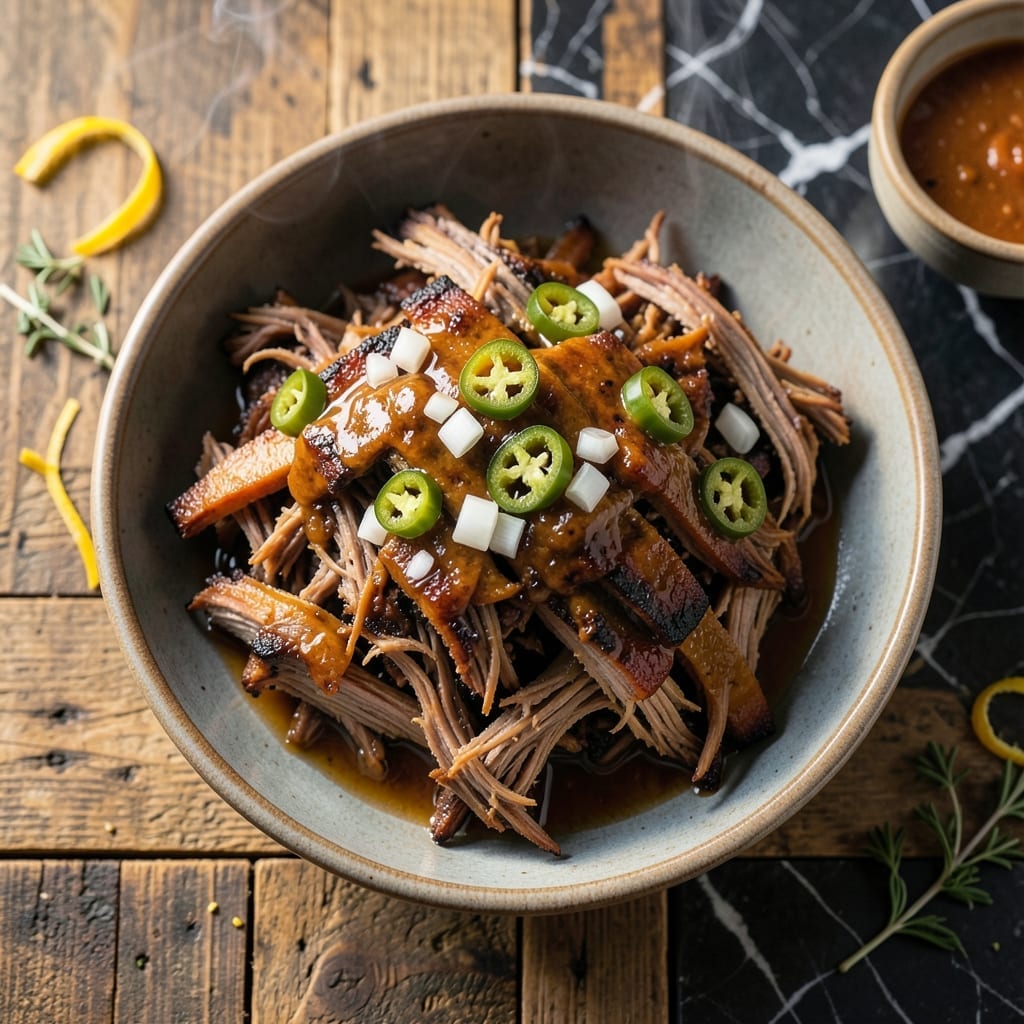
There’s nothing like the scent of hickory smoke signaling tender pulled pork is nearly ready. This method delivers tender results every time, with a tangy vinegar sauce that defines North Carolina tradition.
Slow-cooked pork shoulder absorbs smoky flavors while breaking down into perfect shreds. The vinegar-based sauce cuts through the richness, creating balanced barbecue that honors its roots.
Ingredients for North Carolina Pulled Pork Barbecue
Slow-cooked pork shoulder plus a tangy vinegar sauce capture authentic North Carolina barbecue tradition in every bite.
| Ingredient | Amount | Notes |
|---|---|---|
| Pork Shoulder 🥩 | 4 lb | Bone-in, well-marbled preferred |
| Hickory Wood Chips 🪵 | 2 cups | Soaked in water 1 hour |
| Apple Cider Vinegar 🍏 | 1 ½ cups | For tangy sauce base |
| White Vinegar 🍶 | ½ cup | Balances acidity profile |
| Brown Sugar 🥤 | ¼ cup | Light or dark variety |
| Kosher Salt 🧂 | 2 tbsp | Diamond Crystal preferred |
| Black Pepper 🌶️ | 1 tbsp | Freshly ground coarse |
| Crushed Red Pepper Flakes 🌶️ | 1 tsp | Adjust for heat preference |
| Yellow Mustard 🟡 | ¼ cup | For sauce emulsification |
| Worcestershire Sauce 🫕 | 1 tbsp | Anchovy-free if preferred |
| Garlic Powder 🧄 | 1 tbsp | Not garlic salt |
| Onion Powder 🧅 | 1 tbsp | Granulated for even distribution |
| Smoked Paprika 🌶️ | 1 tsp | Enhances smoky depth |
| Hamburger Buns 🍔 | 8 whole | Soft, slightly sweet style |
| Coleslaw Mix 🥬 | 4 cups | Pre-shredded for convenience |
[recipe_ingredient_scaler]
The pork shoulder is non-negotiable for authentic texture. Bone-in, well-marbled cuts from Whole Foods or your local butcher yield the most tender results. Avoid pre-cut stew meat—whole roasts break down better. Hickory wood chips must be 100% natural (no lighter fluid or additives). For the vinegar, Bragg’s apple cider vinegar offers consistent quality and the right acidity balance.
No hickory? Pecan or oak wood chips provide similar smoke profiles. Out of apple cider vinegar? Rice wine vinegar plus a pinch of sugar approximates the flavor. The brown sugar can be substituted with coconut sugar at 1:1 ratio. For gluten-free needs, tamari replaces Worcestershire sauce. The buns can be potato rolls if hamburger buns aren’t available.
Pulled pork benefits from an overnight rest in its juices. Refrigerate cooked pork in sauce for up to 4 days or freeze for 3 months. The vinegar sauce keeps 1 week refrigerated. Always reheat gently to preserve moisture and prevent drying out.
Why You’ll Love This Recipe
- Set It and Forget: That pork shoulder practically cooks itself in the smoker while I sip sweet tea on the porch.
- Tangy Bite: The apple cider vinegar and brown sugar create that signature North Carolina vinegar-based sauce that hits just right.
- Feeds a Crowd: One shoulder gives me enough for sandwiches, tacos, and a freezer meal for next week’s busy night.
- Budget Stretch: Pork shoulder is cheap, and hickory chips are a one-time buy—this satisfies a family of four for under $20.
Step-by-Step Instructions for North Carolina Pulled Pork Barbecue
Master the slow-smoked technique that delivers fall-apart tender pork with authentic vinegar-based tang.
Step 1: Prepare and Season the Pork Shoulder
Begin by patting the 4 lb Pork Shoulder dry with paper towels to ensure the rub adheres properly. In a small bowl, combine the 2 tbsp Kosher Salt, 1 tbsp Black Pepper, 1 tsp Crushed Red Pepper Flakes, 1 tbsp Garlic Powder, 1 tbsp Onion Powder, and 1 tsp Smoked Paprika.
Rub this mixture generously over all surfaces of the pork, pressing firmly to create a crust. This dry brine draws moisture to the surface while building a flavorful bark. Let the seasoned pork sit at room temperature for 30 minutes while you prepare the smoker.
Step 2: Smoke the Pork Low and Slow
Preheat your smoker to 225°F using the 2 cups Hickory Wood Chips that have been soaked in water for 1 hour. Place the pork shoulder fat-side up on the grill grates, away from direct heat. Maintain a consistent temperature throughout the cooking process.
Smoke the pork for 8-10 hours, or until the internal temperature reaches 195-205°F and the meat probes tenderly with a meat thermometer. Spritz the pork with a mixture of equal parts 1.5 cups Apple Cider Vinegar and water every 2 hours to keep the surface moist and enhance bark formation.
Step 3: Rest and Shred the Pork
Once the pork reaches the desired temperature, transfer it to a large cutting board or baking sheet. Tent loosely with foil and let it rest for 30-45 minutes. This resting period allows the juices to redistribute throughout the meat, ensuring maximum tenderness.
Using two forks or meat claws, shred the pork into bite-sized pieces. Discard any large fat chunks, but leave some marbling for flavor. The pork should pull apart effortlessly, revealing a moist interior with a dark, flavorful bark.
Step 4: Prepare the Vinegar Sauce
In a medium saucepan, combine the 1.5 cups Apple Cider Vinegar, 0.5 cup White Vinegar, 0.25 cup Brown Sugar, 0.25 cup Yellow Mustard, and 1 tbsp Worcestershire Sauce. Simmer over medium heat for 10-12 minutes, stirring occasionally, until the sugar dissolves and the sauce thickens slightly.
Taste and adjust seasoning if needed, though the sauce should have a balanced tangy-sweet profile with a slight kick from the mustard and vinegars. This is the signature North Carolina style that complements the smoky pork perfectly.
Step 5: Serve on Hamburger Buns with Coleslaw
Toss the pulled pork with 1-1.5 cups of the vinegar sauce (reserve the rest for serving). Pile the saucy pork onto the 8 whole Hamburger Buns. Top each sandwich with a generous portion of the 4 cups Coleslaw Mix for the classic Carolina presentation.
Serve immediately with additional sauce on the side. The coleslaw provides a refreshing crunch that cuts through the richness of the pork, while the vinegar sauce ties all the elements together with its signature tang.
Pro Tips For Making North Carolina Pulled Pork Barbecue
- Low and Slow Wins: Cook the pork shoulder at 225°F for at least 8 hours—I learned this the hard way after rushing it at higher temps and ending up with tough, dry meat.
- Soak the Wood: Soak hickory wood chips in water for 30 minutes before smoking to prevent them from burning up too fast and giving off bitter smoke.
- Don’t Skip the Vinegar: Use a 50/50 mix of apple cider and white vinegar in your mop sauce; skipping the white vinegar makes the flavor too sweet and loses that tangy North Carolina bite.
- Rest Before Pulling: Let the pork shoulder rest for 20-30 minutes under foil after cooking—it holds onto the juices better, and pulling it hot makes a mess and wastes all the good moisture.
Pro Cooking Tips for This Dish
Temperature Control
Maintaining a steady 225°F in your smoker is non-negotiable for perfect bark formation. I use a ThermoWorks Smoke thermometer with dual probes—one for the smoker, one for the pork. Hickory smoke should be thin and blue, never thick and white. 🌡️
The Spritz Technique
Every 2 hours, spritz your pork with a 50/50 mix of apple cider vinegar and water. This keeps the surface moist during the long cook and helps build that coveted dark bark. Use a clean spray bottle for even coverage.
Probe for Doneness
Don’t rely on time alone—pork shoulder is done when it probes like butter at 195-205°F internal temp. I check multiple spots, especially near the bone. The meat should pull apart effortlessly when twisted with a fork.
Resting is Key
After reaching temp, tent the pork loosely with foil and rest for 30-45 minutes. This lets juices redistribute. I learned this the hard way—slicing too soon sends all that moisture straight to the cutting board. 💡
Sauce Timing
Toss the shredded pork with sauce just before serving, not during cooking. This preserves the bark’s texture. Use 1-1.5 cups of sauce per 4 lbs of pork, adding more to taste.
Wood Choice
For authentic Carolina flavor, stick with 100% hickory wood chips soaked for 1 hour. Pecan works in a pinch, but avoid mesquite—it’s too strong for this style. I source mine from local BBQ supply shops.
Nutrition Facts
Frequently Asked Questions
What’s the best wood for smoking?
Hickory is traditional for Carolina pulled pork, delivering the classic smoky flavor. Pecan or oak work as great alternatives. Avoid mesquite as it can overpower the pork. Soak chips for 1 hour before use.
Can I cook this in an oven?
Yes! Use a roasting pan with a rack at 225°F for 8-10 hours. Add a water pan for moisture and use liquid smoke for that authentic flavor. The texture will be slightly different but still delicious.
How long can I store leftovers?
Pulled pork keeps in the fridge for up to 4 days or in the freezer for 3 months. Store in an airtight container with some sauce to maintain moisture. Reheat gently to prevent drying out.
Why does the sauce use so much vinegar?
North Carolina style is known for its tangy profile. The vinegar cuts through the richness of the pork while adding that signature zing. Balance is key—sweet and spicy elements round out the flavor.

Trained in classic French technique but raised on slow-cooked ribs and spicy rubs, she blends culinary skill with smoke and soul.
- Hamburgers in Sauce Recipe Crock Pot: Slow-Cooked Savory Delight - October 3, 2026
- Sanjeev Kapoor Egg Biryani Recipe: Fragrant Spiced Rice With Boiled Eggs - October 3, 2026
- Recipe for French Pork Spread Gorton: Savory Gallic Flavors in a Spreadable Delight - October 3, 2026