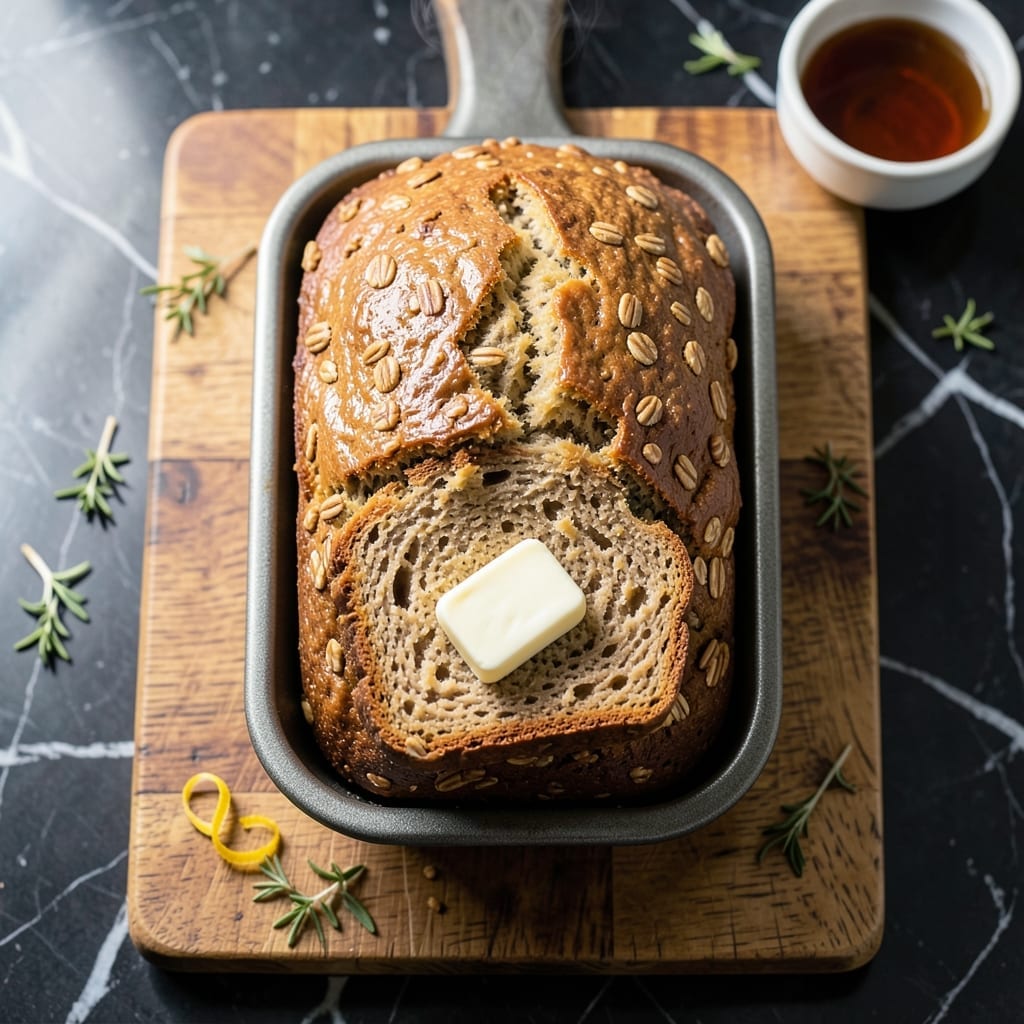
This bread machine oatmeal bread delivers homemade quality with minimal effort. The machine handles the kneading and rising, while you enjoy the warm, nutty aroma filling your kitchen.
You’ll get a soft, slightly dense loaf with a tender crumb and subtle oatmeal sweetness. Perfect for sandwiches, toast, or serving alongside your favorite soup.
Ingredients for Oatmeal Bread Recipe for Bread Machine
Soft, nutty, and perfectly sweet—this loaf comes together with pantry staples and minimal effort.
| Ingredient | Amount | Notes |
|---|---|---|
| Old-Fashioned Rolled Oats 🌾 | 1 cup | Not quick oats, divided |
| Bread Flour 🌾 | 3 cups | Plus extra for dusting |
| Whole Milk 🥛 | 1 ¼ cups | Warm, about 110°F |
| Unsalted Butter 🧈 | 2 tbsp | Melted and cooled |
| Honey 🍯 | ¼ cup | Or maple syrup for sweetness |
| Active Dry Yeast 🍞 | 2 ¼ tsp | One packet plus extra |
| Salt 🧂 | 1 ½ tsp | Fine sea salt preferred |
| Light Brown Sugar 🍚 | 2 tbsp | Packed firmly for richness |
| Large Egg 🥚 | 1 whole | Room temperature for binding |
| Cinnamon 🌿 | 1 tsp | Ground, for warmth |
| Vanilla Extract 💧 | 1 tsp | Pure extract recommended |
[recipe_ingredient_scaler]
The oats are key here—old-fashioned rolled oats give the right texture and nutty bite (quick oats turn to mush). King Arthur bread flour is my go-to for reliability, but any good brand works. The milk needs to be warm, not hot—110°F is ideal to activate the yeast without killing it. I always bloom my yeast first (mix with warm milk and a pinch of sugar) to make sure it’s alive and bubbly before committing to the full batch.
No honey? Maple syrup or agave works just as well. Out of whole milk? Skim milk plus a tablespoon of melted butter gets you close. Want it richer? Swap the milk for half-and-half. The cinnamon is optional but adds a cozy warmth—skip it if you prefer a plainer loaf. For a whole-grain boost, replace up to one cup of bread flour with whole wheat flour (add an extra tablespoon of milk to compensate).
This dough is sticky—don’t panic. The bread machine handles it. Once baked, cool completely before slicing (about 1 hour). Stores wrapped at room temp for 2-3 days, or freeze slices for up to 3 months. Perfect for toast or sandwiches (that slight density holds up great).
Why You’ll Love This Recipe
- Set and Forget: Almost zero effort—just toss the oats, flour, milk, butter, and honey into the machine and let it do the work.
- Warm Honey Sweetness: The honey and butter create this rich, cozy flavor that makes every slice taste like a hug.
- Breakfast to Toast: I bake a loaf on Sunday and we’re set for toast, sandwiches, or even French toast all week.
- Pantry Staples: Uses ingredients I always have on hand, so I can bake fresh bread without a special grocery trip.
Step-by-Step Instructions for Oatmeal Bread in a Bread Machine
This no-knead method delivers homemade bread with minimal effort and maximum flavor.
Step 1: Prepare the Wet Ingredients
In your bread machine pan, start by adding the 1.25 cups Whole Milk (warm, about 110°F). Then add the 2 tbsp Unsalted Butter (melted and cooled), 0.25 cup Honey, 2 tbsp Light Brown Sugar, 1 whole Large Egg, and 1 tsp Vanilla Extract. I use a silicone spatula to ensure everything is well combined.
The warmth of the milk helps activate the yeast later, while the melted butter and sugars create a rich, slightly sweet base for your bread. Make sure the butter has cooled slightly so it doesn’t scald the milk or yeast.
Step 2: Add the Dry Ingredients
Next, add 3 cups Bread Flour to the pan, spreading it evenly over the wet ingredients. Sprinkle 1.5 tsp Salt, 2.25 tsp Active Dry Yeast, 1 tsp Cinnamon, and 1 cup Old-Fashioned Rolled Oats on top of the flour. Do not stir or mix at this stage—just let the ingredients layer naturally.
I’ve found that adding the yeast last ensures it stays dry until the machine starts mixing, which prevents premature activation. The oats add texture and warmth, while the cinnamon gives the loaf a subtle, cozy aroma.
Step 3: Select and Start the Bread Machine Cycle
Insert the pan into your bread machine and select the “Basic” or “White Bread” cycle. Choose a medium or light crust setting for the best results. Start the machine and let it handle the kneading, rising, and baking. The process should take about 3-4 hours, depending on your machine.
About 10 minutes into the cycle, check to ensure all the flour has been incorporated. If the dough looks too dry, add 1-2 tablespoons of warm water. If it’s too sticky, sprinkle in 1-2 tablespoons of extra Bread Flour. This small adjustment ensures the perfect consistency.
Step 4: Cool and Slice the Bread
Once the cycle completes, carefully remove the pan from the machine using oven mitts—the pan and bread will be very hot. Let the bread cool in the pan for 5 minutes, then transfer it to a wire rack to cool completely for at least 1 hour.
This cooling step is essential. Slicing too soon can make the loaf gummy, as the bread needs time to set. Once cooled, slice with a serrated knife for clean, even pieces. The finished loaf should have a soft, slightly chewy texture with a golden-brown crust.
Pro Tips For Making Oatmeal Bread Recipe For Bread Machine
- Pre-soak the oats: Mix the rolled oats with the warm whole milk and let them sit for 10-15 minutes before adding to the bread machine—I learned this the hard way after my first few loaves came out dense and dry.
- Use room-temperature butter: Take the unsalted butter out 30 minutes before starting; cold butter won’t incorporate properly and can leave greasy pockets in the bread.
- Check the knead: About 5 minutes into the kneading cycle, peek in and make sure the dough forms a smooth ball—if it’s too sticky, add bread flour 1 tablespoon at a time.
- Swap honey for warmth: If your honey is thick and hard to pour, warm it for 10 seconds in the microwave to make measuring easier—sounds small, but it saves a ton of mess and guesswork.
Health Benefits of These Flavors
Heart-Healthy Nutrients
This bread packs a fiber punch with old-fashioned rolled oats delivering 4g of soluble fiber per serving. Soluble fiber helps lower LDL cholesterol and supports heart health. I love knowing my morning toast is doing more than just tasting good. 💪
Sustained Energy Source
The combination of whole grain oats and bread flour provides complex carbohydrates that release energy slowly. This keeps you full longer and prevents blood sugar spikes. Perfect for starting your day right.
Protein and B Vitamins
With 1 whole egg and whole milk in the recipe, you get 8g of protein per slice. These ingredients also provide B vitamins like riboflavin and B12, essential for energy metabolism.
Natural Sweetness Benefits
The honey and brown sugar aren’t just for flavor—they contain antioxidants and trace minerals. Honey has antibacterial properties, while brown sugar’s molasses content adds small amounts of calcium and iron.
Low-Fat, Nutrient-Dense
Despite its richness, each slice contains only 2g of fat, mostly from the unsalted butter. The oats contribute magnesium and zinc, supporting immune function. It’s a guilt-free indulgence. ✨
Digestive Health Boost
The fiber in oats promotes healthy digestion and supports gut microbiome diversity. Combined with the probiotic potential of naturally fermented bread, this loaf contributes to overall digestive wellness.
Nutrition Facts
Frequently Asked Questions
Can I use quick oats instead of old-fashioned?
No, old-fashioned rolled oats are essential for texture. Quick oats will turn mushy during the long bread machine cycle. If you only have quick oats, pulse them briefly in a food processor to create a coarser texture before adding.
Why did my bread turn out dense?
Dense loaves usually mean the yeast wasn’t active enough. Check your yeast expiration date and ensure the milk is warm (110°F). Also, verify your bread machine pan is properly sealed during the cycle.
Can I make this without an egg?
Yes! Replace the egg with 1/4 cup unsweetened applesauce or 1/4 cup plain yogurt. These substitutes add moisture and binding without changing the flavor significantly.
How do I store leftover loaves?
Wrap completely cooled bread in plastic wrap or an airtight container. It keeps at room temperature for 2-3 days or frozen for up to 3 months. Slice before freezing for easy toasting.

Trained in classic French technique but raised on slow-cooked ribs and spicy rubs, she blends culinary skill with smoke and soul.
- Recipe for French Pork Spread Gorton: Savory Gallic Flavors in a Spreadable Delight - October 3, 2026
- Recipe for Pan Fried: Golden Crust with Savory Depth - October 3, 2026
- Recipe For Fried Chicken In A Pressure Cooker: Crispy Golden Bites in Half the Time - October 3, 2026