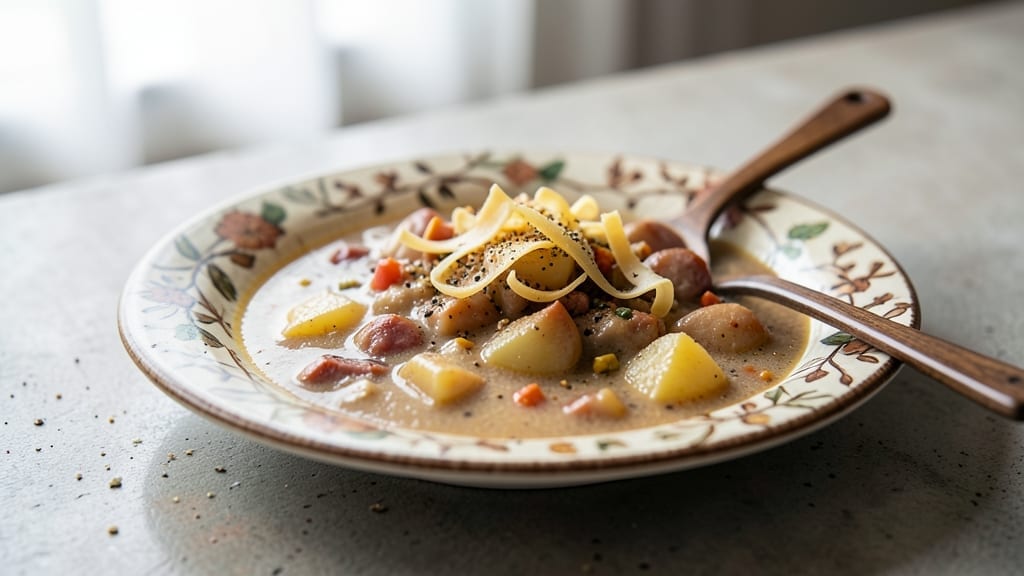
This Olive Garden sausage and potato soup recipe delivers the same creamy, hearty comfort you love from the restaurant—right in your own kitchen. The secret lies in slow-simmered potatoes, flavorful Italian sausage, and a rich broth that coats every spoonful with velvety texture.
I’ve recreated the signature taste using simple techniques that build layers of flavor without shortcuts.
What sets this version apart is the one-pan method, which simplifies cleanup while ensuring perfect results every time. You’ll start with browned sausage for deep, savory notes, then build the soup with aromatic vegetables and potatoes that soften just enough to absorb the broth.
The final touch—a sprinkle of parmesan—elevates the dish to restaurant-quality without extra effort.
By the time you’re done, you’ll have a steaming bowl of soup with tender sausage, perfectly cooked potatoes, and a creamy broth that feels indulgent yet balanced. The aroma alone will have everyone gathering around the table, while the texture delivers that satisfying mouthfeel you remember from Olive Garden.
This is comfort food at its finest—warm, comforting, and impossible to resist.
Serve with crusty bread for dipping or as-is with a side salad for a complete meal. The recipe scales easily for crowds, making it perfect for family dinners or holiday gatherings. Let’s get started on recreating this classic at home!
Ingredients for olive garden sausage and potato soup
Pantry staples plus a few fresh vegetables. That’s all you need for creamy, restaurant-style comfort in one pot.
| Ingredient | Amount | Notes |
|---|---|---|
| Italian Sweet Sausage 🍖 | 1 ½ lb | Kielbasa or mild Italian sausage preferred |
| Yellow Onion 🧅 | 1 whole | Medium size, diced |
| Carrots 🥕 | 3 whole | Medium, Peeled, sliced into 1/4-inch pieces |
| Celery Stalks 🌿 | 3 whole | Trimmed, chopped into 1/2-inch pieces |
| Russet Potatoes 🥔 | 2 lb | Yukon Gold works too, cubed into 1-inch pieces |
| Garlic Cloves 🧄 | 4 cloves | Minced, not powdered |
| Chicken Broth 💧 | 6 cups | Low-sodium preferred, homemade or quality store-bought |
| Heavy Cream 🥛 | 1 cup | Full-fat for best creaminess |
| Whole Milk 🥛 | ½ cup | For extra richness |
| Dried Thyme 🌿 | 1 tsp | Or 1 tbsp fresh thyme leaves |
| Bay Leaves 🌿 | 2 whole | Remove before serving |
| Salt 🧂 | 1 ½ tsp | Adjust to taste, kosher preferred |
| Black Pepper 🌶️ | ½ tsp | Freshly ground for best flavor |
| Parmesan Cheese 🧀 | ½ cup | Freshly grated, for serving |
| Olive Oil 🫒 | 2 tbsp | For browning sausage |
[recipe_ingredient_scaler]
The sausage is where the flavor starts. Kielbasa or mild Italian from the deli section (not the pre-cooked kind) gives you that authentic taste. Trader Joe’s or Costco usually have great options—look for ones with visible fat marbling. If you can’t find Italian sausage, smoked sausage works in a pinch. The potatoes are key too—Russets or Yukon Golds hold up best to slow cooking. Cut them into even pieces so they cook uniformly. Fresh thyme makes a difference here (I always grab extra), but dried works if that’s what you’ve got.
No chicken broth? Beef broth with an extra splash of water keeps things flavorful. Heavy cream giving you sticker shock? Half-and-half works too, though it’ll be slightly lighter. The milk is optional but adds that signature richness you remember from Olive Garden. For the veggies, no need to peel carrots—just scrub them well. If you’re short on time, frozen chopped onions and celery work fine (thaw first). The garlic should be freshly minced—jarred garlic just won’t cut it here. And don’t skip the bay leaves—they disappear during cooking but add depth.
This soup tastes even better the next day—make extra if you can. Keeps for 4-5 days in the fridge, or 3 months frozen. I always portion it into containers so lunches are ready to grab. The Parmesan should be freshly grated right before serving—pre-grated gets clumpy. For a lighter version, swap half the heavy cream for low-fat milk, but trust me on the full-fat version for that restaurant-quality mouthfeel.
Why You’ll Love This Recipe
- I’ve got a secret: this soup is my actual go-to when I’m too wiped to scrub pots afterward. Just toss the sausage and veggies in a Dutch oven, dump in the broth, and let it simmer while I zone out on the couch. The only cleanup? One pot, one spatula, and maybe a quick wipe of the Dutch oven—no dishes piled up for days. Trust me, it’s the kind of recipe that makes me actually look forward to post-dinner cleanup.
- Here’s the thing: you can make this for less than a takeout run, and it serves a crowd. The Italian sweet sausage (especially in bulk) and russet potatoes are budget staples, while the chicken broth and cream stretch to feed four people easily. Plus, if you’ve got pantry basics like salt, pepper, and thyme, you’re already halfway there. It’s the kind of recipe that makes me feel like a smart cook without sacrificing taste.
Step-by-step instructions for Olive Garden sausage and potato soup
Here’s the method that delivers that signature Olive Garden creamy, savory goodness in your own kitchen.
Brown the Sausage and Vegetables
Heat the 2 tablespoons olive oil in a large Dutch oven over medium-high heat. Add the 1½ pounds Italian sweet sausage, breaking it into chunks as it hits the pan. Cook for 5-6 minutes, stirring occasionally, until the sausage is deeply browned and crispy in spots.
Push the sausage to one side of the pot. Add the 1 diced yellow onion, 3 sliced carrots, and 3 chopped celery stalks. Cook for 5-6 minutes until the vegetables begin to soften and develop a golden color. Stir occasionally to prevent burning. Here’s the thing—this browning step builds deep, rich flavor that makes all the difference in your soup.
Add Aromatics and Simmer the Base
Add the 4 minced garlic cloves and cook for 30 seconds until fragrant—don’t let it burn, or you’ll get bitter flavors. Stir in the 1 teaspoon dried thyme and 2 bay leaves, then pour in the 6 cups chicken broth. Bring the mixture to a boil, then reduce heat to medium-low and let it simmer for 10 minutes to meld the flavors.
While it simmers, add the 2 pounds cubed russet potatoes to the pot. The potatoes will absorb some of the broth, so don’t worry if they don’t fully submerge at first. This simmering step is where the vegetables soften and the broth infuses with all the savory flavors we’ve built. You’ll know it’s ready when the potatoes are tender enough to pierce easily with a fork.
Finish with Cream and Seasonings
After the potatoes are tender, stir in the 1 cup heavy cream and ½ cup whole milk. The soup will thicken slightly as it warms through. Add the 1½ teaspoons salt and ½ teaspoon black pepper, then taste and adjust the seasoning if needed. Here’s where the magic happens—the cream creates that signature creamy texture while keeping the soup rich and satisfying.
Let the soup simmer for another 5-7 minutes on low heat to ensure everything is heated through and the flavors are fully combined. The soup should be thick but still spoonable. If it’s too thick, you can add a splash of water or broth to reach your preferred consistency. Remove the 2 bay leaves before serving.
Serve with Parmesan Cheese
Ladle the soup into bowls and top each serving with ½ cup grated parmesan cheese. The parmesan adds a salty, umami finish that ties all the flavors together. Serve immediately while hot, with crusty bread on the side if you like. This is the moment that matters—every spoonful should deliver that comforting, creamy, savory experience you remember from Olive Garden.
Real talk: This soup tastes even better the next day as the flavors continue to develop. Store leftovers in the refrigerator for up to 4 days or freeze for 3 months. When reheating, warm gently on the stove over low heat, stirring occasionally, until heated through. The creamy texture might thicken slightly, so add a splash of milk or broth if needed.
Pro Tips For Making Olive Garden Sausage And Potato Soup
- CRISP THE SAUSAGE FIRST: Don’t just cook the sausage—get it deeply browned with crispy edges. I used to rush this step, and the soup always tasted flat. Those 5-6 minutes on medium-high heat are non-negotiable for that smoky, caramelized flavor that makes the whole dish sing.
- PEEL AND SLICE CARROTS EVENLY: Skip the uneven chunks—peel those carrots and cut them into consistent 1/4-inch slices. This ensures they soften at the same rate as the celery and onions, so you don’t end up with one rock-hard carrot in your bowl. (Yes, I’ve done it.)
- TASTE BEFORE YOU THICKEN: After adding the heavy cream and milk, taste the soup first—plain, no salt. The cream masks saltiness, so you’ll likely need that full 1.5 teaspoons of salt (or more) to balance it. Trust me, you’ll regret it if you skip this step.
- GRATE PARMESAN FRESH (OR REGRET IT): Pre-shredded Parmesan has anti-caking agents that make it taste like sawdust. If you’re not grating your own, at least pat the shreds dry with a paper towel to remove excess starch. The difference in flavor and texture is night and day.
Troubleshooting this recipe
Sausage Not Browning Enough
If your sausage isn’t developing that beautiful golden-brown crust, it’s likely due to undercooked meat or insufficient heat. Use fresh, high-quality Italian sweet sausage—pre-cooked or frozen sausage won’t brown properly. Heat your Dutch oven on medium-high and ensure the pan is hot before adding sausage.
If the pan feels lukewarm, wait until it’s sizzling before adding the sausage. Stir occasionally to prevent sticking, but avoid overcrowding the pan—this can lower the temperature. 🔥
Vegetables Turning Mushy Too Quickly
Carrots and celery softening faster than expected? Reduce the heat slightly after the initial browning step. Once the sausage is cooked and pushed aside, lower the heat to medium for the vegetables.
This prevents them from breaking down too soon and keeps the soup’s texture balanced. If you’re using a larger pot, the heat disperses faster—adjust accordingly.
Soup Too Thin or Watery
If your soup lacks creaminess, it’s often because the potatoes absorbed too much broth or the cream wasn’t added at the right time. After simmering the potatoes, let them cook for 5-7 minutes before adding the heavy cream and milk.
This ensures the potatoes are tender but not falling apart. If the soup is still too thin, stir in 1-2 tablespoons of cornstarch mixed with water as a thickener, or reduce the soup gently on the stove until it reaches your desired consistency.
Flavor Too Mild or Bland
A lack of depth usually means the broth or seasonings weren’t developed enough. Always simmer the broth with thyme and bay leaves for at least 10 minutes before adding the potatoes. Taste the broth before adding the potatoes—it should be flavorful on its own.
If it’s bland, consider using homemade or high-quality low-sodium broth and adding an extra ½ teaspoon of salt during the final seasoning. Fresh herbs or a pinch of smoked paprika can also add complexity.
Potatoes Undercooked or Overcooked
Potatoes that are still firm or mushy? First, check your potato size—evenly cubed 1-inch pieces cook more uniformly. If they’re still hard, simmer longer on low heat until a fork pierces them easily. Overcooked potatoes?
Reduce the heat and cover the pot loosely to trap steam. If you’re in a rush, add the potatoes 10 minutes earlier in the cooking process to ensure they’re tender without turning to mush.
Cream Separating or Soup Curdling
Cream separating or a curdled texture often happens when the soup is reheated improperly. Avoid high heat when reheating—use low or medium-low and stir constantly. If the cream separates, whisk vigorously and add a splash of cold water or milk to help re-emulsify.
For a smoother texture, strain the soup through a fine-mesh sieve before serving. If reheating leftovers, do so gently over 10-15 minutes to avoid overheating the cream.
Nutrition facts
Frequently asked questions
Can I use a different type of sausage in this recipe?
While mild Italian sweet sausage or Kielbasa works best for that authentic taste, you can substitute with smoked sausage or even chicken sausage if needed. Just avoid pre-cooked sausage—it won’t brown properly and lacks the deep flavor. The browning step is key for that restaurant-quality richness!
Why does my soup taste bland even after adding all the seasonings?
Bland soup often means the broth wasn’t developed enough. Always simmer the broth with thyme and bay leaves for at least 10 minutes before adding potatoes. Taste the broth before adding the potatoes—it should be flavorful on its own. If needed, use homemade or high-quality low-sodium broth and add an extra ½ teaspoon of salt during final seasoning.
How can I prevent the cream from separating when reheating?
Cream separation happens when soup is reheated too quickly. Always warm leftovers gently on low or medium-low heat, stirring constantly. If cream separates, whisk vigorously and add a splash of cold water or milk to help re-emulsify. For smoother texture, strain the soup through a fine-mesh sieve before serving.
Can I make this soup ahead of time?
This soup actually tastes better the next day as flavors develop further. Store leftovers in the fridge for up to 4-5 days or freeze for 3 months. When reheating, warm gently on the stove over low heat, stirring occasionally. The texture might thicken slightly, so add a splash of broth if needed.
What if my potatoes aren’t cooking evenly?
Check your potato size—1-inch cubes cook more uniformly. If they’re still firm, simmer longer on low heat until a fork pierces them easily. Overcooked potatoes? Reduce heat and cover loosely to trap steam. For faster cooking, add potatoes 10 minutes earlier in the process to avoid mushiness.

Trained in classic French technique but raised on slow-cooked ribs and spicy rubs, she blends culinary skill with smoke and soul.
- Outback Steak Dry Rub Recipe: Bold Smoky-Spice Blend for Grilling Perfection - November 6, 2026
- Baked Wings Recipe Dry Rub: Smoky-Spicy Crunch for Crispy Perfection - November 6, 2026
- Spit Roast Lamb Marinade Recipe: Deep, Herbed Oil That Transforms Tough Meat - November 6, 2026