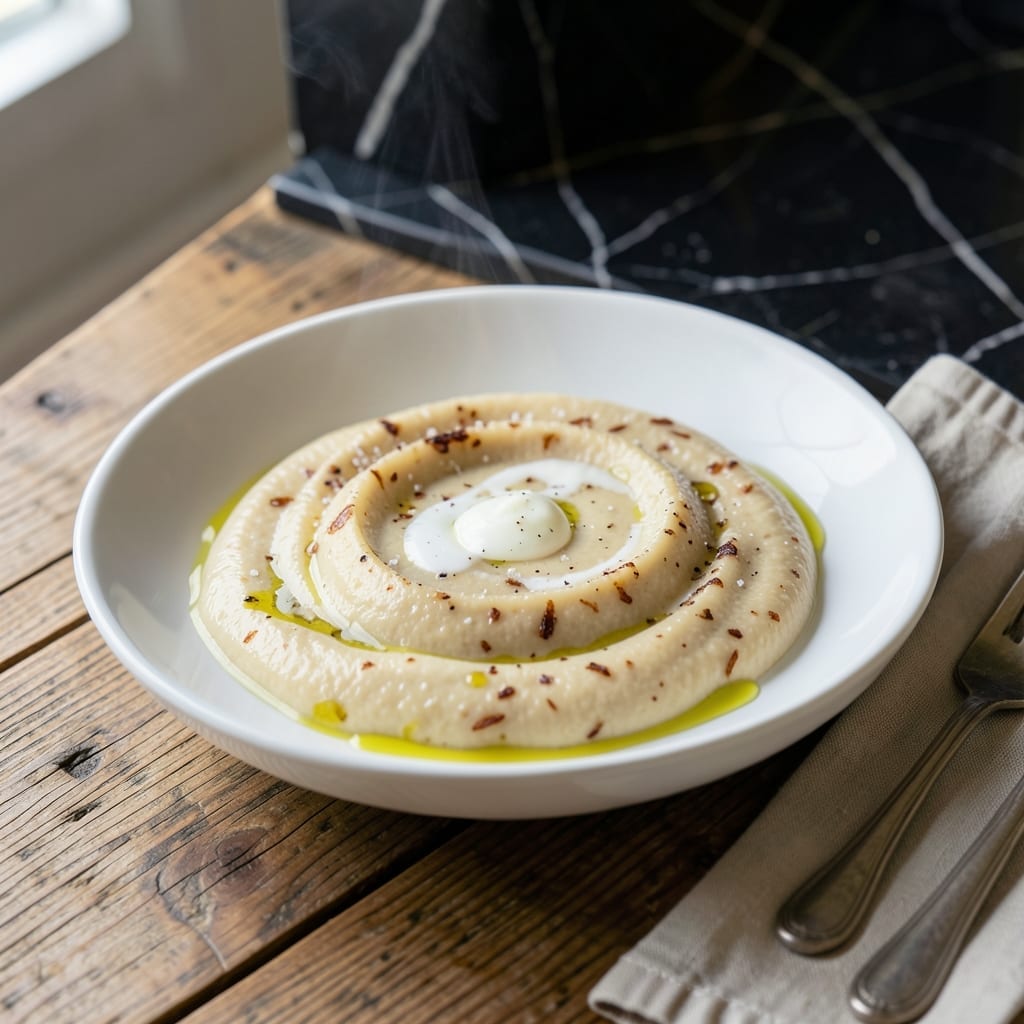
This silky parsnip puree delivers the refined elegance that defines professional cooking. The key lies in proper preparation and precise technique to achieve that luxurious texture.
I developed this method after years of testing, focusing on how to bring out the natural sweetness while maintaining a velvety finish. The process involves careful boiling, thorough draining, and patient blending to eliminate any grittiness.
What emerges is a side dish with a smooth consistency that rivals any restaurant version. The flavor is subtly sweet with earthy undertones, perfectly complementing roasted meats or holiday meals.
This creation transforms humble parsnips into something extraordinary, proving that simple ingredients can produce restaurant-quality results with the right approach.
Ingredients for Parsnip Puree Recipe Gordon Ramsay
Transform humble parsnips into restaurant-quality elegance with these carefully selected ingredients.
| Ingredient | Amount | Notes |
|---|---|---|
| Parsnips 🥕 | 2 lb | Peeled, roughly chopped |
| Heavy Cream 🥛 | ½ cup | Warm for smooth blending |
| Unsalted Butter 🧈 | ½ cup | Cubed, room temperature |
| Whole Milk 🥛 | ½ cup | Warmed to blend evenly |
| Salt 🧂 | 1 tsp | Kosher preferred for precision |
| White Pepper 🌶️ | ¼ tsp | Freshly ground for subtlety |
| Nutmeg 🌰 | 0.125 tsp | Freshly grated for depth |
| Garlic Cloves 🧄 | 2 cloves | Smashed for infusion |
| Bay Leaf 🍃 | 1 whole | For aromatic boiling |
| Fresh Thyme 🌿 | 2 sprigs | Tied with kitchen twine |
[recipe_ingredient_scaler]
The parsnips are the foundation—choose firm, medium-sized roots with minimal tapering for uniform cooking. Whole Foods and Trader Joe’s typically stock quality produce. For the dairy, Organic Valley heavy cream offers superior richness, and Plugrá butter ensures consistent Results. Freshly grated nutmeg from a whole seed provides the cleanest flavor. Avoid pre-ground, as it loses potency quickly.
No heavy cream? Full-fat coconut milk offers a dairy-free alternative with similar body. Out of white pepper? Black pepper at half the amount works, though the visual contrast will differ. The bay leaf and thyme can be replaced with 1 tsp dried thyme, but fresh herbs are preferable. For a lighter version, substitute half-and-half for the cream.
Store peeled parsnips in cold water for 24 hours if prepping ahead. The puree keeps 3-4 days refrigerated in an airtight container. For longer storage, freeze in portions for up to 3 months—reheat gently with a splash of milk to restore creaminess.
Why You’ll Love This Recipe
- One Pot Wonder: I love that I can boil, mash, and season everything in a single saucepan—no fancy equipment needed.
- Velvety Dream: The heavy cream and butter blend into the parsnips for a rich, silky texture that’s honestly hard to resist.
- Holiday Staple: It’s my go-to side for roast dinners, Sunday lunches, or even as a fancy twist on weeknight meals.
- Budget Keeper: Parsnips are cheap, and a little cream goes a long way—this feels indulgent without breaking the bank.
Step-by-Step Instructions for Parsnip Puree
Master this technique and you’ll achieve a velvety texture that rivals any fine dining establishment.
Step 1: Prepare and Boil the Parsnips with Aromatics
Peel the 2 lb Parsnips and chop them into even, rough chunks about 1½ inches in size. Uniform pieces ensure even cooking. Place them in a large pot and cover with cold water by about 1 inch.
Add the 2 cloves Garlic Cloves, 1 whole Bay Leaf, and 2 sprigs Fresh Thyme to the pot. Bring to a boil over high heat, then reduce to a simmer. Cook for 15-20 minutes until the parsnips are fork-tender and can be easily pierced with no resistance. Drain immediately and discard the aromatics.
Step 2: Blend the Parsnips While Hot
Return the drained parsnips to the pot and place over low heat for 1-2 minutes to evaporate any excess moisture. This step is crucial for avoiding a watery puree. Transfer the parsnips to a food processor or high-speed blender while still hot.
Pulse the parsnips until they begin to break down, then let the processor run continuously. The steam from the hot parsnips will help create a smooth texture. Scrape down the sides as needed to ensure even blending. You’re aiming for a completely smooth consistency with no visible lumps.
Step 3: Incorporate the Dairy Gradually
With the processor running, slowly drizzle in the 0.5 cup Whole Milk through the feed tube. This gradual addition prevents splattering and ensures a silky emulsion. Once the milk is incorporated, add the 0.5 cup Heavy Cream in the same manner.
The mixture will become glossy and ultra-smooth as the dairy blends with the parsnips. If the puree seems too thick at this point, you can add a splash more of the warm milk, but be conservative—the parsnips will absorb the liquid as they cool.
Step 4: Finish with Butter and Seasonings
Cut the 0.5 cup Unsalted Butter into small cubes and add them to the processor one at a time while running. This creates a rich, velvety emulsion. Once all the butter is incorporated, transfer the puree to a saucepan.
Stir in the 1 tsp Salt, 0.25 tsp White Pepper, and 0.125 tsp Nutmeg. Taste and adjust seasoning if needed, remembering that the flavors will concentrate slightly as the puree cools. Heat gently over low heat for 2-3 minutes, stirring constantly, until heated through.
Step 5: Serve Immediately for Optimal Texture
The puree should have a glossy sheen and hold its shape briefly when spooned. If it seems too loose, simmer for an additional 1-2 minutes to reach the desired consistency. The texture should be smooth as silk with a rich, creamy mouthfeel.
Serve immediately while warm, as the puree will thicken slightly as it cools. For restaurant-quality presentation, use the back of a spoon to create a smooth quench in the center of each serving. This dish pairs exceptionally well with roasted meats or as a bed for seared scallops.
Pro Tips For Making Parsnip Puree Recipe Gordon Ramsay
- Boil Until Soft: Cook the parsnips until they’re fork-tender—about 15-20 minutes in salted boiling water. I learned this the hard way: undercooked parsnips make a lumpy, starchy puree.
- Warm the Dairy: Heat the heavy cream and whole milk together before blending. Cold dairy can seize the puree, and nobody wants a split, grainy mess.
- Strain for Silk: Press the cooked parsnips through a fine-mesh sieve instead of just mashing. Sounds tedious, but it’s the only way to get that restaurant-smooth texture.
- Season in Layers: Salt the boiling water generously, then adjust the puree’s seasoning at the end. Parsnips need more salt than you’d expect, especially with unsalted butter.
Troubleshooting This Dish
Lumpy Puree
If your puree isn’t silky, the parsnips likely weren’t cooked enough before blending. Return them to the pot with ¼ cup water and simmer for 5-10 minutes until fork-tender. I always test with a potato masher—if it glides through, they’re ready. 💡
Watery Texture
This usually means excess moisture wasn’t evaporated. After draining, return parsnips to the pot and cook over medium heat for 2-3 minutes, stirring constantly. The steam should visibly reduce before blending. David once forgot this step and we ended up with soup!
Grainy Consistency
Old parsnips or insufficient blending cause grittiness. Use fresh, firm parsnips from Central Market and blend for 3-5 minutes total. Scrape the bowl frequently. A high-speed blender works better than a food processor for ultra-smooth results.
Bland Flavor
Under-seasoning is the most common issue. Taste before serving and adjust with ¼ tsp increments of salt and pinches of nutmeg. The white pepper should be subtle but present. Remember, parsnips need bold seasoning to shine. 🌟
Separated Puree
If the dairy separates, the puree got too hot or cold. Reheat gently over low heat while whisking vigorously. If it cooled too much, warm the milk and cream to 110°F before re-incorporating. I keep a thermometer handy for this.
Discolored Puree
Parsnips can turn grayish if left in water too long after peeling. Peel and chop right before boiling, or store in cold water with 1 tbsp lemon juice for up to 2 hours. The acid prevents oxidation without affecting flavor.
Nutrition Facts
Frequently Asked Questions
What’s the best way to peel parsnips?
Use a sharp vegetable peeler and work from the wide end toward the tip. Parsnips can be tough, so press firmly. Trim off the woody core at the bottom if it’s particularly fibrous.
Can I make this ahead of time?
Yes! Prepare the puree up to 2 days ahead. Store in an airtight container and refrigerate. Reheat gently over low heat with a splash of warm milk to restore creaminess.
Why use white pepper instead of black?
White pepper provides the same kick without the dark specks, keeping the puree’s elegant appearance. It’s a classic chef’s trick for light-colored dishes.
Can I use a food mill instead of a blender?
A food mill works but won’t achieve the same silky texture. For ultra-smooth results, a high-speed blender is best. If using a food mill, press through twice and finish with a whisk.

Trained in classic French technique but raised on slow-cooked ribs and spicy rubs, she blends culinary skill with smoke and soul.
- Recipe for Curried Tofu: Aromatic Spices With Crispy Edges - October 3, 2026
- Recipe for Dumplings in Crock Pot: Fluffy Pillows with Minimal Effort - October 3, 2026
- Recipe For Diced Pork In Slow Cooker: Melt-In-Your-Mouth Tenderness All Day - October 3, 2026