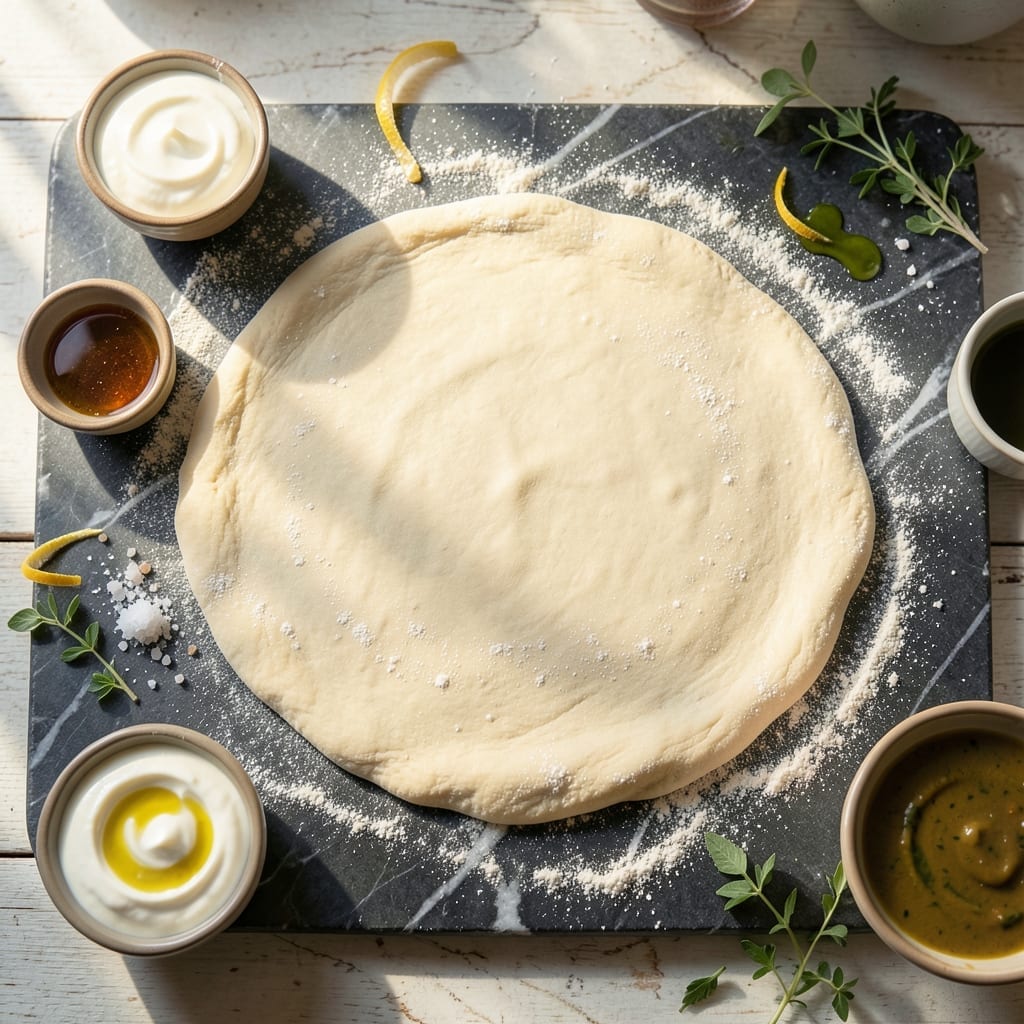
This no-yeast pizza dough delivers a light, fluffy crust using just self-rising flour and a few pantry staples. The process is surprisingly simple yet yields professional-quality results.
In 15 minutes, you’ll have a golden, crisp base ready for your favorite toppings. The self-rising flour eliminates the need for proofing, making this ideal for quick meals.
Ingredients for Pizza Dough Recipe with Self Rising Flour
Pantry staples plus a secret yogurt trick for that perfect no-yeast crust.
| Ingredient | Amount | Notes |
|---|---|---|
| Self-Rising Flour 🌾 | 2 ½ cups | Sifted for best texture |
| Plain Greek Yogurt 🥛 | 1 cup | Full-fat for tenderness |
| Extra-Virgin Olive Oil 🫒 | 2 tbsp | High quality, fruity notes |
| Honey 🍯 | 1 tbsp | Helps with browning |
| Baking Powder 🧂 | 1 tsp | Ensures extra lift |
| Salt 🧂 | ¾ tsp | Fine sea salt preferred |
| Garlic Powder 🧄 | ½ tsp | For subtle savory depth |
| Dried Oregano 🌿 | ½ tsp | Mediterranean variety ideal |
| Dried Basil 🍃 | ½ tsp | Crushed for better dispersion |
| Red Pepper Flakes 🌶️ | ¼ tsp | Adjust for heat preference |
| Black Pepper 🌶️ | ¼ tsp | Freshly ground preferred |
| Water 💧 | 2 tbsp | Lukewarm for best results |
[recipe_ingredient_scaler]
The self-rising flour is non-negotiable here—White Lily or Softasilk if you can find them (Southern brands with lower protein content). King Arthur works in a pinch but the texture won’t be quite as tender. Greek yogurt adds the moisture and fat without yeast; Fage or Chobani full-fat are my go-tos. The honey isn’t just for sweetness—it feeds the browning reaction for that golden crust.
No Greek yogurt? Sour cream at the same amount works, though the flavor shifts slightly. Swap honey for maple syrup or agave if you’re strict vegetarian (some avoid honey). Out of oregano? Italian seasoning blend at half the amount covers it. The baking powder boosts the self-rising flour’s lift—don’t skip it, even if your flour claims to have enough already.
Dough keeps wrapped tight in the fridge for 2 days, or freeze the shaped rounds (parchment between) for 1 month. Let it sit at room temp 30 minutes before rolling—cold dough fights back (worth the extra minute).
Why You’ll Love This Recipe
- Two-Ingredient Base: I just mix self-rising flour and Greek yogurt—no yeast, no waiting for dough to rise.
- Sweet-Savory Balance: The honey adds a subtle sweetness that pairs perfectly with the olive oil’s richness.
- Endless Topping Fun: I’ve used this dough for margherita, BBQ chicken, even dessert pizzas with Nutella.
- Fridge to Table: The dough keeps in the fridge for 3 days, so I can prep ahead and bake fresh when cravings hit.
Step-by-Step Instructions for Pizza Dough With Self-Rising Flour
This method delivers a tender, flavorful crust with minimal effort and no yeast required.
Step 1: Combine Dry Ingredients for the Base
In a large mixing bowl, whisk together the 2.5 cups Self-Rising Flour, 1 tsp Baking Powder, 0.75 tsp Salt, 0.5 tsp Garlic Powder, 0.5 tsp Dried Oregano, 0.5 tsp Dried Basil, 0.25 tsp Red Pepper Flakes, and 0.25 tsp Black Pepper until evenly distributed.
The baking powder works with the self-rising flour to give your dough extra lift, while the herbs and spices infuse every bite with Mediterranean flavor. Sifting the flour first, as suggested in the ingredients list, ensures a lighter texture in the final crust.
Step 2: Mix Wet Ingredients
In a separate bowl, combine the 1 cup Plain Greek Yogurt, 2 tbsp Extra-Virgin Olive Oil, 1 tbsp Honey, and 2 tbsp Water. Whisk until the mixture is smooth and the honey fully dissolves.
Using full-fat Greek yogurt, as noted in the ingredients, adds richness and tenderness to the dough. The honey not only contributes subtle sweetness but also helps with browning as the crust bakes. The lukewarm water ensures all ingredients blend seamlessly.
Step 3: Form and Knead the Dough
Pour the wet mixture into the bowl with the dry ingredients. Stir with a wooden spoon or silicone spatula until a shaggy dough forms. The dough will be slightly sticky—that’s normal.
Turn the dough onto a lightly floured surface and knead for 3-4 minutes until smooth and elastic. If the dough feels too sticky, add a small amount of flour, but avoid over-flouring, as this can make the crust dense. The self-rising flour already contains leavening, so minimal kneading is all that’s needed.
Step 4: Rest the Dough
Shape the dough into a ball and place it in a lightly oiled bowl. Cover with a clean kitchen towel or plastic wrap and let it rest at room temperature for 15-20 minutes.
This short rest allows the gluten to relax, making the dough easier to roll out. Unlike yeast-based doughs, this version doesn’t need a long rise time. After resting, the dough should feel supple and ready to stretch or roll into your desired pizza shape.
Pro Tips For Making Pizza Dough Recipe With Self Rising Flour
- Knead Just Enough: Work the dough until it comes together—about 2-3 minutes—then stop. Overworking it makes the crust tough, and self-rising flour develops gluten faster than you’d expect.
- Warm the Yogurt: Take the Greek yogurt out of the fridge for 15 minutes before mixing. Cold yogurt can shock the dough and slow down the rise, which I learned the hard way with a few flat pizzas.
- Skip Extra Salt: Self-rising flour already contains salt, so adding more throws off the balance. Stick to the honey for sweetness and let the olive oil do the rest.
- Use Oiled Hands: Rub a little olive oil on your hands before shaping the dough—it prevents sticking and makes stretching easier without extra flour that can dry it out.
Storing and Reheating This Recipe
Refrigerator Storage
Wrap your dough ball tightly in plastic wrap or place in an airtight container. It’ll keep in the fridge for up to 2 days. I learned this trick at local BBQ competitions—freshness matters. ❄️
Freezer Storage
For longer storage, freeze shaped dough rounds between parchment paper in a freezer bag. It’ll last 1 month. Thaw overnight in the fridge before using.
Room Temperature Rest
Let refrigerated dough sit at room temperature for 30 minutes before rolling. Cold dough resists stretching—patience pays off.
Reheating Baked Crust
If you’ve pre-baked the crust, reheat in a 375°F oven for 5-7 minutes to restore crispness. A pizza stone helps.
Reviving Dough
If your dough seems dry, add 1-2 tsp water and knead briefly. For sticky dough, add 1 tbsp flour and work it in.
Pro Tip
I forage wild herbs sometimes, but for this dough, stick to the recipe’s dried oregano and basil for consistent flavor. Trust me. 💡
Nutrition Facts
Frequently Asked Questions
Can I use regular flour instead?
No, regular flour lacks the leavening agents. For each cup of all-purpose flour, add 1.5 tsp baking powder and 0.5 tsp salt to mimic self-rising.
Why is Greek yogurt used here?
It adds moisture and fat for tenderness while activating the baking powder for lift. Full-fat versions work best for flavor and texture.
How thin should I roll the dough?
Aim for 1/4-inch thickness for a crispy crust. Use a rolling pin or stretch by hand, adding flour as needed to prevent sticking.
Can I make this ahead of time?
Yes! Store wrapped dough in the fridge for up to 2 days or freeze for 1 month. Thaw overnight before using.

Trained in classic French technique but raised on slow-cooked ribs and spicy rubs, she blends culinary skill with smoke and soul.
- Recipe for Dumplings in Crock Pot: Fluffy Pillows with Minimal Effort - October 3, 2026
- Recipe For Diced Pork In Slow Cooker: Melt-In-Your-Mouth Tenderness All Day - October 3, 2026
- Recipe for Crock Pot Lasagna Using Ravioli: No-Boil Cheese Layers - October 3, 2026