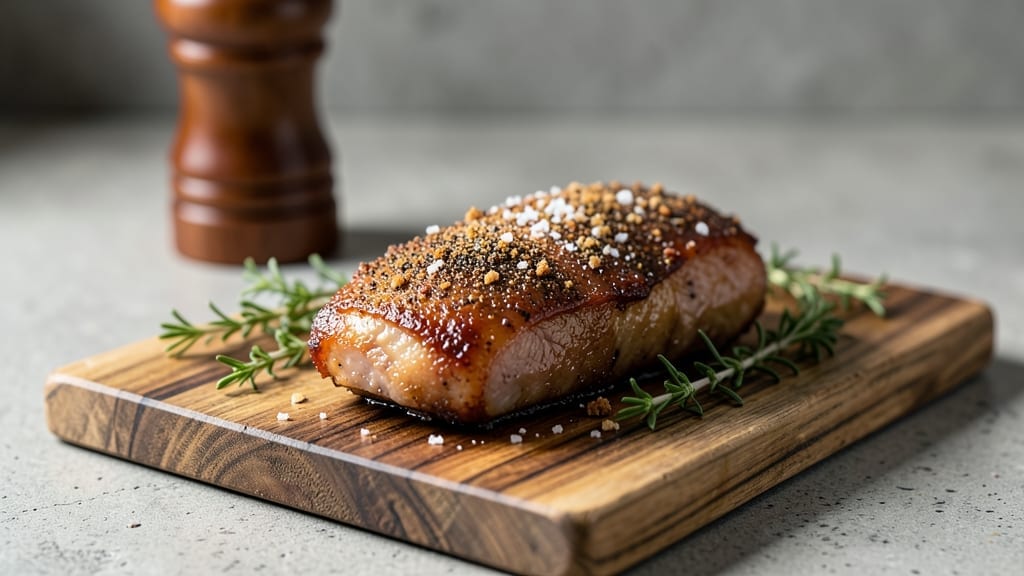
Mastering a pork belly dry rub recipe transforms simple pork into a showstopping centerpiece with a deep-smoky crust that needs no sauce to shine. Growing up in small-town Georgia, I learned that the right dry rub could turn a humble cut into something extraordinary—just like my grandma’s famous pulled pork.
This method delivers restaurant-quality results without the mess of basting or glaze.
The secret lies in balancing sweet, smoky, and savory spices that caramelize into a crackling crust while keeping the meat tender inside. I’ve perfected this technique over years of cooking for crowds at my farm, where heritage pigs yield the richest flavor.
The rub works equally well for roasting, smoking, or even pan-searing—just 15 minutes of prep before the oven does all the work.
What you’ll end up with is pork belly so flavorful it becomes the star of any meal—crispy on the outside, melt-in-your-mouth tender within. The deep-smoky aroma alone will have everyone asking for seconds.
This is the kind of dish that turns weeknight dinners into memorable feasts without requiring hours in the kitchen.
Pair it with roasted vegetables or a simple green salad to let the pork belly take center stage. The beauty of this method is its versatility—whether you’re hosting a dinner party or feeding your family, this dry rub delivers foolproof, professional results every time.
Ingredients for pork belly dry rub
Just 13 simple ingredients. No fancy tools. All deep-smoky magic.
| Ingredient | Amount | Notes |
|---|---|---|
| Pork Belly 🐖 | 2 lb | Thick-cut, skin-on preferred |
| Brown Sugar 🍯 | ¼ cup | Light or dark, packed |
| Smoked Paprika 🌶️ | 2 tbsp | High-quality Spanish preferred |
| Kosher Salt 🧂 | 1 ½ tbsp | Diamond Crystal preferred |
| Ground Black Pepper 🌶️ | 1 tbsp | Freshly cracked preferred |
| Garlic Powder 🧄 | 1 tbsp | Freshly ground preferred |
| Onion Powder 🧅 | 1 tbsp | Freshly ground preferred |
| Ground Cumin 🌿 | 1 tsp | Toasted for depth |
| Mustard Powder 🍯 | ½ tsp | Yellow or Dijon preferred |
| Cayenne Pepper 🔥 | ½ tsp | Adjust for heat preference |
| Olive Oil 🫒 | 1 tbsp | Extra-virgin for brushing |
| Fresh Rosemary 🌿 | 1 tbsp | Chopped, fresh preferred |
| Fresh Thyme 🌿 | 1 tbsp | Chopped, fresh preferred |
[recipe_ingredient_scaler]
Heritage pork belly makes all the difference—look for thick-cut pieces with good marbling at Whole Foods or your local butcher. If you can’t find heritage, Costco’s pork belly is a solid choice, just trim any excess fat. The brown sugar is non-negotiable here; it caramelizes beautifully and balances the smokiness. For the smoked paprika, Penzeys or La Boîte brands deliver that authentic, deep flavor. Fresh herbs like rosemary and thyme add complexity, but if you’re in a pinch, dried works at half the amount (though fresh is definitely worth it).
No smoked paprika? Substitute with a mix of cayenne and regular paprika—just reduce the cayenne to half what you’d normally use. Running low on brown sugar? Honey or maple syrup works in a bind, though the texture might be slightly different. For a sweeter profile, increase the sugar by another tablespoon. The olive oil is just for brushing—don’t skimp here, but don’t overdo it either. If you’re using a cast-iron skillet for pan-searing, preheat it until it’s screaming hot before adding the pork belly.
This rub keeps beautifully in an airtight container for up to 3 months—just store it in a cool, dark place. The pork belly itself can be prepped ahead and refrigerated for 24 hours before cooking, but it’s best served fresh. If you’re planning a big gathering, double the rub and portion it into small jars. The leftovers? Slice thinly and serve on sandwiches or with roasted potatoes—trust me, they’ll disappear fast.
Why You’ll Love This Recipe
- I’ve got a secret: the hardest part of this recipe is deciding whether to roast it or pan-sear it. That’s because once you’ve mixed the smoked paprika, garlic powder, and fresh thyme with the pork belly, you’re already halfway to dinner. No marinating, no soaking—just a quick rub, a 30-minute rest, and boom: you’re ready to cook. Even my roommate, who claims he “hates cooking,” can handle this.
- No-Fuss Flavor Bomb: I’ve got a secret: the hardest part of this recipe is deciding whether to roast it or pan-sear it. That’s because once you’ve mixed the smoked paprika, garlic powder, and fresh thyme with the pork belly, you’re already halfway to dinner. No marinating, no soaking—just a quick rub, a 30-minute rest, and boom: you’re ready to cook. Even my roommate, who claims he “hates cooking,” can handle this.
- Crispy Magic Inside: That cayenne pepper and mustard powder? They do more than just add heat—they help create the perfect crust. The brown sugar caramelizes into something almost candy-like, while the cumin and rosemary give it that earthy, herby depth. Trust me, the crispy edge with the creamy, fatty center? Chef’s kiss. It’s the kind of dish where you take a bite and think, “How did this get so good?”
- Weeknight Hero: This isn’t just for weekends or holidays—it’s my go-to when I’m craving something hearty but don’t want to spend all night in the kitchen. Cook it on a weeknight, slice it for lunch the next day, or even freeze half of it for a future lazy dinner. The rub keeps for months, so you can always have a backup plan when takeout feels like too much effort.
Step-by-step instructions for pork belly dry rub preparation
Here’s how to create a perfectly balanced dry rub that delivers deep flavor without overwhelming the pork belly’s natural richness.
Combine Dry Ingredients for Even Distribution
In a medium mixing bowl, combine the ¼ cup brown sugar, 2 tablespoons smoked paprika, 1½ tablespoons kosher salt, 1 tablespoon ground black pepper, 1 tablespoon garlic powder, 1 tablespoon onion powder, 1 teaspoon ground cumin, ½ teaspoon mustard powder, and ½ teaspoon cayenne pepper. This precise ratio creates a harmonious balance of sweetness, smokiness, and heat that will develop into a rich crust.
Use a whisk or fork to thoroughly blend the ingredients, breaking up any clumps of brown sugar. The goal is to create a fine, cohesive powder that will adhere evenly to the pork belly’s surface. I like to press the mixture through a fine-mesh sieve to eliminate any remaining lumps, ensuring a smooth application later. This step is crucial—uneven distribution can lead to flavor pockets in your final dish.
Incorporate Fresh Herbs and Olive Oil
Add the 1 tablespoon chopped fresh rosemary and 1 tablespoon chopped fresh thyme to the dry mixture. These herbs will add aromatic depth that complements the smoky spices. Next, pour in the 1 tablespoon extra-virgin olive oil and mix until the herbs are evenly coated and the oil is fully absorbed.
The olive oil acts as a binder, helping the rub adhere to the pork belly while also adding subtle richness. I find that using freshly chopped herbs makes a noticeable difference in flavor compared to dried alternatives. If you’re concerned about moisture, don’t worry—the olive oil will evaporate during cooking, leaving behind concentrated flavor. This is the moment that matters: proper herb integration ensures every bite carries that herbaceous brightness we’re after.
Apply the Rub Generously to Pork Belly
Pat the 2 lb pork belly dry with paper towels, removing any excess moisture from the surface. This step is essential—moisture prevents the rub from sticking properly. Place the pork belly skin-side down on a clean cutting board and begin applying the rub mixture, pressing it firmly into all surfaces, including the skin.
Don’t be stingy with the application. I press the rub into the meat using my fingers, working it into every crevice and crack. Pay special attention to the fat cap—the extra layer of flavor here will create a particularly delicious crust. Once fully coated, let the pork belly sit at room temperature for 30 minutes before cooking. This resting period allows the rub to penetrate slightly and develop its full flavor profile.
Optional Pre-Cooking Prep for Maximum Crust Development
For an even more intense crust, you can optionally refrigerate the rubbed pork belly uncovered for 1-2 hours before cooking. This additional step promotes moisture evaporation, which helps the rub form a tighter bond with the meat. When ready to cook, the pork belly will be perfectly prepared to develop that coveted deep-smoky bark we’re aiming for.
If you’re planning to cook immediately, simply proceed to your preferred cooking method—whether that’s roasting, smoking, or pan-searing. The key is to maintain a consistent temperature and avoid peeking at the meat during cooking. This rub is designed to create its own sauce through caramelization, so resist the temptation to baste or add liquids during the process. The magic happens when you let that rub work its magic undisturbed.
Pro Tips For Making Pork Belly Dry Rub
- Sieve the Sugar: That ¼ cup of brown sugar will clump like a stubborn guest if you don’t break it up first. Press the dry mix through a fine-mesh sieve before applying—it’ll stick to the pork belly like a second skin instead of rolling off in uneven patches. I learned this the hard way when my first batch looked like it had been dusted with glitter instead of seasoning.
- Press Harder on Fat: The fat cap isn’t just for looks—it’s where the magic happens. Use your knuckles to really work that rub into the thickest parts of the pork belly, especially where the skin meets the meat. That’s where the crispy, caramelized crust forms, and skipping it means missing out on the best bites. (Yes, even if you’re impatient like me.)
- Skip the Fresh Herbs? Don’t.: Dried rosemary and thyme won’t cut it here. The 1 tablespoon each of fresh herbs in this rub adds a brightness that dried versions can’t match. Chop them just before mixing—their oils release immediately, clinging to the pork like a flavor hug. If you’re short on time, finely mince them with a knife instead of pulse-chopping in a food processor (it dulls their edges).
- Roast Uncovered, No Peeking: Tempting as it is to check on your pork belly, resist. The moment you open that oven door, you’re letting moisture escape and ruining the crust you’ve worked so hard to build. Roast it uncovered at your target temp—whether it’s 325°F or higher—and trust the process. The rub will tell you when it’s done, not the clock. (Your future self will thank you.)
Creative variations of these flavors
Spicy Carolina Heat
For those who love a kick, I add 1 tsp extra cayenne pepper to the original rub and finish with a hot honey drizzle after cooking. This Carolina-style twist keeps the pork belly’s richness while adding serious heat.
I use Penzeys cayenne for that authentic Southern burn—trust me, it’s different from store-brand spice. 🌶️
Sweet & Smoky BBQ Fusion
Swap ½ cup of brown sugar for ¼ cup molasses and add 1 tbsp liquid smoke to the dry rub. This Southern BBQ-inspired version creates a sticky-sweet crust that pairs perfectly with a tangy apple slaw. I’ve used this rub at the Southeast BBQ circuit—it’s a crowd-pleaser every time.
Heritage Glouceshire Old Spots
For my heritage pigs raised on my farm, I reduce the cayenne to ¼ tsp and boost the rosemary to 2 tbsp with 1 tbsp dried sage. The extra herbs complement the pork’s natural marbling, creating a rustic, earthy flavor profile that’s pure farm-to-table.
This is how I serve it at my family gatherings back in Georgia.
Asian-Inspired Sesame Crust
Replace 1 tbsp smoked paprika with 1 tbsp toasted sesame seeds and add 1 tsp ginger powder to the rub. Finish with a sprinkle of sesame seeds after cooking for extra crunch.
This fusion version works beautifully with a quick sweet chili glaze on the side—great for those who love bold, global flavors.
Smoked & Spiced Coffee Rub
Add 1 tbsp instant coffee granules and ½ tsp cinnamon to the dry rub for a deep, smoky-sweet profile that reminds me of my time in Charleston.
The coffee enhances the meat’s natural richness while adding complexity. I’ve used this rub for holiday feasts and it’s always a hit with coffee lovers.
Nutrition facts
Frequently asked questions
Why does the olive oil in the rub matter?
The 1 tablespoon extra-virgin olive oil in the rub serves two key purposes: it acts as a binder to help the spices cling to the pork belly, and it adds subtle richness that enhances the crust’s depth. The oil evaporates during cooking, leaving behind concentrated flavor—so don’t skip it! This step ensures every bite carries that perfect blend of smoky and herbaceous notes.
Can I make the dry rub ahead of time?
This rub keeps beautifully in an airtight container for up to 3 months when stored in a cool, dark place. Just shake it gently before using to redistribute any settled spices. The convenience makes it perfect for meal prep or hosting gatherings—just grab it and apply it right before cooking.
What if I don’t have fresh herbs?
Use dried herbs at half the amount—so ½ tablespoon dried rosemary and ½ tablespoon dried thyme instead of fresh. While fresh herbs offer more vibrant flavor, this substitution still delivers great results, especially when the rub caramelizes during cooking. The olive oil helps bridge any minor difference.
How do I prevent the rub from sticking to my hands?
Wear disposable gloves or simply rub your hands together after applying the mixture—the spices will naturally transfer to your skin. If you prefer, lightly coat your hands with olive oil before handling the rub to make removal easier. The key is to press the rub firmly into the pork belly’s surface for maximum flavor penetration.

Trained in classic French technique but raised on slow-cooked ribs and spicy rubs, she blends culinary skill with smoke and soul.
- Smoked Beef Ribs Recipe: Fall-Apart Tenderness with Smoky Depth - November 4, 2026
- Dry Rub Wings Recipe: Smoky-Spiced Crunch Without the Mess - November 4, 2026
- Corned Brisket Slow Cooker Recipe: Fall-Apart Tender With Smoky Depth - November 4, 2026