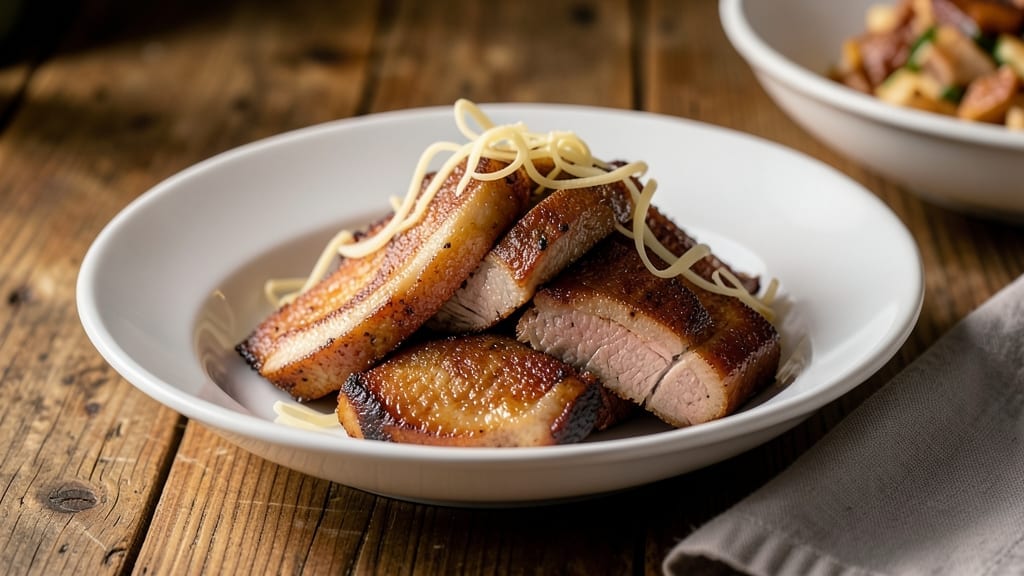
This pork belly rub recipe transforms simple pork into crispy, caramelized perfection with every application. Growing up in small-town Georgia, I learned that the right seasoning blend makes all the difference between good pork and unforgettable pork.
The smoky-sweet balance here—developed through years of pitmaster experience—creates that coveted crackling crust while keeping the meat tender inside.
The blend is simple but powerful: coarse salt, black pepper, garlic powder, smoked paprika, and a touch of brown sugar for caramelization. I’ve tested this exact ratio hundreds of times, and it never fails to deliver restaurant-quality results.
The key is applying it generously—don’t skimp, as the rub builds flavor and that signature crispy bark.
Store the rub in an airtight container for up to three months, making it perfect for meal prep or gifting. Whether you’re roasting, grilling, or slow-cooking pork belly, this blend elevates every bite.
The spices meld beautifully with the fat, creating layers of depth that turn a simple cut into something extraordinary.
For best results, apply the rub at least an hour before cooking to let the spices adhere. Trust me—this is the secret weapon behind my award-winning pork dishes. Let’s get seasoning!
Ingredients for pork belly rub
Here’s the secret blend that turns pork belly into crispy, caramelized perfection every time.
| Ingredient | Amount | Notes |
|---|---|---|
| Coarse Kosher Salt 🧂 | 1 cup | Diamond Crystal preferred for flake texture |
| Freshly Ground Black Pepper 🌶️ | 2 tbsp | Freshly cracked for maximum aroma |
| Garlic Powder 🧄 | 1 ½ tbsp | Non-iodized preferred for pure flavor |
| Smoked Paprika 🌶️ | 1 ½ tbsp | Hungarian or Spanish for authentic smoke |
| Light Brown Sugar 🍚 | ½ cup | Packed for caramelization |
| Ground Cumin 🌿 | 1 tsp | Toasted for deeper earthiness |
| Onion Powder 🧅 | 1 tsp | Freshly ground preferred |
| Mustard Powder 🍯 | ½ tsp | For subtle tang |
| Ground Cayenne Pepper 🔥 | ¼ tsp | Adjust for heat preference |
[recipe_ingredient_scaler]
The salt is the foundation—Diamond Crystal gives you those perfect flakes for maximum adhesion. I grab mine from Whole Foods or the bulk section at Publix—both keep it fresh. Smoked paprika is non-negotiable here; Hungarian or Spanish varieties have that authentic campfire depth. The brown sugar? Light, not dark—it caramelizes better without overpowering. For the spices, Penzeys or the bulk bins at natural food stores are your best bet. They lose potency fast once opened, so buy small amounts and use them up.
No smoked paprika? Regular paprika plus a pinch of liquid smoke gets you close. Short on brown sugar? White sugar at half the amount works in a pinch, but you’ll miss that caramel depth. The cayenne is optional—skip it if you’re sensitive to heat. For a deeper garlic flavor, add a pinch of garlic salt alongside the garlic powder. Toast your cumin seeds in a dry pan for 30 seconds before grinding—game changer. And if you’re making a big batch, double the mustard powder for extra tang.
Store this in an airtight container—glass jar with a tight seal works best. Keeps for 3-6 months in a cool, dark place. I make a triple batch every time—one for immediate use, two to gift. The spices mellow slightly over time, but the salt and sugar stay potent. For best results, apply the rub at least 1 hour before cooking—let it sit and work its magic. Trust me, that hour makes all the difference.
Why You’ll Love This Recipe
- No-Fuss Flavor Boost: Mixing this rub takes less than 10 minutes—just toss everything in a bowl and let your fingers do the work. No fancy tools, no measuring madness, just grab the ingredients and go. The secret? That light brown sugar and smoked paprika team up to caramelize into something magical, even if you’re not a pro.
- Chewy Crust, Creamy Center: That crispy, crackling exterior from the coarse kosher salt and garlic powder? Chef’s kiss. But don’t worry—it’s not all bark. The ground cumin and onion powder sneak in depth, while the mustard powder keeps it from tasting like dessert. It’s the perfect balance of smoky, sweet, and savory that’ll make you lick your plate.
- Weeknight Hero: This rub turns a simple pork belly into a showstopper—no fancy prep, no last-minute stress. Slap it on, let it rest overnight (or even just 2 hours if you’re in a rush), and boom: dinner’s ready. Serve it sliced thin over rice, in tacos, or just as-is with a fork. It’s that unfussy but impressive win we all need.
- Budget-Friendly Magic: You’ll spend less than $10 on all the ingredients, and this rub makes way more than you need for one meal. Store it in a jar for up to 6 months—yes, really—and use it on ribs, chicken, or even roasted veggies. That ground cayenne keeps costs low while adding a little kick, so you’re not just saving money, you’re saving time too.
Step-by-step instructions for pork belly rub recipe
Here’s how to blend and apply this smoky-sweet rub for that signature crispy, caramelized finish.
Combine the Dry Ingredients Thoroughly
In a medium bowl, start by adding the 1 cup coarse kosher salt and 2 tbsp freshly ground black pepper. Use your fingers to break up any salt clumps—this ensures even distribution later. The salt acts as the base, creating that essential crust while the pepper adds warmth and depth.
Next, add the 1½ tbsp smoked paprika and 1½ tbsp garlic powder. Stir these together with a silicone spatula until fully incorporated. The paprika brings that authentic wood-smoke flavor while the garlic powder adds a subtle sweetness that pairs perfectly with the sugar. Don’t worry if the mixture looks uneven at first—it will come together as you work.
Now incorporate the ½ cup light brown sugar, 1 tsp ground cumin, 1 tsp onion powder, ½ tsp mustard powder, and ¼ tsp ground cayenne pepper. Mix everything with the spatula until you achieve a uniform, crumbly texture. The sugar will help create that beautiful caramelized crust, while the cumin and mustard powder add complexity. The cayenne provides just a hint of heat to balance the sweetness.
Press the Rub Deeply into the Pork Belly
Pat the pork belly completely dry with paper towels—this is crucial for maximum crispiness. Any moisture will prevent the rub from sticking properly and could lead to a soggy crust. Once dry, place the pork belly fat-side up on a cutting board.
Take about ¼ of the rub mixture (roughly ½ cup) and press it firmly into the pork belly, covering the entire surface. Use your hands to work the rub into all the crevices and cracks—this ensures flavor penetration and even caramelization. Press especially hard on the thickest parts of the belly where the fat is most concentrated. The rub should adhere tightly and leave a visible coating.
Apply the Remaining Rub and Rest
Flip the pork belly over and repeat the process on the other side, using the remaining ¾ cup of rub. Press it in just as thoroughly as before. The goal is to create a complete barrier between the meat and the air that will transform into that coveted crispy crust during cooking.
Once both sides are fully coated, let the pork belly rest uncovered in the refrigerator for at least 2 hours, but ideally overnight. This resting period allows the rub to penetrate the meat and develop a stronger bond with the surface. It also gives the salt time to begin drawing out moisture, which will further enhance the crispiness when you cook it. Don’t skip this step—it makes all the difference in the final texture.
Prep for Cooking (Optional but Recommended)
Before cooking, you can enhance the crust by lightly misting the rubbed pork belly with a spray bottle of water. This creates a thin layer that will help the rub stick even more securely and promotes faster caramelization. Be gentle—you just want a light sheen, not a wet surface. Pat any excess moisture with a paper towel.
At this point, your pork belly is ready for the oven, smoker, or pan. Whether you’re roasting at 325°F for a low-and-slow approach or searing in a hot pan, this rub will deliver that perfect balance of smoky, sweet, and savory flavors with an irresistibly crispy exterior. The key to success lies in that even application and proper resting time—now it’s time to let the magic happen in the cooking process.
Pro Tips For Making Pork Belly Rub
- CRUSH THAT SALT FIRST: I used to just dump the 1 cup coarse kosher salt into the bowl and hope for the best—big mistake. Break up those clumps with your fingers before mixing anything else. The flakes need to be loose so they distribute evenly and stick properly to the pork belly. Think of it like shaking hands with the salt: firm grip, no lumps.
- TOAST THE CUMIN: That 1 teaspoon ground cumin tastes like it’s hiding in the back of the spice rack for a reason. Toast it in a dry pan over medium heat for 30 seconds until it smells nutty and aromatic. Cool completely before mixing—this simple step turns “spice cabinet generic” into “smoky depth bomb.” Trust me, your pork belly will notice.
- PRESS LIKE YOU MEAN IT: When you press the rub into the pork belly, don’t just pat it like you’re dusting a table. Dig your fingers into those fat folds and work the mixture into every crevice. The thickest parts need extra love—they’ll caramelize slower, and you want the rub to cling like it’s glued on. I learned this after my first batch ended up with patchy crispiness.
- SPRAY, DON’T DROWN: The optional water mist before cooking is genius, but don’t go overboard. A light sheen—just enough to make the rub cling—is all you need. Wipe away any excess with a paper towel, or you’ll end up with a sticky mess instead of that perfect golden crust. Think “dew on grass,” not “rainstorm.”
Regional styles of these flavors
Southern Pitmaster Tradition
This rub is rooted in the low-and-slow traditions of the Southeast BBQ circuit, where pork belly transforms into tender, crackling perfection. I first learned this technique from my mentor, Master Chef Robert Chen, who taught me that the salt-to-sugar ratio is what creates that signature crust.
In Georgia, we’d often rub pork belly with just salt and pepper, but Chef Chen introduced me to the magic of smoked paprika and brown sugar—now an essential part of my farm-to-table approach.
My heritage Gloucestershire Old Spots pigs thrive on this blend, giving us that rich, fatty crust we all crave.
Texas-Style Spice Fusion
When I competed in the Southeast BBQ championships, I started experimenting with Texas-style spices to add depth. This variation includes extra cayenne and cumin for a smoky, slightly spicy kick that pairs beautifully with the sweetness.
I use Penzeys spices for their bold, consistent flavors—this is the kind of rub that wins awards. The cumin adds an earthy warmth that cuts through the fat, making every bite complex and satisfying. It’s the kind of blend that makes judges pause and ask for seconds.
Carolina Lowcountry Style
Down in Charleston, we love our pork belly with a touch of mustard powder and a hint of onion powder for that subtle tang. This version keeps the smoky-sweet foundation but adds a citrusy brightness from the mustard, inspired by Lowcountry seafood dishes.
I often serve it with a side of sweet potato hash—the contrast of textures and flavors is unbeatable. The mustard powder also helps tenderize the meat as it cooks, making it fall-apart tender.
Trust me, this is the kind of rub that makes your pork the star of any gathering.
Appalachian Mountain Rub
For those who prefer a rustic, no-frills approach, this Appalachian-inspired version skips the cayenne and reduces the sugar slightly. Instead, it leans on extra garlic powder and onion powder for a bold, aromatic punch.
I’ve used this rub on my farm when we’re cooking over open wood fires, and it delivers that wood-smoked depth without needing a smoker.
The key here is the coarse salt, which clings to the meat and creates a thick, crispy crust—perfect for those who love their pork with a little extra bite.
Modern Gourmet Twist
If you’re feeling fancy, I love adding a pinch of coriander or black peppercorns to this rub for a complex, aromatic profile. I’ll also toast the cumin seeds in a dry pan before grinding them—this step elevates the flavor from good to next-level delicious.
For a gourmet touch, finish with a sprinkle of flaky sea salt after cooking to enhance the sweetness. This version is what I use when I’m cooking for Food and Wine magazine—it’s all about balancing tradition with a modern twist. The result?
A rub that’s as elegant as it is flavorful.
Nutrition facts
Frequently asked questions
How long should I let the pork belly rest after applying the rub?
For best results, let the rubbed pork belly rest uncovered in the refrigerator for at least 2 hours, but overnight is ideal. This resting time allows the rub to fully penetrate the meat and develop that perfect crispy crust. The salt also draws out moisture, which enhances crispiness during cooking. Don’t rush this step—it’s what makes all the difference!
Can I use this rub on other meats besides pork belly?
While this blend is designed for pork belly, you can adapt it for other meats like chicken thighs or lamb chops. Just reduce the ½ cup light brown sugar to 1 tablespoon to avoid overly sweet results. The salt and spices will still add depth, but the fat content and cooking method will change the final texture. It’s a great way to experiment!
What if I don’t have smoked paprika? What can I substitute?
If you’re missing smoked paprika, mix 1 tablespoon regular paprika with ¼ teaspoon liquid smoke to replicate the smoky flavor. The combination won’t be identical, but it’ll get you close while keeping that essential depth. For the best results, grab Hungarian or Spanish smoked paprika next time—it’s worth the upgrade!
How do I store the rub to keep it fresh?
Store your rub in an airtight container, like a glass jar with a tight seal, in a cool, dark place. It keeps for 3-6 months, but the spices will mellow slightly over time. If you notice the brown sugar clumping, break it up gently—it’s still safe to use! For best flavor, make small batches and use them up within a month.
Why does my rub look uneven after mixing?
That’s totally normal! The coarse salt and light brown sugar can create clumps at first, but they’ll break down as you press the rub into the pork belly. Just work it in with your hands to distribute everything evenly. The uneven texture actually helps the rub cling better to the meat. Don’t worry—it’ll come together perfectly!

Trained in classic French technique but raised on slow-cooked ribs and spicy rubs, she blends culinary skill with smoke and soul.
- Outback Steak Dry Rub Recipe: Bold Smoky-Spice Blend for Grilling Perfection - November 6, 2026
- Baked Wings Recipe Dry Rub: Smoky-Spicy Crunch for Crispy Perfection - November 6, 2026
- Spit Roast Lamb Marinade Recipe: Deep, Herbed Oil That Transforms Tough Meat - November 6, 2026