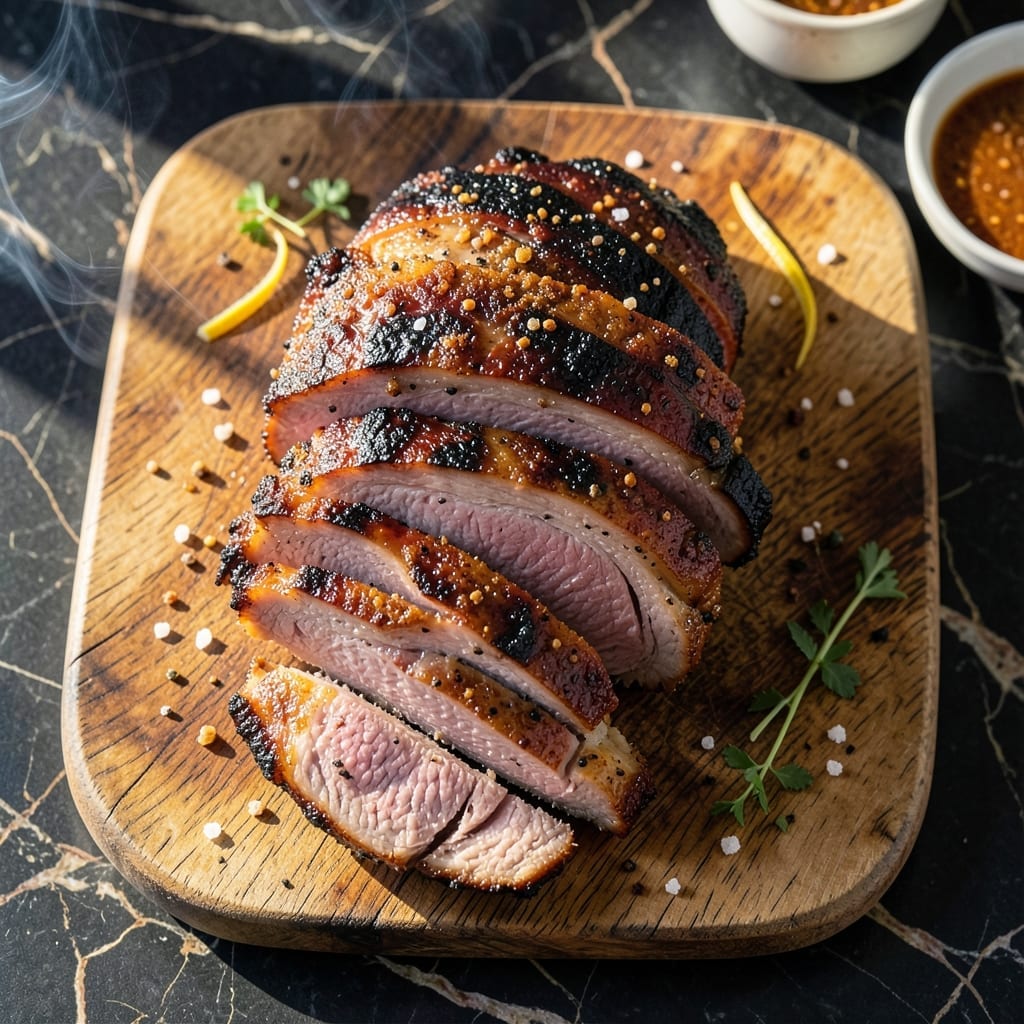
There’s nothing like the aroma of pork shoulder slow-cooking over charcoal, filling the air with smoky promise. My family cookouts always centered around this very technique.
This method delivers pull-apart tenderness with a deep, caramelized bark that forms naturally over hours of careful grilling. The result is worth every minute of patience.
Ingredients for Pork Shoulder Charcoal Grill
Pantry staples plus a trip to the butcher. Nothing exotic, just good quality meat and seasonings.
| Ingredient | Amount | Notes |
|---|---|---|
| Pork Shoulder 🥩 | 4 lb | Bone-in, skin-on preferred |
| Charcoal Briquettes 🔥 | 8 lb | Lump charcoal for best flavor |
| Coarse Kosher Salt 🧂 | 2 tbsp | Diamond Crystal preferred |
| Freshly Ground Black Pepper 🌶️ | 2 tbsp | Coarse grind for bark |
| Light Brown Sugar 💛 | ½ cup | Packed, for caramelization |
| Paprika 🌶️ | 2 tbsp | Sweet or smoked variety |
| Garlic Powder 🧄 | 1 tbsp | Not garlic salt |
| Onion Powder 🧅 | 1 tbsp | Fresh ground preferred |
| Ground Cumin 🌿 | 1 tsp | Toasted for depth |
| Cayenne Pepper 🔥 | ½ tsp | Adjust for heat preference |
| Apple Cider Vinegar 🍏 | ½ cup | For moisture and tang |
| Yellow Mustard 🟡 | ¼ cup | Binder for rub |
| Hickory Wood Chips 🌳 | 2 cups | Soaked in water 1 hour |
| Chicken Stock 🥣 | 1 cup | For spritzing during cook |
[recipe_ingredient_scaler]
The pork shoulder is the star—bone-in, skin-on delivers the best texture and bark. Source from a reputable butcher or Whole Foods for consistent quality. Look for good marbling and a thick fat cap (about 1/4-inch). The charcoal matters too: lump charcoal burns hotter and cleaner than briquettes, though Kingsford works in a pinch for a long cook.
No pork shoulder? Pork butt (same cut, different name) is identical—just confirm it’s from the shoulder. Out of apple cider vinegar? White vinegar at half the amount or beer both work. For the wood chips, cherry or pecan add a sweeter smoke. The rub can be adjusted: swap brown sugar for white or add 1 tsp chipotle powder for extra heat.
Store pork in the fridge for up to 3 days before cooking, or freeze for 6-12 months. Leftover pulled pork keeps 4-5 days refrigerated or 3 months frozen. Reheat gently with a splash of stock to keep it moist.
Why You’ll Love This Recipe
- Set It and Forget: I rub the pork with salt, pepper, and brown sugar, then let the charcoal do the work—no babysitting required.
- Smoky Sweet Crust: The brown sugar caramelizes over the coals, giving every bite that perfect charred-sweet balance.
- Feeds a Crowd: One shoulder stretches to sandwiches, tacos, or plates for eight, so I always have leftovers for lunch.
- Budget Hero: Honestly, pork shoulder is cheap, and a little charcoal goes a long way for a meal that feels fancy.
Step-by-Step Instructions for Pork Shoulder on a Charcoal Grill
Master the technique for fall-apart meat with a deep mahogany bark using this method.
Step 1: Prepare and Season the Pork Shoulder
Pat the 4 lb Pork Shoulder dry with paper towels to ensure the rub adheres properly. In a bowl, combine the 2 tbsp Coarse Kosher Salt, 2 tbsp Freshly Ground Black Pepper, 0.5 cup Light Brown Sugar, 2 tbsp Paprika, 1 tbsp Garlic Powder, 1 tbsp Onion Powder, 1 tsp Ground Cumin, and 0.5 tsp Cayenne Pepper.
Rub the spice mixture evenly over all surfaces of the pork, pressing firmly to create a crust. For extra adhesion, first coat the pork with the 0.25 cup Yellow Mustard—it acts as a binder without adding flavor. Let the seasoned pork rest at room temperature for 30-45 minutes while you prepare the grill.
Step 2: Set Up the Charcoal Grill for Indirect Heat
Arrange the 8 lb Charcoal Briquettes in a two-zone fire: pile the coals on one side of the grill for direct heat, leaving the other side empty for indirect cooking. Soak the 2 cups Hickory Wood Chips in water for 1 hour, then drain and scatter them over the hot coals to generate smoke.
Place a disposable aluminum pan filled with 1 cup Chicken Stock on the indirect heat side. This pan serves dual purposes: it catches drippings and adds moisture to the cooking environment. Maintain the grill temperature at 275-300°F by adjusting the vents—this low-and-slow approach is critical for tender results.
Once the grill stabilizes at the target temperature and you see thin blue smoke, you’re ready to cook. The smoke should be consistent but not overpowering; white smoke indicates the wood isn’t burning cleanly.
Step 3: Smoke the Pork Shoulder to Perfection
Place the pork shoulder on the indirect heat side of the grill, fat-side up. Insert a meat probe into the thickest part of the pork, avoiding the bone. Close the lid and cook undisturbed for 3-4 hours, or until the internal temperature reaches 160-165°F.
Every 45-60 minutes, spritz the pork with the 0.5 cup Apple Cider Vinegar to keep the surface moist and enhance bark formation. If the temperature in the grill begins to drop, add 5-6 Charcoal Briquettes to the fire to maintain consistent heat. Resist the urge to peek frequently—each time you open the lid, you lose heat and smoke.
Step 4: Wrap and Finish the Cook
When the pork reaches 165°F, it will likely stall as moisture evaporates from the surface. Wrap the pork tightly in pink butcher paper or heavy-duty foil, then return it to the grill. This step, known as the “Texas crutch,” helps push through the stall while preserving moisture.
Continue cooking until the internal temperature reaches 200-203°F, which may take another 2-3 hours. The pork is done when a probe slides into the meat with no resistance, like butter. Transfer the wrapped pork to a clean towel-lined cooler or insulated container to rest for 1-2 hours—this resting period is essential for juiciness.
Step 5: Shred and Serve
Unwrap the pork and transfer it to a large cutting board or serving platter. Using two forks or meat claws, shred the pork into desired sizes, discarding any large fat chunks or bone. The meat should pull apart effortlessly, with a dark, caramelized bark on the exterior.
Serve immediately while warm, allowing guests to dress their portions with additional sauce or vinegar as desired. The result should be tender, smoky, and rich, with a perfect balance of spice and sweetness from the rub.
Pro Tips For Making Pork Shoulder Charcoal Grill
- Start Low, Finish Slow: I learned this the hard way—pork shoulder needs 225-250°F for 6-8 hours on the grill, not hotter. Cranking the heat early just dries it out before the collagen breaks down.
- Dry the Shoulder: Pat the pork shoulder bone-dry with paper towels before seasoning. Sounds tedious, but it makes the salt and sugar stick and forms a better bark.
- Skip the Lid Peeking: Resist the urge to check the meat every hour. Every time you lift the lid, you lose 50°F and add 30 minutes to your cook time.
- Use a Drip Pan: Place a disposable aluminum pan under the pork to catch drippings. Not only does it prevent flare-ups, but you can reuse the juices for a quick sauce.
Essential Equipment for Great pork shoulder charcoal grill
Charcoal Grill Essentials
For this cook, you need a kettle grill with good heat retention—I’ve had great results with the Weber Original 22-inch. Its vent system gives precise temperature control, which is crucial for maintaining 275-300°F over hours. A smaller grill will struggle with heat consistency. 🔥
Temperature Control Tools
A dual-probe thermometer is non-negotiable. I use the ThermoWorks Smoke to monitor both grill and meat temps simultaneously. The probe alerts let me adjust vents without opening the lid, preserving that precious smoke. Never guess with pork shoulder—accuracy matters.
Fuel and Smoke
Lump charcoal burns cleaner than briquettes, but Kingsford works for long cooks. Always use hickory or pecan wood chunks (soaked 1 hour) for that classic smoke flavor. I keep a chimney starter handy for adding fresh coals during the cook.
Resting Equipment
After pulling from the grill, rest your pork in a towel-lined cooler for 1-2 hours. This keeps it hot while juices redistribute. I use an old Coleman cooler—it’s the perfect size for a 4 lb shoulder. Skip this step and you’ll lose moisture to the cutting board.
Serving Tools
Invest in heat-resistant gloves for handling wrapped pork and meat claws for shredding. I also keep a large cutting board (at least 18×12 inches) dedicated to smoked meats. These small tools make the final steps effortless and safe.
Nutrition Facts
Frequently Asked Questions
What’s the ideal grill temperature for this cook?
Maintain a steady 275-300°F throughout. This low-and-slow range ensures collagen breaks down without drying out the meat. Use your grill vents to fine-tune the heat.
Can I use a gas grill instead of charcoal?
Yes, but you’ll miss the smoky depth. Add wood chips in a smoker box and keep the temperature at 275°F. Charcoal still delivers the best flavor for this method.
How do I prevent the pork from drying out?
Spritz with apple cider vinegar every 45-60 minutes and wrap in butcher paper at 165°F. Resting for 1-2 hours after cooking locks in juices.
When is the pork done?
It’s ready at 200-203°F internal temp, when a probe slides in like butter. Don’t rely on time alone—always use a meat thermometer.

Trained in classic French technique but raised on slow-cooked ribs and spicy rubs, she blends culinary skill with smoke and soul.
- Recipe for Fried Prawns Batter: Ultra-Crispy Golden Shell - October 3, 2026
- Indian Lamb Curry Recipe Pressure Cooker: Fragrant Spices in a Fraction of the Time - October 3, 2026
- Recipe for Oven Roasted: Golden Crisp Perfection Without the Fryer - October 3, 2026