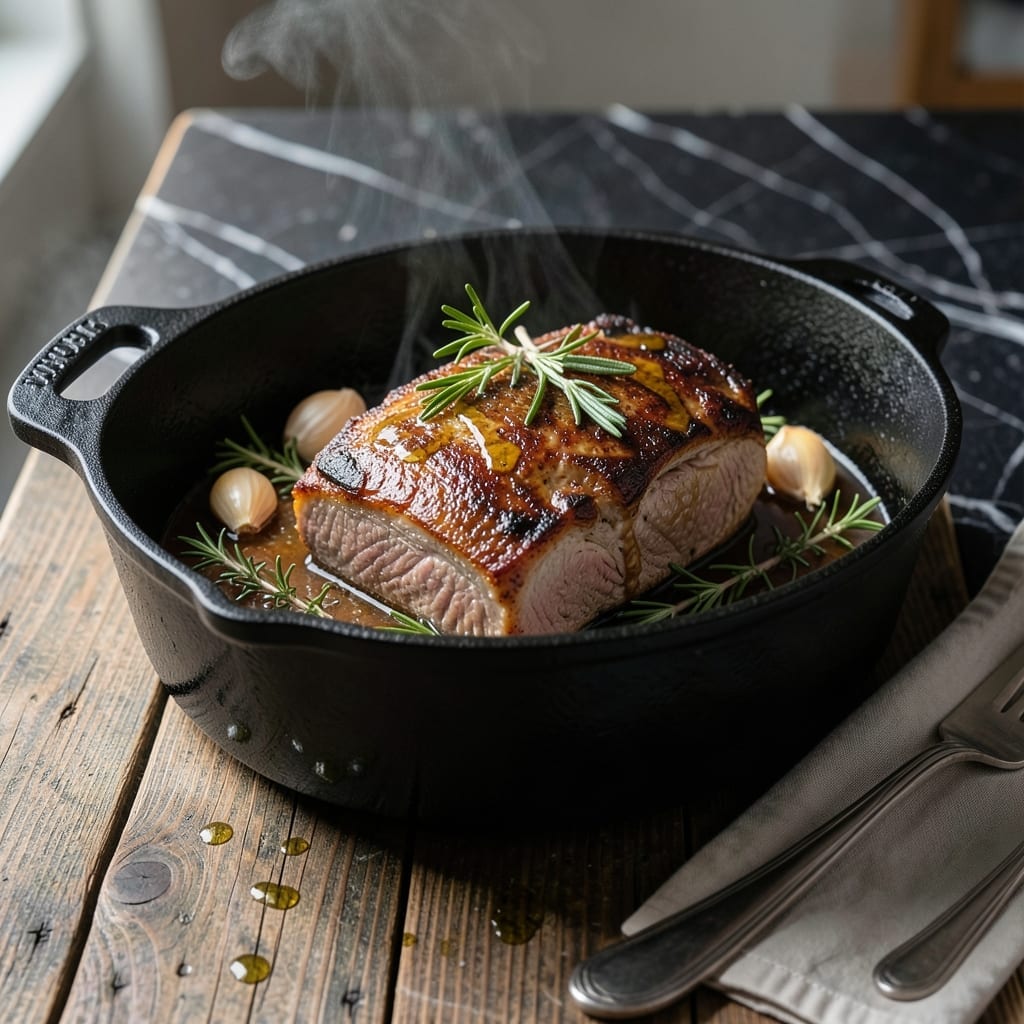
This Dutch oven method transforms pork sirloin into a fork-tender masterpiece with minimal effort. The even heat distribution and tight seal create the perfect environment for slow roasting, ensuring juicy, flavorful meat every time.
I developed this technique after years of experimenting with different cooking methods. A simple herb crust adds depth without overpowering the natural pork flavor, while the Dutch oven locks in moisture for that ideal texture.
The result is a centerpiece worthy of any dinner table—herb-crusted on the outside, impossibly tender within. The aroma alone will have your family gathering in the kitchen before it’s even done.
Serve with roasted vegetables or mashed potatoes to soak up the savory juices. This approach delivers consistent results that will make you a home cooking hero.
Ingredients for Pork Sirloin Roast Recipe Dutch Oven
A few fresh herbs and pantry staples create this herb-crusted, fork-tender pork masterpiece.
| Ingredient | Amount | Notes |
|---|---|---|
| Pork Sirloin Roast 🥩 | 2 ½ lb | Boneless, trimmed of excess fat |
| Kosher Salt 🧂 | 1 ½ tsp | Diamond Crystal preferred for even seasoning |
| Freshly Ground Black Pepper 🌶️ | 1 tsp | Coarse grind for texture |
| Fresh Rosemary 🌿 | 2 tbsp | Chopped, stems removed |
| Fresh Thyme 🍃 | 2 tbsp | Chopped, stems removed |
| Garlic Cloves 🧄 | 6 cloves | Minced for herb crust |
| Olive Oil 🫒 | 2 tbsp | Extra-virgin for richness |
| Dijon Mustard 🟡 | 1 tbsp | Smooth variety for binding |
| Low-Sodium Chicken Broth 🥣 | 1 cup | For braising liquid |
| Dry White Wine 🍷 | ½ cup | Sauvignon Blanc or Pinot Grigio |
| Yellow Onion 🧅 | 1 whole | Large, rough chopped |
| Carrots 🥕 | 3 whole | Peeled, cut into chunks |
| Celery Stalks 🥬 | 2 whole | Cut into large pieces |
[recipe_ingredient_scaler]
The pork sirloin is the star here—look for a well-marbled piece at Whole Foods or your local butcher. 2.5 pounds feeds four with leftovers (trust me, you’ll want them). If buying pre-packaged, check the sell-by date—pork doesn’t keep as long as beef. The fresh herbs are non-negotiable for the crust; dried just won’t cut it. Trader Joe’s has great bundles of rosemary and thyme if your garden isn’t cooperating.
No white wine? Substitute apple cider or additional broth—just add a squeeze of lemon for brightness. Fresh out of Dijon? Whole-grain mustard works, but the texture will be slightly different. For the broth, Better Than Bouillon paste makes a rich base if you’re not using homemade. The veggies can be swapped for whatever you’ve got—potatoes, parsnips, or even fennel play nice here.
Leftovers keep beautifully in the fridge for 4-5 days or freeze for 3 months. Slice before storing so it reheats evenly. The herb crust softens when refrigerated, but a quick broil brings it back to life (worth the extra minute).
Why You’ll Love This Recipe
- One Pot Magic: I just love how the Dutch oven does all the work—sears the pork, locks in juices, and fills my kitchen with rosemary and thyme while I sip coffee.
- Herb Crust Perfection: That crispy rosemary-thyme crust on the sirloin? Honestly, it’s the reason my family lingers at the table.
- Sunday to Thursday: This roast is my Sunday dinner star, but leftovers make killer sandwiches for lunch all week long.
- Budget Friendly Feast: A pork sirloin roast feeds my whole crew for less than takeout, and the Dutch oven means I’m not scrubbing pans for hours.
Step-by-Step Instructions for Herb-Crusted Pork Sirloin Roast in a Dutch Oven
Here’s the method I use for fork-tender results every single time.
Step 1: Sear the Pork Sirloin Roast to Lock in Flavors
Pat the 2.5 lb Pork Sirloin Roast dry with paper towels, then season it evenly with the 1.5 tsp Kosher Salt and 1 tsp Freshly Ground Black Pepper. Heat the 2 tbsp Olive Oil in your Dutch oven over medium-high heat until shimmering.
Sear the roast on all sides for 2-3 minutes per side until deeply browned. This creates a flavorful crust that will enhance the final dish. Don’t rush this step—you want a rich, golden-brown color on every surface.
Step 2: Create the Herb Crust and Aromatic Base
While the roast sears, combine the 2 tbsp Fresh Rosemary, 2 tbsp Fresh Thyme, and 6 cloves Garlic Cloves in a small bowl. Stir in the 1 tbsp Dijon Mustard to create a thick paste.
Once the roast is seared, remove it from the Dutch oven and set it aside. Reduce the heat to medium, then add the 1 whole Yellow Onion, 3 whole Carrots, and 2 whole Celery Stalks to the pot. Cook for 3-4 minutes, stirring occasionally, until the vegetables begin to soften and develop color.
Step 3: Deglaze and Braise the Roast
Pour in the 0.5 cup Dry White Wine to deglaze the pot, scraping up any browned bits from the bottom. Let it simmer for 2 minutes until the liquid reduces slightly. This step ensures you capture all the flavor from the searing process.
Return the roast to the Dutch oven and spread the herb paste evenly over the top. Pour in the 1 cup Low-Sodium Chicken Broth. Cover with the lid and transfer to a preheated 325°F oven.
Step 4: Slow Cook to Fork-Tender Perfection
Braise the roast for 2 to 2.5 hours, turning it halfway through the cooking time. You’ll know it’s done when the internal temperature reaches 195-200°F and a fork slides in with no resistance.
Check the liquid level occasionally—if it reduces too much, add a splash of water or additional broth to keep the pan from drying out. The vegetables should be tender and infused with the rich flavors of the wine and herbs.
Remove the Dutch oven from the oven and let the roast rest, covered, for 15 minutes before slicing. This resting period allows the juices to redistribute, ensuring every bite is moist and tender.
Pro Tips For Making Pork Sirloin Roast Recipe Dutch Oven
- Sear It Hot: Crank the heat to medium-high for the initial sear—this builds a deep crust on the sirloin that locks in flavor. I used to rush this part and ended up with pale, sad meat.
- Score the Fat: Make shallow cuts in a crosshatch pattern across the fat cap before seasoning. Sounds weird, but it works: the rendering fat bastes the roast as it cooks.
- Rest Under Foil: Let the roast rest for at least 15 minutes under loose foil after pulling it from the Dutch oven. My grandmother swore by this, and she was right: it keeps the juices from fleeing the moment you slice.
- Use Fresh Herbs: Don’t substitute dried rosemary or thyme here—the fresh sprigs bruised lightly between your fingers release oils that dried just can’t match. I learned this the hard way after a few lackluster roasts.
Dietary Considerations for These Flavors
Gluten-Free Friendly
This Dutch oven recipe is naturally gluten-free as written—no flour or breadcrumbs in the herb crust. Just verify your Dijon mustard is certified gluten-free, as some brands add wheat as a thickener. I always check labels at New Seasons Market. 💪
Low-Carb Option
With only 3g net carbs per serving from the vegetables, this fits perfectly into low-carb or keto diets. Skip the wine if you’re strict keto, and replace with extra chicken broth. The pork itself has zero carbs, making it ideal for carb-conscious eaters.
Dairy-Free Naturally
There’s no dairy in this recipe, so it’s safe for lactose-intolerant folks. The olive oil and herb crust provide all the richness you need. Even the braising liquid is dairy-free, so no substitutions are necessary.
Lower-Sodium Adaptation
To reduce sodium, use low-sodium chicken broth and cut the kosher salt to 1 tsp. The fresh herbs and garlic still pack plenty of flavor. I often make this adjustment when cooking for my dad, who watches his sodium intake. 💡
Paleo-Friendly Tweaks
This recipe is nearly paleo already. Just confirm your Dijon mustard has no added sugar or preservatives. I like Primal Kitchen brand for paleo compliance. The pork, herbs, and vegetables all align with paleo guidelines.
Nut Allergy Safe
Completely nut-free as written. The only potential concern would be cross-contamination in your Dutch oven if you’ve previously cooked nut-based dishes. A thorough wash with hot, soapy water eliminates this risk.
Nutrition Facts
Frequently Asked Questions
What internal temperature should the roast reach?
Cook until it hits 195-200°F internally. This ensures the connective tissue breaks down for that melt-in-your-mouth texture. A meat thermometer is your best friend here.
Can I use a different cut of pork?
Pork shoulder works well, but will need 30-45 minutes longer to become tender. Avoid lean cuts like tenderloin—they’ll dry out during the long braise.
How do I know when it’s done without a thermometer?
Pierce with a fork—if it slides in with no resistance, it’s ready. The meat should pull apart easily when tested with two forks.
Can I make this on the stovetop instead?
Yes, maintain a gentle simmer on the stovetop for 2-2.5 hours. Check liquid levels more often as they evaporate faster than in the oven.

Trained in classic French technique but raised on slow-cooked ribs and spicy rubs, she blends culinary skill with smoke and soul.
- Meat and Potato Recipe Ideas: Savory Pairings for Hearty Meals - October 3, 2026
- Recipe for Fried Prawns Batter: Ultra-Crispy Golden Shell - October 3, 2026
- Indian Lamb Curry Recipe Pressure Cooker: Fragrant Spices in a Fraction of the Time - October 3, 2026