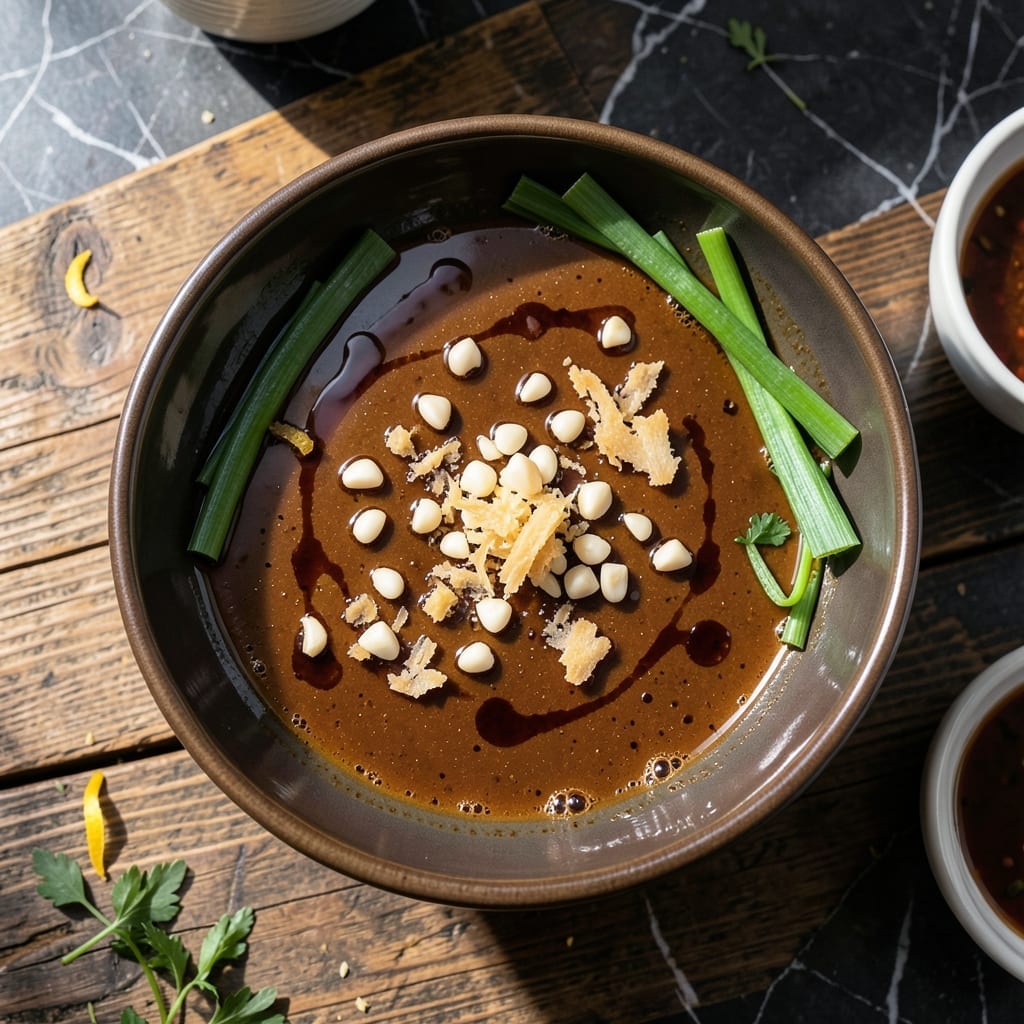
This marinade transforms ordinary pork spare ribs into a flavor-packed masterpiece with minimal effort. My French training taught me that proper marinating is about balance, and this blend delivers that with every ingredient working in harmony.
The combination of soy sauce, garlic, and fresh ginger creates a bold base, while honey and rice vinegar add layers of sweetness and tang. A touch of sesame oil ties everything together, giving the ribs that unmistakable Asian-inspired depth.
What you’ll get is a marinade that penetrates deep into the meat, ensuring every bite is infused with complex flavors. It’s simple to prepare but delivers results that taste anything but ordinary.
Perfect for overnight marination or quick flavor boosts before grilling. This is the kind of recipe that elevates your cooking without complicating it.
Ingredients for Pork Spare Rib Marinade
Nine bold ingredients create this flavor-packed marinade with minimal effort required.
| Ingredient | Amount | Notes |
|---|---|---|
| Soy Sauce 🫒 | ¾ cup | Low-sodium for balance control |
| Garlic Cloves 🧄 | 6 cloves | Minced for maximum infusion |
| Fresh Ginger 🌿 | 2 tbsp | Finely grated for even distribution |
| Honey 🍯 | ¼ cup | Raw or pure for depth |
| Rice Vinegar 🍚 | ¼ cup | Unseasoned variety preferred |
| Sesame Oil 🫒 | 2 tbsp | Toasted for nutty aroma |
| Brown Sugar 🍚 | 2 tbsp | Light or dark, packed |
| Sriracha 🌶️ | 1 tbsp | Adjust to heat preference |
| Green Onions 🧅 | 4 whole | Thinly sliced for garnish |
[recipe_ingredient_scaler]
The soy sauce is your foundation here. Kikkoman low-sodium lets you control the salt level without sacrificing depth. Fresh ginger and garlic are non-negotiable—look for firm roots and plump cloves at Whole Foods or your local Asian market. The honey should be raw if possible (that dark amber color means more complex flavor). Don’t skip the sesame oil; Kadokawa brand has the best toasted aroma I’ve found.
Out of rice vinegar? Apple cider vinegar in a pinch—just cut back by 25% since it’s stronger. No honey? Maple syrup at equal volume works, though it’s slightly thinner. Sriracha too spicy? Gochujang at half the amount gives heat with depth. The brown sugar can be swapped for coconut sugar (same quantity), but it’ll change the color slightly. Green onions? Chives work if that’s what you’ve got growing.
This marinade keeps 5 days in the fridge, but the garlic and ginger flavors intensify after 24 hours. Freeze in ice cube trays for up to 3 months—perfect for portioning. Always shake before using as the honey settles. Don’t leave ribs marinating beyond 48 hours or the texture suffers.
Why You’ll Love This Recipe
- 5-Minute Mix: I just dump soy sauce, honey, and rice vinegar in a bowl with minced garlic and ginger—no fancy steps, no stress.
- Sticky Sweet Heat: The honey caramelizes while the garlic and ginger bite back, creating that can’t-stop-eating flavor on every rib.
- Grill or Oven Flex: I’ve used this marinade for weeknight dinners, backyard BBQs, and even meal prep—works every time.
- Doubles as Sauce: I always make extra because the leftover marinade simmers into a glossy glaze that’s too good to waste.
Step-by-Step Instructions for Pork Spare Rib Marinade
This method guarantees maximum flavor penetration with a perfect balance of sweet, savory, and spicy notes.
Step 1: Combine Liquid Foundation
In a large mixing bowl, whisk together the 0.75 cup Soy Sauce, 0.25 cup Honey, and 0.25 cup Rice Vinegar until the honey fully dissolves. I prefer using low-sodium soy sauce here to control the saltiness—this lets the other flavors shine without overpowering.
The vinegar’s acidity will help tenderize the pork while balancing the sweetness of the honey. You’ll notice the mixture starts to look slightly syrupy as the honey incorporates completely.
Step 2: Incorporate Aromatics and Heat
Add the 6 cloves Garlic Cloves (minced), 2 tbsp Fresh Ginger (finely grated), and 1 tbsp Sriracha to the bowl. The finely grated ginger ensures even distribution throughout the marinade, while the minced garlic releases its full flavor potential.
Stir in the 2 tbsp Sesame Oil and 2 tbsp Brown Sugar, packing the brown sugar firmly into the measuring spoon. The sesame oil adds a deep, nutty aroma that complements the Asian-inspired profile. The brown sugar will dissolve completely as you whisk vigorously for about 30 seconds.
Step 3: Finish with Fresh Elements
Thinly slice the 4 whole Green Onions and add them to the mixture. I save this step for last to preserve their fresh, crisp texture. The green onions will infuse a mild oniony flavor while adding a pop of color to the marinade.
Give everything a final stir to combine. The marinade should have a glossy appearance with visible specks of garlic, ginger, and green onions. This is your sign that all ingredients are properly incorporated and ready to work their magic on the ribs.
Step 4: Apply and Marinate
Place your pork spare ribs in a large resealable plastic bag or shallow dish. Pour the marinade over the ribs, ensuring every surface is coated. Massage the marinade into the meat for 1-2 minutes to help it penetrate deeply.
Seal or cover and refrigerate for at least 4 hours, though I recommend overnight for maximum flavor infusion. The longer the ribs marinate, the more tender and flavorful they’ll become. Turn the ribs occasionally during marination to ensure even coverage.
Pro Tips For Making Pork Spare Rib Marinade
- Marinate Overnight: I learned this the hard way—pork spare ribs need at least 8 hours in the soy-honey marinade to really soak up the flavor, and 12-24 hours actually changes the outcome.
- Grate the Ginger: Fresh ginger is non-negotiable here, but grating it instead of mincing releases way more of its punch into the marinade.
- Skip the Metal Bowl: After my vinegar-based marinade turned a weird color in a metal bowl, I switched to glass or plastic—no more off flavors or reactions.
- Warm the Honey: Sounds weird, but it works: warm the honey for 10 seconds in the microwave so it blends smoothly into the soy and vinegar instead of clumping.
Flavor Customization for This Recipe
Spice It Up
For extra heat, add 1 additional tbsp Sriracha or swap in 1 tsp gochugaru (Korean red pepper flakes) for a deeper, smokier spice. I forage wild chili peppers on my coastal rides and sometimes add a minced one for a personal touch. 🌶️
Sweet Variations
Replace honey with maple syrup or agave nectar at equal volume for a different sweetness profile. Pineapple juice (¼ cup) adds tropical brightness and natural enzymes that tenderize the meat further.
Umami Boost
Add 1 tbsp oyster sauce or 1 tsp fish sauce for an extra layer of savory depth. A splash of 1 tbsp hoisin sauce introduces a rich, slightly sweet complexity. I pick these up at my local Asian market for authentic flavors.
Herb Infusion
Stir in 2 tbsp chopped cilantro or 1 tbsp fresh thyme leaves for a fresh herbal note. I often use wild herbs I forage, like lemongrass or kaffir lime leaves, finely minced for a unique twist.
Citrus Twist
Incorporate zest and juice of 1 lime or 1 tbsp orange juice to brighten the marinade. The acidity balances the richness and adds a zesty kick. This works especially well for grilling.
Smoky Depth
For a barbecue-inspired touch, mix in 1 tsp smoked paprika or ½ tsp liquid smoke. This gives the ribs a subtle smokiness without needing a smoker. 💡
Nutrition Facts
Frequently Asked Questions
How long should I marinate the ribs?
For best results, marinate for at least 4 hours, but overnight is ideal. This allows the flavors to fully penetrate the meat. Avoid marinating longer than 48 hours, as the acidity can start to break down the meat texture.
Can I use this marinade for other meats?
This works beautifully with chicken, beef, or even tofu. For poultry, reduce marinating time to 2-4 hours to prevent over-tenderizing. The bold flavors complement a variety of proteins.
What if I don’t have rice vinegar?
You can substitute with apple cider vinegar—just use 25% less since it’s stronger. White vinegar works in a pinch too, though it lacks the mild sweetness of rice vinegar.

Trained in classic French technique but raised on slow-cooked ribs and spicy rubs, she blends culinary skill with smoke and soul.
- Meat and Potato Recipe Ideas: Savory Pairings for Hearty Meals - October 3, 2026
- Recipe for Fried Prawns Batter: Ultra-Crispy Golden Shell - October 3, 2026
- Indian Lamb Curry Recipe Pressure Cooker: Fragrant Spices in a Fraction of the Time - October 3, 2026