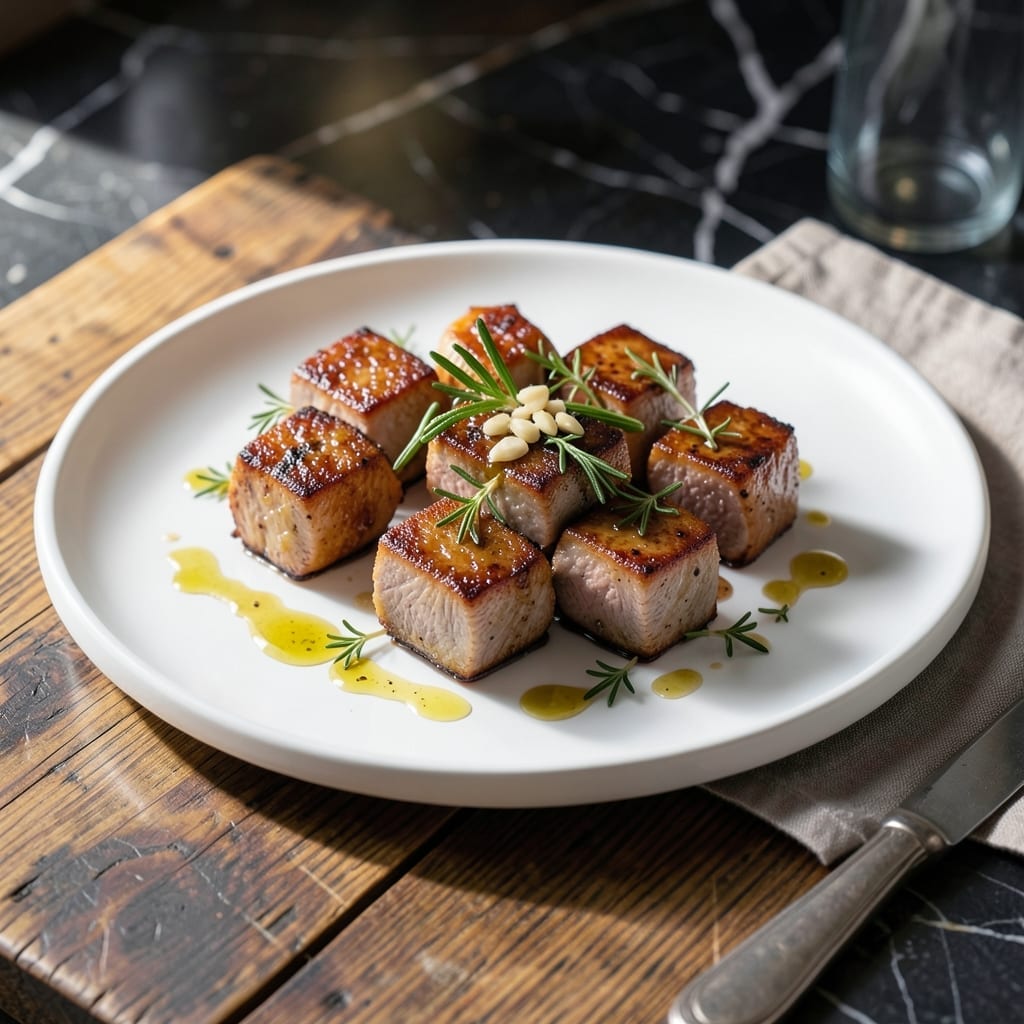
This recipe transforms pork tenderloin into tender bites bursting with garlic-herb flavor. I developed this method after years of perfecting my technique at local BBQ competitions.
Simple ingredients and precise cooking deliver restaurant-quality results every time. The garlic-herb infusion penetrates deep, creating juicy, flavorful pork that’s impossible to resist.
Ingredients for Pork Tenderloin Tips
Transform pork tenderloin with these precise ingredients for competition-level flavor and texture.
| Ingredient | Amount | Notes |
|---|---|---|
| Pork Tenderloin 🥩 | 1 ½ lb | Trimmed of silver skin |
| Garlic Cloves 🧄 | 6 cloves | Minced finely for infusion |
| Fresh Rosemary 🌿 | 2 tbsp | Finely chopped, stems discarded |
| Fresh Thyme 🍃 | 2 tbsp | Leaves stripped from stems |
| Olive Oil 🫒 | ¼ cup | Extra-virgin for best flavor |
| Kosher Salt 🧂 | 1 ½ tsp | Diamond Crystal preferred |
| Black Pepper 🌶️ | 1 tsp | Freshly ground for potency |
| Dijon Mustard 🟡 | 1 tbsp | Smooth variety required |
| Red Wine Vinegar 💧 | 1 tbsp | Balances richness of pork |
| Honey 🍯 | 1 tbsp | For subtle sweetness |
| Soy Sauce 🫕 | 1 tbsp | Low-sodium to control salt |
| Butter 🧈 | 2 tbsp | Unsalted for finishing |
[recipe_ingredient_scaler]
The pork tenderloin must be fresh and uniform in thickness for even cooking. Whole Foods and Costco carry high-quality options with minimal waste. Look for pieces that are pale pink with a fine grain—avoid any with dark spots or an off odor. The silver skin removal is critical; a sharp fillet knife makes quick work of it. For the herbs, organic rosemary and thyme from the produce section offer superior aroma compared to dried.
Out of fresh rosemary? Dried rosemary at one-third the amount works, but crush it between your fingers to release the oils. No Dijon mustard? Whole-grain mustard adds texture but keeps the tang. For a deeper umami note, swap soy sauce for coconut aminos. If avoiding alcohol, substitute apple cider vinegar for the red wine vinegar. The honey can be replaced with maple syrup if needed.
The garlic-herb mixture can be prepped 1 day ahead and refrigerated. Cooked pork keeps in the fridge for 3-4 days or freezes beautifully for 2-3 months. Slice just before serving to retain juices—this dish doesn’t suffer from a brief rest under foil.
Why You’ll Love This Recipe
- One Pan Wonder: I toss everything on a single sheet pan—pork, garlic, rosemary, thyme—and let the oven do the work.
- Garlic-Herb Magic: The rosemary and thyme with roasted garlic give it that restaurant-quality depth without the fuss.
- Weeknight Lifesaver: Between us, this is my go-to for busy evenings when I need something fast but impressive.
- Leftovers? Yes Please: The flavors only get better the next day, and it reheats beautifully for lunch.
Step-by-Step Instructions for Pork Tenderloin Tips
Follow this method precisely for fork-tender results with maximum flavor infusion.
Step 1: Prepare and Marinate the Pork Tenderloin
Pat the 1.5 lb Pork Tenderloin completely dry with paper towels. Trim any remaining silver skin or excess fat. Cut the tenderloin into 1-inch cubes, ensuring uniform pieces for even cooking.
In a large bowl, whisk together the 0.25 cup Olive Oil, 1 tbsp Dijon Mustard, 1 tbsp Red Wine Vinegar, 1 tbsp Honey, and 1 tbsp Soy Sauce until smooth. Add the 6 cloves Garlic Cloves (minced), 2 tbsp Fresh Rosemary (chopped), and 2 tbsp Fresh Thyme (leaves only).
Add the pork cubes to the marinade and toss to coat evenly. Season with 1.5 tsp Kosher Salt and 1 tsp Black Pepper, ensuring all pieces are well covered. Cover and refrigerate for at least 2 hours or overnight for deeper flavor penetration.
Step 2: Sear the Pork to Lock in Juices
Remove the pork from the marinade, allowing excess to drip off, but do not discard the marinade. Heat a large, heavy skillet over medium-high heat. Once hot, add the pork in a single layer, working in batches if necessary to avoid crowding.
Sear undisturbed for 2-3 minutes per side until deep golden brown and caramelized. The pork should release easily from the pan when ready to flip. Transfer the seared pork to a plate and set aside.
Step 3: Deglaze and Finish with a Glossy Sauce
Reduce the heat to medium and pour the reserved marinade into the skillet. Add the 2 tbsp Butter and stir, scraping up any browned bits from the bottom of the pan. Let the sauce simmer for 2-3 minutes until it thickens slightly and becomes glossy.
Return the seared pork to the skillet and toss to coat in the sauce. Cook for an additional 3-4 minutes, stirring occasionally, until the pork reaches an internal temperature of 145°F and the sauce clings to each piece.
Step 4: Rest and Serve
Transfer the pork and sauce to a serving dish. Tent loosely with foil and let rest for 5-10 minutes. This allows the juices to redistribute, ensuring each bite is succulent and tender.
Serve warm, spooning extra sauce over the top. The pork should be juicy with a caramelized exterior, and the sauce should be rich, aromatic, and balanced with a touch of sweetness and acidity.
Pro Tips For Making Pork Tenderloin Tips
- Sear Fast, Finish Slow: I learned this the hard way—blast the pork tips over high heat first to get that caramelized crust, then drop the temperature to medium-low so the garlic and herbs infuse without burning.
- Trim the Silver Skin: That tough membrane on the tenderloin won’t break down no matter how long you cook it, so slice it off before cubing—your pork will be noticeably more tender.
- Crush the Garlic: Skip the mincing and smash the cloves with the flat of your knife instead; they’ll release more flavor into the oil and won’t scorch as easily.
- Use a Meat Thermometer: After pulling a few batches out too dry, I finally started checking for 145°F internally—pork tips go from perfect to overdone in seconds.
Serving Suggestions for This pork tenderloin tips
Plating Presentation
Arrange the 1-inch pork cubes on a warm platter, slightly overlapping for visual appeal. Drizzle the glossy garlic-herb sauce generously over the top, letting it pool in the crevices. Garnish with a sprinkle of fresh thyme leaves for color contrast and that coastal herb aroma I love. 💛
Side Dish Pairings
Serve with creamy mashed potatoes to soak up the rich sauce. I also love roasted asparagus spears—toss them with 1 tbsp olive oil and ¼ tsp kosher salt before roasting at 400°F for 12 minutes. The bright green complements the golden pork beautifully.
Bread Options
A crusty baguette or sourdough from my local bakery is perfect for mopping up every last drop of sauce. For a BBQ-inspired twist, serve with cornbread muffins—the sweetness pairs wonderfully with the savory pork. I always grab mine from the farmers market.
Beverage Matches
A crisp Sauvignon Blanc with its citrus notes cuts through the richness. For beer lovers, a pale ale offers enough bitterness to balance the dish. I personally love a dry rosé when I’m feeling fancy—it brings out the herb flavors. 🍷
Garnish Touches
Add a final drizzle of high-quality olive oil and a pinch of flaky sea salt just before serving. For extra flair, place a few fresh rosemary sprigs on the platter. These small details elevate the dish from great to memorable.
Nutrition Facts
Frequently Asked Questions
What’s the best way to cut the tenderloin evenly?
Use a sharp chef’s knife to slice the trimmed tenderloin into 1-inch cubes. Chill it for 20 minutes first for cleaner cuts. Uniform pieces ensure even cooking and consistent texture.
Can I marinate it longer than overnight?
Stick to 24 hours max. The acid in vinegar and mustard can start to break down the meat, making it mushy. For deepest flavor, 12-24 hours is ideal.
How do I know when it’s done without a thermometer?
Press a piece with tongs—it should feel firm but still yield slightly. The interior will change from translucent to opaque. For safety, always aim for 145°F.
Can I use dried herbs instead of fresh?
Yes, but reduce the amount to 2 tsp each and rub between your fingers to release oils. Fresh herbs provide brighter flavor, but dried work in a pinch.

Trained in classic French technique but raised on slow-cooked ribs and spicy rubs, she blends culinary skill with smoke and soul.
- Recipe for French Pork Spread Gorton: Savory Gallic Flavors in a Spreadable Delight - October 3, 2026
- Recipe for Pan Fried: Golden Crust with Savory Depth - October 3, 2026
- Recipe For Fried Chicken In A Pressure Cooker: Crispy Golden Bites in Half the Time - October 3, 2026