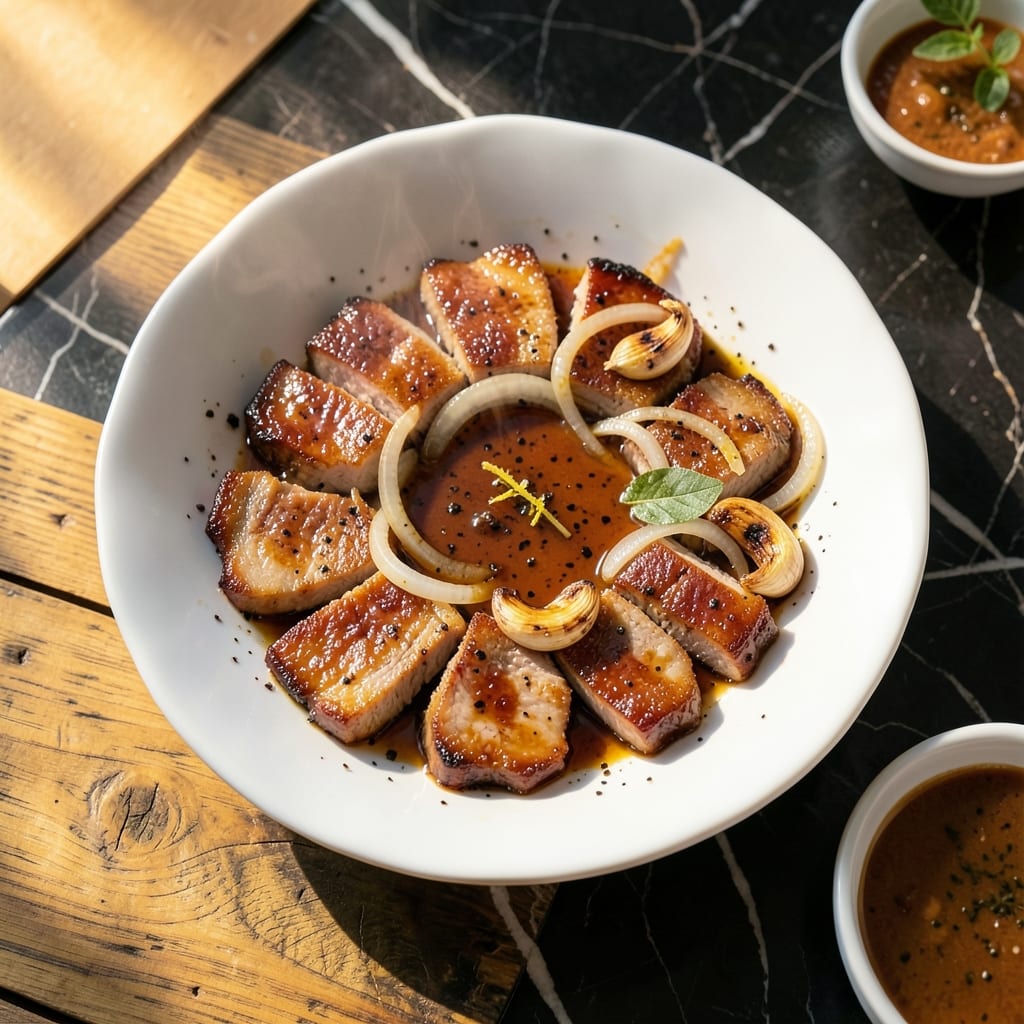
This Filipino-style pork tocino delivers a fast breakfast with bold, sweet-garlic flavors that define traditional mornings in the Philippines. The marinade transforms simple pork into tender, caramelized bites that wake up your taste buds.
I developed this recipe after testing multiple versions in my small Boston kitchen, focusing on the perfect balance of sweetness and savory depth. The key is marinating the pork overnight in a mix of pineapple juice, soy sauce, garlic, and brown sugar.
When cooked, the edges crisp up while the inside stays juicy, creating that signature tocino texture. Serve with garlic rice and a fried egg for the authentic experience.
The dish comes together quickly once marinated, making it ideal for busy mornings without sacrificing flavor.
Ingredients for Pork Tocino Recipe Filipino Style
Simple cuts and pantry staples create that signature sweet-garlic Filipino breakfast magic.
| Ingredient | Amount | Notes |
|---|---|---|
| Pork Shoulder 🥩 | 1 ½ lb | Cut into 1/4-inch thick slices |
| Pineapple Juice 🍍 | 1 cup | Unsweetened, for marinade |
| Soy Sauce 🫒 | ½ cup | Regular or light variety |
| Brown Sugar 🍚 | ½ cup | Packed, for sweetness |
| Garlic Cloves 🧄 | 6 cloves | Minced for marinade |
| White Vinegar 💧 | 2 tbsp | Balances sweetness |
| Black Pepper 🌶️ | 1 tsp | Freshly ground preferred |
| Bay Leaves 🍃 | 2 whole | For marinade depth |
| Vegetable Oil 🫒 | 2 tbsp | For pan-frying tocino |
| Water 💧 | ¼ cup | Optional, for thinning marinade |
| Salt 🧂 | ½ tsp | Adjust to taste |
[recipe_ingredient_scaler]
The pork shoulder is non-negotiable here—look for well-marbled cuts at your butcher or Costco for the best texture. Ask them to slice it thin (about 1/4-inch) or do it yourself at home with a sharp knife. The pineapple juice makes a huge difference, so skip the canned stuff if it’s got added sugars. Fresh is ideal, but 100% juice from the refrigerated section works too.
No pineapple juice? Orange juice plus a teaspoon of vinegar gets you close, though the flavor won’t be identical. Brown sugar can be swapped for coconut sugar for a deeper taste. Short on soy sauce? Tamari or coconut aminos work in a pinch. The bay leaves are subtle but worth it—dried are fine, just remove them before cooking.
Marinate the pork overnight for maximum flavor penetration. Cooked tocino keeps in the fridge for 3-4 days or can be frozen for up to 3 months. Reheat in a pan with a splash of water to keep it tender (microwave works in a pinch, but the edges get chewy).
Why You’ll Love This Recipe
- 5-Minute Marinade: I mix the pineapple juice, soy sauce, brown sugar, and garlic in one bowl, coat the pork shoulder, and it’s ready to sit overnight.
- Sweet-Savory Magic: The brown sugar caramelizes while the soy and pineapple balance it out—every bite is that perfect sweet-salty tang I crave.
- Breakfast to Dinner: Honestly, I serve this with garlic rice at dawn and then toss leftovers into fried rice for dinner.
- Stretches the Budget: Pork shoulder stays cheap, and the marinade uses pantry staples, so I feed four for under ten bucks.
Step-by-Step Instructions for Pork Tocino
Here’s the method. Straightforward, tested, works every time.
Step 1: Marinate the Pork Shoulder Overnight
In a large bowl, combine the 1 cup Pineapple Juice, 0.5 cup Soy Sauce, 0.5 cup Brown Sugar, 6 cloves Garlic Cloves, 2 tbsp White Vinegar, 1 tsp Black Pepper, 2 whole Bay Leaves, and 0.5 tsp Salt. Whisk until the brown sugar fully dissolves.
Add the 1.5 lb Pork Shoulder slices, ensuring each piece is well-coated. I like to press the pork down into the marinade to maximize contact. Cover and refrigerate for at least 8 hours, but overnight is best. This long marinade is what gives it that signature sweet-savory depth.
Step 2: Prepare for Cooking
Remove the pork from the marinade, reserving the liquid. Pat the pork slices dry with paper towels—this ensures they brown properly in the pan. If the marinade seems too thick, stir in the 0.25 cup Water to thin it slightly.
Let the pork sit at room temperature for 15-20 minutes while you preheat your pan. Cold meat seizes up when it hits the hot oil, so this step prevents tough, unevenly cooked pieces.
Step 3: Pan-Fry to Caramelized Perfection
Heat the 2 tbsp Vegetable Oil in a large skillet over medium heat. When the oil shimmers, add the pork slices in a single layer—don’t overcrowd. Cook for 4-5 minutes per side until deeply browned and the edges caramelize from the sugar in the marinade.
As the pork cooks, pour in ½ cup of the reserved marinade. Let it simmer and reduce, basting the pork occasionally with the syrupy liquid. You’ll know it’s ready when the glaze thickens and clings to the meat.
Step 4: Rest and Serve
Transfer the pork to a serving dish and let it rest for 5 minutes. This allows the juices to redistribute, ensuring every bite is moist and flavorful. Pour any remaining pan sauce over the top.
Serve with steamed rice and a side of atchara (pickled papaya) for the full experience. The pork should be tender with a glossy, slightly sticky exterior and a perfect balance of sweet and garlicky flavors.
Pro Tips For Making Pork Tocino Recipe Filipino Style
- Marinate Overnight: I learned this the hard way—pork shoulder needs at least 8 hours in the pineapple juice, soy sauce, and brown sugar mix to really absorb the sweet-savory flavors. Less time and you’ll taste the difference.
- Slice Thinly: Cut the pork shoulder into ¼-inch thick strips, not chunks—this guarantees even cooking and maximum caramelization when frying.
- Skip the Boiling: Resist the urge to pre-boil the meat to “save time.” It washes away flavor and makes the texture rubbery; just simmer gently in the marinade for 30-40 minutes.
- Use Fresh Garlic: After using powdered garlic once, I finally figured out that fresh cloves crushed into the marinade give that sharp, aromatic kick tocino is known for.
Troubleshooting pork tocino recipe filipino style
Marinade Not Penetrating
If your pork isn’t absorbing flavor, check the cut thickness—slices thicker than ¼ inch need more time. I once rushed this in my Boston kitchen and ended up with bland centers. Always marinate overnight, and press the meat into the liquid to ensure full coverage. 💡
Burning the Sugar
Caramelization can turn to burning if the heat is too high. Keep your skillet at medium heat and move the pork frequently. If the pan sauce darkens too quickly, add 2 tbsp water to slow the process and deglaze the pan.
Tough Pork Texture
This usually means the pork wasn’t marinated long enough or was overcooked. Stick to 8-12 hours in the fridge, and remove from heat once the internal temp hits 160°F. Resting for 5 minutes also keeps it juicy—don’t skip this step.
Sauce Too Thin
If your pan sauce isn’t thickening, let it simmer uncovered for an extra 3-4 minutes. The natural sugars in the pineapple juice and brown sugar will reduce into a glossy glaze. Stir occasionally to prevent sticking.
Uneven Cooking
Overcrowding the pan causes uneven browning. Cook in batches if needed, giving each slice space. I learned this the hard way in my tiny apartment kitchen—patience pays off with perfectly caramelized edges. ✨
Bitter Marinade
This can happen if the bay leaves or vinegar overpower the mix. Balance is key: use fresh pineapple juice and taste the marinade before adding the pork. Adjust with a touch more brown sugar if needed.
Nutrition Facts
Frequently Asked Questions
Can I use a different cut of pork?
Yes, but pork shoulder is ideal for its marbling. Pork belly works well too, but avoid lean cuts like tenderloin. They dry out during cooking and won’t absorb the marinade as effectively.
How long can I store marinated pork?
Marinated pork stays fresh in the fridge for up to 2 days. For longer storage, freeze it for up to 3 months. Thaw in the fridge overnight before cooking.
Can I bake this instead of pan-frying?
Bake at 375°F for 25-30 minutes, basting with marinade halfway through. The texture will be slightly different but still delicious.
What can I substitute for pineapple juice?
Use orange juice with 1 tsp vinegar for similar acidity. In a pinch, apple juice works but adds a milder flavor. Avoid citrus alone—it can make the pork too tart.

Trained in classic French technique but raised on slow-cooked ribs and spicy rubs, she blends culinary skill with smoke and soul.
- Recipe for Pan Fried: Golden Crust with Savory Depth - October 3, 2026
- Recipe For Fried Chicken In A Pressure Cooker: Crispy Golden Bites in Half the Time - October 3, 2026
- Recipe For Leftover Fried Fish: Crunchy Leftovers Transformed - October 3, 2026