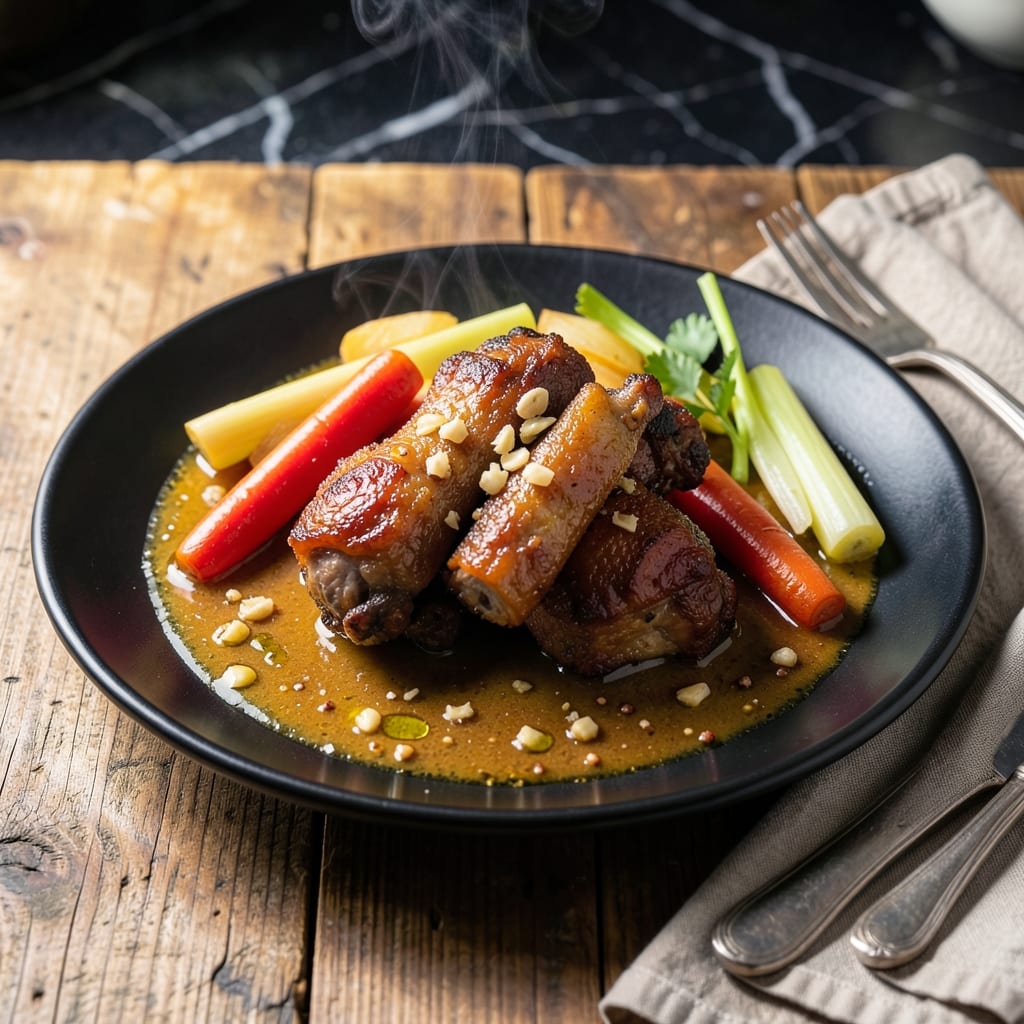
This South African pork trotters recipe transforms humble ingredients into a dish of gelatinous richness through traditional slow-cooking methods. The process coaxes out deep, savory flavors while achieving that signature tender texture.
I developed this method after studying authentic preparation techniques, focusing on the balance between spice and slow simmering. The key lies in patient cooking that allows the collagen to break down into luxurious, velvety goodness.
The result is a dish that celebrates its cultural roots with every fall-off-the-bone bite. The meat becomes fork-tender while the broth develops complex layers of flavor from the spices and slow cooking process.
This recipe honors tradition while making it accessible for home cooks. The process is straightforward but requires attention to detail for the best results.
Ingredients for Pork Trotters Recipe South Africa
Traditional South African flavors come from slow-simmered pork trotters and aromatic spices. Simple, honest ingredients.
| Ingredient | Amount | Notes |
|---|---|---|
| Pork Trotters 🐷 | 2 lb | Cleaned, split, and blanched |
| Yellow Onions 🧅 | 2 whole | Large, roughly chopped |
| Carrots 🥕 | 3 whole | Peeled and cut into chunks |
| Celery Stalks 🌿 | 2 pieces | Cut into large pieces |
| Garlic Cloves 🧄 | 6 cloves | Smashed, peeled whole |
| Fresh Ginger 🌿 | 1 whole | 2-inch piece, sliced |
| Bay Leaves 🍃 | 2 pieces | Dried, whole |
| Black Peppercorns 🌶️ | 1 tbsp | Whole, lightly crushed |
| Ground Coriander 🌿 | 1 tbsp | Toasted for depth |
| Ground Cumin 🌿 | 1 tsp | Freshly ground preferred |
| Dried Thyme 🍃 | 1 tsp | Rubbed between fingers |
| Apple Cider Vinegar 🍏 | ½ cup | For acidity balance |
| Water or Light Stock 💧 | 8 cups | Enough to cover trotters |
| Kosher Salt 🧂 | 1 tbsp | Adjust to taste |
[recipe_ingredient_scaler]
The pork trotters are non-negotiable for authenticity. Source them from a trusted butcher—ask for split and cleaned trotters to save prep time. Look for pieces with good collagen content, as this breaks down into the signature gelatinous texture. Whole Foods or local ethnic markets often carry them fresh or frozen. If using frozen, thaw completely and rinse well before starting the blanching process.
Out of apple cider vinegar? White vinegar or lemon juice works in a pinch, though the flavor profile shifts slightly. No fresh ginger? Ground ginger at one-quarter the amount substitutes adequately. For the stock, homemade or low-sodium chicken stock adds depth, but water works too (just season more aggressively). The spices can be adjusted—add a pinch of cloves for warmth, or a star anise pod for complexity.
This dish improves overnight as the flavors meld. Store in the fridge for up to 4 days—the broth will thicken as it cools. Freezes beautifully for 3 months. Reheat gently to preserve the velvety texture, and skim any excess fat before serving.
Why You’ll Love This Recipe
- One Pot Wonder: I toss the trotters, onions, carrots, and celery in one pot and let it simmer—hardly any cleanup.
- Rich and Hearty: The garlic and slow-cooked pork create a deep, savory flavor that’s hard to resist.
- Feeds a Crowd: I make a big batch for Sunday lunch, and it’s always a hit with family and friends.
- Budget Friendly: Pork trotters are affordable, and I stretch them with veggies to fill everyone up without breaking the bank.
Step-by-Step Instructions for Pork Trotters
This traditional method ensures tender, fall-off-the-bone meat with rich, collagen-infused broth.
Step 1: Blanch and Prepare the Trotters
Place the 2 lb Pork Trotters in a large pot and cover with cold water. Bring to a boil over high heat, then reduce to a simmer for 10 minutes. This step removes impurities and ensures a clean, clear broth later.
Drain and rinse the trotters under cold water, then return them to the pot. I always trim any remaining hair or dark spots at this stage for the best presentation. Pat them dry with paper towels to remove excess moisture before the next step.
Step 2: Build the Aromatic Base
In the same pot, combine the blanched pork trotters with the 2 whole Yellow Onions, 3 whole Carrots, 2 pieces Celery Stalks, 6 cloves Garlic Cloves, and 1 whole Fresh Ginger. Add the 2 pieces Bay Leaves, 1 tbsp Black Peppercorns, 1 tbsp Ground Coriander, 1 tsp Ground Cumin, and 1 tsp Dried Thyme.
These spices and vegetables create a deeply flavorful foundation. The ginger adds a subtle warmth that complements the richness of the pork, while the coriander and cumin provide earthy depth.
Step 3: Add Liquids and Simmer
Pour in the 8 cups Water or Light Stock, 0.5 cup Apple Cider Vinegar, and 1 tbsp Kosher Salt. The vinegar tenderizes the meat and balances the richness of the broth, while the salt enhances all the flavors.
Bring the mixture to a boil over high heat, then reduce to a gentle simmer. Cover partially and cook for 2.5 to 3 hours, skimming any foam that rises to the surface. You’ll know it’s ready when the meat easily pulls away from the bone and the broth has taken on a rich, golden hue.
Step 4: Finish and Serve
Once the trotters are tender, remove them from the broth and set aside. Strain the broth through a fine-mesh sieve to remove solids, pressing gently to extract all the flavor. Return the trotters to the strained broth and keep warm.
Serve the trotters hot with a generous ladle of the aromatic broth. The meat should be so tender it nearly melts in your mouth, while the broth offers a perfect balance of savory, spiced, and slightly tangy notes. This dish pairs wonderfully with crusty bread or steamed rice to soak up the flavorful liquid.
Pro Tips For Making Pork Trotters Recipe South Africa
- Parboil First: I learned this the hard way—give the trotters a 10-minute boil in salted water before braising to remove impurities and keep the broth clean.
- Brown the Onions: Sounds obvious, but caramelizing those yellow onions for at least 15 minutes adds depth you can’t fake. Skip the rush.
- Skip the Skin Trimming: Resist the urge to peel all the skin off—it breaks down into rich gelatin that thickens the sauce naturally.
- Use Cold Water: Start the trotters in cold water, not boiling, to draw out impurities gradually and keep the meat tender, not tough.
Make-Ahead Tips for This Recipe
Overnight Flavor Boost
I always make this dish the day before serving. The flavors deepen overnight as the spices meld with the collagen-rich broth. Store the cooled trotters and liquid in an airtight container in your fridge for up to 2 days for optimal taste development. 💡
Freezer Prep
This recipe freezes beautifully for up to 3 months. Portion the trotters and strained broth into freezer-safe containers, leaving 1-inch headspace for expansion. I use quart-sized mason jars from my Portland farmers market hauls.
Thawing Method
Move containers from freezer to fridge 24 hours before reheating. For faster thawing, place sealed containers in a bowl of cold water, changing water every 30 minutes. Never thaw at room temperature.
Reheating Techniques
Gently reheat on the stovetop over low-medium heat for 20-30 minutes, stirring occasionally. Add ¼ cup water if the broth thickens too much. Avoid boiling to preserve the velvety texture we worked so hard to achieve. 🔥
Fat Skimming Tip
Before storing, skim any solidified fat from the surface with a spoon. I save this for cooking—it adds incredible depth to other dishes. The fat will reabsorb some when reheated, but not all.
Portion Control
For quick meals, freeze individual portions in pint-sized containers. This makes it easy to pull out just what you need. The gelatinous texture holds up well to freezing and reheating.
Nutrition Facts
Frequently Asked Questions
Why blanch the trotters first?
Blanching removes impurities and blood, ensuring a clean, clear broth. It also helps eliminate any strong odors, resulting in a more refined final dish.
Can I use a pressure cooker instead?
Yes, but reduce cooking time to 45-60 minutes on high pressure. The texture may be slightly less gelatinous than slow cooking, but still tender and flavorful.
How do I know when they’re done?
The meat should pull away from the bone easily. Test with a fork—if it slides in without resistance and the collagen has melted into the broth, it’s ready.
What if my broth isn’t gelatinous?
Simmer longer or add more trotters—gelatin comes from collagen breakdown. Avoid boiling, as high heat can prevent proper gelatin formation.

Trained in classic French technique but raised on slow-cooked ribs and spicy rubs, she blends culinary skill with smoke and soul.
- Indian Lamb Curry Recipe Pressure Cooker: Fragrant Spices in a Fraction of the Time - October 3, 2026
- Recipe for Oven Roasted: Golden Crisp Perfection Without the Fryer - October 3, 2026
- Recipe for Fried Pork Chops With Flour: Crispy Crust and Juicy Centers - October 3, 2026