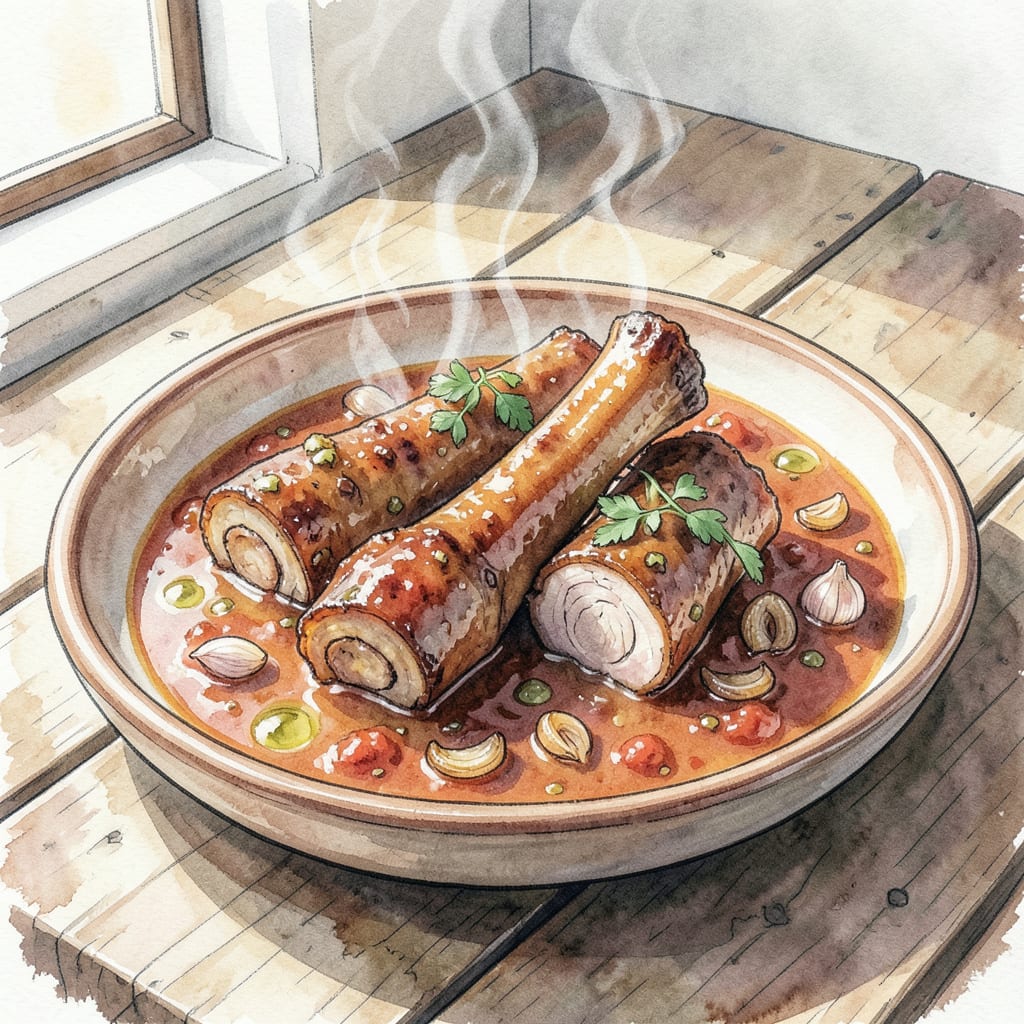
Braising pig feet the Puerto Rican way brings back memories of my family’s gatherings, where tender, fall-off-the-bone meat was the star. This authentic recipe delivers that same comfort, with rich flavors developed over 3 hours of slow cooking.
The result is tender pork that’s perfect with traditional sides like rice, beans, or fried plantains. The long braising time creates a rich, velvety sauce that clings to every piece of meat, making this dish a true crowd-pleaser for family gatherings.
Ingredients for Puerto Rican Pig Feet
Authentic Puerto Rican flavors come together in this tender braised pork dish.
| Ingredient | Amount | Notes |
|---|---|---|
| Pig Feet 🐖 | 2 lb | Cleaned, split into pieces |
| Olive Oil 🫒 | ¼ cup | For browning the pork |
| Onion 🧅 | 1 whole | Chopped, for flavor base |
| Garlic Cloves 🧄 | 4 cloves | Minced for aromatic depth |
| Tomato Paste 🍅 | 2 tbsp | Concentrated for rich flavor |
| Sofrito 🌿 | ¼ cup | Homemade or store-bought |
| Chicken Broth 🍜 | 4 cups | Low-sodium preferred |
| White Wine 🍷 | 1 cup | Dry white wine for braising |
| Bay Leaves 🌿 | 2 whole | For aromatic flavor |
| Dried Oregano 🌿 | 1 tsp | Mexican oregano preferred |
| Salt 🧂 | 1 tsp | Kosher salt for seasoning |
| Black Pepper 🌶️ | ½ tsp | Freshly ground for best flavor |
[recipe_ingredient_scaler]
Pig feet are essential for authentic flavor. Look for them at specialty Latin markets or well-stocked butcher shops. Have them split into manageable pieces for easier cooking. If you can’t find pig feet, beef shank or short ribs make a decent substitute, though the texture will differ.
Sofrito is the backbone of Puerto Rican cooking. You can find it in the international section of most supermarkets, or make your own with cilantro, garlic, and peppers. For an extra depth of flavor, toast your spices (like oregano and bay leaves) in a dry pan before adding them to the pot. If using store-bought sofrito, check the ingredient list for added salt to adjust your seasoning accordingly.
This dish improves with time, so make it ahead if possible. Store it in the refrigerator for up to 3 days or freeze for 3 months. Reheat gently on the stovetop, adding a splash of broth if needed to maintain the rich sauce. Leftovers are perfect for meal prep or family dinners throughout the week.
Step-by-Step Instructions for Puerto Rican Pig Feet
Follow these detailed steps to create an authentic Puerto Rican pig feet dish that’s sure to impress at any family gathering.
Step 1: Brown the Pig Feet for Rich Flavor
Heat the 0.25 cup Olive Oil in a large Dutch oven over medium-high heat. Once the oil is hot and shimmering, add the 2 lb Pig Feet in batches if necessary to avoid overcrowding. Brown the pig feet on all sides for about 5-7 minutes per batch until they develop a deep brown color. This step is crucial as it creates a rich flavor foundation for the dish.
Remove the browned pig feet from the pot and set them aside on a plate. The pieces should be nicely browned on the outside, which will add depth to the final dish.
Step 2: Sauté Aromatics and Build the Flavor Base
Reduce the heat to medium and add the 1 whole Onion, chopped, to the same pot. Cook for about 5 minutes until the onion becomes translucent and starts to caramelize. The residual browned bits from the pig feet will add complexity to the dish.
Add the 4 cloves Garlic Cloves, minced, and cook for another 1-2 minutes until fragrant. Be careful not to burn the garlic, as it can quickly become bitter. Stir constantly to ensure even cooking.
Step 3: Add Tomato Paste and Sofrito for Depth
Stir in the 2 tbsp Tomato Paste and cook for 2-3 minutes, allowing it to darken in color and intensify in flavor. This step concentrates the tomato flavor, adding richness to the braising liquid.
Add the 0.25 cup Sofrito and cook for another minute, stirring constantly. The sofrito will infuse the dish with its characteristic Puerto Rican flavor. Make sure to use high-quality sofrito for the best results.
Step 4: Braise the Pig Feet to Tender Perfection
Add the browned pig feet back into the pot, along with 4 cups Chicken Broth, 1 cup White Wine, 2 whole Bay Leaves, 1 tsp Dried Oregano, 1 tsp Salt, and 0.5 tsp Black Pepper. Bring the mixture to a boil, then cover the pot and transfer it to a preheated oven at 300°F.
Braise the pig feet for about 2.5 to 3 hours until the meat is tender and falls off the bone. The slow cooking process ensures that the pig feet become incredibly tender and flavorful. Check the dish periodically to ensure there’s enough liquid; add more broth if necessary.
Step 5: Finish and Serve
Once the pig feet are tender, remove the pot from the oven and let it cool slightly. Discard the bay leaves and adjust the seasoning if needed. Serve the pig feet hot, garnished with fresh cilantro or parsley if desired. The dish should be rich, flavorful, and incredibly tender.
The final result should be a deliciously authentic Puerto Rican pig feet dish that’s perfect for family gatherings. The slow-braised pork should be so tender it falls off the bone, with a rich and flavorful sauce.
Pro Cooking Tips for Great puerto rican pig feet
Browning Techniques Matter
Proper browning of the pig feet is crucial for developing the rich flavor that characterizes this Puerto Rican dish. I use 0.25 cup olive oil in a large Dutch oven over medium-high heat to get a good sear. Work in batches if necessary to avoid overcrowding, browning for 5-7 minutes per side. This creates a deep flavor foundation that enhances the entire braise. 🔥
Searing Temperature Control
Maintaining the right temperature during browning is essential. If your Dutch oven gets too hot, reduce the heat slightly to prevent burning. I like to use an infrared thermometer to check the surface temperature – it should be around 400-450°F for ideal browning. This ensures a nice crust forms on the pig feet.
Building Flavor Layers
The aromatics layer you build before adding the pig feet back to the pot is where the magic happens. I sauté the 1 chopped onion until it’s translucent, then add 4 minced garlic cloves and cook until fragrant. This creates a complex flavor profile that complements the rich pork. For an extra depth of flavor, toast your spices (like oregano and bay leaves) in a dry pan before adding them to the pot.
Braising Temperature Secrets
Braising at 300°F allows for tender, fall-off-the-bone meat. The low temperature prevents the collagen from breaking down too quickly, resulting in tender, juicy pig feet. I recommend using an oven thermometer to ensure your oven is at the correct temperature, as oven calibrations can vary.
Slow Cooking Benefits
The 2.5-3 hour braising time is essential for developing the dish’s signature tenderness. This slow cooking process allows the connective tissues in the pig feet to break down, creating a rich, velvety texture. Be patient and resist the urge to rush the cooking process – the end result is worth the wait. The long braising time also allows the flavors to meld together beautifully.
Resting Importance
After removing the pot from the oven, let it rest for 10-15 minutes before serving. This allows the flavors to redistribute and the meat to relax, making it easier to serve. The resting period also helps the sauce to thicken slightly, coating the pig feet beautifully. Letting it rest ensures that the dish is served at its best.
Nutrition Facts

Trained in classic French technique but raised on slow-cooked ribs and spicy rubs, she blends culinary skill with smoke and soul.
- Recipe for Curried Lamb Chops: Spice-Rubbed and Pan-Seared to Succulence - October 3, 2026
- Recipe for Boneless Leg of Lamb Roast in the Oven: Herb-Crusted and Rosy Pink Inside - October 3, 2026
- Meat Loaf Recipe With Beef And Pork: Homestyle Blend With Rich Gravy - October 3, 2026