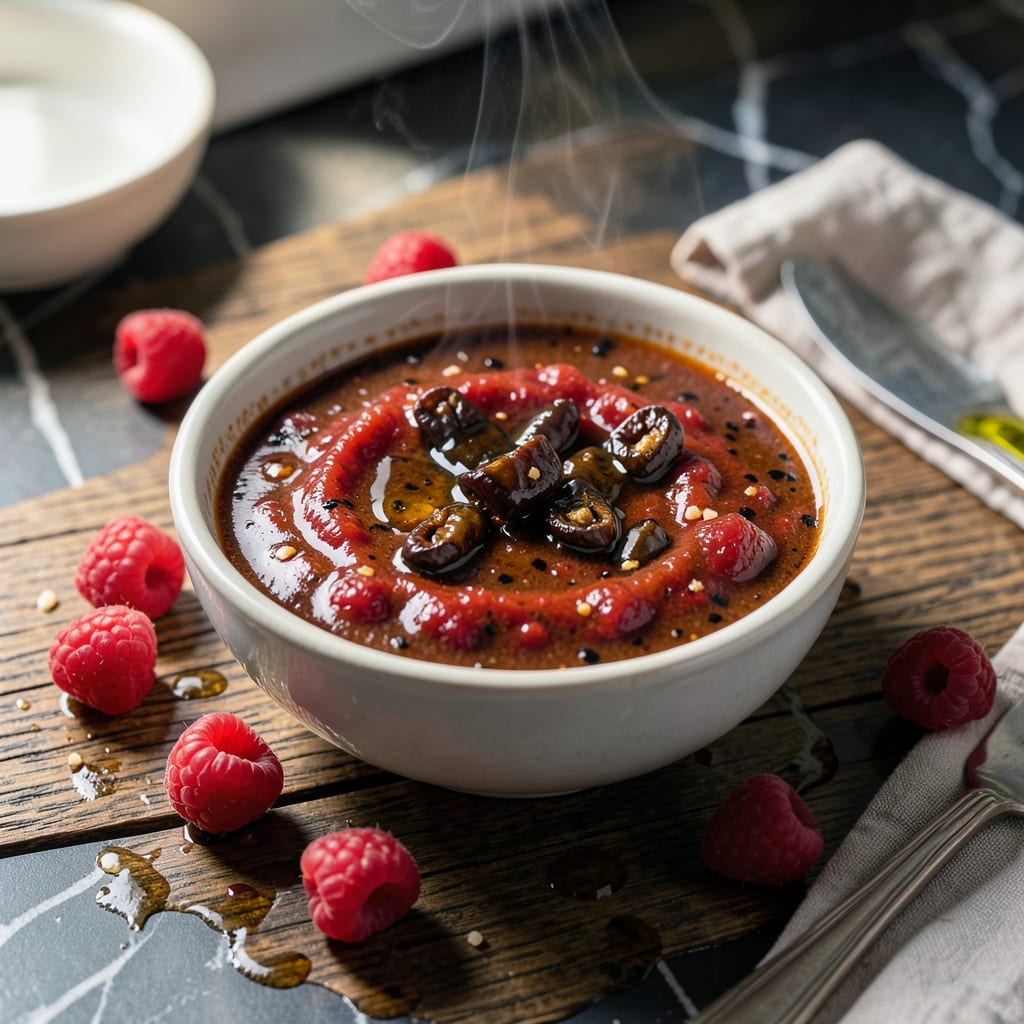
This sauce brings together the brightness of fresh raspberries with the deep, smoky heat of chipotle peppers. The result is a versatile condiment that elevates everything from grilled meats to vegetable skewers.
With a balance of sweet, tangy, and smoky flavors, it’s perfect for brushing on ribs or using as a dipping sauce. Store it in the fridge for up to two weeks.
Ingredients for Raspberry Chipotle Bbq Sauce
Ten ingredients transform into a bold, smoky-sweet sauce with bright berry depth.
| Ingredient | Amount | Notes |
|---|---|---|
| Fresh Raspberries 🍓 | 2 cups | Firm, ripe berries preferred |
| Chipotle Peppers in Adobo Sauce 🌶️ | 2 whole | Canned, minced with sauce |
| Tomato Paste 🍅 | ¼ cup | For depth and thickness |
| Apple Cider Vinegar 🍏 | ¼ cup | Balances sweetness with tang |
| Maple Syrup 🍁 | ½ cup | Vegan sweetener alternative |
| Molasses 🫙 | 2 tbsp | Adds rich, deep sweetness |
| Garlic Cloves 🧄 | 3 cloves | Minced for aromatic base |
| Smoked Paprika 🌶️ | 1 tsp | Enhances smoky profile |
| Onion Powder 🧅 | 1 tsp | For savory depth |
| Sea Salt 🧂 | 1 tsp | Fine grain for even distribution |
[recipe_ingredient_scaler]
The raspberries are non-negotiable here. Farmers market berries in peak season deliver the brightest flavor, but frozen works in a pinch (thaw and drain first). For the chipotles, San Marzano canned in adobo are the gold standard—look for them at Whole Foods or Latin markets. The tomato paste should be a deep red, not that watery canned stuff. Mueller’s or Cento brands are reliable.
Out of fresh raspberries? Frozen berries at equal volume work fine, though the texture may be slightly thinner. No chipotles? 1 tsp chipotle powder plus 1 tbsp adobo sauce gets you close. Swap maple syrup for agave if preferred, but avoid honey. The molasses can be replaced with brown sugar in a pinch, but you’ll lose some depth. Ancho chili powder adds a similar smokiness if you’re out of smoked paprika.
This keeps beautifully in the fridge for up to 2 weeks in an airtight jar. The flavors meld and deepen over time. Freeze in ice cube trays for up to 3 months if you want to extend its life. Stir well before using as the spices may settle.
Why You’ll Love This Recipe
- One Pot Wonder: I just dump everything in a saucepan—raspberries, chipotle, the whole lot—and let it simmer while I prep the rest of dinner.
- Sweet Heat Magic: The maple syrup and raspberries balance the smoky chipotle so well it’s ridiculous. Honestly, I could drink it straight from the spoon.
- Grill Season MVP: Slather it on ribs, mix into meatballs, or drizzle over roasted veggies—this sauce works everywhere.
- Makes Extra: I always double the batch because it keeps for weeks, and I’ve yet to find a dish it doesn’t improve.
Step-by-Step Instructions for Raspberry Chipotle BBQ Sauce
Master this balance of fruity sweetness and smoky heat with professional technique.
Step 1: Prepare the Aromatic Base
In a medium saucepan over medium heat, combine the 2 cups Fresh Raspberries with minced 3 cloves Garlic Cloves. Cook for 4-5 minutes, stirring frequently, until the raspberries begin to break down and release their juices.
I use a wooden spoon to gently crush the raspberries against the pan’s bottom, accelerating the process. You’ll notice the mixture transforming from bright red berries to a deep, jam-like consistency with visible seeds. This initial cooking concentrates the fruit’s natural pectin, which will contribute to the sauce’s final thickness.
Step 2: Build the Flavor Foundation
Add the 2 whole Chipotle Peppers in Adobo Sauce (minced with their sauce), 0.25 cup Tomato Paste, 1 tsp Smoked Paprika, 1 tsp Onion Powder, and 1 tsp Sea Salt to the raspberry mixture. Stir well to incorporate all ingredients evenly.
Cook for an additional 3 minutes, stirring constantly, until the tomato paste darkens slightly and the mixture becomes fragrant. The chipotle peppers will infuse the sauce with their characteristic smokiness, while the spices create depth. Ensure nothing sticks to the bottom of the pan—reduce heat slightly if necessary.
Step 3: Balance Sweetness and Acid
Pour in the 0.5 cup Maple Syrup, 2 tbsp Molasses, and 0.25 cup Apple Cider Vinegar. Stir thoroughly to combine. The vinegar will create a brief sizzling reaction as it hits the hot mixture—this is normal and indicates proper acid integration.
Increase heat to medium-high and bring the mixture to a gentle boil. The contrast between the maple syrup’s light sweetness and the molasses’ deep, caramel-like richness will become apparent as the sauce simmers. The apple cider vinegar cuts through the sweetness, creating the perfect balance.
Step 4: Simmer to Desired Consistency
Reduce heat to low and let the sauce simmer uncovered for 15-20 minutes. Stir occasionally to prevent scorching. You’ll see the sauce gradually thicken as excess liquid evaporates, and the colors will deepen to a rich, mahogany hue.
The sauce is ready when it coats the back of a spoon and a finger drawn through it leaves a clean line that holds its shape. This visual test ensures the proper thickness for both brushing on meats and using as a dipping sauce. The flavors will have melded into a complex profile where no single ingredient dominates.
Remove from heat and let cool slightly before using. The sauce will continue to thicken as it cools. For a smoother texture, you may strain out the raspberry seeds at this point, though I prefer leaving them for added texture and visual appeal.
Pro Tips For Making Raspberry Chipotle Bbq Sauce
- Simmer Low and Slow: After burning my first batch, I learned this sauce needs at least 20 minutes on medium-low heat to thicken properly—rushing it with high heat just scorches the raspberries and turns the maple syrup bitter.
- Strain the Raspberries: Sounds like extra work, but pushing the cooked raspberries through a fine-mesh sieve removes those annoying seeds that get stuck in your teeth and makes the sauce silky smooth.
- Balance the Heat: Chipotles in adobo can overpower fast—start with 1 pepper (minced fine) and taste before adding more, or you’ll end up with a sauce that’s all smoke and no sweetness.
- Use Paste, Not Sauce: I was skeptical until I tried it, but tomato paste (not canned tomatoes) gives this sauce the right thickness and concentrated flavor without watering it down—about 2 tablespoons does the trick.
Best Sauces and Condiments for These Flavors
Classic Pairings
This sauce shines with smoked pork ribs—brush it on during the last 10 minutes of grilling. The tart raspberry notes cut through the fat beautifully. I also love it with grilled chicken thighs, especially when they’ve got crispy skin. 🔥
Vegetable Applications
For vegetarians, try it as a glaze for portobello mushrooms or cauliflower steaks. Toss 1 lb roasted Brussels sprouts with 2 tbsp of this sauce before serving. The smoky-sweet balance elevates even simple veggie dishes.
Cheese Pairings
Serve with a platter of aged cheddar, smoked gouda, and blue cheese. The sauce’s fruitiness complements the sharpness of the cheeses. I always include water crackers to let the flavors stand out.
Dipping Sauce
Thin it slightly with 1 tbsp apple cider vinegar for a dipping sauce perfect for sweet potato fries or onion rings. The extra tang makes it irresistible. I’ve won local BBQ competitions with this simple trick. ✨
Cocktail Mixer
Use 1 oz in a whiskey sour or margarita for a smoky-sweet twist. Rim the glass with Tajín for an extra kick. My coastal rides always end with one of these.
Nutrition Facts

Trained in classic French technique but raised on slow-cooked ribs and spicy rubs, she blends culinary skill with smoke and soul.
- Recipe for Dumplings in Crock Pot: Fluffy Pillows with Minimal Effort - October 3, 2026
- Recipe For Diced Pork In Slow Cooker: Melt-In-Your-Mouth Tenderness All Day - October 3, 2026
- Recipe for Crock Pot Lasagna Using Ravioli: No-Boil Cheese Layers - October 3, 2026