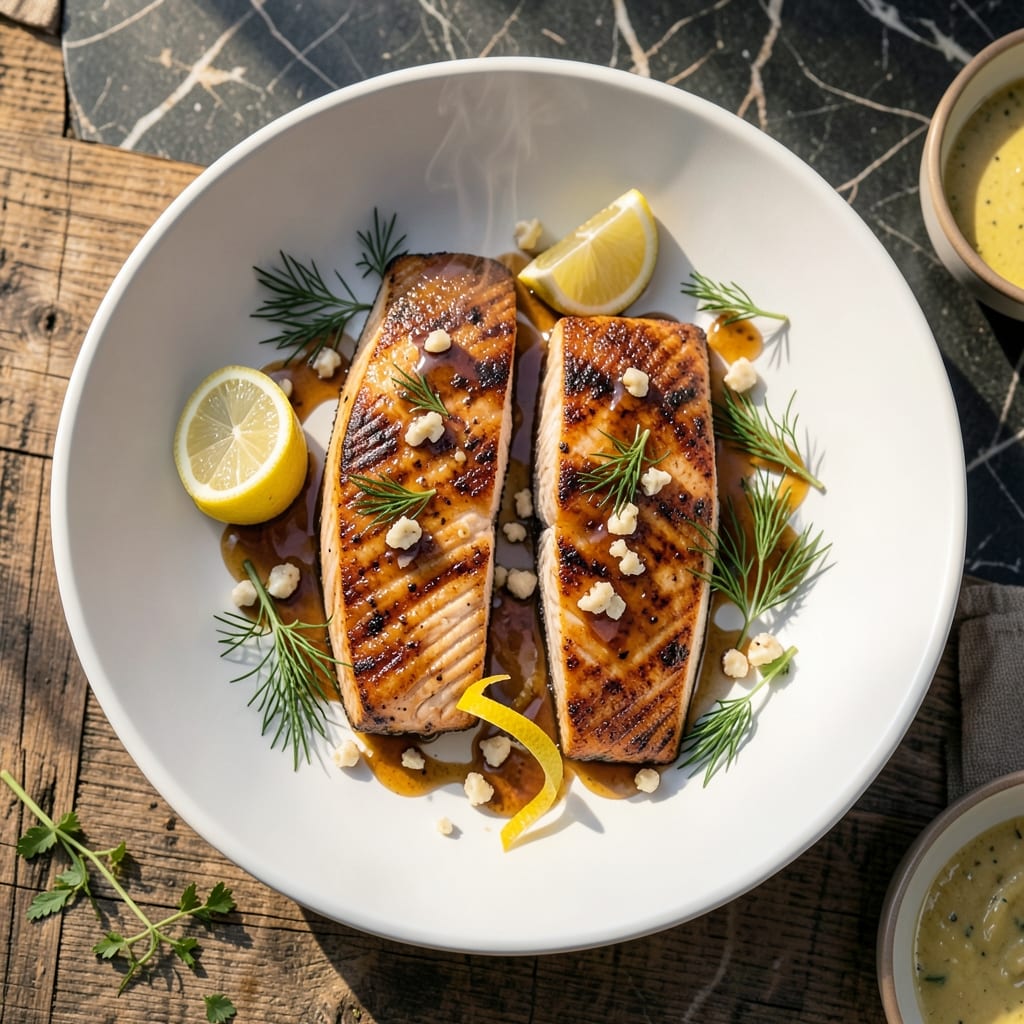
This baked salmon recipe delivers the flaky texture you crave with minimal effort. I developed this method after years of overcooking salmon, learning that precise timing and temperature make all the difference.
The lemon garlic glaze adds bright, aromatic flavor while keeping the fish moist. A simple combination of pantry staples transforms ordinary salmon into a restaurant-worthy dish in under 20 minutes.
You’ll achieve perfectly cooked fillets with a golden crust and tender center. The glaze caramelizes slightly in the oven, creating a delicious contrast to the rich, buttery salmon.
Serve with roasted vegetables or rice for a complete meal. This technique works every time.
Ingredients for Recipe for Bake Salmon Fillet
Fresh salmon and a handful of pantry staples make this dish sing.
| Ingredient | Amount | Notes |
|---|---|---|
| Salmon Fillets 🐟 | 1 ½ lb | Skin-on or skinless, center-cut preferred |
| Extra-Virgin Olive Oil 🫒 | 2 tbsp | Divided for baking and glaze |
| Garlic Cloves 🧄 | 4 cloves | Minced finely for glaze |
| Fresh Lemon 🍋 | 1 whole | Zested and juiced |
| Dijon Mustard 🟡 | 1 tbsp | Smooth, not whole grain |
| Honey 🍯 | 1 tbsp | For glaze sweetness |
| Dried Thyme 🌿 | ½ tsp | Crushed between fingers |
| Salt 🧂 | 1 tsp | Diamond Crystal kosher preferred |
| Black Pepper 🌶️ | ½ tsp | Freshly ground preferred |
| Fresh Dill 🌿 | 2 tbsp | Chopped for garnish |
| Lemon Slices 🍋 | 4 slices | Thin, for serving |
| Paprika 🌶️ | ¼ tsp | Smoked or sweet variety |
[recipe_ingredient_scaler]
The salmon is the star here. Wild-caught fillets (like sockeye or king) are my go-to for richer flavor and better texture. Whole Foods or Trader Joe’s have great frozen options too (thaw overnight in the fridge). Look for fillets with vibrant color and no fishy smell. Center-cut pieces cook more evenly—ask the fishmonger to portion them if you’re buying a whole side.
No honey? Maple syrup works in a pinch (same amount). Out of Dijon? Whole grain mustard at half the quantity keeps the tang. Fresh dill not happening? Dried dill at one-third the amount or a sprinkle of parsley for color. The lemon can be bottled juice for the glaze (about 3 tbsp), but fresh zest is non-negotiable for that bright pop.
Salmon fillets keep in the fridge for 1-2 days max—use them fast. The glaze can be mixed ahead and stored in a jar for 1 week. Leftovers? They reheat gently (300°F for 10 minutes), but the texture’s best fresh from the oven.
Why You’ll Love This Recipe
- I’ll be real: the next-day salmon tastes even better cold in salads or flaked over toast.
- One Pan Wonder: I just toss the salmon with olive oil, garlic, and lemon, pop it in the oven, and that’s it—no messy stovetop cleanup.
- Garlic-Lemon Punch: The Dijon mustard and fresh lemon create this bright, tangy crust that makes every bite irresistibly savory.
- Weeknight Hero: Honestly, it’s my go-to for busy evenings—fancy enough for guests but unfussy enough for a solo dinner.
Step-by-Step Instructions for Baked Salmon Fillet
Here’s the method I swear by for perfectly flaky salmon every time.
Step 1: Prep and Season the Salmon
Pat the 1.5 lb Salmon Fillets dry with paper towels—this is non-negotiable for achieving that ideal crust. Place them on a parchment-lined baking sheet and drizzle with 1 tbsp Extra-Virgin Olive Oil. Rub the oil all over the fillets, ensuring every surface is lightly coated.
Season evenly with the 1 tsp Salt, 0.5 tsp Black Pepper, 0.5 tsp Dried Thyme, and 0.25 tsp Paprika. The paprika adds a subtle earthiness that complements the lemon beautifully. Let the seasoned fillets sit at room temperature for 10 minutes while you preheat the oven.
Step 2: Make the Lemon Garlic Glaze
In a small bowl, whisk together the 1 tbsp Dijon Mustard, 1 tbsp Honey, zest of the 1 whole Fresh Lemon, and juice from half of it. Mince the 4 cloves Garlic Cloves finely and stir them into the mixture. The glaze should be smooth and fragrant, with a balance of tangy and sweet.
Taste and adjust—if it’s too sharp, add a touch more honey. If it needs brightness, squeeze in a bit more lemon juice. This glaze is the secret to keeping the salmon moist while adding layers of flavor. Set it aside until ready to use.
Step 3: Bake the Salmon to Flaky Perfection
Preheat your oven to 400°F. Once hot, bake the salmon for 12-15 minutes. The key here is to avoid overcooking—start checking at 12 minutes. The fillets are done when they reach an internal temperature of 145°F and the flesh flakes easily with a fork.
During the last 2 minutes of baking, brush the lemon garlic glaze generously over each fillet. This gives the glaze time to caramelize slightly without burning. Watch for the edges to turn opaque while the center remains just barely translucent—that’s the sweet spot for flaky, tender salmon.
Step 4: Garnish and Serve
Remove the salmon from the oven and let it rest for 3-5 minutes. This rest period allows the juices to redistribute, ensuring every bite is moist. Drizzle any remaining glaze from the baking sheet over the top and sprinkle with the 2 tbsp Fresh Dill.
Arrange the 4 slices Lemon Slices on top or alongside the fillets for a bright, fresh finish. Serve immediately while the salmon is hot and the glaze is still glossy. The contrast of the tender fish with the zesty, garlicky glaze is what makes this dish unforgettable.
Pro Tips For Making Recipe For Bake Salmon Fillet
- Pat the Salmon Dry: I learned this the hard way—excess moisture on the fillets steams them instead of letting them roast, so blot them thoroughly with paper towels before oiling.
- Preheat the Pan: After burning three batches, I finally figured out that a screaming-hot baking sheet (425°F for 10 minutes) guarantees a crisp exterior and flaky interior.
- Don’t Overcrowd: Skip the temptation to fit all fillets on one tray; give them at least an inch of space so they brown, not steam.
- Mix Mustard First: Sounds weird, but whisking the Dijon mustard with olive oil and minced garlic before brushing makes a real difference—it clings better and flavors every bite.
Troubleshooting recipe for bake salmon fillet
Overcooked Salmon
If your salmon turns out dry, you likely left it in the oven too long. Start checking at 12 minutes at 400°F—the flesh should flake easily but still look slightly translucent in the center. I learned this the hard way after ruining several fillets. 🌡️
Glaze Burning
If your lemon garlic glaze burns, you probably applied it too early. Always brush it on during the last 2 minutes of baking. The sugars in honey and mustard caramelize quickly, so timing is everything.
Uneven Cooking
Thicker parts of the fillet cook slower. For even doneness, choose center-cut pieces of similar thickness, or fold thinner ends under slightly before baking. This ensures the entire fillet reaches 145°F simultaneously.
Salmon Sticking
Use parchment paper or a well-greased baking sheet to prevent sticking. Even with 1 tbsp Extra-Virgin Olive Oil on the fillets, a non-stick surface is essential. I also avoid moving the fillets until they’re ready to serve.
Bland Flavor
If the flavor seems flat, your glaze might need adjustment. Taste it before baking—add more lemon juice for brightness or honey for sweetness. Don’t skip the Dijon Mustard; it’s key for depth.
Also, ensure you’re using fresh garlic and lemon zest for maximum impact.
Nutrition Facts
Frequently Asked Questions
What oven temperature works best?
400°F is ideal for even cooking without drying out the fish. This temperature allows the glaze to caramelize while keeping the center tender.
How do I know when it’s done?
Check at 12 minutes—the flesh should flake easily and reach 145°F internally. The center may still look slightly translucent but will finish cooking while resting.
Can I use skin-on fillets?
Place them skin-side down on parchment paper for easy removal. The skin helps hold the fillet together and adds extra flavor.
What if I don’t have fresh dill?
Dried dill works at 1/3 the amount, or use parsley for color. The glaze flavor will still shine through without it.

Trained in classic French technique but raised on slow-cooked ribs and spicy rubs, she blends culinary skill with smoke and soul.
- Recipe for Fried Prawns Batter: Ultra-Crispy Golden Shell - October 3, 2026
- Indian Lamb Curry Recipe Pressure Cooker: Fragrant Spices in a Fraction of the Time - October 3, 2026
- Recipe for Oven Roasted: Golden Crisp Perfection Without the Fryer - October 3, 2026