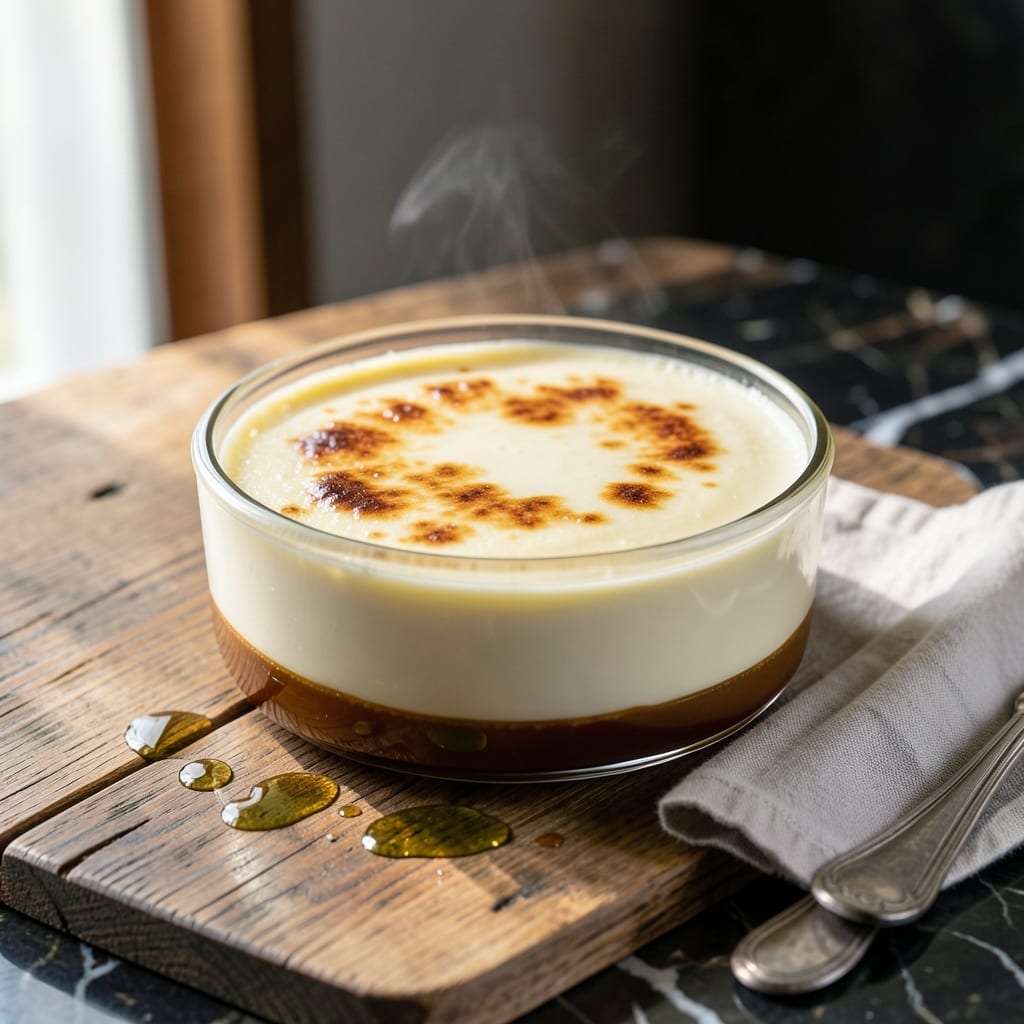
This Filipino flan delivers a silky custard topped with a golden caramel layer that’s impossible to resist. I’ve perfected the balance between creamy texture and sweet depth.
The traditional method ensures a smooth finish with minimal effort. Just a few ingredients and gentle baking create a dessert that feels both nostalgic and luxurious.
Ingredients for Recipe for Filipino Flan
Simple ingredients create this luxurious custard with its signature caramel topping.
| Ingredient | Amount | Notes |
|---|---|---|
| Granulated Sugar 🍚 | 1 cup | Divided for caramel and custard |
| Water 💧 | ¼ cup | For caramel syrup |
| Large Eggs 🥚 | 6 whole | Room temperature for smooth texture |
| Egg Yolks 🐣 | 4 whole | Extra yolks for richness |
| Evaporated Milk 🥛 | 1 can | 12 oz can, full-fat |
| Sweetened Condensed Milk 🥛 | 1 can | 14 oz can, standard brand |
| Vanilla Extract 🌿 | 1 tsp | Pure extract for depth |
| Whole Milk 🥛 | ½ cup | Optional for lighter texture |
| Calamansi Juice 🍋 | 1 tbsp | Or substitute lime juice |
| Salt 🧂 | ¼ tsp | Balances sweetness |
[recipe_ingredient_scaler]
The evaporated and condensed milk are non-negotiable here. Carnation is the standard brand most Filipino cooks trust—look for the blue cans. Eggs must be fresh but at room temperature (just set them out 30 minutes before starting). The granulated sugar for caramel should be fine grain, not coarse, to dissolve evenly. Domino or store brand works perfectly.
No calamansi? Lime or lemon juice at the same amount works fine. Want a deeper caramel? Use light brown sugar instead of white—adds a molasses note. For a lighter flan, 2% milk replaces the whole milk without issue. If you only have egg whites leftover, save them for meringues—this recipe needs the yolks for that signature silkiness.
The custard sets as it cools, so don’t rush it. Refrigerate at least 4 hours or overnight for clean slices. Keeps well covered for 5 days, though it’s best the first two. Leftovers? Unthinkable in my house.
Why You’ll Love This Recipe
- One-Bowl Wonder: I just mix the eggs, yolks, evaporated milk, and sugar in one bowl—no fancy tools, no mess.
- Caramel Magic: That first crack into the golden caramel top? Pure joy. The evaporated milk makes it so creamy it melts on your tongue.
- Feeds a Crowd: I make this for potlucks and it’s always the first to disappear. Doubling the batch takes the same effort.
- Budget Keeper: Eggs and evaporated milk are cheap, and it turns into something that tastes like a fancy dessert. Leftovers? Even better the next day.
Step-by-Step Instructions for Filipino Flan
Master the technique for a smooth custard with a perfect caramel layer using this reliable method.
Step 1: Prepare the Caramel Syrup
In a small saucepan, combine ½ cup Granulated Sugar with the 0.25 cup Water. Place over medium heat and stir just until the sugar dissolves completely. This initial stirring prevents sugar from sticking to the pan bottom.
Once dissolved, stop stirring and let the mixture cook undisturbed for 8-10 minutes until it turns a deep amber color. Watch carefully as it can burn quickly. Immediately pour the hot caramel into your flan mold, tilting to coat the bottom evenly. Set aside to cool and harden while you prepare the custard.
Step 2: Blend the Custard Mixture
In a blender, combine the 6 whole Large Eggs, 4 whole Egg Yolks, 1 can Evaporated Milk, and 1 can Sweetened Condensed Milk. Blend on low for 20 seconds until fully homogeneous. The mixture should be smooth with no visible streaks of egg or milk.
Add the 1 tsp Vanilla Extract, 0.5 cup Whole Milk, 1 tbsp Calamansi Juice, and 0.25 tsp Salt. Blend for another 10 seconds to incorporate. Strain the mixture through a fine-mesh sieve into a pitcher to remove any bubbles or lumps for the silkiest texture.
Step 3: Assemble and Steam the Flan
Pour the strained custard mixture over the hardened caramel in your mold. Cover the mold tightly with aluminum foil to prevent water from seeping in during steaming. Place the mold in a large steaming pot or deep baking dish.
Add hot water to the pot until it reaches halfway up the sides of the mold. Bring to a gentle simmer, then reduce heat to low. Steam for 45-50 minutes until the center is just set—it should jiggle slightly like gelatin when shaken gently. Avoid boiling water as it can cause the custard to curdle.
Step 4: Cool and Chill for Perfect Texture
Carefully remove the mold from the steamer and let it cool to room temperature on a wire rack, about 30 minutes. This gradual cooling prevents the flan from cracking or developing a skin on top.
Once cooled, refrigerate for at least 4 hours, but preferably overnight. The long chilling time allows the custard to fully set and develop its signature silky texture. The caramel will also soften slightly, making it easier to invert later.
Step 5: Unmold and Serve
To serve, run a thin knife around the edge of the flan to loosen it from the mold. Place a serving plate over the mold and quickly invert. The caramel syrup should pour out over the custard, creating that signature glistening blanket.
Slice with a sharp, hot knife for clean portions. Each serving should have a glossy caramel top, creamy custard beneath, and no air bubbles. Serve chilled for the best texture and flavor experience.
Pro Tips For Making Recipe For Filipino Flan
- Melt Sugar Slowly: Cook the sugar and water over medium-low heat, resisting the urge to stir once it starts bubbling. I learned this the hard way—stirring after the sugar dissolves can cause crystallization, leading to a grainy caramel.
- Strain the Custard: After whisking the eggs, yolks, and evaporated milk, strain the mixture through a fine-mesh sieve. This removes any lumps and guarantees a silky smooth texture in your flan.
- Skip the Boiling Water: Use hot (not boiling) water for the bain-marie to prevent the flan from cooking too quickly. Boiling water can cause the edges to curdle before the center sets.
- Cool Before Unmolding: Let the flan cool at room temperature for at least 30 minutes, then refrigerate for 4 hours or overnight. Trying to unmold it too soon will leave you with a runny mess—yes, even if you’re impatient like me.
Perfect Pairings for recipe for filipino flan
Beverage Pairings
I love serving this custard with strong black coffee—the bitterness cuts through the sweetness beautifully. Try Barako coffee, a bold Filipino variety that stands up to the caramel’s richness. A small espresso works equally well for a more concentrated experience. ☕
Fruit Companions
Fresh mango slices or ripe pineapple chunks add a bright contrast to the creamy flan. The tropical sweetness complements without overpowering. I often serve with calamansi wedges for guests to squeeze over their slice for a citrusy lift.
Dessert Wine
A chilled Moscato d’Asti with its light fizz and honeyed notes pairs wonderfully. The bubbles cleanse your palate between bites. For a local touch, Tondon Philippines’ sweet white wine offers similar harmony with Filipino flavors.
Tea Options
Pandan tea enhances the custard’s vanilla notes with its aromatic, slightly nutty profile. I steep 2 fresh pandan leaves in hot water for 5 minutes. Alternatively, jasmine tea provides a delicate floral contrast that many of my guests adore.
Crunchy Textures
Sprinkle toasted pinipig (pounded rice) over each serving for a nutty crunch. If unavailable, crushed graham crackers work as a substitute. The contrast in texture makes every bite more exciting.
Savory Balance
For a bold contrast, serve with a small portion of queso de bola (Edam cheese) and ensaymada (Filipino sweet bread). The salty-sweet combination is a holiday tradition in many Filipino homes. 💛
Nutrition Facts
Frequently Asked Questions
Why do I need to use both evaporated and condensed milk?
The evaporated milk provides a creamy base while condensed milk adds sweetness and thickness. Together they create the signature rich, silky texture traditional to Filipino flan.
Can I bake this in the oven instead of steaming?
Yes, but use a water bath. Place the mold in a larger pan with 1 inch of hot water. Bake at 325°F for 50-60 minutes until the center jiggles slightly.
How can I prevent bubbles in my custard?
Straining the mixture after blending removes air bubbles. Also, avoid overmixing and pour the custard slowly into the mold to minimize foam formation.

Trained in classic French technique but raised on slow-cooked ribs and spicy rubs, she blends culinary skill with smoke and soul.
- Recipe for Fully Cooked Spiral Ham: Sweet Glaze and Effortless Elegance - October 3, 2026
- Recipe for Cream of Rice: Silky Smooth Breakfast Comfort - October 3, 2026
- Old Fashioned Beef and Noodles Recipe Crock Pot: Set-It-and-Forget-It Hearty Meal - October 3, 2026