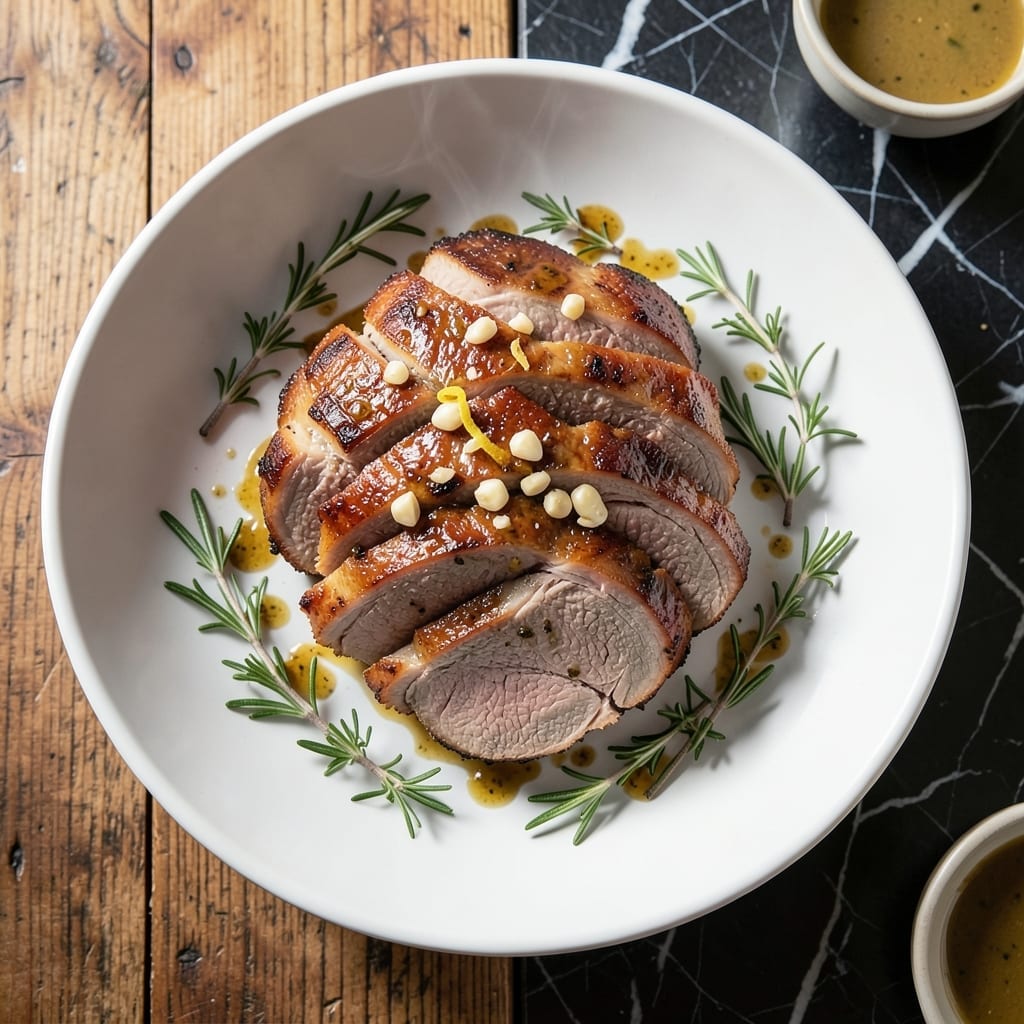
I developed this method after realizing most home cooks overcomplicate pork tenderloin. The secret is a high-heat sear followed by a 25-minute roast.
This creates a tender, juicy center with a flavorful herb crust. Simple ingredients, professional results every time.
Ingredients for Recipe Roasted Pork Tenderloin
A few quality ingredients transform pork tenderloin into a restaurant-worthy centerpiece in minutes.
| Ingredient | Amount | Notes |
|---|---|---|
| Pork Tenderloin 🥩 | 1 ½ lb | Trimmed of excess fat |
| Olive Oil 🫒 | 2 tbsp | Extra-virgin preferred |
| Dijon Mustard 🟡 | 1 ½ tbsp | For herb crust adhesion |
| Fresh Rosemary 🌿 | 2 tbsp | Finely chopped |
| Fresh Thyme 🍃 | 2 tbsp | Leaves stripped from stems |
| Garlic Cloves 🧄 | 4 cloves | Minced finely |
| Kosher Salt 🧂 | 1 ½ tsp | Diamond Crystal preferred |
| Black Pepper 🌶️ | 1 tsp | Freshly cracked |
| Dried Oregano 🌿 | 1 tsp | Mediterranean variety |
| Lemon Zest 🍋 | 1 tbsp | Freshly grated |
| Red Wine Vinegar 💧 | 1 tbsp | For brightness |
| Unsalted Butter 🧈 | 1 tbsp | For finishing |
[recipe_ingredient_scaler]
The pork tenderloin is the star—select pieces with even thickness (about 1.5 inches diameter) for consistent cooking. Whole Foods and Costco carry excellent options. Look for a pale pink color with minimal marbling (this cut is naturally lean). Avoid enhanced or pre-brined versions, as they interfere with the herb crust’s ability to form. Fresh herbs from the produce section outperform dried every time for this application.
No fresh rosemary or thyme? Dried herbs at one-third the amount work in a pinch, though the flavor profile will be more concentrated. Out of Dijon? Whole-grain mustard adds pleasant texture, or use regular yellow mustard with a pinch of turmeric for color. The red wine vinegar can be swapped for apple cider vinegar without issue. Unsalted butter is essential here—salted varieties can make the crust overly salty.
Store pork tenderloin in its original packaging in the coldest part of your refrigerator for up to 3 days. For longer storage, freeze for up to 6 months. The herb mixture can be prepped a day ahead and stored in an airtight container. Bring the pork to room temperature for 30 minutes before cooking for even doneness.
Why You’ll Love This Recipe
- One Pan Wonder: I toss the pork with olive oil, mustard, and herbs, then roast—no extra dishes, just flavor.
- Herb-Crusted Heaven: That Dijon-mustard crust with rosemary and thyme? Ridiculously good, crispy outside, tender inside.
- Weeknight Hero: Honestly, it’s my go-to for busy Tuesdays—ready in 30, fancy enough for guests.
- Leftovers Magic: The slices reheat beautifully for sandwiches or salads. I’ll be real: I make extra on purpose.
Step-by-Step Instructions for Roasted Pork Tenderloin
Here’s the method. Straightforward, tested, works every time.
Step 1: Prepare the Herb Marinade
In a small bowl, combine the 2 tbsp olive oil, 1.5 tbsp Dijon mustard, 2 tbsp fresh rosemary, 2 tbsp fresh thyme, 4 cloves minced garlic, 1.5 tsp kosher salt, 1 tsp black pepper, 1 tsp dried oregano, 1 tbsp lemon zest, and 1 tbsp red wine vinegar.
This creates a fragrant paste that will adhere beautifully to the pork. I find that whisking vigorously for 30 seconds ensures all the herbs and aromatics are evenly distributed throughout the mixture. The acidity from the vinegar and mustard helps tenderize the meat while the herbs infuse it with complex flavor.
Step 2: Coat and Rest the Pork
Pat the 1.5 lb pork tenderloin completely dry with paper towels. This is crucial for achieving a good sear and allowing the marinade to cling properly. Place the pork on a cutting board and rub the herb mixture all over the surface, pressing firmly to ensure even coverage.
Let the coated pork rest at room temperature for 15-20 minutes. This resting period allows the salt to begin penetrating the meat and the flavors to meld. The pork should develop a slightly sticky exterior as the marinade sets, which will create a beautiful crust during roasting.
Step 3: Sear and Roast to Perfection
Preheat your oven to 425°F. While the oven heats, warm a large oven-safe skillet over medium-high heat. Add the pork and sear for 2-3 minutes per side until the surface develops a golden-brown crust.
The pork should release easily from the pan when it’s properly seared. Transfer the skillet directly to the preheated oven and roast for 12-15 minutes, or until an instant-read thermometer inserted into the thickest part registers 145°F. The internal temperature will continue to rise a few degrees during resting.
Step 4: Rest and Finish with Butter
Remove the pork from the oven and transfer it to a cutting board. Tent loosely with foil and let rest for 10 minutes. This resting period allows the juices to redistribute throughout the meat, ensuring each slice remains moist and tender.
Just before slicing, top the pork with the 1 tbsp unsalted butter and let it melt over the surface. This final touch adds a luxurious sheen and an extra layer of richness to the herb crust. Slice against the grain into ½-inch thick medallions and serve immediately.
Pro Tips For Making Recipe Roasted Pork Tenderloin
- Sear First, Roast After: I learned this the hard way—searing the pork tenderloin in a hot pan for 2 minutes per side before roasting locks in the juices and gives that golden crust you want.
- Pat It Dry: After burning three batches, I finally figured out that blotting the tenderloin with paper towels before seasoning makes the mustard and herbs stick better and promotes even browning.
- Don’t Overcrowd Herbs: Skip dumping all the rosemary and thyme in one spot—spread them out under and over the pork so every bite gets that fresh, aromatic kick.
- Rest Under Foil: Give it a solid 10 minutes under foil after roasting—sounds weird, but it works and keeps the meat impossibly tender.
Perfect Pairings for These Flavors
Wine Pairings
A crisp Pinot Noir from Oregon complements the herb crust beautifully—its bright acidity cuts through the richness. I love Domaine Drouhin for its balance of red fruit and earthy notes that echo the rosemary and thyme. 🍷
Beer Options
A malty Amber Ale like Fat Tire enhances the pork’s savory depth. For something lighter, a Belgian Tripel with its fruity esters and spice notes pairs surprisingly well with the lemon zest and herbs.
Side Dishes
Try roasted root vegetables like carrots and parsnips—toss 2 cups chopped veggies with 1 tbsp olive oil and roast at 400°F for 20 minutes. Their caramelized sweetness contrasts the pork’s savory herb crust perfectly.
A simple apple-fennel salad with 1 sliced apple, 1 bulb shaved fennel, and 2 tbsp lemon juice adds a refreshing crunch. The anise notes in fennel bridge beautifully with the pork’s flavors.
Sauce Pairings
A tangy whole-grain mustard sauce amplifies the dish. Whisk 2 tbsp whole-grain mustard, 1 tbsp honey, and 1 tsp red wine vinegar for a quick glaze. Drizzle lightly over each medallion before serving. 💫
Nutrition Facts
Frequently Asked Questions
What’s the best internal temperature for pork tenderloin?
Remove from oven at 145°F internal temperature. The USDA confirms this is safe and yields the juiciest results. Resting will bring it to 150-155°F.
Can I use dried herbs instead of fresh?
Yes, but reduce the amount to 1/3 of fresh. Dried herbs are more concentrated. For this recipe, use 2 tsp dried rosemary and 2 tsp dried thyme instead.
Why does the pork need to rest before slicing?
Resting for 10 minutes lets juices redistribute. Slicing too soon causes them to spill out, leaving the meat dry. The temperature also evens out during this time.
How do I prevent the herb crust from burning?
Press the herb mixture firmly onto the pork and sear first. The 2-3 minute sear sets the crust before roasting at 425°F.

Trained in classic French technique but raised on slow-cooked ribs and spicy rubs, she blends culinary skill with smoke and soul.
- Recipe for Dumplings in Crock Pot: Fluffy Pillows with Minimal Effort - October 3, 2026
- Recipe For Diced Pork In Slow Cooker: Melt-In-Your-Mouth Tenderness All Day - October 3, 2026
- Recipe for Crock Pot Lasagna Using Ravioli: No-Boil Cheese Layers - October 3, 2026