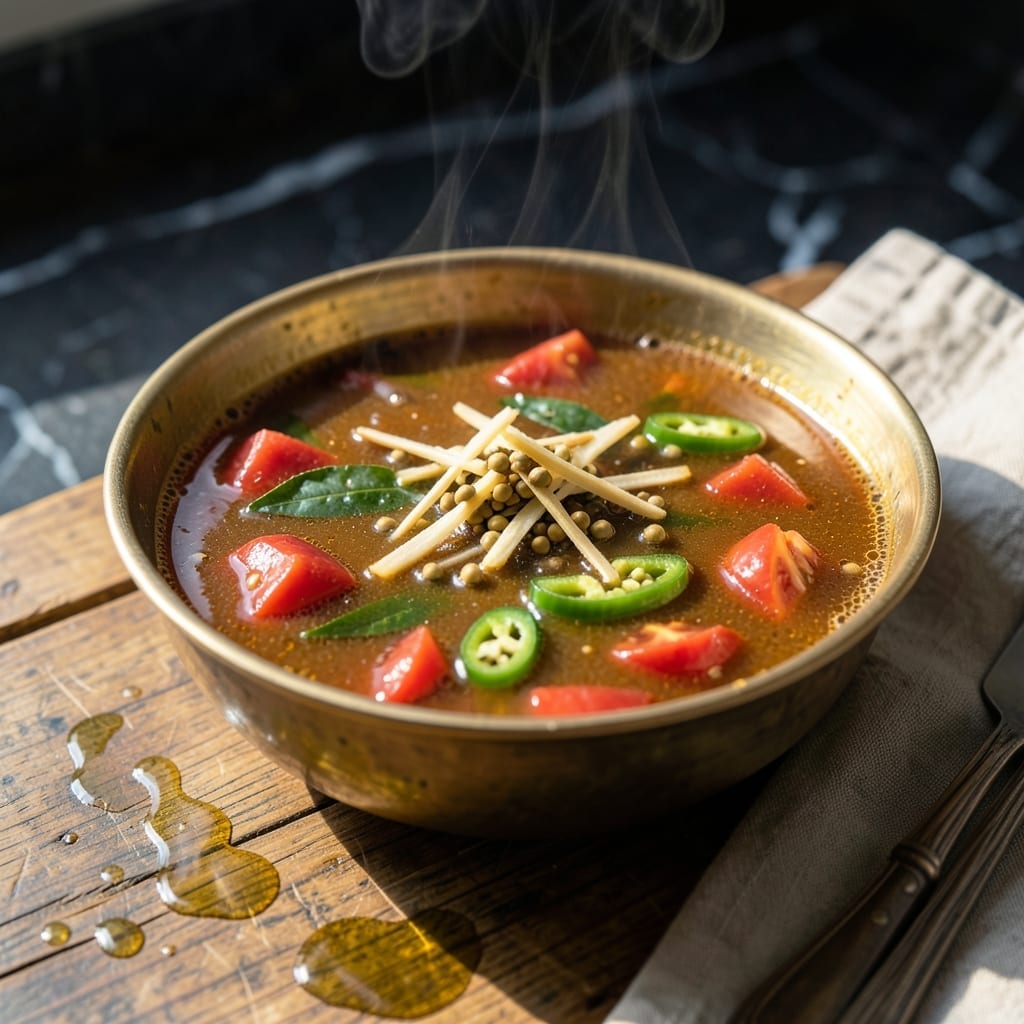
This South Indian soup delivers comfort in every warm, tangy spoonful. I’ve refined this method to balance tamarind’s sourness with aromatic spices, creating a light yet deeply satisfying dish.
Simple ingredients come together through careful temperature control, ensuring the flavors meld without overpowering. The result is a fragrant, soothing bowl that’s both nourishing and full of tradition.
Ingredients for Recipe to Make Rasam
Warm, tangy, and aromatic ingredients create this comforting South Indian classic.
| Ingredient | Amount | Notes |
|---|---|---|
| Tamarind Pulp 🍋 | 2 tbsp | Seedless, soaked in warm water |
| Tomatoes 🍅 | 2 whole | Medium-sized, finely chopped |
| Green Chili Peppers 🌶️ | 2 whole | Slit lengthwise, adjust to taste |
| Fresh Ginger 🌿 | 1 tbsp | Peeled and minced |
| Fresh Curry Leaves 🍃 | 1 tbsp | Roughly torn for flavor |
| Asafoetida 🧂 | ¼ tsp | Hing, essential for aroma |
| Cumin Seeds 🌿 | 1 tsp | Whole, for tempering |
| Mustard Seeds 🌿 | 1 tsp | Black or yellow variety |
| Dried Red Chilies 🌶️ | 2 whole | Broken into pieces |
| Turmeric Powder 🌶️ | ½ tsp | Ground, for color and earthiness |
| Salt 🧂 | 1 tsp | Adjust to taste preference |
| Fresh Coriander Leaves 🌿 | ¼ cup | Chopped, for garnish |
| Water 💧 | 4 cups | For desired consistency |
| Ghee 🧈 | 1 tbsp | Clarified butter, for tempering |
[recipe_ingredient_scaler]
The tamarind is non-negotiable here—look for seedless pulp at Indian grocery stores or specialty aisles in larger supermarkets. Fresh curry leaves are ideal (often sold in the refrigerated produce section), but dried work in a pinch. Asafoetida (hing) is the secret aromatic base; Patel Brothers or Indian Bazaar carry authentic versions. For the best flavor, use ripe, firm tomatoes and freshly ground spices.
No tamarind? Lemon juice at half the quantity plus a pinch of sugar mimics the tang. Short on curry leaves? A bay leaf plus a pinch of lime zest helps. Ghee can be substituted with neutral oil for a lighter version. Green chilies can be adjusted—remove seeds for milder heat. For extra depth, toast the cumin and mustard seeds lightly before tempering.
Rasam tastes best fresh but keeps for 2-3 days refrigerated. Reheat gently to preserve the bright flavors. The tamarind pulp and spices can be stored separately for up to 6 months in a cool, dark place. Always add fresh coriander just before serving.
Why You’ll Love This Recipe
- 20-Minute Magic: I can have this simmering while I set the table—just tamarind, tomatoes, and a quick tempering of curry leaves and ginger.
- Tangy Heat: The tamarind’s sharpness balanced with green chili’s kick and fresh ginger’s zing is ridculously good.
- Weeknight Rescue: Honestly, it’s my go-to when I need something light yet satisfying for dinner (yes, even on a Tuesday night).
- Budget Stretcher: A handful of pantry staples and fresh curry leaves feed four for pennies—leftovers taste even better the next day.
Step-by-Step Instructions for Rasam
This traditional method delivers a perfectly balanced, tangy broth every time.
Step 1: Prepare the Tamarind Base and Tomato Mixture
Soak the 2 tbsp Tamarind Pulp in ½ cup of the 4 cups Water for 10 minutes, then squeeze to extract the juice. Discard the solids. This creates the base for that signature sour tang.
In a bowl, combine the finely chopped 2 whole Tomatoes, minced 1 tbsp Fresh Ginger, slit 2 whole Green Chili Peppers, and 1 tsp Salt. Mash these together into a coarse paste. The tomatoes break down during cooking, so they don’t need to be perfectly smooth.
Step 2: Temper the Spices in Ghee
Heat the 1 tbsp Ghee in a saucepan over medium heat. Add the 1 tsp Mustard Seeds and wait for them to pop—this takes about 30-45 seconds. Immediately add the 1 tsp Cumin Seeds, 2 whole Dried Red Chilies, and 0.25 tsp Asafoetida.
Stir for 10-15 seconds until the cumin seeds sizzle and turn light golden brown. The asafoetida will release its pungent aroma almost instantly. Add the roughly torn 1 tbsp Fresh Curry Leaves and sauté for another 10 seconds—just until they crisp slightly.
Step 3: Build the Rasam Base
Pour the tamarind extract and the remaining 3½ cups Water into the saucepan with the tempered spices. Add the tomato-ginger-green chili mixture and 0.5 tsp Turmeric Powder. Stir well to combine.
Bring to a boil, then reduce heat to medium-low and simmer for 10-12 minutes. The liquid should reduce slightly and develop a vibrant orange hue. You’ll notice the raw tomato smell disappears as the flavors meld together.
Step 4: Adjust Consistency and Finish
Taste and adjust the salt if needed—the 1 tsp Salt should be enough, but rasam often benefits from a touch more. The consistency should be like a thin soup; add a splash more water if it’s too thick.
Turn off the heat and let it sit for 2 minutes. The flavors deepen as it rests. Just before serving, stir in the chopped 0.25 cup Fresh Coriander Leaves. The fresh cilantro adds a bright, herbal finish.
Pro Tips For Making Recipe To Make Rasam
- Simmer, Don’t Boil: Once you add the tamarind pulp, keep it at a gentle simmer—boiling makes the rasam bitter. I learned this the hard way after ruining two batches.
- Toast the Spices: Dry-roast mustard seeds, cumin, and peppercorns for 30 seconds before adding to the tempering. Sounds weird, but it works—the flavor deepens noticeably.
- Use Ripe Tomatoes: Overripe, soft tomatoes blend better and sweeten the rasam naturally. Skip the firm ones—they’ll leave a raw taste no matter how long you cook them.
- Crush the Ginger: Instead of grating, crush fresh ginger with a mortar and pestle—it releases more juice and aroma. My grandmother swore by this, and she was right.
Wine and Beer Pairings for This Dish
Light Beer Pairings
Indian lagers like Kingfisher or Taj Mahal work beautifully—their crisp, clean profile complements the tangy broth without overpowering it. I find 12 oz of chilled beer enhances the spice notes perfectly. 🍺
White Wine Options
A dry Riesling from Germany or Washington State offers citrus notes that echo the tamarind’s sourness. The slight sweetness balances the chili heat beautifully. Serve at 45-50°F for optimal crispness.
Rosé Choices
For something different, try a dry Provence rosé with its delicate berry and floral notes. The acidity cuts through the ghee’s richness while harmonizing with the spices. I prefer Whispering Angel for its consistency.
Non-Alcoholic Pairings
A chilled mango lassi provides cooling contrast to the spicy elements. For a simpler option, sparkling water with a lime wedge cleanses the palate between bites. Both options work wonderfully for lunch pairings.
Red Wine Avoidance
I’d steer clear of bold reds—their tannins clash with the tamarind’s acidity. Even lighter reds like Pinot Noir tend to taste metallic against the dish’s bright flavors. Stick to whites or light beers instead.
Temperature Tips
Serve your rasam piping hot and your beverages ice-cold. This temperature contrast makes each sip more refreshing. I always keep a pitcher of iced water on the table as well. ❄️
Nutrition Facts
Frequently Asked Questions
How long can I store leftover rasam?
Leftover rasam stays fresh in the fridge for 2-3 days in an airtight container. Reheat gently on the stove to preserve its bright, tangy flavor. Avoid microwaving to prevent uneven heating.
Can I make rasam without tamarind?
Yes! Substitute with 1 tbsp lemon juice plus a pinch of sugar for similar tang. The flavor will be slightly different but still delicious. Fresh lime works too.
Why did my rasam turn bitter?
Overcooking tamarind or using too much can cause bitterness. Simmer for only 10-12 minutes after adding tamarind, and taste as you go. Fresh tamarind pulp gives the best results.
What’s the best way to adjust spice levels?
Control heat by reducing green chilies or removing their seeds. For extra warmth, add a pinch of red chili powder. Balance is key in this dish.

Trained in classic French technique but raised on slow-cooked ribs and spicy rubs, she blends culinary skill with smoke and soul.
- Recipe for Fully Cooked Spiral Ham: Sweet Glaze and Effortless Elegance - October 3, 2026
- Recipe for Cream of Rice: Silky Smooth Breakfast Comfort - October 3, 2026
- Old Fashioned Beef and Noodles Recipe Crock Pot: Set-It-and-Forget-It Hearty Meal - October 3, 2026