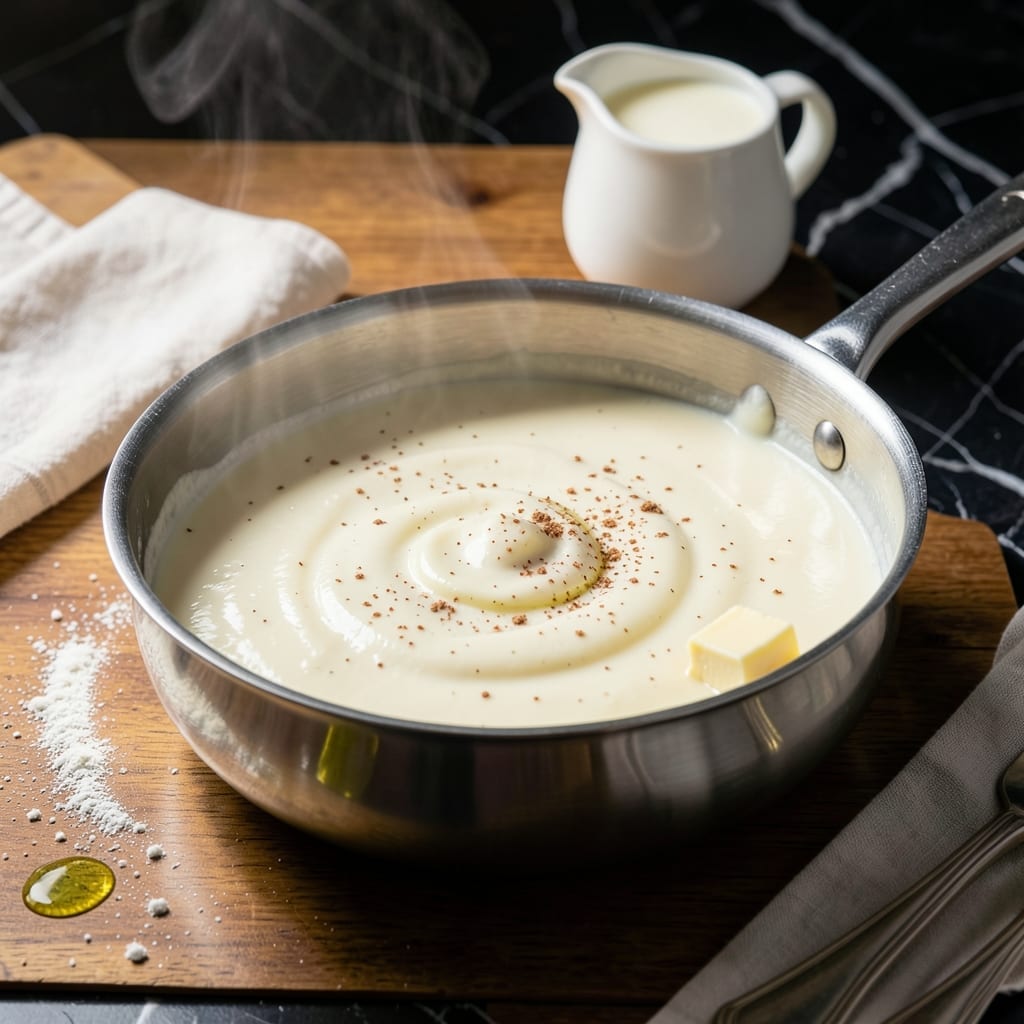
This classic white sauce is the foundation of countless dishes, from creamy pasta to rich casseroles. Mastering this velvety béchamel opens up endless culinary possibilities.
With just a few simple ingredients and proper technique, you’ll create a smooth, lump-free sauce that elevates any meal. The key is patience and constant stirring.
Ingredients for Recipe to Make White Sauce
Eight ingredients transform into this velvety foundation for countless classic dishes.
| Ingredient | Amount | Notes |
|---|---|---|
| Whole Milk 🥛 | 2 cups | Whole for richest texture |
| Unsalted Butter 🧈 | 3 tbsp | European-style preferred |
| All-Purpose Flour 🌾 | 3 tbsp | For thickening the roux |
| Kosher Salt 🧂 | ½ tsp | Diamond Crystal recommended |
| White Pepper 🌶️ | ¼ tsp | Freshly ground for delicacy |
| Whole Nutmeg 🌰 | 0.125 tsp | Freshly grated for depth |
| Heavy Cream 🥛 | ¼ cup | Optional for extra richness |
| Bay Leaf 🍃 | 1 whole | For subtle aromatic infusion |
[recipe_ingredient_scaler]
The butter and milk quality directly impact the sauce’s texture and flavor. European-style butter (like Plugrá or Kerrygold) has higher fat content for superior smoothness. For milk, whole milk is non-negotiable—lower fat percentages yield a thinner, less luxurious result. The flour should be all-purpose; avoid cake flour as it lacks sufficient protein for proper thickening.
Need a dairy-free version? Oat milk or cashew milk work best (avoid almond milk as it can separate). Replace butter with vegan butter or refined coconut oil. For gluten-free, rice flour or cornstarch can substitute at a 1:1 ratio. The nutmeg is traditional but optional—a pinch of mace offers a similar warmth if you’re out.
Béchamel is best used immediately but can be held in the fridge for 2-3 days. Reheat gently over low heat, whisking constantly. For longer storage, freeze in ice cube trays for up to 3 months. Thaw in the fridge overnight before reheating.
Why You’ll Love This Recipe
- 5-Minute Magic: I melt the butter, whisk in flour, and pour in milk—done before the pasta boils.
- Velvety Smooth: The whole milk and butter blend into this rich, silky sauce that clings to everything.
- Endless Pairings: Honestly, it turns mac and cheese, veggies, or even leftover chicken into something special.
- Pantry Staples: All-purpose flour, butter, milk—I always have these on hand, so it’s my last-minute lifesaver.
Step-by-Step Instructions for White Sauce
Master the classic béchamel technique with precise temperature control and perfect consistency.
Step 1: Create the Roux Base
In a heavy-bottomed saucepan over medium heat, melt the 3 tbsp Unsalted Butter until it begins to foam but does not brown. This gentle melting ensures the milk solids don’t burn, which would impart unwanted color and flavor to your sauce.
Add the 3 tbsp All-Purpose Flour all at once and whisk constantly for 2-3 minutes until the mixture forms a smooth paste and turns a pale golden color. The roux should smell nutty but not toasted. This cooking step removes the raw flour taste and builds the foundation for your sauce’s thickness.
Step 2: Gradually Incorporate the Milk
Slowly pour in the 2 cups Whole Milk, ¼ cup at a time, whisking vigorously after each addition until completely smooth before adding more. This gradual incorporation prevents lumps from forming and ensures a silky texture.
Add the 1 whole Bay Leaf to the saucepan as you begin adding the milk. The steady stream of milk should be thin enough to incorporate smoothly but fast enough to maintain the sauce’s temperature. You’ll notice the mixture thicken as you add more liquid.
Step 3: Cook and Season the Sauce
Once all the milk is incorporated, reduce the heat to medium-low and continue cooking, stirring frequently, for 8-10 minutes until the sauce thickens enough to coat the back of a spoon. The sauce should leave a clear path when you run your finger through it on the spoon.
Season with 0.5 tsp Kosher Salt, 0.25 tsp White Pepper, and 0.125 tsp Whole Nutmeg. The white pepper provides a subtle heat without the visual specks of black pepper, while the nutmeg adds a warm, aromatic depth essential to classic béchamel.
Step 4: Finish with Cream for Richness
Remove the saucepan from heat and discard the bay leaf. Stir in the 0.25 cup Heavy Cream until fully incorporated. This final addition enhances the sauce’s richness and creates an ultra-velvety texture that’s perfect for sophisticated dishes.
The sauce should now have a glossy appearance and a consistency that ribbons off the whisk. If it’s too thick, you can thin it slightly with a splash of warm milk. Taste and adjust seasoning if needed, keeping in mind that the sauce will reduce slightly more as it sits.
Pro Tips For Making Recipe To Make White Sauce
- Start with Cold Milk: I learned this the hard way—adding cold milk slowly to your roux prevents lumps better than warm milk, and you get a smoother sauce every time.
- Cook the Roux Longer: After burning three batches, I finally figured out that cooking the butter and flour for a full 2 minutes (not just until bubbly) removes the raw flour taste.
- Skip the Boiling: Sounds weird, but it works: once the sauce thickens, pull it off the heat immediately—boiling can make it thin or grainy.
- Use a Whisk, Not a Spoon: My grandmother swore by this, and she was right: a whisk breaks up lumps instantly and keeps the sauce silky, especially when adding milk.
Common Mistakes When Making This Dish
Lumpy Sauce
Adding cold milk too quickly to hot roux causes lumps. Always warm your 2 cups Whole Milk slightly first and pour it in ¼ cup at a time, whisking vigorously after each addition. I find using a flat whisk helps break up any potential clumps more effectively than a balloon whisk. 💡
Thin or Runny
If your sauce isn’t thickening, it either needs more cooking time or more 3 tbsp All-Purpose Flour in your roux. Cook for the full 8-10 minutes after adding all milk – the starch needs time to fully hydrate and swell. A heavy-bottomed pan prevents hot spots that can cause uneven cooking.
Burnt Flavor
Medium heat is perfect for melting 3 tbsp Unsalted Butter, but you must stir constantly. If your butter browns, it will give the sauce an off flavor. I always use a light-colored saucepan so I can monitor the color of my roux. If it happens, start over – there’s no saving burnt roux.
Grainy Texture
This usually means your roux wasn’t cooked long enough before adding milk. The raw flour taste needs 2-3 minutes of cooking to develop properly. Also, ensure your flour is fresh – old flour can create a gritty texture. I store mine in the freezer to maintain freshness.
Over-Seasoning
Remember that this sauce often gets reduced further in other recipes. Start with ½ tsp Kosher Salt and taste before adding more. The white pepper and nutmeg are potent – a little goes a long way. You can always add more seasoning, but you can’t take it out. 🌟
Curdled Appearance
If your sauce looks separated or curdled, it might have boiled. Remove from heat immediately and whisk vigorously. If that doesn’t work, a splash of cold milk can sometimes bring it back together. Prevention is key – maintain that gentle simmer, never a boil.
Nutrition Facts
Frequently Asked Questions
Can I use low-fat milk instead of whole?
Whole milk is ideal for the creamiest texture, but 2% milk can work. Avoid skim as it may result in a thinner sauce. The fat content contributes significantly to the velvety mouthfeel.
How can I make this sauce gluten-free?
Replace the 3 tbsp All-Purpose Flour with rice flour or cornstarch at a 1:1 ratio. Cook the roux for the full 2-3 minutes to remove any raw taste.
Can I make this ahead of time?
Yes! Store in an airtight container in the fridge for 2-3 days. Reheat gently over low heat, whisking constantly to prevent separation.
Why does my sauce taste like raw flour?
Your roux likely didn’t cook long enough. Cook the butter-flour mixture for the full 2-3 minutes until golden and nutty. This step is crucial to eliminate the raw flour taste.

Trained in classic French technique but raised on slow-cooked ribs and spicy rubs, she blends culinary skill with smoke and soul.
- Recipe for Fried Prawns Batter: Ultra-Crispy Golden Shell - October 3, 2026
- Indian Lamb Curry Recipe Pressure Cooker: Fragrant Spices in a Fraction of the Time - October 3, 2026
- Recipe for Oven Roasted: Golden Crisp Perfection Without the Fryer - October 3, 2026