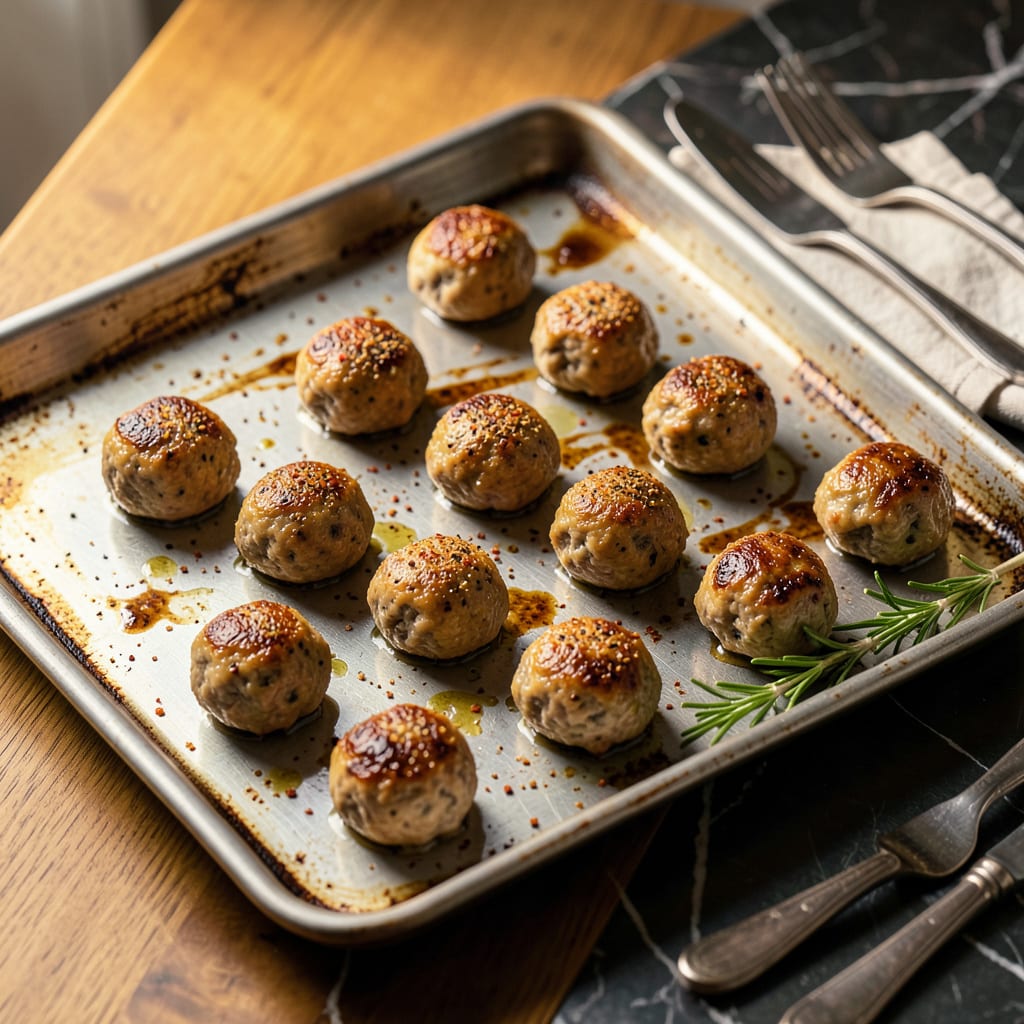
Nothing ruins a good meatball faster than reheating it wrong—dry, rubbery, and sad. I’ve burned through more batches than I’d like to admit before cracking the code for juicy results every time. The oven is your best friend here, but only if you use the right technique with temperature and moisture control.
Here’s the thing—most people blast meatballs at high heat, which sucks out every drop of moisture. I found that 350°F for 10-15 minutes works perfectly, whether you’re dealing with fresh or frozen. The real game-changer? Adding a splash of broth or covering with foil to trap steam. This keeps the inside tender while the outside gets just warm enough.
What you’ll end up with are meatballs that taste almost as good as when they were first made—tender centers, no dryness, and ready to pair with marinara, gravy, or even a creamy sauce. I’ve tested this with everything from Italian-style to Swedish meatballs, and it never fails. The key is patience and that little bit of added moisture.
Fair warning: if you skip the broth or foil, you’re basically asking for disappointment. But do it right, and you’ll wonder why you ever microwaved meatballs in the first place. Let’s get those leftovers back to life.
📚 In This Guide
- What You’ll Need
- Instructions
- Tips and Common Mistakes
What Youll Need
- ● Meatballs: Leftover cooked meatballs (any quantity, but avoid overcrowding the baking sheet).
- ● Baking sheet: 1 standard (18″ x 13″) or 2 smaller sheets for even heating.
- ○ Aluminum foil or parchment paper: Enough to line the baking sheet (optional but recommended for easy cleanup).
- ○ Cooking oil or nonstick spray: Light coating to prevent sticking (optional).
- ● Oven: Preheated to 300–350°F (150–175°C) for best results.
- ● Oven mitts: 1 pair for safe handling.
- ○ Meat thermometer: To check internal temp (optional but ideal for food safety).
- ○ Sauce or broth: 2–3 tbsp per batch (optional, for extra moisture).
- ● Timer: To track reheating time (5–15 mins, depending on size).
- ● Tongs or spatula: For flipping meatballs halfway (if desired).
Instructions
Here’s the foolproof method I use to bring meatballs back to life with all their original juiciness.
Preheat and Prepare for Even Heating
Start by positioning your oven rack in the middle and preheating to 300°F. This moderate temperature is the sweet spot—hot enough to reheat thoroughly but gentle enough to prevent drying out. While the oven heats, arrange your meatballs in a single layer on a baking sheet, leaving about 1 inch of space between them.
I always use a rimmed baking sheet rather than a flat one to catch any juices that might escape. For extra insurance against dryness, place a wire rack inside the baking sheet—this allows hot air to circulate completely around each meatball. If your meatballs are particularly large (think golf ball size), you might want to cut them in half to ensure even heating throughout.
Create a Moisture Barrier
Here’s the secret weapon: add ¼ cup of water or low-sodium chicken broth to the bottom of the baking sheet. The liquid creates steam in the oven environment, which helps prevent the meatballs from drying out. For even better results, cover the entire sheet tightly with aluminum foil—this traps the steam and creates a gentle reheating environment.
If your meatballs were originally saucy (like marinara or gravy), spoon a couple tablespoons of that sauce over them before covering. The sauce will absorb into the meatballs as they reheat, restoring that just-made flavor. Just be careful not to over-sauce them, or they’ll end up steamed rather than properly reheated.
Reheat Gently and Monitor Carefully
Place the prepared baking sheet in the preheated oven. The reheating time will vary based on size: 10-12 minutes for standard 1-inch meatballs, 15-18 minutes for larger ones. Set a timer for the minimum time, then start checking. You’re looking for an internal temperature of 165°F when measured with an instant-read thermometer inserted into the center of a meatball.
About halfway through the reheating time, carefully flip each meatball using tongs. This ensures even heating and prevents one side from drying out. If you notice the pan liquid has evaporated completely before the meatballs reach temperature, add another 2 tablespoons of water or broth to maintain that steamy environment.
Finish with a Quick Broil (Optional)
Once the meatballs reach the proper internal temperature, you have an option for extra flavor. Remove the foil and switch the oven to broil for 1-2 minutes. Keep the oven door slightly ajar and watch constantly—this quick blast of high heat will restore any crispy exterior your meatballs originally had without cooking them further.
This step is particularly effective for meatballs that were originally fried or had a seared exterior. The broiler mimics that initial high-heat cooking, giving you that delightful textural contrast between the slightly crispy outside and juicy interior. Just remember that broiling can go from perfect to burned in seconds, so don’t walk away from the oven during this step.
Rest Briefly Before Serving
Transfer the reheated meatballs to a serving platter and let them rest for 3-5 minutes before serving. This brief resting period allows the juices to redistribute throughout the meatballs rather than running out when you cut into them. You’ll notice the difference in every bite—the meatballs will be uniformly juicy from edge to center.
If you’re serving them with sauce, add it now rather than during reheating. This prevents the meatballs from absorbing too much liquid and becoming soggy. The resting time also gives you a moment to taste-test: if they need a brightness boost, a squeeze of lemon or sprinkle of fresh herbs can work wonders to revive the flavors.
Tips and Common Mistakes
Let me share what I’ve learned from years of reheating meatballs—these small details make all the difference between dry, disappointing results and juicy perfection.
Temperature Strategy: The 300°F setting in Step 1 isn’t arbitrary—it’s the ideal balance between thorough reheating and moisture retention. I’ve found that higher temperatures (like 350°F) can cause the exterior to dry out before the center reaches 165°F. If your oven runs hot, consider reducing to 275°F and extending the 10-12 minute timeframe by a few minutes, checking frequently with your thermometer.
Moisture Management: In Step 2, that ¼ cup of liquid is your insurance policy against dryness, but don’t overdo it. I learned the hard way that too much liquid creates a steaming effect that can make meatballs soggy rather than juicy. If you’re using sauce, remember that two tablespoons is plenty—just enough to rehydrate without turning your meatballs into sponges.
Even Heating Technique: The flip mentioned in Step 3 isn’t just about browning—it’s about heat distribution. Meatballs sitting directly on the pan can develop a tough bottom layer if not turned. I use tongs to gently roll each one rather than just flipping, which ensures every surface gets equal exposure to the 300°F environment. This is especially important for larger meatballs in that 15-18 minute range.
Optional Broiling Wisdom: That 1-2 minute broil in Step 4 can transform good meatballs into great ones, but only if done carefully. I position my oven rack so the meatballs are about 6 inches from the broiler element—close enough to crisp but not so close they’ll burn in seconds. Keep that oven door cracked and watch like a hawk; the difference between perfectly crispy and tragically burned can be mere seconds.
Pro Tips for Reheating Meatballs In Oven
- Let me share what I’ve learned from years of reheating meatballs—these small details make all the difference between …
- Temperature Strategy: The 300°F setting in Step 1 isn’t arbitrary—it’s the ideal balance between thorough reheating a…
- Moisture Management: In Step 2, that ¼ cup of liquid is your insurance policy against dryness, but don’t overdo it. I…
Frequently Asked Questions
Can I reheat frozen meatballs directly in the oven?
Yes, but add 5–10 extra minutes! Place frozen meatballs on a baking sheet at 300°F (150°C) and cover with foil to prevent drying. Check internal temp reaches 165°F (74°C) for safety. For best texture, thaw overnight in the fridge first.
How long do meatballs last in the fridge before reheating?
Cooked meatballs stay fresh for 3–4 days in an airtight container. After that, freeze them for up to 3 months. Always sniff-test before reheating—if they smell sour or off, toss them!
What’s the best way to keep meatballs moist when reheating?
Add a splash of broth, marinara sauce, or water to the baking dish and cover tightly with foil. This creates steam, locking in juices. Avoid overcrowding the pan—space them out for even heating.
Can I use a microwave or air fryer instead of the oven?
Microwave: 1–2 minutes with a damp paper towel (stir halfway). Air fryer: 3–5 mins at 350°F (175°C), shaking once. Oven’s best for large batches, but these work in a pinch!
Why did my meatballs turn out dry or rubbery after reheating?
Overheating or skipping the foil cover is usually the culprit. Reheat at low temp (250–300°F) and pull them out as soon as they hit 165°F. If they’re already dry, serve with extra sauce or gravy!
Reheating meatballs in the oven doesn’t have to mean dry, rubbery results—just a little know-how keeps them juicy and flavorful every time! 🎯 With the right temperature, timing, and moisture tricks (like a splash of broth or a foil tent), you’ll turn leftovers into a meal that tastes almost as good as fresh. Ready to put it into practice? Grab those meatballs, preheat your oven, and enjoy a fuss-free, delicious meal in minutes—no microwave required! 🍽️

Trained in classic French technique but raised on slow-cooked ribs and spicy rubs, she blends culinary skill with smoke and soul.