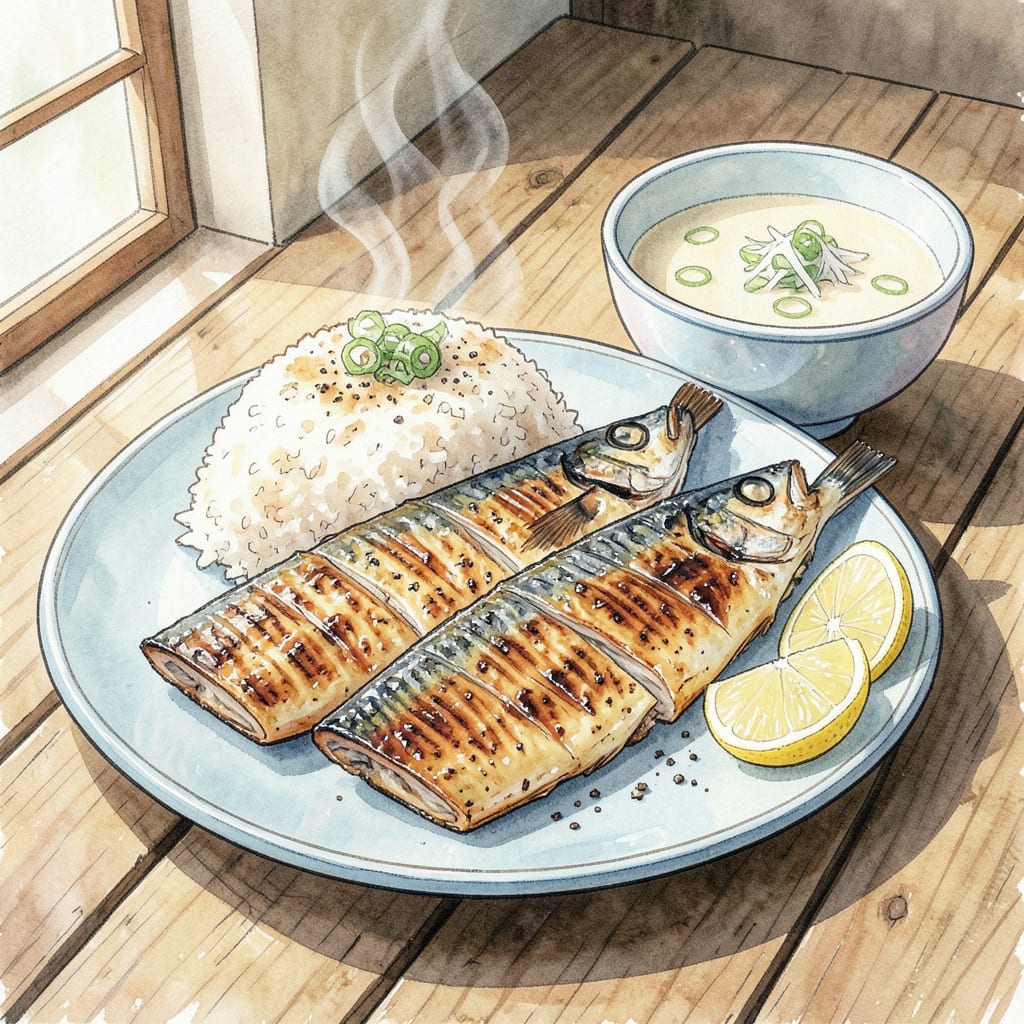
As a pitmaster with French technique training, I’ve discovered that simplicity can be the key to unlocking bold flavors. Saba shioyaki, a traditional Japanese dish, showcases this perfectly with just salt and grilled mackerel.
Grilling mackerel at 400°F for 4-5 minutes per side yields a crispy exterior and tender interior. The result is a beautifully charred, flavorful fish that pairs perfectly with steamed rice and miso soup.
Ingredients for Saba Shioyaki
Essential ingredients for authentic saba shioyaki, a beautifully simple Japanese grilled mackerel dish.
| Ingredient | Amount | Notes |
|---|---|---|
| Mackerel Fillets 🐟 | 4 pieces | Fresh, skin on, scaled |
| Kosher Salt 🧂 | ¼ cup | Coarse, flaky salt preferred |
| Black Pepper 🌶️ | ¼ tsp | Freshly ground, to taste |
| Lemon Wedges 🍋 | 4 whole | For serving, optional |
| Japanese Short-Grain Rice 🍚 | 2 cups | For serving, cooked according to package |
| Miso Soup 🍜 | 4 cups | For serving, homemade or store-bought |
[recipe_ingredient_scaler]
For the best mackerel, look for sashimi-grade at Japanese markets or high-quality fish counters. Freshness is paramount—the fish should have a pleasant ocean smell and firm texture. If you’re having trouble finding mackerel, substitute with sardines or herring for a similar flavor profile. For the salt, Japanese kosher salt or flaky Maldon works best.
No Japanese short-grain rice? Calrose or Koshihikari are good substitutes. For miso soup, you can use store-bought dashi or make your own from scratch using kombu and katsuobushi. If you prefer a lighter salt flavor, start with 2 tablespoons and adjust to taste. The key is to enhance, not overpower, the mackerel’s natural flavor.
Store mackerel fillets in the coldest part of your fridge and use within 24 hours of purchase. Cooked saba shioyaki is best consumed immediately, but you can store leftovers in an airtight container in the fridge for up to 1 day. Reheat gently or enjoy cold. The salt can be stored indefinitely in a cool, dry place.
Step-by-Step Instructions for Saba Shioyaki
Mastering this traditional Japanese dish is easier than you think – let’s get started.
Step 1: Prepare the Mackerel Fillets
Begin by rinsing the 4 pieces Mackerel Fillets under cold running water to remove any residual scales or bloodlines. Pat them dry with paper towels, making sure to dry both the skin side and the flesh side thoroughly. This step is crucial as it helps the 0.25 cup Kosher Salt adhere evenly to the fish.
Season both sides of the mackerel fillets with the 0.25 cup Kosher Salt and a sprinkle of 0.25 tsp Black Pepper. Make sure to cover the entire surface, but don’t overdo it – the salt should form a thin layer. Let the seasoned fillets sit at room temperature for 15-20 minutes to allow the salt to penetrate the fish.
Step 2: Grill the Mackerel to Perfection
Preheat your grill to medium-high heat, aiming for a temperature of around 400°F. Once hot, place the mackerel fillets skin-side down on the grill grates. Cook for 4-5 minutes until the skin becomes crispy and slightly charred. You’ll know it’s ready to flip when the skin releases easily from the grates.
Flip the fillets over and continue grilling for another 3-4 minutes until the flesh is cooked through but still moist. The internal temperature should reach 145°F when checked with a food thermometer. Be careful not to overcook, as mackerel can dry out quickly.
Step 3: Serve with Traditional Accompaniments
While the mackerel is grilling, prepare the accompaniments. Cook the 2 cups Japanese Short-Grain Rice according to package instructions. Heat the 4 cups Miso Soup in a separate pot until warmed through. These traditional sides complement the saba shioyaki perfectly.
Once the mackerel is done, remove it from the grill and serve immediately with the cooked rice, miso soup, and a wedge of lemon on the side. The 4 whole Lemon Wedges add a bright, citrusy note that cuts through the richness of the fish. Enjoy your perfectly grilled saba shioyaki!
Best Sauces and Condiments for This Recipe
Classic Pairings for Saba Shioyaki
Traditional Japanese cuisine offers several perfect accompaniments for saba shioyaki. Steamed Japanese short-grain rice provides a comforting base that absorbs the fish’s savory juices beautifully. A bowl of warm miso soup adds depth with its umami flavors, while pickled vegetables like takuan or cucumber sunomono cut through the richness with their bright acidity. For a complete meal, I often serve saba shioyaki with a simple ohitashi (boiled spinach seasoned with soy sauce and sesame oil) to add some freshness.
Modern Sauce Enhancements
While traditional saba shioyaki relies on the simplicity of salt, modern variations can incorporate various sauces to enhance the flavor. A yuzu-ginger dipping sauce made with fresh yuzu juice, grated ginger, and soy sauce adds a bright, citrusy note that complements the smoky mackerel. Alternatively, a light drizzle of ponzu sauce (citrus-based soy sauce) just before serving provides a refreshing contrast. For those who like a bit of heat, a spicy gochujang mayo (Korean chili paste mixed with mayonnaise) can add an exciting kick.
Condiment Variations
Experimenting with different condiments can elevate your saba shioyaki experience. Try serving with shichimi togarashi (Japanese seven-spice blend) on the side for those who enjoy extra heat and complexity. Some people prefer a sprinkle of sesame seeds and thinly sliced scallions for added texture and flavor. For a more substantial accompaniment, Japanese-style potato salad with kewpie mayonnaise, cucumber, and carrots provides a creamy contrast.
Regional Influences
Different regions of Japan have their own unique ways of enjoying saba shioyaki. In some areas, it’s common to serve the grilled mackerel with grated daikon radish and a drizzle of soy sauce for added moisture and flavor. The Kansai region often pairs it with tsuyu (a dipping sauce made from dashi, soy sauce, and mirin) for a richer taste experience. These regional variations showcase the versatility of saba shioyaki and offer different ways to enjoy this traditional dish.
Personal Touch
I love adding a personal touch to my saba shioyaki by incorporating elements from my own culinary background. Sometimes I’ll serve it with a side of smoked jalapeño slices for an unexpected kick, blending Japanese tradition with my pitmaster roots. The key is to balance respect for the traditional recipe while adding your own creative flair.
Nutrition Facts

Trained in classic French technique but raised on slow-cooked ribs and spicy rubs, she blends culinary skill with smoke and soul.
- Recipe for Curried Lamb Chops: Spice-Rubbed and Pan-Seared to Succulence - October 3, 2026
- Recipe for Boneless Leg of Lamb Roast in the Oven: Herb-Crusted and Rosy Pink Inside - October 3, 2026
- Meat Loaf Recipe With Beef And Pork: Homestyle Blend With Rich Gravy - October 3, 2026