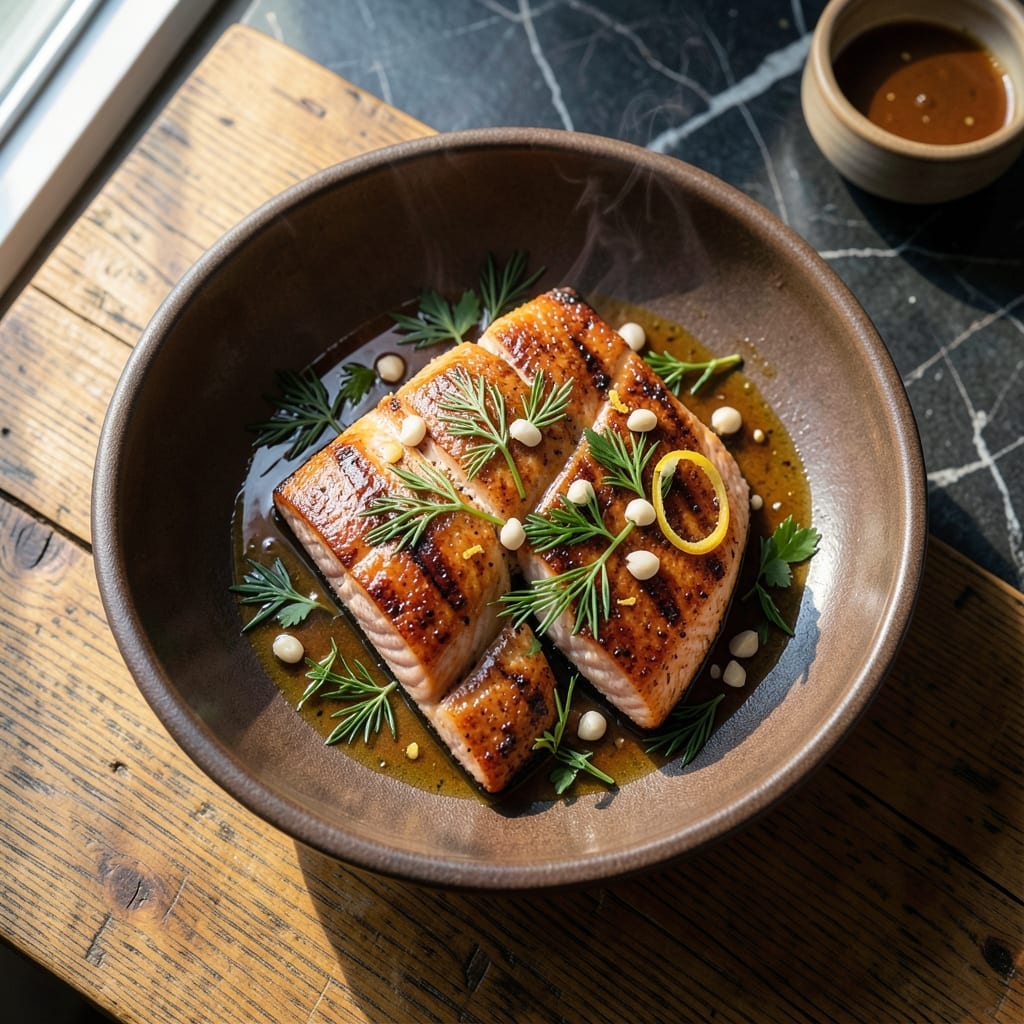
This grilled salmon achieves perfect balance between sweet and smoky flavors. The brown sugar creates a caramelized crust that locks in moisture.
I developed this method after years of experimenting with heat levels and glaze timing. The result is tender, flaky salmon with a glossy, slightly crisp exterior that pairs perfectly with summer sides.
Ingredients for Salmon Grill Recipe Brown Sugar
Perfectly balanced sweet and smoky ingredients for tender grilled salmon with a caramelized crust.
| Ingredient | Amount | Notes |
|---|---|---|
| Salmon Fillets 🐟 | 1 ½ lb | Skin-on, center-cut preferred |
| Brown Sugar 🍚 | ¼ cup | Light or dark variety |
| Soy Sauce 🫒 | 3 tbsp | Low-sodium preferred |
| Olive Oil 🫒 | 2 tbsp | Extra-virgin for richness |
| Garlic Cloves 🧄 | 3 cloves | Minced finely |
| Fresh Ginger 🌿 | 1 tbsp | Grated or minced |
| Lemon Juice 🍋 | 2 tbsp | Freshly squeezed |
| Dijon Mustard 🟡 | 1 tbsp | Smooth variety recommended |
| Ground Black Pepper 🌶️ | 1 tsp | Freshly ground preferred |
| Kosher Salt 🧂 | ½ tsp | Diamond Crystal preferred |
| Smoked Paprika 🌶️ | ½ tsp | For depth of flavor |
| Fresh Cilantro 🌿 | ¼ cup | Chopped, for garnish |
[recipe_ingredient_scaler]
The salmon quality is paramount. Wild-caught sockeye or king from Whole Foods or Costco delivers the best texture and flavor. Center-cut fillets with skin on hold together better on the grill. The brown sugar should be fine-grained—Domino is reliable. For the soy sauce, Kikkoman low-sodium allows better control over seasoning without overwhelming saltiness.
No fresh ginger? Ground ginger at one-quarter the amount works, but fresh is superior. Short on cilantro? Fresh parsley or dill offer different but complementary notes. The Dijon mustard can be swapped for whole-grain mustard for texture, or Worcestershire sauce for umami depth (just reduce soy sauce slightly). The smoked paprika is non-negotiable for that signature smokiness.
Prepare the glaze up to 2 days ahead—flavors meld beautifully. Store raw salmon in the coldest part of the fridge, not the door, and use within 24 hours of purchase. Leftover cooked salmon keeps 3-4 days refrigerated or freezes well for 1 month.
Why You’ll Love This Recipe
- 5-Minute Marinade: I mix the brown sugar, soy sauce, and garlic in a bowl while the grill heats up—no waiting around.
- Sweet & Savory Magic: The caramelized brown sugar crust with the salty soy sauce hits that perfect balance every time.
- Feeds a Crowd: I’ve served this for summer cookouts and quiet weeknights with leftovers that taste even better cold.
- One-Bowl Wonder: Honestly, the whole prep fits in one bowl, one spoon, and my counter stays clean.
Step-by-Step Instructions for Sweet and Smoky Grilled Salmon
Here’s the method. Straightforward, tested, works every time.
Step 1: Prepare the Sweet and Smoky Marinade
In a medium bowl, whisk together the 0.25 cup brown sugar, 3 tbsp soy sauce, 2 tbsp olive oil, 2 tbsp lemon juice, 1 tbsp Dijon mustard, 1 tsp ground black pepper, 0.5 tsp kosher salt, and 0.5 tsp smoked paprika until fully combined.
Add the 3 cloves garlic cloves (minced finely) and 1 tbsp fresh ginger (grated or minced). Stir well to distribute the aromatics evenly. The marinade should be thick and glossy, with the brown sugar mostly dissolved. This blend creates the perfect balance of sweet, smoky, and umami flavors.
Step 2: Marinate the Salmon Fillets
Place the 1.5 lb salmon fillets (skin-on, center-cut preferred) in a shallow dish or resealable plastic bag. Pour the marinade over the fillets, ensuring they are fully coated. Let the salmon marinate at room temperature for 15 minutes, or in the refrigerator for up to 2 hours for deeper flavor penetration.
I recommend skin-side up during marinating so the flesh absorbs maximum flavor. Don’t exceed 2 hours of marinating time, as the acid in the lemon juice and soy sauce can begin to break down the fish texture. The fillets should develop a slightly sticky glaze as they sit.
Step 3: Grill the Salmon to Perfection
Preheat your grill to medium-high heat (about 400°F). Clean and oil the grates thoroughly to prevent sticking. Remove the salmon from the marinade, shaking off any excess, and place it skin-side down on the grill.
Grill for 4-5 minutes until the skin develops a caramelized crust and releases easily from the grates. Flip carefully using a thin spatula and cook for an additional 3-4 minutes until the salmon reaches an internal temperature of 145°F and flakes easily with a fork. The brown sugar in the marinade will create beautiful char marks.
Step 4: Rest and Garnish for Serving
Transfer the grilled salmon to a serving platter and let it rest for 5 minutes. This allows the juices to redistribute throughout the fillets, ensuring moist, tender fish.
Sprinkle with the 0.25 cup fresh cilantro (chopped) just before serving. The cilantro adds a bright, fresh contrast to the rich, smoky-sweet flavors of the salmon. Serve immediately while hot, with any remaining marinade warmed gently in a small saucepan for drizzling if desired.
Pro Tips For Making Salmon Grill Recipe Brown Sugar
- Preheat the Grill: Get those grates screaming hot—medium-high heat, at least 400°F—before the salmon hits them. I learned this the hard way after too many batches stuck to lukewarm grates.
- Pat Salmon Dry: Blot the fillets with a paper towel until they’re bone-dry, then brush with olive oil. Sounds tedious, but it’s the only way to get that caramelized brown sugar crust instead of a soggy mess.
- Skip the Overcrowding: Leave at least an inch between fillets on the grill—any closer and they’ll steam instead of sear. After ruining a batch to “save space,” I now cook in batches if needed.
- Rest Before Serving: Pull the salmon off just before it’s fully done (it’ll keep cooking), then let it rest 5 minutes under foil. My grandmother swore by this, and she was right: it keeps the fish juicy and the brown sugar glaze sets perfectly.
Common Mistakes When Making This Dish
Over-Marinating Disaster
Never let your salmon soak in that sweet marinade for more than 2 hours. The acid in the lemon juice and soy sauce starts breaking down the fish, turning your beautiful fillets mushy. I learned this the hard way at my first BBQ competition. 🌡️
Sticking to the Grates
Always clean and oil your grill grates before cooking. Even with oil, the brown sugar can cause sticking. I use tongues and a brush to scrub, then rub with paper towels dipped in vegetable oil. This creates a non-stick surface.
Flipping Too Soon
The salmon will tell you when it’s ready to flip. If it’s sticking, it’s not ready. Wait for that caramelized crust to form, usually after 4-5 minutes. Use a thin, flexible spatula to gently release it from the grates.
Skipping the Rest
Resting for 5 minutes after grilling is non-negotiable. The juices need time to redistribute through the fillet. Cutting too soon sends all those delicious flavors right onto your cutting board instead of into your salmon.
Uneven Heat
Hot spots on your grill can burn the brown sugar before the salmon cooks through. I always test my grill temperature with an infrared thermometer and adjust burners as needed. Aim for consistent 400°F across the cooking surface. 🔥
Skipping Internal Temp
Don’t guess doneness by color alone. Salmon can look cooked before it reaches 145°F internally. I keep a digital meat thermometer handy and check the thickest part of each fillet for perfect, safe results.
Nutrition Facts

Trained in classic French technique but raised on slow-cooked ribs and spicy rubs, she blends culinary skill with smoke and soul.
- Recipe for Fried Prawns Batter: Ultra-Crispy Golden Shell - October 3, 2026
- Indian Lamb Curry Recipe Pressure Cooker: Fragrant Spices in a Fraction of the Time - October 3, 2026
- Recipe for Oven Roasted: Golden Crisp Perfection Without the Fryer - October 3, 2026