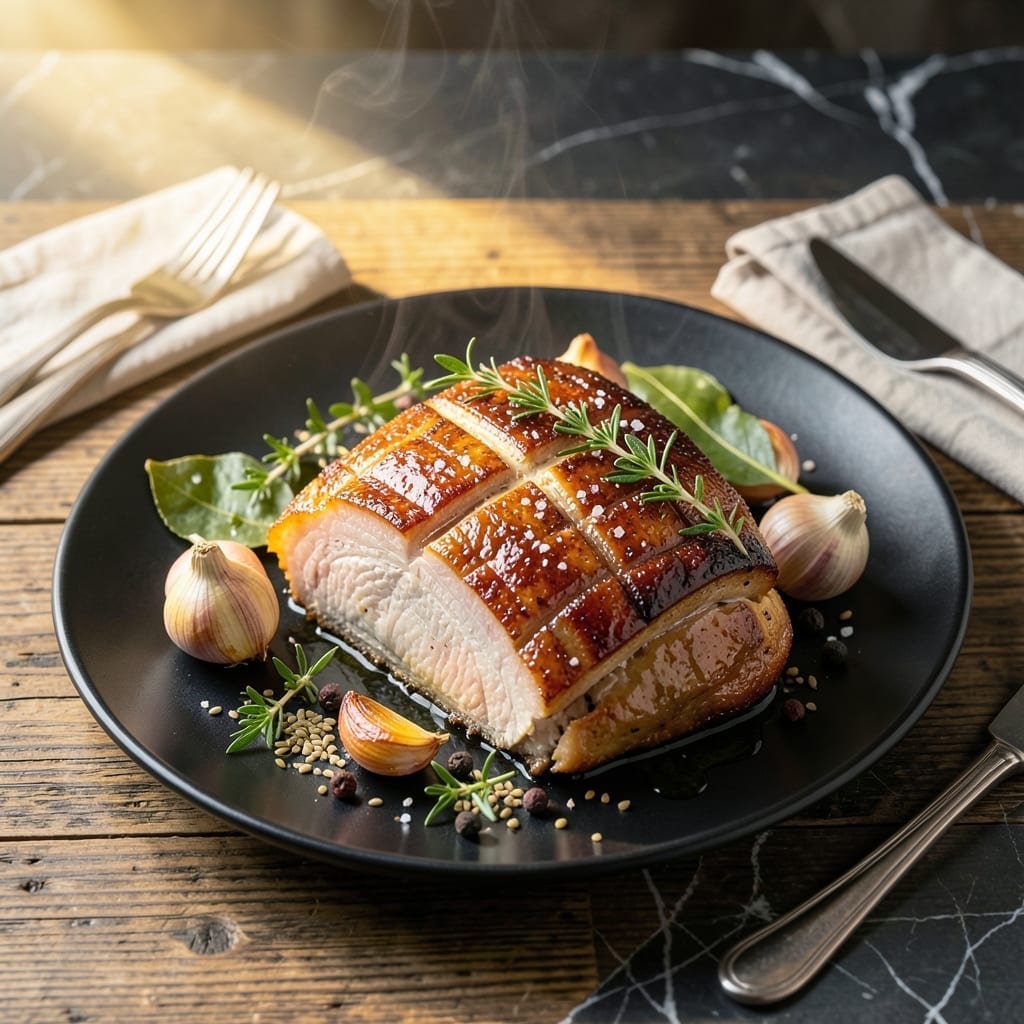
Achieving crispy crackling on pork belly requires patience and precise technique. This method delivers layers that melt in your mouth with a shatteringly crisp top.
I perfected this approach after years of competition cooking, balancing slow roasting with high-heat finishing. The result is restaurant-quality pork belly every time.
Ingredients for Slow Roasted Pork Belly
Patience and precision transform these ingredients into restaurant-quality pork belly with perfect crackling.
| Ingredient | Amount | Notes |
|---|---|---|
| Pork Belly 🥓 | 2 lb | Skin-on, evenly cut slab |
| Kosher Salt 🧂 | 2 tbsp | Diamond Crystal preferred for texture |
| Black Peppercorns 🌶️ | 1 tbsp | Freshly cracked for maximum flavor |
| Fennel Seeds 🌿 | 1 tbsp | Lightly toasted before use |
| Dried Thyme 🍃 | 1 tbsp | Rubbed between fingers to release oils |
| Bay Leaves 🌿 | 4 whole | Fresh or dried, removed before serving |
| Garlic Cloves 🧄 | 8 cloves | Smashed but left whole |
| White Vinegar 💧 | ¼ cup | For acidity balance in dry rub |
| Olive Oil 🫒 | 2 tbsp | Extra-virgin for rubbing exterior |
| Honey 🍯 | 2 tbsp | Optional for caramelized glaze finish |
| Apple Cider Vinegar 🍏 | 1 tbsp | For deglazing and moisture retention |
| Fresh Rosemary Sprigs 🌿 | 4 whole | For aromatic infusing during roasting |
[recipe_ingredient_scaler]
The pork belly quality is paramount—source skin-on, even-fat-cap slabs from a trusted butcher or specialty grocer like Whole Foods. Look for pieces with consistent marbling and a thick, unblemished skin layer. Competition cooks know that Diamond Crystal kosher salt provides the ideal texture for dry-brining without over-curing. The skin should be dry and taut; any moisture will impede crackling development during roasting.
No fennel seeds? Coriander seeds at equal volume provide a similar aromatic depth. Dried rosemary at half the quantity can replace fresh sprigs. For a sweeter profile, swap honey for maple syrup in the glaze. If white vinegar isn’t available, rice vinegar works equally well in the dry rub. The garlic can be halved if you prefer a milder allium presence, but don’t omit it entirely.
The uncooked pork belly can be dry-brined overnight in the fridge for 12-24 hours. Once roasted, leftovers keep remarkably well—store in an airtight container in the fridge for up to 5 days. For longer storage, freeze portions for 3 months. Reheat in the oven to restore crispness to the crackling.
Why You’ll Love This Recipe
- Set and Forget: I rub the pork belly with salt, peppercorns, fennel, and thyme, then let the oven do all the work.
- Crispy, Herby Crust: That slow-roasted skin cracks like glass, while the fennel and thyme infuse every bite with warm, earthy depth.
- Feeds a Hungry Table: This one dish stars at Sunday dinner, then transforms into next-day tacos or ramen topping with zero extra effort.
- Leftovers? Even Better: Honestly, the flavors deepen overnight—cold slices on crusty bread make the best next-day sandwiches.
Step-by-Step Instructions for Slow Roasted Pork Belly
This method ensures crisp crackling while maintaining tender, succulent meat beneath.
Step 1: Prepare the Pork Belly with Dry Rub
Score the skin of the 2 lb Pork Belly in a crosshatch pattern using a sharp knife, cutting through the skin but not into the fat. This allows the fat to render properly and creates more surface area for crispiness.
In a mortar, combine the 2 tbsp Kosher Salt, 1 tbsp Black Peppercorns, 1 tbsp Fennel Seeds, and 1 tbsp Dried Thyme. Grind the Black Peppercorns and Fennel Seeds to a coarse texture. Rub this mixture evenly over the scored skin and all sides of the pork belly. Add the 0.25 cup White Vinegar to help the rub adhere and balance the richness.
Step 2: Add Aromatics and Begin Roasting
Preheat your oven to 300°F. Place the 8 cloves Garlic Cloves, 4 whole Bay Leaves, and 4 whole Fresh Rosemary Sprigs in the bottom of a roasting pan. These aromatics will infuse the meat with flavor as it cooks.
Rub the 2 tbsp Olive Oil over the non-skin side of the pork belly. Place the belly skin-side up on the aromatics in the pan. This low temperature start ensures the fat renders slowly without burning the skin.
Step 3: Slow Roast for Tender Meat
Roast the pork belly uncovered for 2 hours. This slow cooking process breaks down the connective tissue, resulting in meltingly tender meat. Check occasionally to ensure the skin isn’t browning too quickly.
After 2 hours, increase the oven temperature to 425°F. Drizzle the 2 tbsp Honey over the skin. This final high-heat phase will create the crisp crackling. Roast for an additional 20-30 minutes until the skin is deep golden brown and crackles when pressed.
Step 4: Rest and Finish with Vinegar
Remove the pork belly from the oven and transfer it to a cutting board. Discard the Bay Leaves and Rosemary Sprigs. Let it rest for 15 minutes to allow the juices to redistribute.
Before serving, drizzle the 1 tbsp Apple Cider Vinegar over the crackling. This adds a final bright note that cuts through the richness. The vinegar complements the rendered fat and enhances the overall flavor profile without overpowering the dish.
Pro Tips For Making Slow Roasted Pork Belly
- Score Deep: Cut through the skin and fat down to the meat in 1/2-inch intervals—this lets the salt and spices penetrate while creating crispy ridges.
- Salt Overnight: Rub the pork belly with kosher salt and let it sit uncovered in the fridge for at least 12 hours; I learned this the hard way after my first few attempts came out bland.
- Start Hot: Roast at 450°F for the first 30 minutes to jumpstart the skin crisping, then drop to 300°F for the slow render.
- Toast the Spices: Lightly toast the black peppercorns, fennel seeds, and dried thyme before grinding—they’ll smell twice as intense and actually stick to the meat.
Pro Cooking Tips for Slow Roasted Pork Belly
Scoring Perfection
Use a sharp utility knife to score the skin in a ¼-inch diamond pattern. This helps render fat and creates maximum surface area for crispiness. I go deep enough to penetrate the skin but stop before hitting the fat layer. 💡
Dry Brine Magic
Let the seasoned pork belly sit uncovered in your fridge for 12-24 hours. This dry brine draws out moisture while the salt penetrates deep. I learned this trick from a French chef—it’s the secret to that melting texture.
Low and Slow Start
Begin roasting at 300°F for 2 hours to render fat gently. Place a wire rack in your roasting pan to allow air circulation underneath. This prevents the belly from steaming in its own juices.
The Crisping Finish
For the final 20-30 minutes, crank the heat to 425°F after brushing with honey. Watch closely—this is when the magic happens and the skin transforms into crackling. The vinegar drizzle at the end adds that perfect tangy contrast.
Aromatic Foundation
Don’t skip the bed of garlic, bay leaves, and rosemary under the belly. These infuse the meat with subtle flavor as it roasts. I source my fresh herbs from local farmers markets—the difference is noticeable. 🌿
Resting Ritual
Always rest for 15 minutes before slicing. This lets juices redistribute for the most tender bite. I use this time to set the table and pour the wine—multitasking at its finest.
Nutrition Facts
Frequently Asked Questions
Why score the skin before roasting?
Scoring helps render fat and creates more surface area for crispy crackling. Use a sharp knife to cut ¼-inch diamond patterns through the skin only, not into the fat.
Can I skip the dry brine step?
Not recommended. The 12-24 hour dry brine draws out moisture and allows salt to penetrate deeply for that signature melting texture.
How do I know when it’s done?
The skin should be deep golden brown and crackle when pressed. The internal temperature should reach 165°F.
What if my crackling isn’t crispy?
Try increasing the final roast temperature to 425°F for an extra 10 minutes. Ensure the skin was dry before roasting and the oven is fully preheated.

Trained in classic French technique but raised on slow-cooked ribs and spicy rubs, she blends culinary skill with smoke and soul.
- Recipe for Kabsa Rice: Spiced Middle Eastern Feast in One Pot - October 3, 2026
- Hamburger Stir Fry Recipe Healthy: Lean Protein and Veggie-Packed Dinner - October 3, 2026
- Recipe for Curried Lamb Chops: Spice-Rubbed and Pan-Seared to Succulence - October 3, 2026