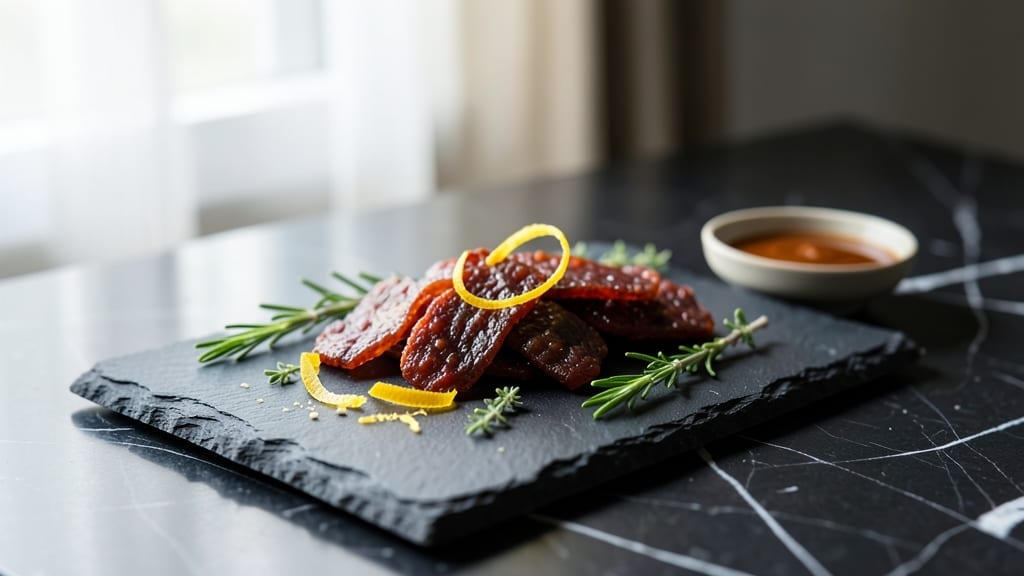
This smoked beef jerky recipe delivers restaurant-quality tender bites with a perfect bark, crafted through precise curing and low-and-slow smoking. Growing up in Nana Mae’s Atlanta diner, I learned how proper meat selection and timing transform tough cuts into melt-in-your-mouth perfection.
The secret lies in balancing salt, smoke, and patience to achieve jerky that’s both safe and irresistibly flavorful.
The process begins with selecting the right cut—top round or flank steak—and slicing it against the grain for maximum tenderness.
A dry brine with coarse kosher salt and spices (like smoked paprika and garlic powder) penetrates deeply, while the smoking phase at 165°F with hickory or oak wood develops that signature bark. Safety is critical: internal temperatures must reach 160°F before drying, ensuring food safety without sacrificing texture.
What you’ll end up with is jerky that’s tender enough to eat with a fork yet firm enough to hold its shape—ideal for snacks, camping trips, or gifting. The low-and-slow method preserves natural flavors while creating a rich, smoky crust.
David (my official taste-tester) insists this version rivals store-bought, and it keeps for up to 3 months in the pantry when properly stored.
For variations, try adding liquid smoke to the brine for extra depth or a sweet glaze of honey and cayenne for heat lovers. Whether you’re a beginner or a seasoned smoker, this method ensures perfect results every time. Let’s get started!
Ingredients for smoked beef jerky
The perfect blend of premium cuts and smoky spices transforms tough beef into melt-in-your-mouth jerky.
| Ingredient | Amount | Notes |
|---|---|---|
| Top Round Beef Roast 🥩 | 3 lb | Center-cut, against grain slicing |
| Coarse Kosher Salt 🧂 | ½ cup | Diamond Crystal preferred |
| Smoked Paprika 🌶️ | 2 tbsp | High-quality, not sweet |
| Garlic Powder 🧄 | 1 tbsp | Freshly ground preferred |
| Ground Black Pepper 🌶️ | 1 ½ tsp | Freshly cracked for best flavor |
| Onion Powder 🧅 | 1 tsp | No added MSG |
| Cayenne Pepper 🔥 | ½ tsp | Adjust for heat preference |
| Hickory Wood Chips 🌳 | 1 package | Unsoaked, food-grade |
| Oak Wood Chips 🌳 | 1 package | Unsoaked, food-grade |
| Liquid Smoke 💨 | 1 tbsp | Optional, for extra depth |
| Honey 🍯 | 1 tbsp | Raw, for optional glaze |
| Baking Soda 🧴 | ½ tsp | For tenderizing (optional) |
[recipe_ingredient_scaler]
The beef is everything—top round from a trusted butcher like Snake River Farms delivers that ideal balance of tenderness and fat. Look for cuts with visible marbling, not the leanest option. Costco often carries pre-sliced top round, but if you’re buying whole, ask for center-cut—it’s less chewy. Slice against the grain, about 1/8-inch thick. Pro tip: Let the meat sit at room temperature for 30 minutes before slicing for even thickness. The wood chips? Traeger or Smoker’s Pride brands are my go-tos—they hold up perfectly during smoking.
No smoked paprika? Regular paprika plus a dash of liquid smoke works in a pinch, but you’ll miss that authentic depth. The liquid smoke is optional but adds that extra restaurant-quality punch—think of it as insurance for perfect bark. Swapping the wood chips? Cherry or pecan add sweetness, while mesquite brings a bold, earthy note. For the heat lovers, double the cayenne, but start with half if you’re unsure. The honey glaze? Skip it if you’re avoiding sugar, but it creates a stunning caramelized crust when brushed on post-smoking.
Store your jerky in an airtight container with parchment paper between layers to prevent sticking. Keeps in the pantry for 3 months—that’s why we make big batches! For gifting, use vacuum-sealed bags with oxygen absorbers to extend shelf life to 6 months. Freezing isn’t recommended since it can dry out the texture. Pro move: Label your containers with the date and spice blend—trust me, you’ll want to make this again.
Why You’ll Love This Recipe
- No-Fuss Smoking: Honestly, this isn’t one of those recipes that requires a fancy setup. Just slice that Top Round against the grain, slap on the salt and baking soda, and let it do its thing in the fridge for a day. The real magic happens in the smoker, but even that’s low-effort—180°F for 4-5 hours with a mix of hickory and oak chips, and you’re golden. No babysitting, no stress.
- Smoky-Spicy Kick: The smoked paprika and garlic powder combo? Chef’s kiss. That’s the kind of flavor that makes you lick your fingers—deep, smoky warmth with just a hint of heat from the cayenne. And that honey glaze at the end? It ties everything together, so you get that perfect balance of savory, sweet, and spicy in every bite. Trust me, it’s addictive.
- Grab-and-Go Snack: Need a protein-packed snack for work, hiking, or just because? This jerky keeps for three months in the pantry—yes, really. I make a big batch every few weeks and stash it in jars. My kids grab it for after-school energy, my husband packs it in his lunch, and I sneak pieces when I think no one’s looking. It’s the ultimate no-thought snack.
- Budget Beast Mode: You’re getting three pounds of beef for a fraction of what store-bought jerky costs. The Top Round is affordable, and the spices? A little goes a long way. Plus, making it yourself means no weird additives or preservatives. It’s just beef, salt, and smoke—simple, honest, and way better than anything in a bag. My secret weapon for stretching my grocery budget.
Step-by-step instructions for smoked beef jerky
Here’s the method to transform tough top round into melt-in-your-mouth jerky with an irresistible bark.
Prepare the Meat for Maximum Tenderness
Begin by slicing the 3 lb Top Round Beef Roast against the grain into strips ¼-inch thick and 2-inch wide. This cut ensures each piece will be tender enough to chew without resistance. Place the sliced beef in a large bowl and add the ½ cup Coarse Kosher Salt and ½ tsp Baking Soda. The baking soda acts as a natural tenderizer, breaking down muscle fibers for that signature jerky texture.
Massage the salt mixture into the beef using your hands for 2-3 minutes until every strip is evenly coated. This step is critical—it ensures the seasoning penetrates deeply and creates that perfect balance of saltiness. Let the beef rest uncovered in the refrigerator for 24 hours. This long marinating time allows the salt to fully tenderize the meat while drawing out excess moisture, which prevents a gummy final product.
Create the Smoky Dry Rub
In a small bowl, combine the 2 tbsp Smoked Paprika, 1 tbsp Garlic Powder, 1½ tsp Ground Black Pepper, 1 tsp Onion Powder, and ½ tsp Cayenne Pepper. This blend delivers a perfect balance of smoky depth, savory warmth, and a subtle kick. The smoked paprika is the star here—it’s what gives jerky its signature flavor profile.
After the beef has rested, pat the strips dry with paper towels. This step is essential—any remaining moisture will prevent the rub from adhering properly. Once dry, generously coat each strip with the dry rub mixture, pressing it into the meat so it sticks. Place the seasoned beef on a wire rack set over a baking sheet lined with parchment paper. This setup allows air to circulate evenly, preventing any pieces from sticking together during the smoking process.
Smoke the Jerky Low and Slow
Set up your smoker for 180°F using a 50/50 mix of the 1 package Hickory Wood Chips and 1 package Oak Wood Chips. The combination of these woods creates a rich, balanced smoke flavor that complements the beef beautifully. Let the smoker preheat for 15-20 minutes until you see steady, blue smoke with no white vapor.
Place the wire rack with the seasoned beef into the smoker and smoke for 4-5 hours. The low temperature ensures the meat cooks gently without drying out. You’ll know it’s ready when the jerky reaches an internal temperature of 160°F and the edges develop a deep mahogany bark. This bark isn’t just for show—it’s packed with concentrated flavor. If you’re using the 1 tbsp Liquid Smoke for extra depth, brush it on during the last 30 minutes of smoking.
Glaze and Finish for Perfect Texture
Remove the jerky from the smoker and let it cool completely on the wire rack. Once cooled, brush each piece with the 1 tbsp Honey for a glossy finish and subtle sweetness. This step isn’t just about flavor—it also helps create a beautiful sheen that makes your jerky look as good as it tastes. Return the jerky to the smoker for an additional 15-20 minutes to set the glaze.
Once finished, let the jerky cool completely before storing. The final product should be tender enough to cut with a fork but still hold its shape. Each bite should deliver that perfect balance of smoky, spicy, and slightly sweet flavors with a satisfying chew. Store in an airtight container in the refrigerator for up to 2 weeks or freeze for 3 months to preserve freshness.
Pro Tips For Making Smoked Beef Jerky
- Slice Against the Grain: DESCRIPTION: I learned this the hard way—skipping this step means jerky that’s tougher than boot leather. Use a sharp knife and cut perfectly against the grain, no thicker than ¼-inch. If your strips vary, the thinner ones will overcook while the thicker ones stay chewy. Trust me, that 2-inch width matters too—narrower strips dry out faster.
- Salt Like a Pro: DESCRIPTION: That ½ cup of coarse kosher salt isn’t just seasoning—it’s the secret weapon for tenderness. Massage it in hard for 2-3 minutes, and don’t skip the baking soda. I used to rush this, and my jerky always turned out gummy. Let it rest uncovered for 24 hours, even if you’re tempted to cut it short. The moisture will evaporate, and the salt will do its magic.
- Dry Before You Rub: DESCRIPTION: Wet strips = rub sliding off. After the salt cure, pat the beef thoroughly dry with paper towels—no shortcuts. If you’re in a hurry, use a clean kitchen towel to press out extra moisture. The rub needs something to stick to, and damp meat will just make a mess in your smoker.
- Watch the Bark: DESCRIPTION: That mahogany crust isn’t just for looks—it’s packed with flavor. Smoke until the edges hit 160°F and develop a deep bark, but don’t walk away. I’ve burned batches waiting for the bark, so keep an eye on it. If you’re using liquid smoke, add it in the last 30 minutes—any earlier, and the flavor gets muddy.
Best sauces and condiments for this smoked beef jerky
Sweet Heat Glaze
For a caramelized twist, brush cooled jerky pieces with a mix of 1 tbsp raw honey and ½ tsp cayenne pepper before returning to the smoker. This creates a glossy, slightly spicy glaze that enhances the smoky depth.
I love using local Texas honey from Austin farmers markets—it adds floral notes that pair beautifully with the beef. Let the jerky smoke for 15-20 minutes to set the glaze, then cool completely before storing.
This variation is a hit with my kids, Emma and Jack, who insist it’s their “favorite snack.”
BBQ Rub Twist
Swap the dry rub for a BBQ-inspired blend by combining 1 tbsp smoked paprika, 1 tbsp brown sugar, 1 tsp garlic powder, 1 tsp onion powder, and ½ tsp chili powder. This creates a sweet-and-spicy profile that’s perfect for those who love bold flavors.
After smoking, brush with 1 tbsp apple cider vinegar mixed with 1 tbsp honey for extra tang. The result? Jerky with a tangy, smoky sweetness that reminds me of my grandmother’s old Southern recipes. 🔥
Chipotle Chipotle Kick
Add 1 tsp chipotle powder (or ½ tsp ground chipotle for more heat) to your dry rub for a smoky, fruity heat. The chipotle’s smoky depth complements the hickory and oak smoke beautifully.
For extra intensity, mix 1 tbsp adobo sauce with 1 tbsp honey and brush it on after smoking. This version is my go-to for game days—it’s got that perfect balance of smoky, spicy, and slightly sweet that keeps everyone coming back for more.
Spicy Sriracha Drizzle
For a modern twist, drizzle cooled jerky with a mix of 2 tbsp sriracha and 1 tbsp soy sauce. This creates a tangy, spicy glaze that’s both bold and balanced. I like to let the jerky sit for 10 minutes after drizzling to let the flavors meld.
Store it in an airtight container, and it keeps for up to 2 weeks in the fridge. This variation is a favorite at our Austin BBQ cookouts—it’s got that perfect kick that pairs well with cold beer. 🍺
Honey Mustard Zing
Combine 2 tbsp Dijon mustard, 1 tbsp raw honey, and 1 tsp apple cider vinegar for a tangy, slightly sweet glaze. Brush it on after smoking and let it set for 15 minutes before storing.
The mustard adds a sharp contrast to the smoky beef, while the honey keeps it from being too overpowering. This version is a crowd-pleaser, especially for those who aren’t big fans of heat but still want flavor. It’s like a little taste of Southern comfort in every bite.
Nutrition facts
Frequently asked questions
Why does the recipe call for a 24-hour rest before smoking?
The 24-hour rest in the refrigerator is critical for two reasons: it allows the ½ cup coarse kosher salt and ½ tsp baking soda to fully tenderize the tough top round beef, breaking down muscle fibers. It also draws out excess moisture, which prevents a gummy final product. This step ensures each bite is tender enough to cut with a fork while maintaining that perfect jerky texture.
Can I skip the baking soda in the dry brine?
Yes, you can omit the ½ tsp baking soda, but your jerky may require slightly longer drying time to achieve the same tenderness. The baking soda acts as a natural tenderizer, helping to break down proteins faster. If you skip it, just monitor the jerky closely during smoking to ensure it reaches 160°F internally for food safety.
What’s the best way to store smoked beef jerky long-term?
For maximum freshness, store your jerky in an airtight container with parchment paper between layers to prevent sticking. It keeps in the pantry for up to 3 months—perfect for big batches! If you need to extend shelf life, vacuum-seal portions and freeze for 3 months to preserve texture and flavor. Just let it cool completely before storing.
How do I know when the jerky is fully cooked?
Your jerky is ready when it reaches an internal temperature of 160°F and develops a deep mahogany bark around the edges. The bark isn’t just for show—it indicates concentrated flavor and proper drying. Use a meat thermometer to check the thickest part of a strip, and let it smoke until both conditions are met. This ensures safety and that perfect chewy texture.

Trained in classic French technique but raised on slow-cooked ribs and spicy rubs, she blends culinary skill with smoke and soul.
- Smoked Beef Ribs Recipe: Fall-Apart Tenderness with Smoky Depth - November 4, 2026
- Dry Rub Wings Recipe: Smoky-Spiced Crunch Without the Mess - November 4, 2026
- Corned Brisket Slow Cooker Recipe: Fall-Apart Tender With Smoky Depth - November 4, 2026