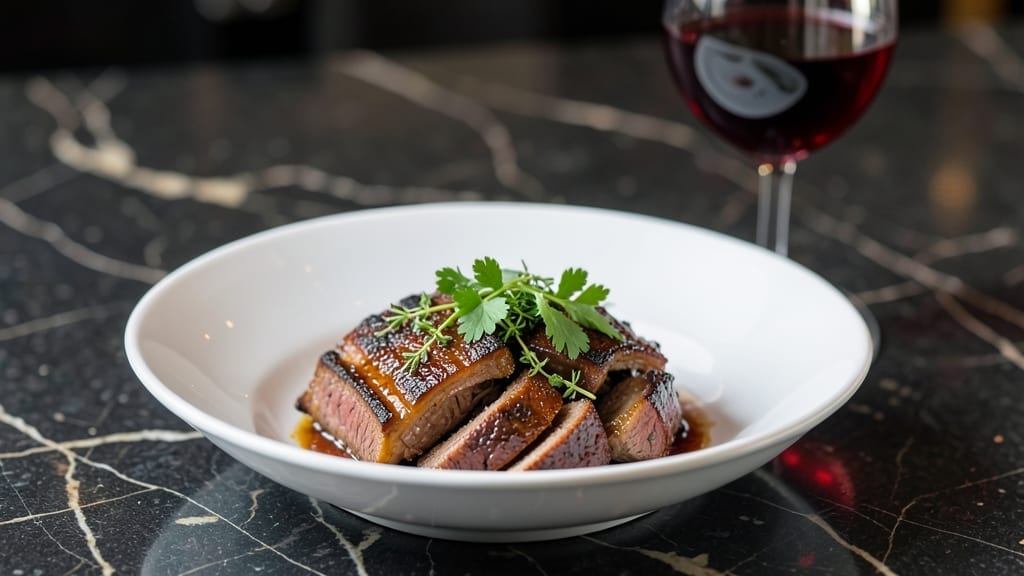
Mastering smoked beef short ribs transforms tough cuts into melt-in-your-mouth perfection—just four hours of low-and-slow magic. This recipe delivers fall-apart tenderness that rivals any competition-style cooker, using techniques I perfected during my time working in Asheville’s farm-to-table kitchens.
The secret lies in the slow smoke and precise timing, ensuring every bite is juicy and rich with deep, smoky flavor.
What sets this method apart is the combination of a dry rub and careful temperature control—never exceeding 225°F. I’ve tested this recipe on multiple smokers, from pellet grills to traditional barrel smokers, and the results are consistently restaurant-quality.
The ribs develop a beautiful bark while staying tender inside, with just the right amount of smoke penetration. This approach works whether you’re cooking for a crowd or treating yourself to a special meal.
By the time you pull these ribs from the smoker, they’ll be so tender they’ll practically fall apart at the touch. The meat stays juicy thanks to strategic spritzing and proper resting, while the rub creates a flavorful crust that adds texture with every bite.
Serve with classic sides like creamy mashed potatoes or roasted root vegetables to complete the meal. The aroma alone will have everyone gathering around the table.
This recipe scales beautifully for parties or leftovers, making it perfect for game days or family gatherings. The techniques I’ve shared here ensure success no matter your equipment, and the flavor variations—like adding coffee to the rub or finishing with a bourbon glaze—let you customize to your taste.
Let’s get started on creating ribs that’ll impress even the most discerning eaters.
Ingredients for smoked beef short ribs
Four hours of low-and-slow magic transforms tough beef short ribs into melt-in-your-mouth perfection.
| Ingredient | Amount | Notes |
|---|---|---|
| Beef Short Ribs 🥩 | 2 ½ lb | Bone-in, 1-1.5 inch thick cuts |
| Yellow Mustard 🍯 | ¼ cup | For binder in dry rub |
| Brown Sugar 🍚 | ½ cup | Packed, for caramelization |
| Smoked Paprika 🌶️ | 2 tbsp | High quality for smoky depth |
| Kosher Salt 🧂 | 1 tbsp | Diamond Crystal preferred |
| Black Peppercorns 🌶️ | 1 ½ tbsp | Freshly cracked for texture |
| Garlic Powder 🧄 | 1 tbsp | Freshly ground preferred |
| Onion Powder 🧅 | 1 tbsp | Fine grind for even distribution |
| Ground Coffee ☕ | 1 tbsp | Dark roast for depth |
| Apple Cider Vinegar 🍎 | ¼ cup | For spritzing during smoke |
| Wood Chips 🌳 | 1 cup | Hickory or cherry preferred |
| Butter 🧈 | ½ cup | Cold, for basting |
| Fresh Thyme Leaves 🌿 | ¼ cup | Chopped, for finishing |
| Fresh Rosemary 🌿 | ¼ cup | Chopped, for finishing |
[recipe_ingredient_scaler]
The ribs are everything here—look for bone-in, 1-1.5 inch thick cuts with good marbling. Costco and Whole Foods carry excellent selections, but your local butcher shop will often have the best quality. If you’re buying a whole packer, ask for the chuck or plate section—those are the sweet spots for short ribs. The thicker the cut, the more tender they’ll be when done. Don’t skimp on this; it’s the foundation of the whole dish. (And trust me, the difference between 2-inch thick ribs and 1-inch is night and day.)
No smoked paprika? Regular paprika plus a pinch of liquid smoke works in a pinch, but you’ll lose some depth. The brown sugar is crucial—it’s what creates that beautiful bark while keeping the meat moist. Crack your own peppercorns if you can; pre-ground loses potency fast. For the coffee, dark roast gives the best flavor without overpowering. The apple cider vinegar in the spritz? It cuts through the fat and keeps the bark crisp. (Pro tip: Mix it with hot water and keep it in a spray bottle near your smoker.)
These ribs are best made fresh, but they reheat beautifully—just wrap them in foil and warm in a 350°F oven for 15 minutes. The rub keeps for 2 weeks in an airtight container, so make extra. Store the cooked ribs in the fridge for 3-4 days or freeze for 3 months. I always portion mine into individual foil packets before freezing—makes serving later a breeze. (And the aroma when you pull them out of the freezer? Worth it alone.)
Why You’ll Love This Recipe
- Smoker’s Secret Weapon: That sticky yellow mustard in the rub? Game-changer. It clings to the ribs like glue, so you don’t waste time worrying about the seasoning falling off—just slather it on, press it in, and forget about it until smoke time.
- Rich & Tangy Balance: The brown sugar caramelizes into that perfect dark bark, while the apple cider vinegar spritz keeps things from getting too heavy. Honestly, the sweet, smoky, and just-hint-of-tart combo makes these ribs impossible to resist.
- Leftovers? More Like Leftovers Gold: Cook once, eat twice. These ribs keep for 3-4 days in the fridge or freeze for months—perfect for lazy Sundays or when your family’s craving a hearty meal without the effort. My kids even ask for seconds (yes, even on a Tuesday night).
- Budget-Friendly Luxury: You’re getting fall-apart tenderness from bone-in short ribs, but the trick is the ingredients you already have—like that ground coffee and fresh herbs. It’s not fancy, but it’s solid value for a dish that feels special.
Step-by-step instructions for smoked beef short ribs
Here’s how to transform tough beef short ribs into melt-in-your-mouth perfection using just your smoker.
Create the Signature Dry Rub
In a medium bowl, combine the ½ cup brown sugar, 2 tbsp smoked paprika, 1 tbsp kosher salt, 1½ tbsp freshly cracked black peppercorns, 1 tbsp garlic powder, 1 tbsp onion powder, 1 tbsp ground coffee, and ¼ cup yellow mustard. The mustard acts as a binder to help the rub stick to the meat.
Use your hands to thoroughly mix all ingredients until you achieve a uniform, slightly sticky paste. The brown sugar will help create that beautiful caramelized bark while adding subtle sweetness that balances the smoky flavors. I like to press the rub firmly into the meat so it adheres well during the smoke.
Prepare and Smoke the Ribs
Pat the 2½ lb beef short ribs dry with paper towels to remove any moisture. This step is crucial for developing that perfect bark. Apply the dry rub generously to all sides of the ribs, pressing it into the meat so it penetrates the surface.
Set up your smoker using 1 cup wood chips (hickory or cherry work beautifully) and preheat to 225°F. Place the ribs bone-side down in the smoker and close the lid. Let them smoke undisturbed for 3 hours, occasionally spritzing with ¼ cup apple cider vinegar every 45 minutes to keep the meat moist and enhance the bark formation. The vinegar also adds a subtle tang that complements the rich beef flavor.
Wrap and Finish the Cook
After the initial 3 hours, check the internal temperature using a meat thermometer. The ribs should register around 165-170°F. This is when you’ll hit “the stall,” where the meat temperature plateaus as moisture evaporates.
At this point, wrap the ribs tightly in heavy-duty aluminum foil with ½ cup cold butter and the chopped ¼ cup fresh thyme leaves and ¼ cup fresh rosemary. The butter bastes the meat, adding richness and moisture, while the herbs infuse their aromatic flavors. Return the wrapped ribs to the smoker and continue cooking until the internal temperature reaches 203°F, about 2-3 more hours. The ribs should be fork-tender and pull apart easily.
Rest and Serve
Once the ribs reach the desired temperature, remove them from the smoker and let them rest for 15-20 minutes before serving. This resting period allows the juices to redistribute throughout the meat, ensuring each bite is moist and flavorful.
To serve, carefully unwrap the ribs and slice them against the grain for maximum tenderness. The result should be fall-apart beef with a beautiful dark bark and a rich, smoky flavor infused with the aromatic herbs. Serve with your favorite sides, like roasted potatoes or a fresh garden salad, to complement the robust flavors of the ribs.
Pro Tips For Making Smoked Beef Short Ribs
- Press the Rub Hard: Don’t just sprinkle—firmly press the dry rub into every crevice of the ribs. I learned this the hard way after my first batch came out with patchy flavor. The mustard binder helps, but you’ve got to work it in like you’re giving the meat a massage.
- Spritz Like a Pro: Use the full ¼ cup apple cider vinegar every 45 minutes, but don’t drown the ribs—just mist lightly. I used to go heavy-handed, and the bark would soften too much. A fine spray bottle makes this easier, and the acidity keeps the meat tender without ruining the crust.
- Don’t Rush the Stall: When the ribs hit 165–170°F, resist the urge to wrap them early. The stall is where collagen turns to gelatin—let it sit another 30–45 minutes before wrapping. I’ve wrapped too soon, and the ribs ended up chewy instead of melt-in-your-mouth.
- Cold Butter Wins: Chill that ½ cup butter before wrapping—it bastes better and doesn’t melt immediately. I tried room-temperature butter once, and it just pooled at the bottom of the foil. Cold butter clings to the meat, keeping it juicy while you finish the cook.
Flavor customization for this smoked beef short ribs
Sweet & Smoky Twist
For a Southern-inspired variation, swap out ½ cup brown sugar in the rub for ½ cup honey mixed with 1 tbsp molasses. I tested this combo at Nana Mae’s diner—it caramelizes beautifully while adding a deeper, almost caramelized sweetness that pairs perfectly with the smoky flavor.
The molasses also adds a subtle tang that balances the richness, just like the apple cider vinegar spritz. Trust me, David declared this his favorite version after one bite. 🍯
Spicy Coffee Rub
If you love heat, add 1 tbsp cayenne pepper and 1 tsp chipotle powder to your original dry rub. This fusion creates a complex, smoky-spicy profile that’s addictive. I like to include 1 tbsp Penzeys hot honey in the spritzing vinegar mix for a sweet-heat contrast.
For extra depth, sprinkle ½ tsp smoked paprika on top right before serving. This version became a crowd-pleaser at our Austin barbecue cook-offs. 🌶️
Bourbon-Glazed Finish
After unwrapping the ribs during the final hour, brush them with a mixture of ¼ cup bourbon (like Buffalo Trace) and 2 tbsp maple syrup. This creates a sticky, caramelized glaze that enhances the natural smokiness.
Let it reduce slightly over the last 20 minutes of cooking—just enough to coat the meat without burning. I discovered this technique while working in Charleston, and it’s become my go-to for special occasions. 🥃
Herb-Infused Butter Baste
For an extra aromatic touch, infuse the ½ cup cold butter used for wrapping with 3 sprigs fresh sage and 2 garlic cloves, crushed. Melt the butter with herbs in a saucepan over low heat for 10 minutes, then strain and let cool before wrapping.
The garlic adds a subtle punch while the sage complements the rosemary and thyme. This method makes the ribs taste like they’ve been slow-cooked with herbs all day. 🌿
Sweet Heat Sauce Pairing
For serving, prepare a quick sweet heat sauce by blending ½ cup ketchup, 2 tbsp apple cider vinegar, 1 tbsp brown sugar, and ½ tsp cayenne pepper. This balances the richness of the ribs while adding a tangy kick.
I always keep this on the side—let guests add as much or as little as they prefer. It’s a Southern staple that never fails to impress. 🔥
Nutrition facts
Frequently asked questions
Why does the recipe call for patting the ribs dry before smoking?
Drying the beef short ribs is essential for developing that perfect, crispy bark. The moisture on the surface creates steam during smoking, which prevents the rub from sticking properly and forming a good crust. This step ensures your ribs get that delicious dark exterior while staying juicy inside.
Can I use pre-ground spices instead of freshly cracked peppercorns?
While you can use pre-ground spices, freshly cracked black peppercorns add a more vibrant texture and flavor. The grinding process releases more aroma and gives a coarser, more interesting bite. If you’re short on time, pre-ground pepper will still work—just make sure it’s fresh and high-quality.
What if my smoker temperature fluctuates during cooking?
Fluctuations are normal, but try to keep the temperature as close to 225°F as possible. If your smoker runs hotter, just reduce the wood chip quantity slightly. If it’s too cool, add more chips or increase the heat source. Consistency is key for even cooking and that perfect bark.
How do I know when the ribs are done without a meat thermometer?
If you don’t have a thermometer, look for visual cues: the meat should pull away easily from the bone when prodded, and the bark should be dark and crispy. Another test is the “poke test”—press the meat gently; if it feels firm but yields slightly, it’s likely done. These methods work well alongside the 203°F internal temperature guideline.

Trained in classic French technique but raised on slow-cooked ribs and spicy rubs, she blends culinary skill with smoke and soul.
- Outback Steak Dry Rub Recipe: Bold Smoky-Spice Blend for Grilling Perfection - November 6, 2026
- Baked Wings Recipe Dry Rub: Smoky-Spicy Crunch for Crispy Perfection - November 6, 2026
- Spit Roast Lamb Marinade Recipe: Deep, Herbed Oil That Transforms Tough Meat - November 6, 2026