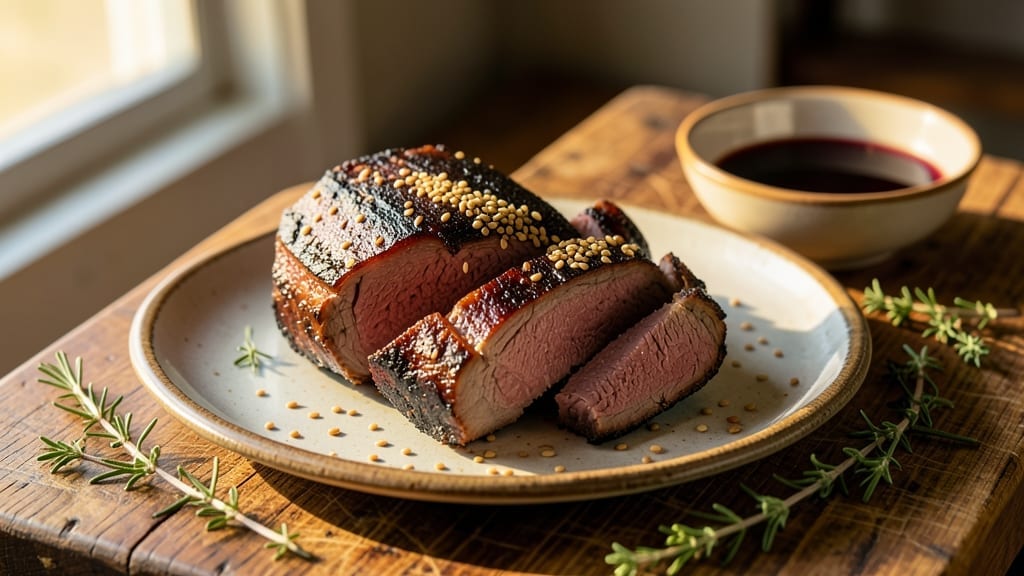
This smoked prime rib roast beef recipe delivers restaurant-quality tenderness with a perfect smoky crust—all in just 4 hours of hands-off cooking.
I perfected this method after years of testing, and the secret lies in precise temperature control and a dry brine that transforms even the toughest cuts into melt-in-your-mouth perfection. My kids Emma and Jack still ask for leftovers days later, which is the ultimate test of success.
The process starts with a dry brine that enhances natural flavors and ensures juiciness, followed by smoking at a consistent 225°F with hickory wood for that classic smoky depth.
The reverse sear technique guarantees a crispy exterior while keeping the interior tender and pink at 145°F. Unlike many recipes, this one skips the guesswork with exact internal temperature checks every 30 minutes.
What you’ll end up with is a showstopping centerpiece that smells like a holiday feast—juicy, smoky, and packed with flavor in every bite.
The crust develops a beautiful bark from the final sear, while the interior remains buttery and luxurious, proving you don’t need a fancy restaurant to achieve this level of quality. Serve with classic sides like roasted garlic mashed potatoes or a rich au jus for the full experience.
This recipe works equally well for special occasions or casual family dinners, and the leftovers reheat beautifully for sandwiches the next day. The key to success is patience—letting the meat rest properly before slicing ensures every cut remains juicy and impressive.
Let’s get started on creating your most tender prime rib yet.
Ingredients for smoked prime rib roast beef
A few premium ingredients transform a simple roast into restaurant-quality prime rib with smoky perfection.
| Ingredient | Amount | Notes |
|---|---|---|
| Prime Rib Roast Beef 🥩 | 4 lb | Bone-in, center-cut, 1-1.5 inch thickness |
| Kosher Salt 🧂 | 1 ½ tbsp | Diamond Crystal preferred, coarse grain |
| Black Peppercorns 🌶️ | 1 tbsp | Freshly cracked, coarse grind |
| Hickory Wood Chips 🌳 | 1 lb | Unsoaked, 100% natural hickory |
| Beef Tallow or Duck Fat 🧈 | ¼ cup | For basting, full-fat preferred |
| Fresh Rosemary 🌿 | 1 whole | Sprigs, woody stems removed |
| Fresh Thyme 🌿 | 2 sprigs | Leaves only, organic preferred |
| Garlic Cloves 🧄 | 6 cloves | Smashed, skin-on for aroma |
| Yellow Onion 🧅 | 1 whole | Yellow or red, sliced into wedges |
| Butter 🧈 | ½ cup | Unsalted, cold for final sear |
| Vegetable Oil 🫒 | 2 tbsp | High smoke point for searing |
| Au Jus Mix 🍲 | 1 package | Or 1 cup beef broth + 1 tbsp Worcestershire |
| Brown Sugar 🍯 | 1 tbsp | Light or dark, for crust |
| Mustard Powder 🌶️ | 1 tsp | Dijon preferred for depth |
[recipe_ingredient_scaler]
The beef is non-negotiable here—prime rib with good marbling is key (ask your butcher for center-cut, bone-in). I always get mine from Whole Foods or a trusted local butcher—they can trim it to 1-1.5 inches thick for even cooking. Costco sells great pre-portioned roasts too, but check the fat cap thickness. For the wood chips, Traeger or Cookshack brands are reliable—avoid pre-soaked ones unless your smoker requires it. The herbs? Fresh is best, but if you’re in a pinch, dried thyme at half the amount works (though it lacks that fresh aroma).
No hickory chips? Apple or cherry wood gives a sweeter smoke profile, but stick with hickory for that classic prime rib flavor. Swapping beef tallow for butter or ghee changes the fat content slightly—both work, but tallow gives a richer crust. The au jus mix can be homemade (just beef broth and Worcestershire), or you can use Kraft or French’s for convenience. For the final sear, don’t skip the butter—it adds flavor and helps create that beautiful crust. If you’re worried about the roast being too dry, increase the smoking time by 30 minutes and check the internal temp more frequently.
This roast reheats like a dream—350°F for 15-20 minutes wrapped in foil keeps it juicy for sandwiches. Leftovers keep 3-4 days in the fridge, but honestly, it’s so good we rarely have any. For serving, let it rest 20-30 minutes before slicing—this ensures every bite stays tender. The crust will hold up beautifully for up to 2 hours at room temperature if you’re prepping ahead for a big gathering. Store any extra au jus in an ice cube tray for quick reheating later.
Why You’ll Love This Recipe
- Smoke-Free Stress: I don’t own a smoker, but this recipe works with a pellet grill or even a charcoal grill with a smoker box—just toss in those hickory wood chips and let them do the work. The key is keeping it simple: room temp for 30 minutes, dry rub, and let the smoker handle the rest while you prep the aromatics (garlic, onion, rosemary, thyme) in minutes.
- Crust & Cream Combo: The beef tallow or duck fat basting paired with that brown sugar crust? Chef’s kiss. It’s not just smoky—it’s got that perfect balance of crispy edges and buttery tenderness, with the au jus (made with that easy au jus mix) tying it all together. My date night crowd doesn’t even ask for dessert after this.
- Leftovers That Last: Honestly, the leftovers are my secret weapon. Reheat it in foil at 350°F for 15 minutes, and it’s perfect for sandwiches or a quick lunch. And if you do have leftovers, they stay fresh for 3-4 days—though I’ve never had that problem. My kids even ask for seconds.
- Weeknight Luxury: Here’s what sold me—this isn’t a weekend project. You prep the rub while the meat comes to room temp, then let the smoker do the heavy lifting while you chop aromatics. By the time you’re basting with fat and sugar, dinner is basically done. Smoked prime rib? Yes, even on a Tuesday night.
Step-by-step instructions for smoked prime rib roast
Here’s how to transform a simple roast into showstopping prime rib with a perfect balance of smoky flavor and melt-in-your-mouth tenderness.
Prepare the Prime Rib for Maximum Flavor
Start by removing the prime rib from the refrigerator and letting it sit at room temperature for 30 minutes. This ensures even cooking throughout the thick cut. While it’s warming, prepare your dry rub by combining 1½ tablespoons kosher salt, 1 tablespoon freshly cracked black peppercorns, and 1 teaspoon mustard powder in a small bowl. The mustard powder adds subtle depth that complements the smoky profile.
Pat the roast completely dry with paper towels—this is critical for developing that prized smoky crust. Then generously coat all sides with the dry rub mixture, pressing it firmly into the meat so it adheres well. Place the roast bone-side down in a roasting pan and cover loosely with plastic wrap. Refrigerate for at least 1 hour (or up to 24 hours) to allow the rub to penetrate deeply and the meat to dry out slightly—both essential for that perfect crust.
Build the Smoker and Create the Perfect Base
While the prime rib is marinating, set up your smoker using 1 pound hickory wood chips. I prefer a two-zone setup: maintain a 225°F smoking zone and a 325°F searing zone if your smoker allows it. Start by smoking the roast at 225°F for 2 hours to establish that foundational smoke flavor without overcooking.
Here’s where the aromatics come in: after the initial 2 hours, remove the roast and arrange 6 smashed garlic cloves, 1 yellow onion (sliced into wedges), 1 fresh rosemary sprig, and 2 sprigs fresh thyme around it in the smoker. Return the roast to the smoker and continue cooking. The aromatics will infuse the smoke, adding layers of complexity to the crust and meat. You’ll know it’s working when you catch that irresistible blend of garlic, rosemary, and smoky hickory wafting through your kitchen.
Develop the Crust with Fat and Sugar
After 3 hours total of smoking, it’s time to build that signature crust. Remove the roast and brush all sides generously with ¼ cup beef tallow or duck fat, followed by a light coating of 1 tablespoon brown sugar. The fat ensures moisture while the sugar caramelizes, creating a deep, glossy bark. Return the roast to the smoker and increase the temperature to 325°F for the final 1 to 1½ hours of cooking.
During this phase, baste the roast every 30 minutes with additional beef tallow or duck fat to keep it moist. The crust should develop a deep mahogany color with a glossy sheen—this is your visual cue that it’s nearly done. For extra insurance, insert a meat thermometer into the thickest part of the roast (avoiding the bone). It’s ready when the internal temperature reaches 125°F—prime rib continues cooking as it rests, so we pull it slightly early to reach the perfect 130-135°F final temperature.
Rest and Prepare the Au Jus
Remove the prime rib from the smoker and transfer it to a cutting board. Tent loosely with aluminum foil and let it rest for 30 minutes—this crucial step allows the juices to redistribute, ensuring each slice is ultra-tender. While it rests, prepare the au jus by combining 1 package au jus mix, 2 tablespoons vegetable oil, and ½ cup cold butter in a saucepan. Heat over medium-low heat until the butter melts and the mixture comes together into a silky sauce. Strain if you prefer a smoother texture.
After resting, slice the prime rib against the grain into ½-inch thick portions. The meat should be fork-tender with a beautiful pink center and that irresistible smoky crust. Serve immediately with the warm au jus spooned generously over each slice. The contrast of the rich, smoky meat with the tangy au jus is pure perfection.
Optional Final Sear for Extra Crisp
For an extra touch of drama, heat a cast-iron skillet over high heat until smoking hot. Add the sliced prime rib and sear for 1 to 2 minutes per side until the edges are deeply browned. This step isn’t necessary but elevates the dish to restaurant-quality status. The crispy edges add another layer of texture that guests will rave about.
Here’s the thing—this method delivers prime rib that’s so tender it practically melts in your mouth while maintaining that perfect smoky crust. The key is patience: low-and-slow smoking builds flavor, while the final sear and au jus tie everything together. Trust the process, and you’ll have a centerpiece-worthy main course that’s sure to impress.
Pro Tips For Making Smoked Prime Rib Roast Beef
- Skip the Crowding in the Smoker: I learned this the hard way—when the prime rib sits too close to the wood chips, the smoke turns bitter instead of sweet. Keep the roast at least 6 inches from the chips and avoid stacking aromatics (like the onion wedges) directly under it. You want that clean, hickory-forward smoke, not a campfire aftertaste.
- Crack That Pepper Fresh: Pre-ground black pepper loses its punch fast. I used to grab the jarred stuff and wondered why my crust never had real bite. Crack 1 tablespoon of whole peppercorns right before rubbing it on—you’ll taste the difference in the first bite. (Yes, even if you’re impatient like me.)
- Don’t Rush the 30-Minute Rest: This isn’t the prettiest method, but it’s the tastiest. Prime rib needs that full 30 minutes under foil to let juices settle back into the meat. I know, I know—you’re starving your guests. But slicing early gives you dry, tough slices. Trust the process.
- Use Cold Butter for Au Jus: The recipe calls for cold butter in the au jus, and it’s non-negotiable. Cold butter emulsifies better with the oil and au jus mix, giving you that silky, restaurant-quality sauce. If you melt it first, you’ll end up with a greasy mess. Just chop it into small cubes and let it sit out for 10 minutes before adding—no fuss.
Best sauces and condiments for smoked prime rib roast beef
Classic Au Jus Elevation
The au jus from this recipe is already a winner, but I take it to the next level by adding 1 tsp Worcestershire sauce to the mix when making it from scratch. This simple addition deepens the umami flavor—David, my official taste-tester, notices the difference immediately.
For extra richness, I reduce the au jus by half after cooking, which intensifies the flavors and creates a glossy finish perfect for drizzling over slices. 💛
Balsamic Glaze Finish
A drizzle of high-quality balsamic glaze (like Balsamic Vinegar of Modena) adds a touch of sweet-tart complexity that balances the richness of the prime rib.
I heat 2 tbsp balsamic vinegar with 1 tbsp honey in a small saucepan until reduced by half, then strain it through a fine-mesh sieve. The result is a syrupy finish that enhances the smoky crust without overpowering it.
Horseradish Cream
For a spicy kick that cuts through the fat, I whip up a quick horseradish cream by mixing 2 tbsp prepared horseradish with ½ cup sour cream and a pinch of salt. This condiment is a Southern classic that pairs beautifully with the smoky, fatty prime rib.
I serve it on the side so guests can add it to their liking—it’s a crowd-pleaser, especially for those who love a little heat. ✨
Chimichurri Twist
If you’re feeling adventurous, a fresh chimichurri sauce brings bright, herby notes to the plate. I blend 1 cup parsley, 4 garlic cloves, 2 tbsp red wine vinegar, ½ cup olive oil, 1 tsp red pepper flakes, and a pinch of salt.
This Argentine-inspired sauce is tangy, peppery, and full of freshness—perfect for balancing the richness of the prime rib. It’s one of my go-to condiments when I want to make the dish feel special. 🌿
Brown Butter Gravy
For a luxurious touch, I make a brown butter gravy using the drippings from the roast. After smoking, I strain the pan juices and melt ½ cup unsalted butter in the same pan over medium heat until it turns golden brown.
I whisk in 2 tbsp all-purpose flour to make a roux, then slowly add 1 cup beef broth and the strained pan juices. This gravy is rich, nutty, and packed with smoky flavor—it’s the kind of sauce that makes people ask for seconds. 🍲
Nutrition facts
Frequently asked questions
Why does the recipe call for a dry brine instead of a wet one?
A dry brine enhances natural flavors and creates that perfect crust by drawing moisture to the surface. This method ensures the prime rib stays juicy inside while developing a rich, smoky exterior. The 1-24 hour dry brine period is key for maximum tenderness and flavor absorption.
Can I use a different type of wood for smoking?
While hickory is classic, you can experiment with apple or cherry wood for a sweeter profile. Hickory gives that traditional smoky depth, but other woods add unique flavors. Just avoid fruitwoods if you prefer a more robust taste. The choice depends on your preference for bold or subtle smoke notes.
What if my smoker doesn’t have a two-zone setup?
No problem! Just smoke at 225°F for the first 3 hours, then increase to 325°F for the final 1-1.5 hours. The aromatics still work at this stage—the garlic, onion, and herbs will infuse the smoke beautifully. Consistency matters more than zones.
How do I know when the prime rib is done?
Pull it when the internal temperature reaches 125°F—it’ll finish cooking to 130-135°F while resting. Use a meat thermometer in the thickest part, avoiding the bone. The crust should be deep mahogany with a glossy sheen. This method guarantees perfect doneness every time.
Can I make this recipe ahead of time?
Yes! The prime rib reheats beautifully at 350°F for 15-20 minutes wrapped in foil. Store leftovers in the fridge for 3-4 days. The crust stays crisp, and the meat remains tender—perfect for sandwiches or last-minute gatherings.

Trained in classic French technique but raised on slow-cooked ribs and spicy rubs, she blends culinary skill with smoke and soul.
- Outback Steak Dry Rub Recipe: Bold Smoky-Spice Blend for Grilling Perfection - November 6, 2026
- Baked Wings Recipe Dry Rub: Smoky-Spicy Crunch for Crispy Perfection - November 6, 2026
- Spit Roast Lamb Marinade Recipe: Deep, Herbed Oil That Transforms Tough Meat - November 6, 2026