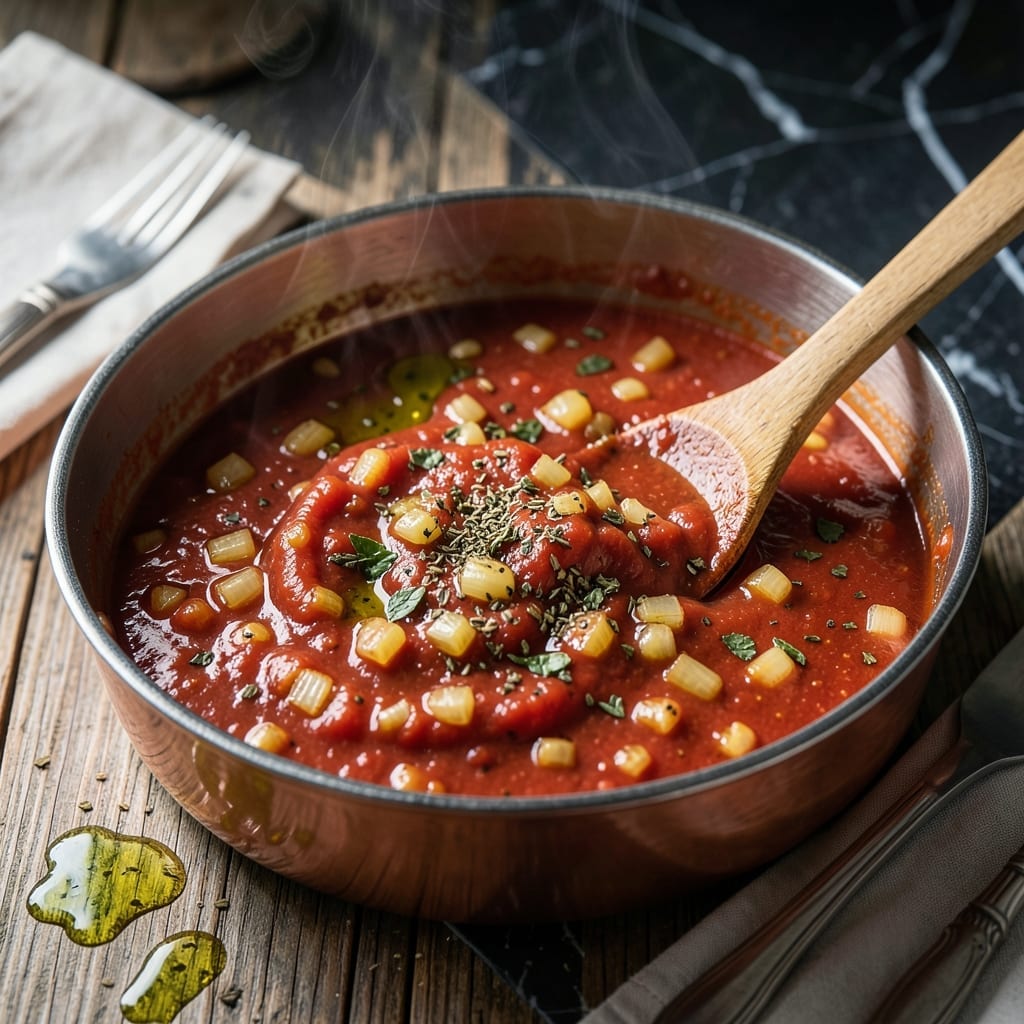
This sauce transforms humble tomato paste into a rich, deeply flavored base that rivals slow-simmered versions. The concentrated paste builds complex layers without hours on the stove.
Perfect for pasta night, this method delivers restaurant-quality results with pantry staples. The sauce thickens beautifully and clings to every strand of spaghetti.
Ingredients for Spaghetti Sauce Recipe Using Tomato Paste
Pantry staples transform into a rich, restaurant-quality sauce with concentrated tomato flavor.
| Ingredient | Amount | Notes |
|---|---|---|
| Tomato Paste 🍅 | ½ cup | Double-concentrated preferred for depth |
| Extra-Virgin Olive Oil 🫒 | ¼ cup | High-quality, fruity variety |
| Yellow Onion 🧅 | 1 whole | Finely diced for even distribution |
| Garlic Cloves 🧄 | 4 cloves | Minced to release full aroma |
| Dried Oregano 🌿 | 1 tsp | Mediterranean variety for authenticity |
| Dried Basil 🍃 | 1 tsp | Crushed between fingers to release oils |
| Red Pepper Flakes 🌶️ | ½ tsp | Adjust to heat preference |
| Granulated Sugar 🍚 | 1 tsp | Balances acidity of tomato paste |
| Sea Salt 🧂 | 1 tsp | Fine grain for even seasoning |
| Freshly Ground Black Pepper 🌶️ | ½ tsp | Coarse grind for texture |
| Vegetable Broth 💧 | 1 cup | Low-sodium to control seasoning |
[recipe_ingredient_scaler]
The tomato paste is non-negotiable for depth—double-concentrated tubes (like Amore or Mutti) deliver superior flavor compared to canned versions. Extra-virgin olive oil should be robust enough to stand up to the paste’s intensity. For the herbs, Mediterranean oregano (found at Penzeys or specialty markets) offers authentic complexity that standard oregano can’t match.
No vegetable broth? Water with a bouillon cube works, but expect less depth. Short on dried herbs? Fresh basil or oregano at triple the amount brightens the sauce nicely. For a smoky twist, add half a teaspoon of smoked paprika. The sugar can be omitted if your paste is naturally sweet, but it’s worth including for balance.
This sauce keeps 5 days refrigerated in an airtight container or 3 months frozen. For best texture, thaw frozen sauce in the fridge overnight. Reheat gently to preserve the concentrated flavors (don’t boil).
Why You’ll Love This Recipe
- One-Pot Wonder: I love how this comes together in a single saucepan—just olive oil, onions, and tomato paste simmering away.
- Deep, Rich Taste: The tomato paste caramelizes slightly, giving it that bold, concentrated flavor I crave in every bite.
- Freezer Friendly: I always double the batch and freeze half for those nights I need dinner in a flash.
- Pantry Staples: Between us, I usually have all these ingredients on hand—no last-minute grocery runs.
Step-by-Step Instructions for Spaghetti Sauce Using Tomato Paste
Achieve rich, concentrated flavor with this methodical approach to building depth in your sauce.
Step 1: Sauté Aromatics in Olive Oil
Heat the 0.25 cup Extra-Virgin Olive Oil in a heavy-bottomed saucepan over medium heat until it shimmers slightly. Add the finely diced Yellow Onion and cook for 5-6 minutes, stirring occasionally, until the pieces turn translucent and begin to soften.
This foundation step develops the sweetness of the onion while preventing browning. The oil should coat the bottom of the pan but not pool excessively. Adjust heat as needed to maintain a gentle sizzle without smoking.
Step 2: Toast Spices and Tomato Paste
Add the 4 cloves Garlic Cloves, 1 tsp Dried Oregano, 1 tsp Dried Basil, and 0.5 tsp Red Pepper Flakes to the onions. Stir constantly for 30-45 seconds until the garlic becomes fragrant but doesn’t brown.
Immediately incorporate the 0.5 cup Tomato Paste and 1 tsp Granulated Sugar. Cook this mixture for 2-3 minutes, stirring frequently, until the paste deepens to a brick-red color. This step caramelizes the natural sugars and removes the raw taste from the paste.
Step 3: Deglaze and Simmer
Pour in the 1 cup Vegetable Broth while scraping the bottom of the pan with a wooden spoon to release any browned bits. The liquid should sizzle vigorously upon contact. Add the 1 tsp Sea Salt and 0.5 tsp Freshly Ground Black Pepper.
Bring the mixture to a gentle boil, then reduce heat to maintain a steady simmer. Partially cover the pan and cook for 20-25 minutes, stirring occasionally, until the sauce thickens slightly and the flavors meld together. The surface should have small, lazy bubbles.
Step 4: Adjust Consistency and Finish
After the simmering period, the sauce should have reduced by about one-third. If it appears too thick, add a splash of water. Taste and adjust seasoning if needed—the flavors should be balanced with a slight sweetness from the caramelized paste.
Remove from heat and let rest for 5 minutes before using. The sauce will continue to thicken as it cools. For the smoothest texture, blend briefly with an immersion blender if desired, though the rustic texture is authentic.
Pro Tips For Making Spaghetti Sauce Recipe Using Tomato Paste
- Bloom the Paste: Cook the tomato paste in olive oil for 2-3 minutes until it darkens slightly—I learned this the hard way after my first few sauces tasted raw.
- Fine Dice the Onion: Chop the yellow onion super fine so it melts into the sauce, or you’ll be picking out chunks later.
- Skip Raw Garlic: Sauté the garlic just until fragrant, about 30 seconds, or it’ll turn bitter and ruin the whole batch.
- Rehydrate the Oregano: Rub the dried oregano between your fingers before adding it to release its oils—sounds small, but it actually changes the outcome.
Wine and Beer Pairings for spaghetti sauce recipe using tomato paste
Beer Pairings
A rich spaghetti sauce made with tomato paste calls for beers that can stand up to its bold, savory flavors. Try a Sierra Nevada Pale Ale 🍺—its citrusy hops and caramel malt notes complement the acidity of the tomatoes while cutting through the richness. For a darker option, a Guinness Stout offers roasted, slightly bitter flavors that harmonize beautifully with the deep umami of the sauce. If you prefer something lighter, a crisp Peroni provides a refreshing contrast without overpowering the dish.
Wine Pairings
Wine lovers have plenty of options to elevate this hearty sauce. A medium-bodied Chianti 🍷, with its bright acidity and cherry notes, is a classic choice that balances the tomato paste’s intensity. For a bolder pairing, a Barbera offers juicy red fruit flavors and a touch of spice that enhances the sauce’s depth. If you prefer white wine, a buttery Chardonnay can add a creamy contrast, though it works best with sauces that have a touch of cream or butter.
Non-Alcoholic Options
No alcohol? No problem! Sparkling water with a squeeze of lemon or lime 🍋 can cleanse the palate between bites. For a more flavorful option, try a San Pellegrino Aranciata—its citrusy sweetness pairs surprisingly well with the tangy tomato base. Herbal iced teas, like hibiscus or mint, also offer a refreshing complement to the dish’s savory notes.
Nutrition Facts

Trained in classic French technique but raised on slow-cooked ribs and spicy rubs, she blends culinary skill with smoke and soul.
- Recipe for Cut Up Chicken: One-Pan Crispy Bites - October 3, 2026
- Recipe For Oven Baked Haddock: Buttery Crumbs With Zesty Lemon Topping - October 3, 2026
- Recipe For Fried Salmon Patties With Flour: Crispy Golden Crust With Flaky Centers - October 3, 2026