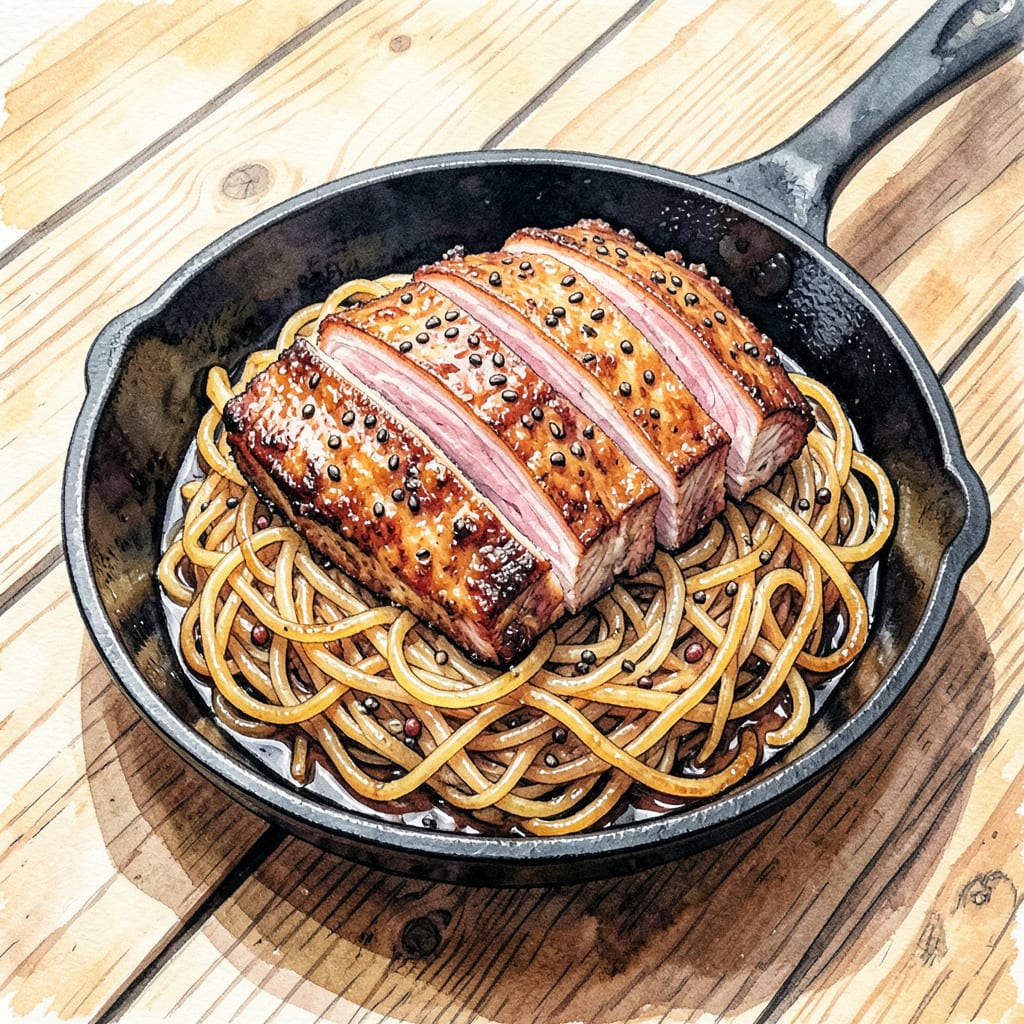
This recipe brings together two powerhouse flavors: slow-cooked spare ribs so tender they nearly fall apart, paired with tangy sauerkraut that cuts through the richness. The combination isn’t just delicious—it’s a masterclass in balancing textures and tastes, where smoky, succulent meat meets the bright, fermented crunch of sauerkraut.
What makes this dish special is the method. The ribs are cooked low and slow until they reach that perfect fall-off-the-bone tenderness, while the sauerkraut is prepared to maintain its crisp texture. Together, they create a meal that feels both hearty and refreshing, with every bite offering a contrast of flavors and mouthfeel. This isn’t just comfort food—it’s comfort food elevated.
Ingredients for Spare Ribs and Sauerkraut
This dish balances rich, slow-cooked pork with bright, fermented sauerkraut—just twelve ingredients for restaurant-quality results.
| Ingredient | Amount | Notes |
|---|---|---|
| Pork spare ribs 🥩 | 4 lb | St. Louis-style, membrane removed |
| Sauerkraut 🥬 | 2 lb | Fresh or refrigerated, drained |
| Yellow onion 🧅 | 1 whole | Medium, thinly sliced |
| Granulated sugar 🍬 | 2 tbsp | For balancing acidity |
| Caraway seeds 🌿 | 1 tsp | Lightly crushed for aroma |
| Juniper berries 🌿 | 6 pieces | Lightly bruised (optional) |
| Bay leaves 🌿 | 2 whole | Dried, for depth |
| Black peppercorns 🌶️ | 1 tsp | Whole, for slow-cooked flavor |
| Dry white wine 🍷 | 1 cup | Sauvignon Blanc or Pinot Grigio |
| Apple cider vinegar 🍏 | ¼ cup | For brightness |
| Chicken stock 🍲 | 2 cups | Low-sodium preferred |
| Dijon mustard 🟡 | 1 tbsp | Smooth, not grainy |
| Olive oil 🫒 | 2 tbsp | Extra-virgin, for searing |
| Kosher salt 🧂 | 1 ½ tbsp | Diamond Crystal preferred |
| Fresh thyme sprigs 🌿 | 4 pieces | For aromatic depth |
[recipe_ingredient_scaler]
The ribs are the foundation—St. Louis-style spare ribs offer the ideal fat-to-meat ratio for fall-off-the-bone texture. Source from a trusted butcher or Whole Foods for consistent quality. The sauerkraut should be refrigerated (not shelf-stable) for optimal texture; Boar’s Head or Frank’s Kraut are excellent choices. Caraway seeds and juniper berries are non-negotiable for authentic flavor; find them in the spice aisle at Trader Joe’s or bulk sections of natural food stores. The wine needn’t be expensive, but avoid overly oaky varieties—they clash with the sauerkraut’s acidity.
No white wine? Dry vermouth or additional chicken stock with 1 tbsp lemon juice works. Caraway seeds can be replaced with fennel seeds at half the quantity, though the flavor profile shifts slightly. For a non-alcoholic version, substitute the wine with equal parts apple cider plus 1 tbsp rice vinegar. The Dijon mustard stabilizes the sauce; whole-grain mustard can be used but will alter the final texture. If fresh thyme is unavailable, dried thyme at one-third the amount is acceptable, though less aromatic.
Prepared sauerkraut keeps for 1 week refrigerated in its original packaging. The cooked ribs and sauerkraut mixture stores well for 4 days in airtight containers, with flavors deepening over time. For longer storage, freeze components separately for up to 3 months—reheat gently to preserve texture. The caraway seeds and juniper berries can be stored in a cool, dark place for 6-12 months if kept whole. Always bring refrigerated sauerkraut to room temperature before cooking to maintain its signature crunch.
Step-by-Step Instructions for Spare Ribs and Sauerkraut
This method ensures perfectly tender ribs with a tangy, aromatic sauerkraut that complements the richness.
Step 1: Prepare and Season the Ribs
Begin by patting the 4 lb Pork spare ribs completely dry with paper towels. This ensures optimal browning during searing. Season both sides evenly with 1.5 tbsp Kosher salt, pressing gently so the salt adheres to the meat. Let the ribs rest at room temperature for 20 minutes—this allows the salt to penetrate slightly and creates a more flavorful crust.
The membrane should already be removed (as specified in the ingredients), but double-check by sliding a butter knife under the thin membrane on the bone side. If present, grip it with a paper towel and pull it off in one piece. This step prevents chewy texture in the finished dish.
Step 2: Sear the Ribs and Build the Aromatic Base
Heat 2 tbsp Olive oil in a large Dutch oven over medium-high heat until shimmering. Add the ribs and sear for 4-5 minutes per side until deeply browned. You’re looking for a rich, caramelized crust—not just color. Transfer the ribs to a plate and set aside.
In the same pot, add the thinly sliced yellow onion and cook for 3-4 minutes until softened and just beginning to caramelize. Add the 1 tsp Caraway seeds, 6 pieces Juniper berries, 2 whole Bay leaves, and 1 tsp Black peppercorns. Toast for 1 minute until fragrant—this blooms the spices and deepens their flavor profile.
Step 3: Deglaze and Braise to Tenderness
Pour in 1 cup Dry white wine and scrape up all the browned bits from the bottom of the pot with a wooden spoon. This deglazing step incorporates all the concentrated flavors from searing. Add the 2 lb Sauerkraut, 2 tbsp Granulated sugar, 0.25 cup Apple cider vinegar, 2 cups Chicken stock, 1 tbsp Dijon mustard, and 4 pieces Fresh thyme sprigs. Stir to combine evenly.
Return the ribs to the pot, nestling them into the sauerkraut mixture. The liquid should come about three-quarters up the ribs—add a splash of water if needed. Bring to a gentle simmer, then reduce heat to low, cover, and braise for 2.5 to 3 hours. The ribs are done when the meat pulls back from the bones by about ¼ inch and a fork inserts easily with no resistance.
Step 4: Rest and Serve for Optimal Texture
Carefully transfer the ribs to a cutting board and tent loosely with foil. Let them rest for 10 minutes—this allows the juices to redistribute throughout the meat instead of running out when sliced. Meanwhile, taste the sauerkraut and adjust seasoning if needed. The flavors should be balanced: tangy from the vinegar, sweet from the sugar, and aromatic from the spices.
Slice the ribs between the bones into individual portions. Serve each portion over a bed of the braised sauerkraut, ensuring each plate gets some of the aromatic liquid. The ribs should be fall-off-the-bone tender while the sauerkraut retains a slight crunch. Garnish with additional fresh thyme if desired.
Make-Ahead Tips for Leftovers
Prep Ahead Strategy
You can prepare the sauerkraut base up to 2 days in advance. Sauté the onions with spices, then combine with drained sauerkraut, sugar, vinegar, and stock. Store this mixture in an airtight container in the fridge. The flavors will meld beautifully, and you’ll save 20 minutes of active cooking time on the big day. 💡
For the ribs, create your dry rub (salt plus any additional spices you prefer) the night before. Pat the ribs dry, apply the rub, and let them sit uncovered in the fridge overnight. This not only seasons the meat deeply but also helps develop that perfect crust when you sear them.
Partial Cooking Method
Braise the ribs for just 1.5 hours the day before, then cool and refrigerate them in their cooking liquid. On serving day, reheat gently at 300°F for 45-60 minutes until warmed through. This approach maintains tenderness while letting you control the final texture. The sauerkraut can be reheated separately with a splash of broth.
I learned this trick during my competition BBQ days—it’s how we kept ribs perfect for judging hours after cooking. The partial cook method gives you that fall-off-the-bone texture without last-minute stress.
Freezer-Friendly Approach
Cook the entire dish, then cool completely before freezing. Portion ribs and sauerkraut into freezer-safe bags (I use Stasher bags for their durability) with all the cooking liquid. They’ll keep for 3 months without quality loss. Thaw overnight in the fridge before reheating gently in a 325°F oven for 30-40 minutes.
The sauerkraut actually improves with freezing—the flavors concentrate and the texture softens just enough. This is my go-to method for meal prep when I know I’ll have busy weeks ahead.
Sauerkraut Shortcut
If using store-bought sauerkraut, rinse it briefly under cold water to remove excess salt, then drain well. Sauté with onions and spices as directed, but reduce the added salt by half. I prefer Boar’s Head or Frank’s Kraut for their consistent texture and flavor—they hold up beautifully to reheating.
For extra depth, stir in 1 tbsp Dijon mustard and ½ cup white wine when reheating. This brightens the flavors and makes it taste freshly prepared.
Day-Of Assembly
If you’ve prepped components separately, combine them in a Dutch oven with ½ cup chicken stock and reheat at 325°F for 20-25 minutes. This allows the flavors to marry while the ribs warm through gently. Baste the ribs occasionally with the liquid to keep them moist.
I like to finish under the broiler for 2-3 minutes to crisp up any exposed meat surfaces. Watch closely—this step adds that just-cooked texture without drying anything out.
Equipment Prep
Set out your Dutch oven, cutting board, and serving platters the night before. If using a slow cooker for reheating, line it with a slow cooker liner for easy cleanup. I keep a dedicated rib knife (a long, thin-bladed slicer) in my knife block just for this dish—it makes portioning the cooked ribs effortless.
Having everything ready means you can focus on the final touches rather than scrambling for tools. This is especially helpful when serving guests—you want to enjoy the meal too, not just the cooking process!
Nutrition Facts

Trained in classic French technique but raised on slow-cooked ribs and spicy rubs, she blends culinary skill with smoke and soul.
- Recipe For Diced Pork In Slow Cooker: Melt-In-Your-Mouth Tenderness All Day - October 3, 2026
- Recipe for Crock Pot Lasagna Using Ravioli: No-Boil Cheese Layers - October 3, 2026
- Recipe for Cut Up Chicken: One-Pan Crispy Bites - October 3, 2026