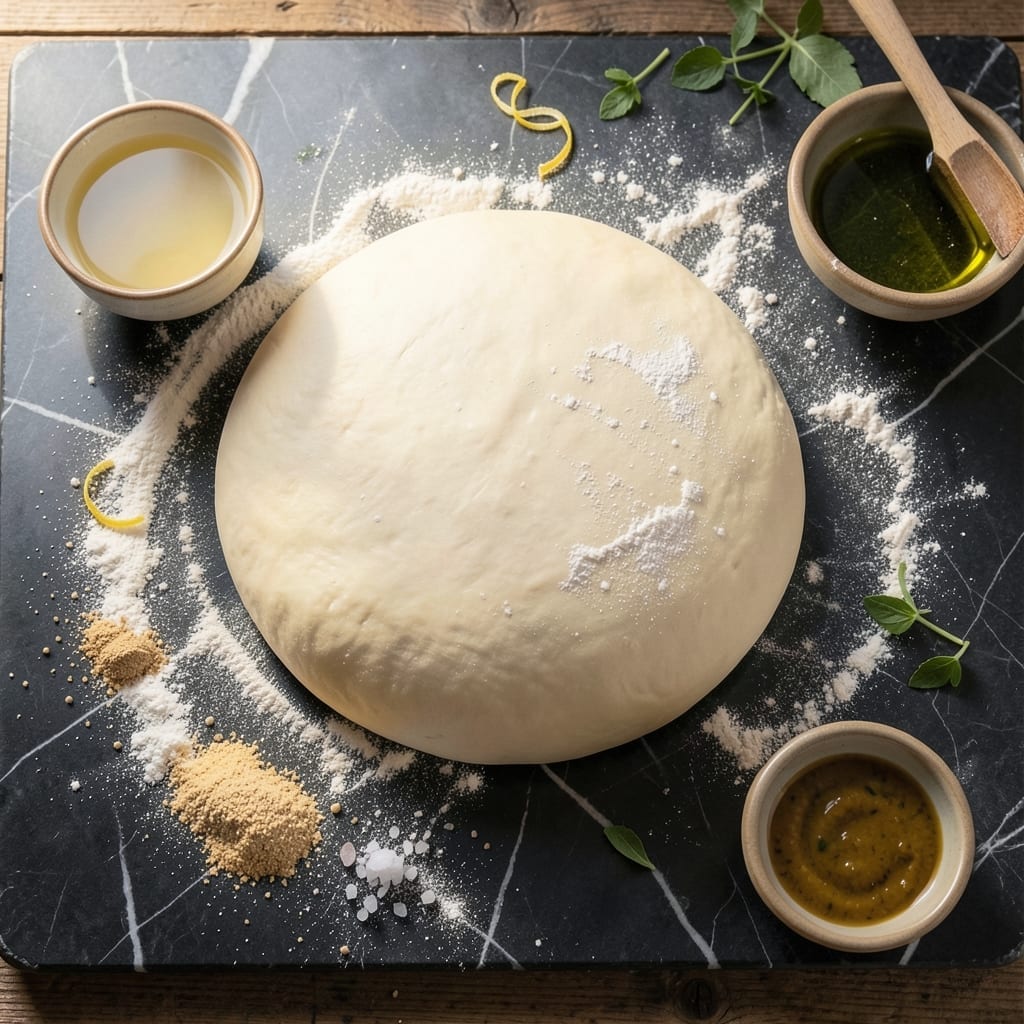
This pizza dough delivers authentic Italian results with a chewy, flavorful crust. I’ve refined the technique to ensure professional quality at home.
Stanley Tucci’s approach inspired this method, focusing on slow fermentation for depth. The result is a golden, airy base that holds toppings perfectly.
Ingredients for Stanley Tucci Pizza Dough
Nine ingredients transform into a restaurant-quality pizza base with authentic chew and golden color.
| Ingredient | Amount | Notes |
|---|---|---|
| Bread Flour 🌾 | 3 ½ cups | High-protein for chewy texture |
| Active Dry Yeast 🍞 | 2 ¼ tsp | One standard packet works |
| Fine Sea Salt 🧂 | 2 tsp | Diamond Crystal preferred |
| Granulated Sugar 🍚 | 1 tsp | Feeds the yeast |
| Extra-Virgin Olive Oil 🫒 | 2 tbsp | Italian cold-pressed recommended |
| Warm Water 💧 | 1 ¼ cups | 105-110°F for yeast activation |
| Semolina Flour 🌾 | ½ cup | For dusting work surface |
| Cornmeal 🌽 | ¼ cup | For pizza peel dusting |
| All-Purpose Flour 🌾 | ½ cup | Optional for softer crust |
[recipe_ingredient_scaler]
Professional kitchens rely on King Arthur Bread Flour for its consistent 12.7% protein content—this is non-negotiable for authentic Neapolitan-style chew. Red Star Active Dry Yeast delivers reliable rise; check expiration dates as old yeast is the most common failure point. The olive oil should be Italian cold-pressed (look for DOP certification), and warm the water to precisely 105-110°F (use a thermometer—guessing risks killing the yeast).
Substitute bread flour with all-purpose in a pinch, though the crust will be slightly less chewy. Instant yeast at 1.5 tsp works identically to active dry—no need to proof first. For sugar, honey works but may darken the crust more; omit entirely for a leaner dough. Semolina and cornmeal are interchangeable for dusting, though cornmeal adds a subtle crunch.
The dough balls can rest in the refrigerator for up to 48 hours—slow fermentation develops more flavor. Store dry ingredients in airtight containers for 6-12 months. Yeast keeps for 1 year unopened in the pantry, but refrigerate after opening for maximum viability.
Why You’ll Love This Recipe
- 5-Minute Mix: I can have the dough ready before the oven preheats—just bread flour, yeast, and a glug of olive oil.
- Crisp & Chewy: The olive oil gives it that perfect golden crust with a soft, airy center every time.
- Endless Toppings: Honestly, it’s my blank canvas for anything from margherita to loaded veggie.
- Dough for Days: One batch makes four pizzas, so I freeze half for lazy nights later.
Step-by-Step Instructions for Stanley Tucci Pizza Dough
Master the technique behind authentic Italian pizza dough with these precise, time-tested steps.
Step 1: Activate the Yeast Properly
In a small bowl, combine the 1.25 cups warm water with the 1 tsp granulated sugar and 2.25 tsp active dry yeast. Let this mixture sit undisturbed for 5-10 minutes until it becomes foamy and cloudy. This visual confirmation is critical—it proves your yeast is alive and ready to work.
I always check the water temperature with a thermometer to ensure it’s between 105-110°F. Water that’s too hot will kill the yeast, while water that’s too cool won’t activate it properly. The foam should rise to about double the original volume—this is your first checkpoint for success.
Step 2: Form and Knead the Dough
In a large mixing bowl, combine the 3.5 cups bread flour and 2 tsp fine sea salt. Make a well in the center and pour in the yeast mixture along with the 2 tbsp extra-virgin olive oil. Using a wooden spoon, stir until a shaggy dough begins to form and all the flour is hydrated.
Turn the dough out onto a surface dusted with 0.5 cup semolina flour. Knead for 8-10 minutes by hand until the dough becomes smooth, elastic, and slightly tacky but not sticky. The bread flour’s high protein content develops the gluten that gives this dough its signature chewy texture.
To test if it’s properly kneaded, perform the windowpane test: stretch a small piece of dough between your fingers. If it stretches thin enough to see light through without tearing, your gluten is well-developed. If it tears, continue kneading for another 2-3 minutes.
Step 3: First Rise Until Doubled
Shape the dough into a ball and place it in a lightly oiled bowl, turning once to coat all sides. Cover with a damp kitchen towel or plastic wrap and let it rise in a warm, draft-free place for 1 to 1.5 hours, or until doubled in volume.
I prefer letting it rise in an oven with the light turned on, which maintains a consistent 75-80°F environment. The dough is ready for the next step when it has visibly doubled and a finger pressed gently into the surface leaves a slight indentation that slowly springs back.
Step 4: Divide, Shape, and Second Rise
Punch down the risen dough to release the air, then turn it out onto your semolina flour-dusted surface. Divide it into 4 equal portions (about 250g each for this recipe) and shape each into a tight ball. Place these on a baking sheet dusted with 0.25 cup cornmeal to prevent sticking.
Cover loosely with a towel and let rest for 30 minutes. This second rise relaxes the gluten, making the dough easier to stretch without tearing. For a softer crust, you can substitute up to 0.5 cup all-purpose flour for some of the bread flour during the initial mixing.
After the second rise, your dough balls should be puffy and ready to stretch. Dust your work surface and pizza peel with additional cornmeal or semolina as needed to prevent sticking during shaping and baking.
Pro Tips For Making Stanley Tucci Pizza Dough
- Prove the Yeast: Always activate your active dry yeast in warm water (110°F) with a pinch of sugar first—if it doesn’t foam within 5 minutes, your dough won’t rise. I learned this the hard way after tossing out two flat, sad dough balls.
- Use High-Protein Flour: Bread flour’s higher protein content (12-14%) gives that chewy, elastic texture Stanley’s recipe is known for. Skip all-purpose—it just won’t hold up the same way.
- Skip Cold Olive Oil: Let your extra-virgin olive oil come to room temperature before mixing—cold oil can shock the yeast and slow fermentation. Sounds fussy, but it actually changes the outcome.
- Rest Overnight: After kneading, let the dough rise in the fridge for 24 hours. Yes, it takes patience, but the slow ferment develops way more flavor than a quick countertop rise.
Creative Variations of This Dish
Herb-Infused Crust
Mix 2 tbsp chopped fresh rosemary and 1 tbsp thyme into the flour before adding wet ingredients. I forage these wild herbs along coastal trails for an earthy aroma. The herbs infuse the dough with subtle Italian flavors that pair perfectly with olive oil. 🌿
Garlic Lovers Twist
Add 4 minced garlic cloves and 1 tsp garlic powder to the dry ingredients. This creates a fragrant base that shines through even with bold toppings. I learned this trick from a local butcher who swears by garlic in everything.
Spicy Calabrian Kick
Stir 1 tbsp Calabrian chili paste into the warm water before adding yeast. The heat builds gradually as the dough proofs, creating a spicy foundation. This variation reminds me of the fiery flavors I discovered in Southern Italy. 🔥
Whole Wheat Blend
Replace 1 cup bread flour with whole wheat flour for a nuttier, heartier crust. The texture becomes denser but gains complexity. I recommend adding 1 extra tbsp olive oil to compensate for the drier flour.
Cheesy Stuffed Edge
After the first rise, flatten each dough ball and place 1 oz mozzarella in the center before reshaping. This creates a gooey, cheesy surprise in every bite. Press the edges tightly to seal the cheese inside during baking.
Sourdough Starter
Replace ½ cup water and ½ cup flour with 1 cup active sourdough starter. The tangy flavor develops during the longer fermentation. I maintain my own starter, fed daily with organic flour from the farmers market.
Nutrition Facts
Frequently Asked Questions
Why use bread flour instead of all-purpose?
Bread flour’s higher protein content (12-14%) develops more gluten, creating that signature chewy texture. All-purpose works in a pinch but yields a softer crust.
How long can I refrigerate the dough?
Dough balls can rest in the fridge for up to 48 hours. The cold slows fermentation, developing deeper flavor while keeping the texture perfect.
What’s the ideal water temperature for yeast?
Use water between 105-110°F. Too hot kills the yeast; too cool won’t activate it. A thermometer ensures accuracy every time.
Can I make this dough without a stand mixer?
Knead by hand for 8-10 minutes until smooth and elastic. The windowpane test (stretching a piece thin) confirms it’s ready.

Trained in classic French technique but raised on slow-cooked ribs and spicy rubs, she blends culinary skill with smoke and soul.
- Meat and Potato Recipe Ideas: Savory Pairings for Hearty Meals - October 3, 2026
- Recipe for Fried Prawns Batter: Ultra-Crispy Golden Shell - October 3, 2026
- Indian Lamb Curry Recipe Pressure Cooker: Fragrant Spices in a Fraction of the Time - October 3, 2026