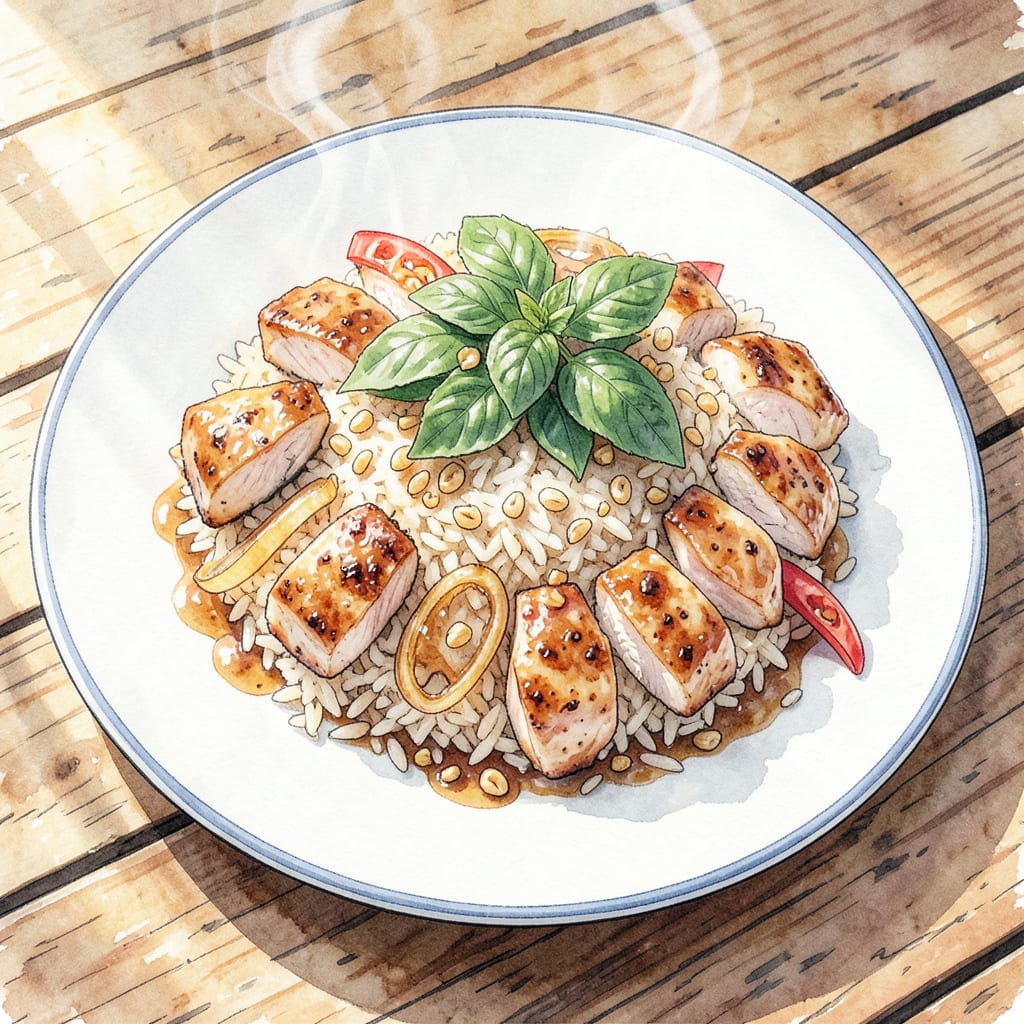
This Thai basil chicken fried rice brings the vibrant flavors of Bangkok street food straight to your kitchen. The secret lies in achieving that signature wok-seared aroma and perfect balance of savory, spicy, and herbaceous notes. I’ve refined this technique over years of testing to capture the authentic taste without requiring professional equipment.
What makes this dish special is how simple ingredients transform under high heat. The chicken stays tender, the rice develops a slight crispness, and fresh Thai basil adds its distinctive peppery finish. Serve it with a lime wedge and fried egg for the complete street food experience.
Ingredients for Thai Basil Chicken Fried Rice
Authentic Thai flavors start with these carefully balanced ingredients—fresh herbs, umami sauces, and aromatic spices for street-food magic.
| Ingredient | Amount | Notes |
|---|---|---|
| Jasmine Rice 🍚 | 3 cups | Day-old, cooked and chilled |
| Boneless Chicken Thighs 🍗 | 1 lb | Cut into small, even pieces |
| Thai Basil Leaves 🌿 | 1 ½ cups | Fresh, loosely packed |
| Garlic Cloves 🧄 | 6 cloves | Finely minced for maximum flavor |
| Thai Red Chilies 🌶️ | 3 whole | Sliced thinly (adjust for heat) |
| Fish Sauce 🐟 | 2 tbsp | Use Red Boat or Thai Kitchen brand |
| Light Soy Sauce 🫙 | 2 tbsp | Low-sodium preferred for balance |
| Oyster Sauce 🦪 | 1 tbsp | Vegetarian oyster sauce if needed |
| Sugar 🍬 | 1 tsp | White granulated for authenticity |
| Vegetable Oil 🫒 | 3 tbsp | High smoke point for wok frying |
| White Pepper 🧂 | ½ tsp | Freshly ground for aromatic kick |
| Lime 🍋 | 1 whole | Cut into wedges for serving |
| Large Eggs 🥚 | 2 whole | For optional fried egg topping |
| Shallots 🧅 | 2 whole | Thinly sliced for sweetness |
| Green Onions 🌱 | 3 whole | Thinly sliced for garnish |
[recipe_ingredient_scaler]
The Thai basil is non-negotiable for authentic flavor. Look for it at Asian markets—it has purple stems and narrower leaves than Italian basil. Jasmine rice must be day-old and completely chilled to achieve that signature crispness. For the chicken, thighs stay juicier than breast under high heat. Opt for Red Boat fish sauce if available—its clean, pure flavor makes a noticeable difference in the final dish. The Thai chilies should be vibrant red and firm; adjust quantity based on your heat tolerance (seeds in for more fire).
No Thai basil? Italian basil at double the amount works in a pinch, though the flavor profile changes. For a vegetarian version, swap fish sauce for soy sauce and use mushroom oyster sauce. The sugar balances the saltiness—palm sugar is traditional but granulated works fine. If you can’t find Thai chilies, serrano peppers are the closest substitute. The white pepper is crucial for that authentic Thai taste; don’t substitute black pepper.
Prep all ingredients before heating the wok—mise en place is essential for high-heat cooking. Cooked rice keeps in the fridge for 3-4 days before using. The fried rice itself is best eaten immediately but reheats decently for 2 days (microwave with a splash of water). Store sauces in a cool, dark place—they’ll keep for 6-12 months unopened. Fresh Thai basil should be used within 3-5 days; wrap stems in damp paper towels.
Why You’ll Love This Recipe
- One-Pan Magic: I love that this comes together in a single wok or skillet—no extra bowls, no messy countertops. Just toss in the chicken thighs, garlic, and chilies, push it aside, crack in an egg, then fold everything with the jasmine rice and basil. Cleanup’s faster than the cooking.
- That Basil-Chili Kick: The second those Thai basil leaves hit the hot pan, the whole kitchen smells like a Bangkok street stall. The red chilies give it a slow-building heat that’s balanced by the sweet, anise-like basil, while the garlic gets crispy and golden. Honestly? I’ve caught myself eating it straight from the pan before it even hits a plate.
- Leftover Reinvention: Day-old jasmine rice actually works better here—dry, separate grains that fry up perfectly. I double the batch on purpose because cold leftovers (with a fried egg on top) make my ideal desk lunch or a 2 a.m. snack. Between us, it tastes even better the next day.
- Budget-Friendly Protein: Boneless chicken thighs stay juicy, cost half what breasts do, and stretch further than you’d think. A pound plus rice and veggies feeds four generously, or two of us for two meals. I’ll be real: this is the dish I make when I’m craving takeout but my wallet’s saying nope.
Step-by-Step Instructions for Thai Basil Chicken Fried Rice
The secret to authentic wok-fried flavor lies in high heat and proper technique.
Step 1: Prepare the Ingredients and Equipment
Begin by gathering all ingredients and preparing them as specified. The boneless chicken thighs should be cut into small, even pieces about ½-inch in size to ensure quick, uniform cooking. Thinly slice the shallots and green onions, finely mince the garlic cloves, and slice the Thai red chilies. This preparation step is crucial for maintaining the high-heat cooking process without interruption.
Use day-old, chilled jasmine rice that has been cooked and refrigerated overnight. Freshly cooked rice contains too much moisture and will result in mushy fried rice. Break up any clumps with your hands before cooking. Have all ingredients measured and within reach of your cooking area – this dish comes together quickly once you start cooking.
Step 2: Cook the Chicken and Aromatics
Heat a wok or large skillet over high heat until very hot. Add 2 tablespoons of the vegetable oil and swirl to coat the surface. When the oil begins to shimmer, add the prepared chicken thighs in a single layer. Cook undisturbed for 2-3 minutes until the bottom develops a golden sear.
Stir-fry the chicken for another 2-3 minutes until cooked through and no longer pink. Remove the chicken from the wok and set aside. In the same wok, add the remaining 1 tablespoon of vegetable oil if needed. Add the minced garlic and sliced shallots, stir-frying for 30 seconds until fragrant but not browned. Immediately add the sliced Thai red chilies and cook for another 15 seconds to release their flavor without burning.
Step 3: Combine Rice and Sauces
Add the chilled jasmine rice to the wok, breaking up any remaining clumps with your spatula. Stir-fry for 2-3 minutes until the rice is heated through and begins to develop a slightly toasted aroma. The rice should make a faint sizzling sound as it hits the hot wok.
Create a well in the center of the rice and add the fish sauce, light soy sauce, oyster sauce, sugar, and white pepper. Stir the sauces together in the well for 10-15 seconds until the sugar dissolves, then quickly mix everything together. Return the cooked chicken to the wok and stir-fry for another 1-2 minutes until all ingredients are evenly distributed and the rice takes on a uniform golden color.
Step 4: Finish with Thai Basil and Garnishes
Reduce the heat to medium and add the Thai basil leaves. Stir gently just until the basil wilts, about 30-45 seconds. The leaves should turn dark green but maintain some texture. Overcooking will make them bitter and lose their vibrant color.
Taste and adjust seasoning if needed, though the sauce combination should provide perfect balance. Transfer the fried rice to a serving platter and garnish with sliced green onions. Serve immediately with lime wedges on the side for squeezing over individual portions. For an authentic street food presentation, top each serving with a fried egg cooked sunny-side up using the large eggs.
Essential Equipment for Perfect Results
Wok Selection
A carbon steel wok is my top recommendation for authentic results. I use a 14-inch flat-bottom wok from Joyce Chen that works on both gas and electric stoves. The sloped sides help toss ingredients while the flat bottom ensures good contact with your burner. Season it properly before first use—heat with oil until it turns black. 🔥
High Heat Source
You need serious BTUs to achieve wok hei (breath of the wok). A gas burner with at least 15,000 BTU output is ideal. If using electric, preheat your wok for 10 minutes on high. I’ve found that outdoor propane burners work best for home cooks wanting restaurant-quality heat.
Essential Utensils
A long-handled wok spatula is non-negotiable for safe tossing. I prefer the stainless steel version with a wooden handle that stays cool. Keep a fine-mesh splatter screen nearby—those Thai chilies can pop! A large metal bowl helps organize prepped ingredients within arm’s reach.
Rice Prep Tools
For perfect day-old rice, I use a rice cooker (Zojirushi model) to ensure consistent texture. A box grater helps break up clumps quickly before frying. If making fresh rice, spread it on a baking sheet to cool rapidly in the fridge. The right tools make all the difference in texture.
Sauce Measurement
Invest in small stainless steel bowls for your sauces—fish sauce, soy sauce, and oyster sauce should be pre-measured. I use 1-ounce portion cups from restaurant supply stores. A small whisk helps emulsify the sugar completely. This prep prevents frantic measuring during the high-heat cooking process.
Serving Essentials
Have lime wedges ready in a small bowl and fried eggs prepped if using. I love serving this in a large wooden bowl for that street food feel. Keep extra Thai basil on hand for garnish—it wilts quickly but adds freshness. A bottle of sriracha on the table never hurts for heat lovers. 🌿
Nutrition Facts

Trained in classic French technique but raised on slow-cooked ribs and spicy rubs, she blends culinary skill with smoke and soul.
- Recipe for Kabsa Rice: Spiced Middle Eastern Feast in One Pot - October 3, 2026
- Hamburger Stir Fry Recipe Healthy: Lean Protein and Veggie-Packed Dinner - October 3, 2026
- Recipe for Curried Lamb Chops: Spice-Rubbed and Pan-Seared to Succulence - October 3, 2026