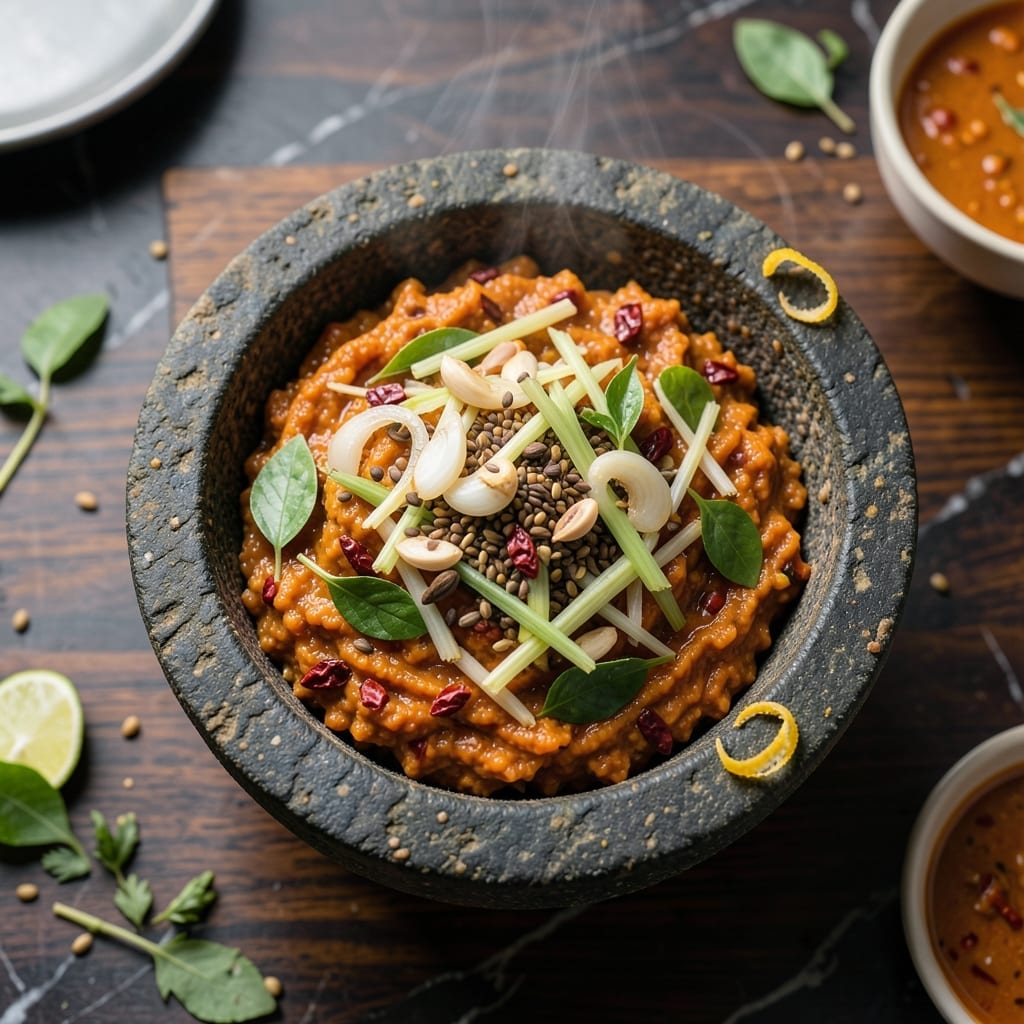
This vegetarian Thai red curry paste delivers authentic flavor without fish sauce, using plant-based ingredients to create a bold, aromatic base for curries and stir-fries.
Make a batch to keep on hand—it lasts 3 months refrigerated and transforms simple dishes with its complex, spicy-sweet profile.
Ingredients for Thai Red Curry Paste Recipe Vegetarian
Ten plant-based ingredients create this bold, aromatic paste for authentic Thai flavors.
| Ingredient | Amount | Notes |
|---|---|---|
| Dried Red Chili Peppers 🌶️ | 12 pieces | Stems removed, seeds optional |
| Shallots 🧅 | 4 whole | Peeled and quartered |
| Garlic Cloves 🧄 | 6 cloves | Peeled and roughly chopped |
| Fresh Galangal 🌿 | 1 whole | Peeled and sliced, or ginger |
| Lemongrass Stalks 🌱 | 2 pieces | Tender inner parts only |
| Kaffir Lime Leaves 🍃 | 6 pieces | Stems removed, finely chopped |
| Coriander Seeds 🌿 | 1 tbsp | Toasted and ground |
| Cumin Seeds 🌿 | 1 tsp | Toasted and ground |
| White Peppercorns 🌶️ | 1 tsp | Freshly ground preferred |
| Sea Salt 🧂 | 1 tsp | Fine grain for even blending |
[recipe_ingredient_scaler]
Dried red chili peppers are the foundation—look for Thai bird’s eye chilies at Asian markets or online. Their heat and fruity depth can’t be replicated with standard red pepper flakes. Shallots and garlic should be fresh, with firm texture and no sprouting (a sign of age). Galangal, the citrusy rhizome, is non-negotiable for authenticity, though fresh ginger can substitute in a pinch. Lemongrass and kaffir lime leaves are often sold fresh at Whole Foods or Trader Joe’s.
No galangal? Use double the ginger for a similar zing. Missing kaffir lime leaves? Lime zest plus bay leaf approximates the citrusy aroma. Coriander and cumin seeds must be toasted before grinding—raw seeds taste bitter. For heat control, remove chili seeds before blending; for extra fire, leave them in. Sea salt balances the flavors, but kosher salt works too in a 1:1 ratio.
This paste keeps well due to its high oil content from blending. Store in an airtight container with a thin oil layer on top for 3 months refrigerated. Freeze in ice cube trays for 6 months—perfect for single-use portions in curries or stir-fries.
Why You’ll Love This Recipe
- One-Blend Wonder: I toss everything—chilies, shallots, galangal—in the food processor and it’s done in minutes.
- Flavor Bomb: The lemongrass and garlic hit you with this bright, fiery kick that’s ridiculously good.
- Freezer Friendly: I make a double batch and freeze portions so I’m never without curry paste on a busy night.
- Budget Stretcher: Dried chilies and fresh herbs cost pennies compared to store-bought paste, and it tastes way better.
Step-by-Step Instructions for Thai Red Curry Paste Vegetarian
This method ensures maximum flavor extraction from every aromatic component in your paste.
Step 1: Toast and Grind the Whole Spices
Begin by toasting the 1 tbsp Coriander Seeds and 1 tsp Cumin Seeds in a dry skillet over medium heat for 1-2 minutes until fragrant. Stir constantly to prevent burning—the seeds should darken slightly but not smoke.
Immediately transfer the toasted seeds to a spice grinder or mortar. Add the 1 tsp White Peppercorns and grind to a fine powder. The warmth from toasting will amplify the spices’ essential oils, creating a more potent base for your paste. Set this mixture aside.
Step 2: Prepare and Soften the Aromatics
Roughly chop the 12 pieces Dried Red Chili Peppers, removing stems but leaving seeds for heat if desired. Peel and quarter the 4 whole Shallots, then peel and roughly chop the 6 cloves Garlic Cloves.
Slice the 1 whole Fresh Galangal into thin rounds after peeling. For the 2 pieces Lemongrass Stalks, trim away the tough outer layers and use only the tender inner 4-5 inches, finely minced. Remove stems from the 6 pieces Kaffir Lime Leaves and chop finely. These preparations ensure even blending and maximum surface area for flavor release.
Step 3: Blend All Ingredients into a Smooth Paste
Combine all prepared ingredients in a food processor: the dried chili peppers, shallots, garlic, galangal, lemongrass, kaffir lime leaves, ground spice mixture, and 1 tsp Sea Salt. Pulse until the mixture forms a coarse paste, stopping to scrape down the sides as needed.
With the processor running continuously, gradually drizzle in 2-3 tablespoons of water or neutral oil—just enough to achieve a smooth, thick consistency. The paste should hold together when pressed but not be watery. This may take 3-5 minutes of processing for complete homogeneity.
Step 4: Test and Adjust the Flavor Balance
Transfer a small amount of paste to a spoon and taste carefully. The flavor should be intensely aromatic with heat from the chilies, citrus from the kaffir lime, and warmth from the spices. The Sea Salt should enhance all flavors without dominating.
If the mixture seems too dry, add another 1 teaspoon of water. For more depth, allow the paste to rest for 10 minutes before using—the flavors will meld and intensify. Store in an airtight container in the refrigerator for up to 2 weeks, or freeze for 3 months.
Pro Tips For Making Thai Red Curry Paste Recipe Vegetarian
- Soak the Chilies: Cover dried red chilies in hot water for 15-20 minutes before blending—this softens them and prevents grittiness in your paste. I learned this the hard way after chewing on stubborn chili bits in my first batch.
- Scrape the Lemongrass: After peeling the outer layers, scrape the stalks with the flat side of your knife to release more aromatic oils before chopping. Sounds tedious, but it actually changes the outcome.
- Skip the Ginger: Resist the urge to substitute ginger for galangal—it lacks the citrusy, floral notes that define Thai red curry paste. My grandmother swore by this, and she was right.
- Pulse, Don’t Blend: Use short pulses in your food processor instead of continuous blending to avoid overheating the paste, which dulls the flavors. I burned out two batches before figuring this out.
Essential Equipment for This Dish
Must-Have Tools
To make authentic Thai red curry paste at home, start with a mortar and pestle—this traditional tool ensures the best texture and flavor extraction. A high-speed blender or food processor like the Vitamix or Ninja works too if you prefer convenience. 🥘
Don’t forget a sharp chef’s knife and a cutting board for prepping fresh ingredients like lemongrass, galangal, and chilies. Precision matters for even blending!
Nice-to-Have
A spice grinder (like the Krups) can help pulverize whole spices like coriander or cumin seeds for a more aromatic base. If you’re making large batches, a stand mixer with a grinding attachment saves time.
For storage, airtight glass jars keep your paste fresh longer. A microplane is also handy for finely grating ginger or lime zest.
Budget Alternatives
No mortar and pestle? Use a rolling pin and a sturdy bowl to crush ingredients manually. A small electric chopper (like the Hamilton Beach) is a wallet-friendly alternative to high-end blenders.
For measuring, basic kitchen spoons and cups work just fine—no need for fancy scales unless you’re scaling up production. 💡
Nutrition Facts

Trained in classic French technique but raised on slow-cooked ribs and spicy rubs, she blends culinary skill with smoke and soul.
- Recipe for Oven Roasted: Golden Crisp Perfection Without the Fryer - October 3, 2026
- Recipe for Fried Pork Chops With Flour: Crispy Crust and Juicy Centers - October 3, 2026
- Octopus Recipe Pan Fried: Crispy Edges With Tender Bites - October 3, 2026