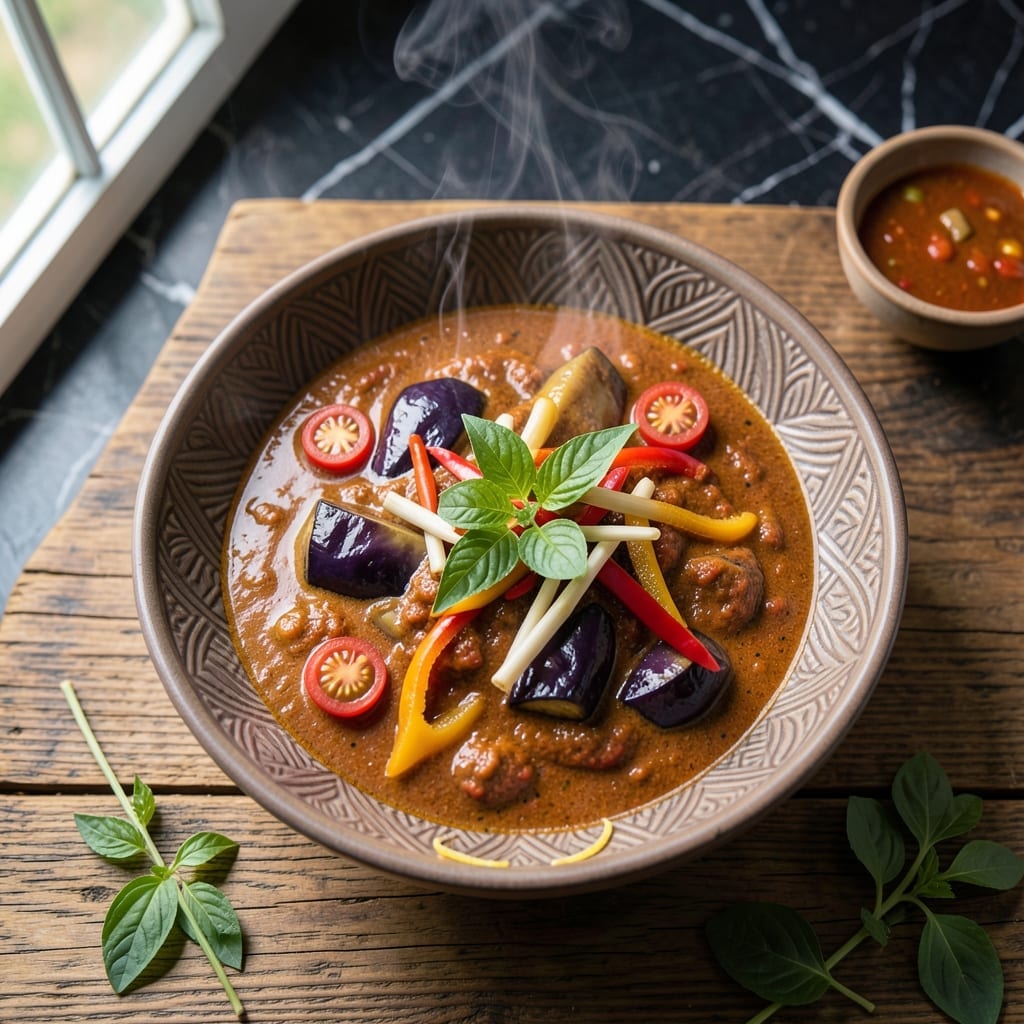
This vegetarian Thai red curry delivers bold flavors without complexity.
Coconut milk mellows the spice blend while fresh vegetables add texture. The result is a restaurant-quality dish ready in 30 minutes.
Ingredients for Thai Red Curry Recipe Vegetarian
Restaurant-quality Thai flavors start with these fresh and aromatic ingredients.
| Ingredient | Amount | Notes |
|---|---|---|
| Red Curry Paste 🌶️ | 3 tbsp | Thai brand preferred |
| Full-Fat Coconut Milk 🥥 | 2 cans | 13.5 oz cans, well shaken |
| Bell Peppers 🌶️ | 2 whole | Red and yellow, sliced |
| Bamboo Shoots 🌿 | 1 can | Drained and rinsed |
| Thai Eggplant 🍆 | 4 pieces | Quartered, optional |
| Cherry Tomatoes 🍅 | 1 cup | Halved |
| Red Onion 🧅 | 1 whole | Thinly sliced |
| Fresh Basil 🌿 | ½ cup | Thai basil preferred |
| Firm Tofu 🧈 | 14 oz | Pressed and cubed |
| Vegetable Broth 💧 | 1 cup | Low-sodium preferred |
| Light Brown Sugar 🍚 | 1 tbsp | Balances spice heat |
| Fish-Free Soy Sauce 🥢 | 2 tbsp | Tamari for gluten-free |
| Lime 🍈 | 1 whole | Juiced, plus wedges |
| Fresh Cilantro 🌿 | ¼ cup | Chopped, for garnish |
| Jasmine Rice 🍚 | 1 ½ cups | Uncooked, for serving |
[recipe_ingredient_scaler]
The curry paste is non-negotiable for authentic flavor. Maesri or Thai Kitchen brands are widely available at Whole Foods or Asian markets. Full-fat coconut milk is essential—light versions separate and lack richness. For the tofu, extra-firm holds its shape best during cooking. Pressing removes excess water (worth the extra minute). Bell peppers should be crisp and vibrant.
No Thai eggplant? Zucchini or regular eggplant works beautifully. Bamboo shoots can be omitted, but they add great texture. For a protein swap, tempeh or chickpeas stand up well to the bold flavors. Fish-free soy sauce is critical for vegetarian authenticity—San-J makes a reliable version. Brown sugar can be swapped for coconut sugar at equal amounts.
Curry tastes even better the next day once flavors meld. Stores in the fridge for 4-5 days or freezes for 3 months. Reheat gently to avoid coconut milk separation. Always garnish fresh with basil and cilantro (the good stuff, not the pre-chopped kind).
Why You’ll Love This Recipe
- One Pot Wonder: I just toss the red curry paste, coconut milk, and veggies into a single pot and let it simmer while I set the table.
- Ridiculously Good: The creamy coconut milk balances the spicy paste so well, and the crisp bell peppers add the perfect bite.
- Meal Prep Hero: I make a big batch on Sunday and pack it for lunch all week—it actually tastes better the next day.
- Budget Stretcher: Between us, a can of coconut milk and a jar of paste feed my family for two meals without breaking the bank.
Step-by-Step Instructions for Thai Red Curry Vegetarian
Master the technique for building layers of flavor in this aromatic vegetarian curry.
Step 1: Bloom the Curry Paste and Aromatics
Heat a large, heavy pot over medium heat until hot. Add the 3 tbsp Red Curry Paste and cook for 1-2 minutes, stirring constantly, until the paste darkens slightly and becomes fragrant. This step is crucial—it deepens the curry’s flavor and eliminates any raw paste taste.
Immediately add the thinly sliced Red Onion and cook for 3-4 minutes until softened and translucent. The onions should release their natural sweetness, which balances the heat of the curry paste. Watch carefully to prevent burning, as the paste can stick to the bottom of the pot.
Step 2: Build the Curry Base with Coconut Milk
Pour in 1 can of Full-Fat Coconut Milk, stirring constantly to incorporate the curry paste and onions. Use a wooden spoon to scrape up any browned bits from the bottom of the pot—these add depth to the sauce. Bring the mixture to a gentle simmer over medium heat.
Once simmering, add the remaining 1 can Full-Fat Coconut Milk, 1 cup Vegetable Broth, 1 tbsp Light Brown Sugar, and 2 tbsp Fish-Free Soy Sauce. Stir well to combine. The coconut milk will separate slightly at first, but it will emulsify as it heats. Simmer for 5 minutes to meld the flavors.
Step 3: Add Vegetables and Tofu
Add the 2 whole Bell Peppers (sliced), 1 can Bamboo Shoots (drained and rinsed), 4 pieces Thai Eggplant (quartered), 1 cup Cherry Tomatoes (halved), and 14 oz Firm Tofu (pressed and cubed). Stir gently to coat all the ingredients in the sauce.
Bring the curry back to a simmer, then reduce the heat to medium-low. Cover and cook for 10-12 minutes, stirring occasionally, until the Bell Peppers are tender but still hold their shape and the Thai Eggplant is soft. The tofu should absorb the flavors of the sauce while maintaining its structure.
Taste and adjust the seasoning if needed, but remember the flavors will intensify as it rests.
Step 4: Finish with Fresh Herbs and Lime
Remove the pot from heat. Stir in the 0.5 cup Fresh Basil (Thai basil preferred) and let it wilt into the curry for 1-2 minutes. The basil adds a bright, aromatic note that complements the rich sauce.
Squeeze in the juice of the 1 whole Lime and stir to combine. The lime juice brightens the dish and balances the creaminess of the coconut milk. Garnish with the 0.25 cup Fresh Cilantro (chopped) just before serving to preserve its fresh flavor.
Serve hot over 1.5 cups Jasmine Rice (cooked).
Pro Tips For Making Thai Red Curry Recipe Vegetarian
- Bloom the Paste: Cook the red curry paste in a dry pan for 1-2 minutes before adding coconut milk—this deepens the flavor and removes any raw bitterness.
- Use Full-Fat Only: I learned this the hard way: light coconut milk just won’t give you that rich, creamy texture that balances the heat of the curry paste.
- Prep Veggies Small: Cut bell peppers, bamboo shoots, and Thai eggplant into uniform, bite-sized pieces so they cook evenly and soak up the sauce.
- Simmer, Don’t Boil: Once the coconut milk is in, keep it at a gentle simmer—boiling can cause the curry to separate and lose its silky consistency.
Storing and Reheating This thai red curry recipe vegetarian
🍳 Refrigerator Storage
To keep your vegetarian Thai red curry fresh, transfer it to an airtight container once it has cooled to room temperature. It will stay delicious in the refrigerator for 3-4 days. This method preserves the rich coconut flavors and vibrant spices beautifully.
❄️ Freezer Storage
For longer storage, freeze your curry in airtight containers or heavy-duty freezer bags. It will maintain its quality for 2-3 months. To prevent freezer burn, ensure the container is filled to the top to minimize air exposure. Label with the date for easy tracking!
🔥 Reheating Methods
Reheat your curry gently to preserve its creamy texture. On the stovetop, warm it over medium-low heat for 5-7 minutes, stirring occasionally. In the microwave, use 30-second intervals and stir between each to ensure even heating. For a smoky touch, reheat in a smoker at 225°F (107°C) for 15-20 minutes.
✨ Quality Preservation
To retain the best texture, avoid overcooking during reheating. If the curry thickens too much, add a splash of coconut milk or water. For frozen curry, thaw it overnight in the refrigerator before reheating. This ensures even warming and prevents separation of the coconut milk.
Nutrition Facts

Trained in classic French technique but raised on slow-cooked ribs and spicy rubs, she blends culinary skill with smoke and soul.
- Hamburgers in Sauce Recipe Crock Pot: Slow-Cooked Savory Delight - October 3, 2026
- Sanjeev Kapoor Egg Biryani Recipe: Fragrant Spiced Rice With Boiled Eggs - October 3, 2026
- Recipe for French Pork Spread Gorton: Savory Gallic Flavors in a Spreadable Delight - October 3, 2026