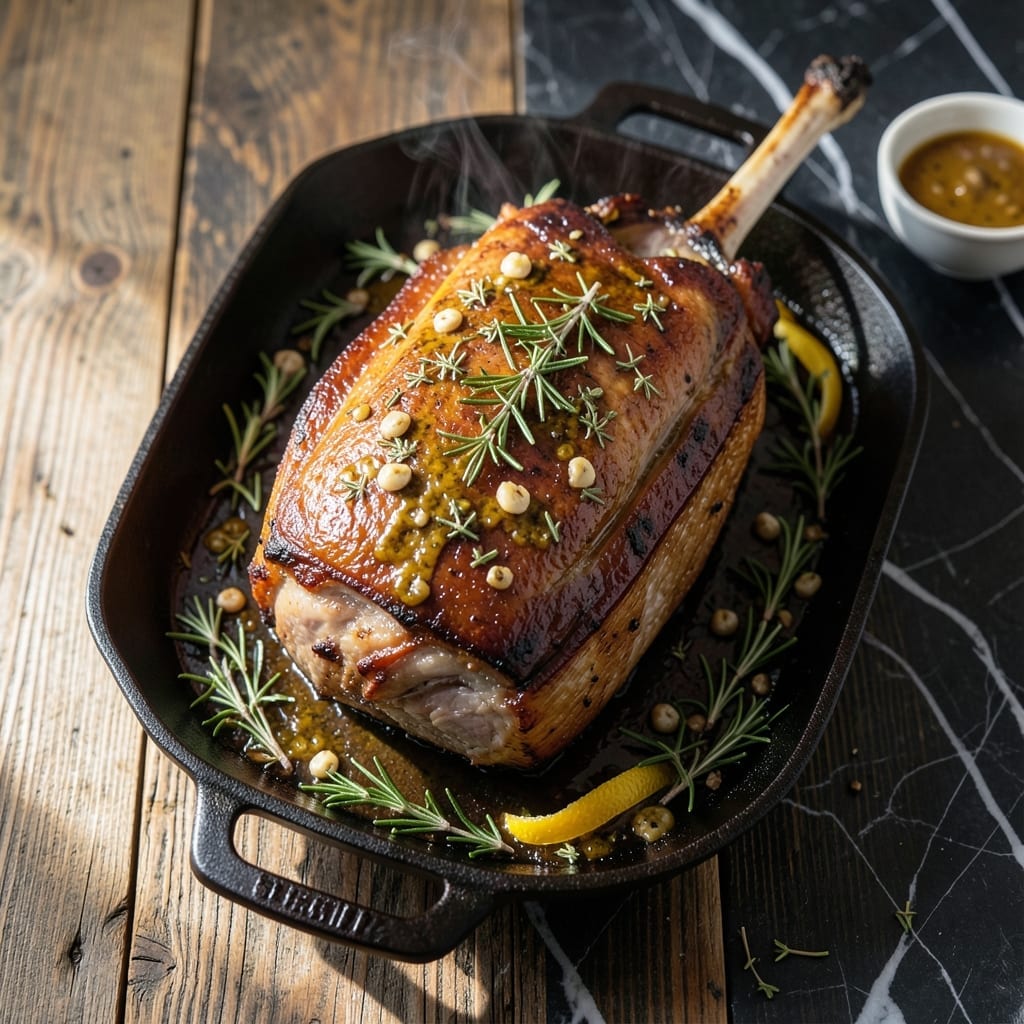
This standing rib roast delivers perfectly tender meat with a herb-crusted exterior that seals in juices. My years of experience confirm this method yields the best results every time.
Simple preparation with bold flavors creates a centerpiece worthy of any special occasion. The key lies in proper seasoning and precise cooking times to achieve ideal doneness.
Ingredients for The Best Standing Rib Roast
Prime cut, fresh herbs, and bold seasonings create this showstopping centerpiece. Nothing less will do.
| Ingredient | Amount | Notes |
|---|---|---|
| Standing Rib Roast 🥩 | 5 lb | Bone-in, prime grade preferred |
| Kosher Salt 🧂 | 2 tbsp | Diamond Crystal brand recommended |
| Freshly Ground Black Pepper 🌶️ | 2 tbsp | Coarse grind for texture |
| Fresh Rosemary 🌿 | 3 tbsp | Finely chopped, stems discarded |
| Fresh Thyme 🍃 | 3 tbsp | Leaves stripped from stems |
| Garlic Cloves 🧄 | 6 cloves | Minced to fine paste |
| Dijon Mustard 🟡 | ¼ cup | Smooth, no seeds |
| Extra-Virgin Olive Oil 🫒 | ¼ cup | High-quality, fruity notes |
| Unsalted Butter 🧈 | 4 tbsp | Softened to room temperature |
| Red Wine 🍷 | 1 cup | Dry, bold variety |
| Beef Stock 🥩 | 1 cup | Low-sodium preferred |
| Shallots 🧅 | 2 whole | Finely diced |
| All-Purpose Flour 🌾 | 2 tbsp | For thickening pan sauce |
[recipe_ingredient_scaler]
The roast itself is non-negotiable. Prime grade from a trusted butcher like Whole Foods or Snake River Farms ensures marbling that self-bastes during cooking. Look for bright red color with creamy fat—avoid anything gray or dry. Bone-in provides superior flavor and structure. If choosing between rib counts, three-bone roasts offer the best balance of size and cooking uniformity.
No fresh herbs? Dried at one-third the quantity works in a pinch, though fresh delivers superior aroma. Out of red wine? Beef stock with a tablespoon of balsamic vinegar substitutes adequately. The Dijon can be swapped for whole-grain mustard if you prefer texture. For a richer crust, some chefs add a tablespoon of Worcestershire sauce to the herb mixture.
Prep the herb mixture up to 1 day ahead—store covered in the fridge. The roast can be dry-brined (salted) 12-24 hours before cooking for deeper seasoning. Leftovers, if any, keep beautifully for 4-5 days and make exceptional sandwiches or hash.
Why You’ll Love This Recipe
- Set It and Forget: Honestly, just season with salt, pepper, rosemary, and thyme, then let the oven do the work.
- Crispy Herb Crust: That combination of fresh rosemary and thyme with the fat cap creates the most incredible crust I’ve ever tasted.
- Holiday Showstopper: I serve this for Christmas dinner and my guests rave about it every time.
- Leftovers for Days: Between us, the sandwiches I make with the leftovers might be even better than the original meal.
Step-by-Step Instructions for Herb-Crusted Standing Rib Roast
This method delivers a flawless crust and perfectly medium-rare center every time.
Step 1: Prepare the Herb Paste and Season the Roast
In a small bowl, combine the 0.25 cup Dijon mustard, 0.25 cup extra-virgin olive oil, 3 tbsp fresh rosemary, 3 tbsp fresh thyme, and 6 cloves garlic cloves minced to a paste. Stir until fully incorporated into a thick, fragrant mixture.
Pat the 5 lb standing rib roast dry with paper towels. This is critical for achieving a proper sear. Season all sides aggressively with the 2 tbsp kosher salt and 2 tbsp freshly ground black pepper, pressing to adhere. Spread the herb paste evenly over the entire surface of the roast, ensuring full coverage.
Step 2: Sear the Roast to Develop Flavor
Place the roast bone-side down in a large roasting pan. Add 4 tbsp unsalted butter to the top of the roast, allowing it to melt and baste the meat as it cooks. Preheat your oven to 450°F and position the rack in the lower third.
Once the oven reaches temperature, transfer the pan to the oven and sear for 20 minutes. This high-heat step creates a deeply browned crust while locking in juices. You should see a rich, golden-brown exterior forming with an intoxicating aroma filling your kitchen.
Step 3: Slow Roast to Ideal Doneness
Reduce the oven temperature to 325°F without opening the door. Continue roasting until an instant-read thermometer inserted into the thickest part of the meat (avoiding bone) registers 120-125°F for medium-rare. This typically takes 1.5 to 2 hours for a 5 lb standing rib roast.
Baste the roast with its pan juices every 30 minutes during this phase. The internal temperature will rise 5-10°F during resting, so remove it when it’s slightly below your target. Look for juices that run clear with a slight pink tint when pierced.
Step 4: Rest and Prepare the Pan Sauce
Transfer the roast to a cutting board, bone-side down, and tent loosely with foil. Let it rest for 20-30 minutes—this allows the juices to redistribute for optimal tenderness and slicing. Meanwhile, place the roasting pan on the stovetop over medium heat.
Add the 2 whole shallots to the pan and cook for 2 minutes until softened. Sprinkle in the 2 tbsp all-purpose flour and whisk constantly for 1 minute to create a roux. Gradually pour in the 1 cup red wine and 1 cup beef stock, whisking to incorporate all browned bits from the pan bottom.
Step 5: Slice and Serve with Pan Sauce
Simmer the sauce for 5-7 minutes until reduced by half and thickened enough to coat the back of a spoon. Strain through a fine-mesh sieve if you prefer a smoother consistency, then adjust seasoning with a pinch of kosher salt or freshly ground black pepper if needed.
Carve the roast by slicing between the ribs for elegant, bone-in portions. Arrange on a warmed platter and spoon the pan sauce over the top. The meat should be uniformly pink from edge to edge with a thick, herbaceous crust. Serve immediately while the sauce is still hot and glossy.
Pro Tips For Making The Best Standing Rib Roast
- Salt Generously Night Before: I learned this the hard way—dry-brine the roast with 1 tablespoon kosher salt per pound the evening before cooking. This guarantees deep seasoning and a perfectly tender crust.
- Bring to Room Temp: Pull the roast out of the fridge 2-3 hours before cooking. Cold meat seizes up in the oven, and I’ve ruined more than one roast by rushing this step.
- Skip the Crowded Pan: Use a roasting rack or bed of vegetables to elevate the roast—this prevents the bottom from steaming instead of browning. Sounds simple, but it actually changes the outcome.
- Rest Under Foil: After cooking, tent it loosely with foil and let it rest for 20-30 minutes. I used to cut too soon and watched all the juices escape—now I wait, and the meat stays juicy every time.
Flavor Customization for This Recipe
Garlic & Herb Boost
For a more intense herb flavor, double the rosemary and thyme to 2 tbsp each. Add 1 tbsp fresh sage for earthy depth—I forage wild sage along the coast for this. The aromatic oils will create a more pronounced crust.
Spicy Coffee Rub
Mix 2 tbsp finely ground coffee with 1 tbsp smoked paprika and 1 tsp cayenne into your herb paste. This adds a deep, slightly bitter contrast to the rich beef. I learned this trick at a local BBQ competition.
Citrus Zest Addition
Add zest of 1 lemon and 1 orange to your herb mixture for bright, fresh notes. The citrus oils cut through the fat beautifully. This is my go-to for summer roasts when I want a lighter profile.
Mushroom Umami Layer
Blend ½ cup finely chopped dried porcini mushrooms into your herb paste. This adds incredible depth and meaty flavor. I source mine from specialty spice shops for the best quality.
Cheese Crust Variation
In the last 15 minutes of roasting, sprinkle ½ cup grated Parmesan over the herb crust. This creates a golden, crispy topping that adds a salty, nutty dimension. 💡
Balsamic Glaze Finish
After resting, drizzle 2 tbsp reduced balsamic glaze over the roast before slicing. The sweet-tart contrast elevates the herb notes. Reduce ½ cup balsamic vinegar by simmering for 10 minutes. 🔥
Nutrition Facts
Frequently Asked Questions
How do I know when it’s done?
Use an instant-read thermometer inserted into the thickest part, avoiding bone. Remove at 120-125°F for medium-rare. The temperature will rise 5-10°F during resting.
Should I cover it while roasting?
No, leave it uncovered to develop a proper crust. Covering traps steam, preventing the beautiful brown exterior. Baste every 30 minutes with pan juices instead.
Can I use a boneless roast?
Yes, but bone-in provides better flavor and structure. If using boneless, reduce cooking time by about 15-20% and ensure even thickness for consistent doneness.
What if my crust isn’t browning?
Increase oven temp to 475°F for the final 10-15 minutes. Or broil for 2-3 minutes watching closely to avoid burning. Always preheat your oven fully first.

Trained in classic French technique but raised on slow-cooked ribs and spicy rubs, she blends culinary skill with smoke and soul.
- Recipe For Leftover Fried Fish: Crunchy Leftovers Transformed - October 3, 2026
- Recipe for Crock Pot Swiss Steak: Slow-Cooked Beef With Mushroom Gravy - October 3, 2026
- Recipe for Kabsa Rice: Spiced Middle Eastern Feast in One Pot - October 3, 2026