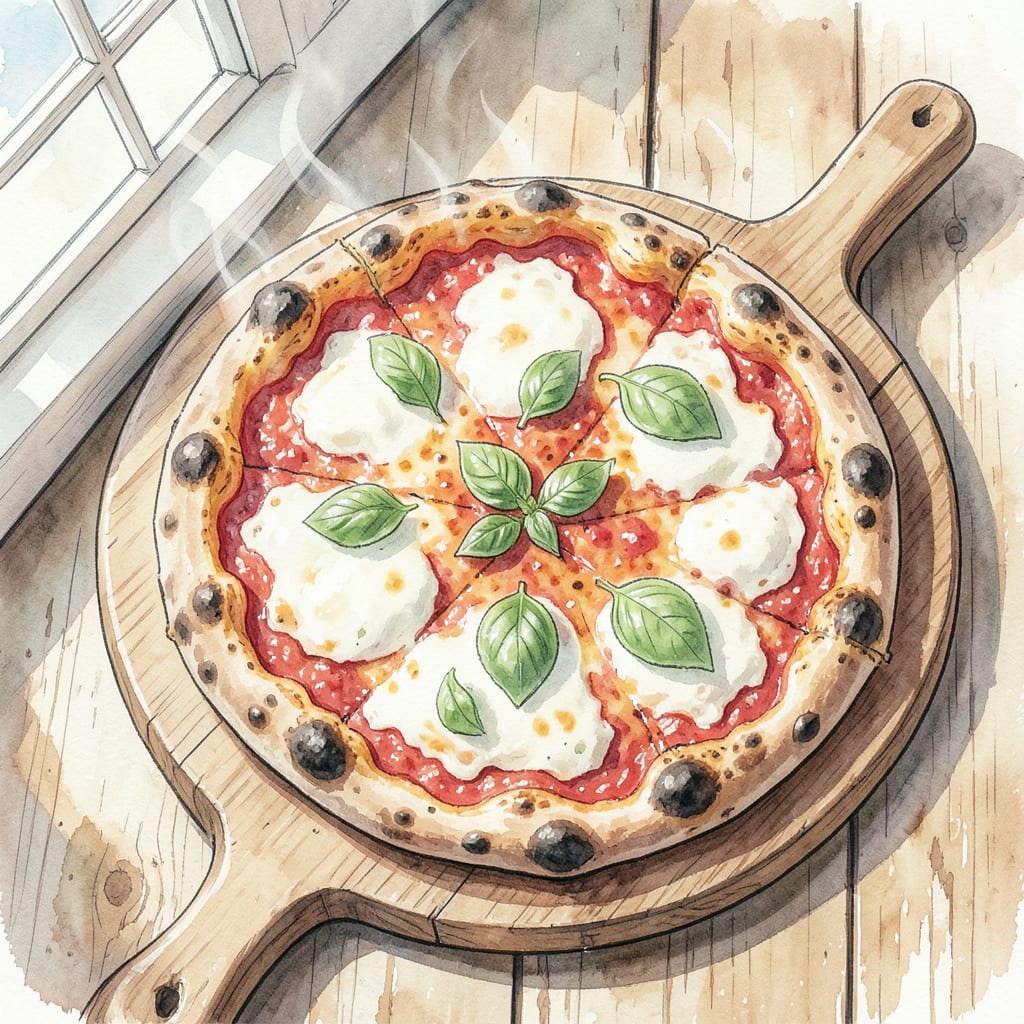
I’ve spent years perfecting my thin crust wood-fired pizza dough recipe, and I’m excited to share it with you. 🔥 The secret lies in achieving that perfect balance between crispy edges and a tender center, just like traditional Neapolitan-style pizzas.
To get started, you’ll need to mix and proof the dough, then shape it into perfectly round pizzas. Cooked at 500°F for just a few minutes, you’ll achieve that authentic wood-fired crust with characteristic char and crunch. Let’s make pizza night unforgettable!
Ingredients for Thin Crust Wood Fired Pizza Dough
Gather these simple ingredients to create authentic Neapolitan-style pizza dough at home tonight.
| Ingredient | Amount | Notes |
|---|---|---|
| All-Purpose Flour 🌾 | 2 ½ cups | Unbleached, unbromated preferred |
| Active Dry Yeast 🍞 | 1 tsp | Instant yeast works too |
| Salt 🧂 | 1 tsp | Kosher or sea salt |
| Extra-Virgin Olive Oil 🫒 | 2 tbsp | For dough richness |
| Warm Water 💧 | 1 cup | About 100°F to 110°F |
| Honey 🍯 | 1 tsp | Optional, for slight sweetness |
| Semolina Flour 🌾 | ½ cup | For dusting, optional |
[recipe_ingredient_scaler]
For the best results, use high-quality Caputo or All-Purpose flour with about 12% protein content. I prefer King Arthur or Bob’s Red Mill for consistency. If you’re new to pizza making, don’t worry—this dough is very forgiving.
No instant yeast? Active dry yeast works fine—just give it a few extra minutes to activate. The honey is optional, but it helps with browning and adds a hint of sweetness. For an authentic touch, use San Marzano tomatoes for your sauce.
Dough keeps for 3 days in the fridge—let it come to room temp before shaping. You can freeze portions for up to 3 months. Just thaw overnight in the fridge and you’re good to go. Keep your flour and semolina handy for dusting to prevent sticking.
Step-by-Step Instructions for Thin Crust Wood-Fired Pizza Dough
Let’s create authentic Neapolitan-style pizza dough with a perfect thin crust that’s crispy on the outside and tender on the inside.
👨🍳 Step 1: Mix Dry Ingredients and Activate Yeast
In a large mixing bowl, combine the 2.5 cups All-Purpose Flour, 1 tsp Active Dry Yeast, and 1 tsp Salt. Whisk these dry ingredients together until they’re evenly distributed. I like to use a balloon whisk for this step as it incorporates air and ensures even yeast distribution. You’ll notice the mixture becomes lighter and more uniform.
Creating a well in the center of the dry ingredients is crucial. This prevents the yeast from coming into contact with the salt directly, which can kill the yeast. I learned this the hard way when I first started making pizza dough.
👨🍳 Step 2: Combine Wet and Dry Ingredients
Pour the 1 cup Warm Water into the well you created, then add the 1 tsp Honey and 2 tbsp Extra-Virgin Olive Oil. Using a wooden spoon or dough whisk, gently incorporate the dry ingredients into the wet ingredients. Start from the inside of the bowl and work your way outwards. The mixture will start to come together in a shaggy dough.
Don’t overmix at this stage. You want to maintain the delicate balance of ingredients. The dough should look rough and uneven – that’s perfectly normal. As you mix, you’ll notice the flour starting to hydrate and the dough beginning to take shape.
🍳 Step 3: Knead to Develop Gluten
Transfer the shaggy dough to a lightly floured surface and begin kneading. I use a push-fold-turn motion, working the dough for 10 minutes until it becomes smooth and elastic. You’ll know it’s ready when the dough passes the “windowpane test” – when stretched thin, it allows light through without tearing.
During kneading, pay attention to the dough’s texture. It should start feeling smoother and more elastic as you work it. If it remains sticky, add a sprinkle of flour. If it’s too dry, a tiny bit of water helps. The goal is a dough that’s tender but not sticky.
⏰ Step 4: Ferment and Proof the Dough
Place the kneaded dough in a lightly oiled bowl, cover it with plastic wrap or a damp towel, and let it rise in a warm, draft-free place. I let mine ferment for 1-2 hours until it doubles in size. You’ll see it start to bubble on the surface – that’s a sign of proper fermentation.
After the first rise, gently deflate the dough by folding it over itself a few times. Then, divide it into 4 equal portions for individual pizzas. Shape each portion into a ball and let them rest for another 30 minutes. This final proof allows the dough to relax, making it easier to shape later.
🔥 Step 5: Shape and Bake
Preheat your oven to its highest temperature setting (usually around 500-550°F) with a pizza stone or baking steel inside. If you have a pizza peel, dust it with 0.5 cup Semolina Flour to prevent sticking. Gently stretch your dough ball into a thin circle, about 12 inches in diameter.
Top your pizza as desired, then slide it onto the preheated stone. Bake for 10-12 minutes until the crust is golden brown with charred spots. The edges should be crispy while the center remains tender. You’ll know it’s done when the crust is firm and the toppings are heated through.
Best Sauces and Condiments for These Flavors
Classic Pizza Sauce
The foundation of a great Neapolitan-style pizza is a simple yet flavorful sauce. I use San Marzano tomatoes crushed by hand with a drizzle of extra-virgin olive oil, a pinch of salt, and a sprinkle of fresh basil. This minimalist approach lets the natural sweetness of the tomatoes shine through while adding a hint of freshness from the basil. The result is a sauce that’s both bright and rich, perfect for balancing the crispy crust. 🌿
Infused Oils for Added Depth
Infused oils can elevate your pizza game by adding complex flavors without overpowering the other ingredients. I love making a garlic and herb infused oil by slowly heating olive oil with minced garlic and fresh herbs like rosemary or thyme. This oil adds a subtle aromatic quality that enhances the overall flavor profile of your pizza. Brush it on the crust before baking for an extra layer of flavor. 💧
Cheese Blends for Balance
While mozzarella is the classic choice for Neapolitan pizza, blending different cheeses can create a more nuanced flavor profile. I often mix fresh mozzarella with a bit of Parmesan or Gorgonzola for added depth. The creaminess of mozzarella pairs beautifully with the tanginess of Gorgonzola, while Parmesan adds a salty, umami flavor that enhances the overall taste. Experiment with different ratios to find your perfect blend. 🧀
Fresh Herbs for Brightness
Fresh herbs are a simple yet effective way to add brightness and freshness to your pizza. I like to sprinkle chopped fresh basil or oregano over my pizza just before serving. The heat from the pizza releases the oils in the herbs, infusing the entire dish with their aromatic flavor. For a more subtle effect, you can mix chopped herbs into your sauce or olive oil. 🌸
Spices and Chili Flakes for Heat
For those who like a bit of heat, adding red pepper flakes or chili powder to your pizza can provide a nice kick. I sprinkle a pinch of red pepper flakes over my pizza before baking for a subtle, smoky heat. You can also mix chili flakes into your sauce for a more integrated heat. Adjust the amount to your taste, and
Nutrition Facts

Trained in classic French technique but raised on slow-cooked ribs and spicy rubs, she blends culinary skill with smoke and soul.
- Recipe for Crock Pot Lasagna Using Ravioli: No-Boil Cheese Layers - October 3, 2026
- Recipe for Cut Up Chicken: One-Pan Crispy Bites - October 3, 2026
- Recipe For Oven Baked Haddock: Buttery Crumbs With Zesty Lemon Topping - October 3, 2026