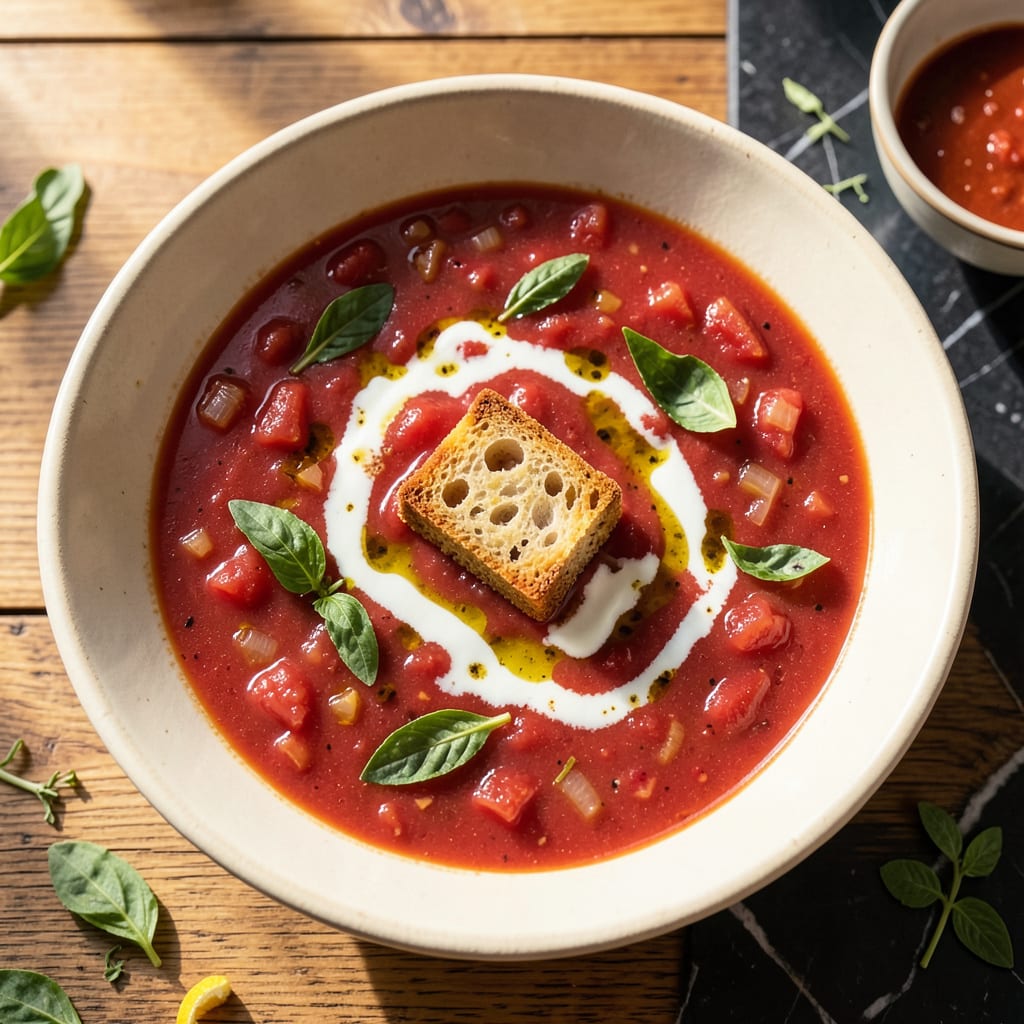
I’ll be real with you—making creamy tomato soup without a blender seemed impossible until I figured out this foolproof method. No fancy equipment, no lumps, just rich, velvety soup that tastes like it came from your favorite diner. The secret? A simple potato trick that thickens and smooths everything naturally.
This recipe was born during a power outage when my blender died mid-puree. Instead of giving up, I mashed the tomatoes by hand and let a single potato break down into the broth. The result was so good, I’ve never gone back to blending. You control the texture—leave it rustic or work it until silky smooth.
What you get is comfort in a bowl: sweet-tart tomatoes, creamy body without dairy (though you can add it), and that perfect balance of acid and richness. I serve mine with crusty bread for dunking and a sprinkle of fresh basil. The aroma alone will have everyone gathering around the table.
Best part? It’s idiot-proof—no special skills needed. Whether you’re avoiding appliances or just want simpler cleanup, this method delivers every time. Let’s get that pot simmering.
📚 In This Guide
- What You’ll Need
- Instructions
- Tips and Common Mistakes
What Youll Need
- ● Fresh ingredients: 2 lbs (about 6-8 medium) ripe tomatoes (Roma or vine-ripened work best) 🍅
- ● 1 small yellow onion, finely diced
- ● 3 garlic cloves, minced
- ● 2 cups low-sodium vegetable or chicken broth
- ● ¼ cup heavy cream or coconut milk (for dairy-free)
- ● 2 tbsp unsalted butter or olive oil
- ● Pantry staples: 1 tsp sugar (balances acidity)
- ● 1 tsp dried oregano or basil
- ● Salt & black pepper to taste
- ● Tools: Large soup pot or Dutch oven (3-4 quart capacity)
- ● Fine-mesh strainer or food mill (key for silky texture!)
- ● Wooden spoon (for stirring)
- ● Chef’s knife & cutting board
- ○ Optional upgrades: 1 tbsp tomato paste (for deeper flavor)
- ● Pinch of red pepper flakes (for heat)
- ● Fresh basil leaves (for garnish)
- ● Immersion hand mixer (if you want extra smoothness)
Step-by-Step Instructions for Tomato Soup No Blender
Here’s how to achieve velvety smooth texture without any special equipment—just good technique.
Sauté the Aromatics for Maximum Flavor
Heat a large, heavy-bottomed pot over medium heat and add your fat of choice (butter or olive oil both work beautifully). When the butter melts and just starts to foam—or the oil shimmers—add your finely diced onions. Cook them slowly, stirring occasionally, for 8-10 minutes until they turn translucent and sweet.
This slow cooking process caramelizes the natural sugars in the onions, building a rich flavor foundation for your soup. Add minced garlic during the last 2 minutes of cooking—just until fragrant but not browned. I always scrape the bottom of the pot with my wooden spoon to prevent any sticking and incorporate those flavorful browned bits.
Cook the Tomatoes Until Completely Soft
Add your tomatoes to the pot (canned whole tomatoes work best here). Break them up with your spoon as they heat through. If using fresh tomatoes, you’ll want to cook them for 15-20 minutes until they completely collapse and release their juices. For canned tomatoes, 10 minutes of simmering is usually sufficient.
You’re looking for the tomatoes to become so soft they almost dissolve into the cooking liquid. This is where the magic happens—the tomatoes will naturally break down and create that smooth base we’re after. I like to use the back of my spoon to press any larger pieces against the side of the pot to help them along.
Simmer and Reduce for Concentrated Flavor
Pour in your broth or water and bring the mixture to a gentle boil. Reduce the heat to low and let it simmer uncovered for 20-25 minutes. You’ll notice the liquid reducing slightly and the flavors intensifying. This is exactly what we want—the longer simmer time allows the tomatoes to fully meld with the aromatics.
As it cooks, the soup will naturally thicken. You can control the final consistency by adjusting the simmer time—longer simmering yields a thicker soup. I like to tilt the pot occasionally to check the texture against the side. When it coats the back of a spoon but still pours easily, it’s perfect.
Create Silky Texture Without a Blender
Here’s the secret technique: use a potato masher or the back of a sturdy spoon to press the softened tomatoes through a fine-mesh sieve set over a clean pot. Work in batches, pressing firmly to extract all the smooth tomato pulp and liquid. The sieve will catch any skins or seeds, leaving you with pure, velvety soup base.
For extra richness, I like to stir in a splash of cream or a pat of butter at this stage. Return the strained soup to low heat and warm through for 5 minutes. Taste and adjust seasoning with salt and pepper—remember, the flavors will be more concentrated now that it’s smooth.
Finish with Bright, Fresh Flavors
Just before serving, stir in any fresh herbs you’re using. A sprinkle of chopped basil or parsley adds that final bright note that makes the soup sing. For a professional touch, I like to swirl in a teaspoon of balsamic vinegar—it enhances the tomato flavor without making the soup taste vinegary.
Ladle the hot soup into warmed bowls and serve immediately. The texture should be completely smooth, with a rich tomato flavor that coats your tongue. If you prefer a little texture, you can stir in some finely diced fresh tomatoes at the end, but I love it perfectly silky. This method proves you don’t need fancy equipment for restaurant-quality results.
Tips and Common Mistakes
Making silky smooth tomato soup without a blender is all about patience and technique. Here’s what I’ve learned from perfecting this method.
The Heat Factor: When sautéing your onions in Step 1, that 8-10 minutes on medium heat is crucial. Don’t rush it by turning up the heat—you want them to caramelize slowly, not brown quickly. I always test by pressing an onion piece against the side of the pot; if it sticks slightly but comes away clean, you’re at the right stage. This builds the flavor foundation for your entire soup.
Tomato Breakdown: In Step 2, whether you’re using fresh or canned tomatoes, the goal is complete collapse. For fresh tomatoes, that 15-20 minutes simmer time is non-negotiable—they need to completely soften and release all their juices. With canned tomatoes, the 10 minutes is usually perfect, but I often press them against the pot sides with my spoon to help them break down faster. You’ll know they’re ready when you can crush them with just a gentle stir.
Simmering Strategy: The 20-25 minutes simmer in Step 3 is where flavors concentrate. I like to tilt the pot occasionally to check the consistency against the side—when it coats but still pours easily, it’s perfect. If your soup seems too thin, extend the simmer time by 5 minutes and check again. Remember, it will thicken slightly more as it cools.
Straining Success: For Step 4, use a fine-mesh sieve and press firmly with the back of a spoon. Work in batches to avoid overfilling the sieve, which can make pressing difficult. I’ve found that pressing in a circular motion extracts the most pulp. The 5 minutes of warming after straining is just enough to blend all the flavors without over-reducing.
Pro Tips for Tomato Soup No Blender
- Making silky smooth tomato soup without a blender is all about patience and technique. Here’s what I’ve learned from …
- The Heat Factor: When sautéing your onions in Step 1, that 8-10 minutes on medium heat is crucial. Don’t rush it by t…
- Tomato Breakdown: In Step 2, whether you’re using fresh or canned tomatoes, the goal is complete collapse. For fresh …
Frequently Asked Questions
Can I make tomato soup without a blender and still get it smooth?
Use a food mill, fine-mesh strainer, or even a potato masher followed by straining to remove seeds/skins. Simmering tomatoes longer (20+ mins) softens them for easier mashing. For ultra-smooth texture, press through a sieve with a spoon—it takes elbow grease but works!
How long does no-blender tomato soup take to make?
Plan for 30–45 minutes total. Sautéing aromatics (5–7 mins), simmering tomatoes (15–20 mins), and straining/mashing (10 mins). Pro tip: Prep veggies while tomatoes cook to save time. Instant Pot? Cut simmering to 10 mins!
What can I use instead of heavy cream for a dairy-free version?
Try these swaps for creaminess:
- Coconut milk (full-fat for richness)
- Cashew cream (blend soaked cashews with water—ironic, but no blender needed for the soup!)
- Silken tofu (whisked in at the end)
- Olive oil drizzle (adds body without dairy)
Why is my soup grainy or seedy?
Tomato skins or seeds are likely the culprit! Peel tomatoes first (score, blanch in boiling water, then ice bath) or strain through a fine-mesh sieve. For seedless soup, halve tomatoes and squeeze out seeds before cooking. Simmering longer also breaks down fibers.
Can I make this soup ahead and reheat it?
Yes! Store in the fridge for 3–4 days or freeze for 3 months. Reheat gently on the stove, stirring often. Add cream/dairy substitutes fresh when reheating to prevent separation. Thin with broth if too thick—flavors deepen overnight!
Who knew you could whip up creamy tomato soup without a blender? With just a fork, a fine-mesh strainer, or a potato masher, you’ve got all the tools to turn simple ingredients into a velvety bowl of comfort. 🍅✨ No fancy gadgets—just pure, cozy flavor!
Now that you’ve mastered this hack, why not experiment? Try swapping in fire-roasted tomatoes for a smoky twist or stirring in fresh basil for extra brightness. And if you loved this no-fuss method, check out our other appliance-free recipes—your kitchen (and taste buds) will thank you!

Trained in classic French technique but raised on slow-cooked ribs and spicy rubs, she blends culinary skill with smoke and soul.
- Recipe for Fully Cooked Spiral Ham: Sweet Glaze and Effortless Elegance - October 3, 2026
- Recipe for Cream of Rice: Silky Smooth Breakfast Comfort - October 3, 2026
- Old Fashioned Beef and Noodles Recipe Crock Pot: Set-It-and-Forget-It Hearty Meal - October 3, 2026