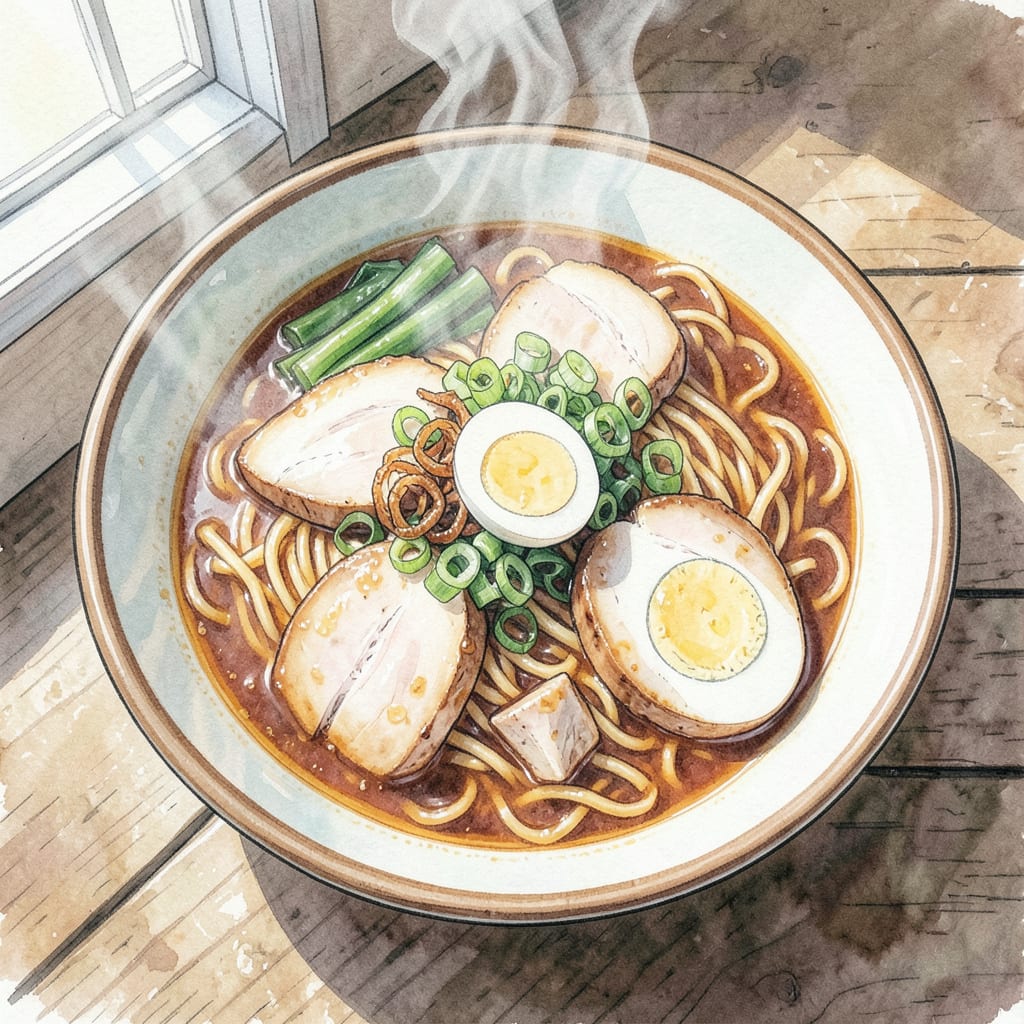
As a pitmaster with French technique training, I’ve always been fascinated by the rich flavors of traditional ramen. This chicken ramen recipe brings together a rich tonkotsu broth and springy noodles in a dish that’s both comforting and complex.
Cooking the broth requires patience, with 4-6 hours of simmering to extract deep flavors from the bones. The result is a creamy, savory broth that’s perfect for serving with your favorite toppings and springy ramen noodles.
Ingredients for Traditional Chicken Ramen
Gather these traditional ingredients for an authentic chicken ramen experience.
| Ingredient | Amount | Notes |
|---|---|---|
| Chicken Bones 🍗 | 2 lb | Preferably chicken backs and necks |
| Chicken Breast or Thighs 🍗 | 1 lb | Sliced for serving |
| Ramen Noodles 🍜 | 12 oz | Springy, preferably fresh |
| Vegetable Oil 🫒 | 2 tbsp | For browning bones |
| Onion 🧅 | 1 whole | Sliced for aromatics |
| Garlic Cloves 🧄 | 4 cloves | Minced for broth |
| Fresh Ginger 🌿 | 2 tbsp | Grated or sliced |
| Soy Sauce 🧂 | ¼ cup | Use low-sodium variety |
| Sesame Oil 🫒 | 2 tbsp | For finishing |
| Green Onions 🌿 | ½ cup | Chopped for garnish |
| Soft-Boiled Eggs 🥚 | 4 whole | Optional, for serving |
| Sesame Seeds 🌱 | 2 tbsp | For garnish |
[recipe_ingredient_scaler]
For the richest broth, use a mix of chicken backs and necks—they’re packed with collagen. Most butcher shops will give you these for cheap or free if you ask. Costo or Japanese markets often have pre-cut bones too. When shopping for noodles, look for fresh ramen in the refrigerated section.
No chicken backs? Use whatever bones you’ve got—just know it’ll take longer to get that rich, creamy texture. For ginger, don’t peel it—just grate or slice it thin. You can substitute ground ginger at one-third the amount if fresh isn’t available. Soy sauce is crucial; go for low-sodium to control salt levels.
This broth reheats beautifully—make a big batch and freeze portions for up to 3 months. Noodles are best fresh, but dried works too. Store leftover toppings (eggs, green onions, sesame seeds) separately in airtight containers for 3-4 days.
Step-by-Step Instructions for Traditional Chicken Ramen
Here’s the method for creating an authentic tonkotsu ramen experience at home.
Step 1: Brown the Chicken Bones for Rich Flavor
Preheat your oven to 400°F. Spread the 2 lb Chicken Bones on a baking sheet and roast for 30 minutes, turning halfway through. The bones should develop a deep golden brown color, which enhances the broth’s richness. I find that this browning step makes a significant difference in the final flavor.
While the bones are browning, heat 2 tbsp Vegetable Oil in a large pot over medium-high heat. Once hot, add the sliced 1 whole Onion and cook until it’s nicely caramelized on all sides, stirring occasionally. This should take about 8-10 minutes. The caramelized onion adds depth to the broth.
Step 2: Simmer the Broth for Maximum Richness
Once the bones are done browning, add them to the pot with the caramelized onion. Pour in enough cold water to cover the bones by about 2 inches — typically around 4-5 quarts. Add 4 cloves Garlic Cloves and 2 tbsp Fresh Ginger to the pot. Bring the mixture to a boil over high heat, then reduce to a simmer.
Skim off any impurities that rise to the surface during the first 30 minutes of simmering. Continue to simmer gently for at least 4 hours, adding more water as needed to keep the bones covered. The longer you simmer, the richer the broth will be. For the best results, I recommend simmering for 6-8 hours.
Step 3: Prepare the Toppings and Noodles
While the broth is simmering, prepare your toppings. Slice the 1 lb Chicken Breast or Thighs into thin strips and cook them in boiling water until just done. Shock the cooked chicken in ice water to stop the cooking process and keep it tender.
Cook the 12 oz Ramen Noodles according to the package instructions, typically boiling for 2-3 minutes until they are springy and cooked through. Drain and rinse the noodles under cold water to stop the cooking and remove excess starch.
Step 4: Assemble and Serve the Ramen
Strain the broth through a fine-mesh sieve into a clean pot, discarding the solids. Add 0.25 cup Soy Sauce to the broth and simmer for another 10-15 minutes to meld the flavors. Taste and adjust the seasoning as needed.
To serve, place a portion of noodles in each bowl, add slices of cooked chicken, and ladle the hot broth over the top. Garnish with 0.5 cup Green Onions, 2 tbsp Sesame Seeds, and a Soft-Boiled Egg if desired. Finish with a drizzle of 2 tbsp Sesame Oil for added richness and aroma.
Creative Variations of This traditional chicken ramen
Spicy Korean-Style Variation
Add 2-3 tbsp Korean chili flakes (gochugaru) to the broth during the last 30 minutes of simmering for an authentic spicy kick. Include kimchi (about 1 cup, chopped) as a topping along with the traditional green onions and soft-boiled egg. The spicy, fermented flavors complement the rich tonkotsu broth beautifully. 🌶️
Japanese-Style Tantanmen
Transform your chicken ramen into tantanmen by adding a spicy miso paste to the broth. Mix 2 tbsp miso paste with 1 tbsp soy sauce and 1 tsp sesame oil, then stir into the broth. Top with ground pork (about 1/2 lb, cooked with chili flakes) and blanched spinach. The combination of spicy and savory elements creates a complex flavor profile. 🔥
Light and Clear Variation
For a lighter version, reduce the simmering time to 2-3 hours and use more chicken breast than bones. This creates a cleaner, clearer broth that’s still flavorful but less rich. Add fresh herbs like cilantro or Thai basil as a garnish for brightness. The result is a refreshing take on traditional ramen.
Rich Paitan Broth Variation
Create a paitan broth by blending some of the cooked chicken directly into the broth for added richness. Use an immersion blender to puree about 1 cup of the chicken with some broth until smooth, then return it to the pot. This technique gives the broth a creamy texture without adding heavy cream. The result is a velvety, satisfying broth.
Regional Tonkotsu Variation
For a more authentic Kyushu-style tonkotsu ramen, focus on the pork bones rather than chicken. Use pork femur bones and simmer for 8-10 hours to achieve that signature creamy broth. Add pickled ginger and sesame seeds as toppings for traditional flavor combinations. The long simmering time creates an incredibly rich, satisfying broth.
Modern Fusion Variation
Try a modern fusion by adding truffle oil (about 1 tsp) or shaved truffles to the broth for luxury. Include toppings like seared scallops or pan-fried pork belly for added richness. The earthy truffle flavor pairs surprisingly well with the traditional ramen elements, creating a unique dining experience.
Nutrition Facts

Trained in classic French technique but raised on slow-cooked ribs and spicy rubs, she blends culinary skill with smoke and soul.
- Recipe for Crock Pot Swiss Steak: Slow-Cooked Beef With Mushroom Gravy - October 3, 2026
- Recipe for Kabsa Rice: Spiced Middle Eastern Feast in One Pot - October 3, 2026
- Hamburger Stir Fry Recipe Healthy: Lean Protein and Veggie-Packed Dinner - October 3, 2026