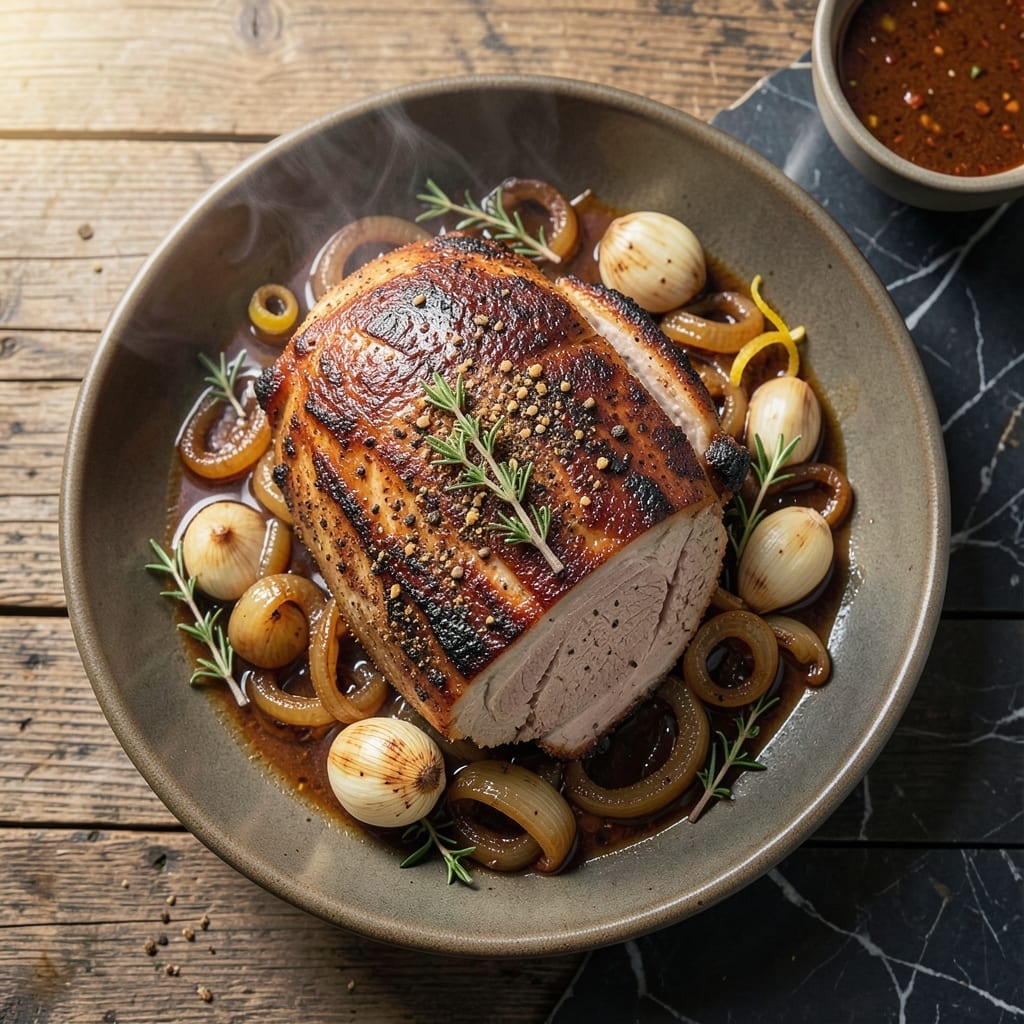
There’s nothing like the aroma of hickory smoke mingling with a perfectly seasoned pork roast on my Traeger. This method delivers tender meat with a crispy bark that’s hard to resist.
I’ve refined this technique over years of backyard cookouts, balancing French precision with old-school smoke traditions. The result is a roast that’s juicy inside, with a deep, smoky crust that makes every bite memorable.
Ingredients for Traeger Grill Pork Roast
A well-seasoned pork shoulder and hickory pellets create that perfect bark and juicy interior.
| Ingredient | Amount | Notes |
|---|---|---|
| Pork Shoulder Roast 🥩 | 4 lb | Bone-in, skin-on preferred |
| Kosher Salt 🧂 | 2 tbsp | Diamond Crystal preferred |
| Coarse Black Pepper 🌶️ | 2 tbsp | Freshly ground |
| Garlic Powder 🧄 | 1 tbsp | Not garlic salt |
| Onion Powder 🧅 | 1 tbsp | Fine grind preferred |
| Smoked Paprika 🌶️ | 1 tbsp | Sweet or hot variety |
| Dried Thyme 🌿 | 1 tsp | Crushed for better adhesion |
| Dried Rosemary 🌿 | 1 tsp | Crushed for better adhesion |
| Brown Sugar 🍚 | ½ cup | Light or dark variety |
| Dijon Mustard 🟡 | ¼ cup | Smooth, no seeds |
| Apple Cider Vinegar 🍏 | 2 tbsp | For tangy balance |
| Hickory Wood Pellets 🪵 | 2 cups | For Traeger grill |
| Olive Oil 🫒 | 2 tbsp | For binding rub |
[recipe_ingredient_scaler]
The pork shoulder is critical here. Bone-in, skin-on delivers the best moisture and bark formation. Source from local butchers or high-end grocers like Whole Foods for consistent quality. Look for uniform marbling throughout the cut. The fat cap should be at least 1/4-inch thick to protect the meat during the long smoke (worth the extra minute to check at the counter).
No pork shoulder? Pork butt works identically—it’s the same cut, just differently labeled. Substitute brown sugar with maple syrup at a 1:1 ratio for a stickier bark. Out of Dijon? Yellow mustard at half the amount provides similar tang. The vinegar can be swapped for white vinegar if that’s what’s in your pantry (the flavor difference is minimal).
The rub keeps for 6 months in an airtight container. Store the pork in the fridge for up to 3 days before cooking, or freeze for up to 12 months. Hickory pellets stay fresh indefinitely if kept dry—store them in a sealed container with a desiccant pack.
Why You’ll Love This Recipe
- Set and Forget: I rub the pork shoulder with salt, pepper, and those powders, then let the Traeger do the work—no babysitting required.
- Smoky Depth: The garlic and onion powders form this crust that gives every bite that rich, wood-fired flavor I crave.
- Feeds the Crew: One shoulder roast means dinner for six, plus leftovers for sandwiches that outshine any deli.
- Pennywise Protein: Pork shoulder is cheap, but with this method, it tastes like a weekend splurge. Honestly, my wallet and taste buds both win.
Step-by-Step Instructions for Traeger Grill Pork Roast
Master these fundamental steps to achieve tender, wood-fired pork with a caramelized bark crust.
Step 1: Prepare the Dry Rub and Apply to Pork
In a small bowl, combine the 2 tbsp kosher salt, 2 tbsp coarse black pepper, 1 tbsp garlic powder, 1 tbsp onion powder, 1 tbsp smoked paprika, 1 tsp dried thyme, and 1 tsp dried rosemary. Stir thoroughly to ensure even distribution of spices.
Pat the 4 lb pork shoulder roast completely dry with paper towels. This step is crucial for bark formation. Drizzle the 2 tbsp olive oil over the pork and rub it evenly across all surfaces. Then apply the dry rub generously, pressing it into the meat to create a thick, even coating. The rub should adhere completely without falling off.
Step 2: Create the Binder and Apply to Pork
In a separate bowl, whisk together the 0.5 cup brown sugar, 0.25 cup Dijon mustard, and 2 tbsp apple cider vinegar until smooth. This sweet-tangy mixture will form a sticky binder that helps the rub caramelize during cooking.
Apply this mixture evenly over the spice-rubbed pork, using your hands or a basting brush to ensure complete coverage. The paste should create a glossy layer over the entire surface. Let the seasoned pork rest at room temperature for 30 minutes while you prepare the grill.
Step 3: Set Up the Traeger Grill
Fill the Traeger’s pellet hopper with the 2 cups hickory wood pellets. Turn the grill on and set the temperature to 225°F using the Super Smoke setting if available. This low-and-slow temperature with enhanced smoke production is ideal for breaking down the pork’s connective tissue while infusing deep wood-fired flavor.
Allow the grill to preheat for 10-15 minutes until it reaches the set temperature and you see a steady stream of thin blue smoke emerging from the chimney. This indicates the grill is ready for cooking. Clean the grates thoroughly with a grill brush to prevent sticking.
Step 4: Smoke the Pork Roast to Perfection
Place the seasoned pork shoulder directly on the grill grates, fat-side up. Close the lid and maintain the temperature at 225°F throughout the cooking process. Smoke the pork undisturbed for 6-8 hours or until the internal temperature reaches 165-170°F as measured in the thickest part of the meat.
At this point, the pork will have developed a rich, dark bark. Wrap the roast tightly in butcher paper or aluminum foil to power through “the stall,” then return it to the grill. Continue cooking until the internal temperature reaches 200-205°F and a probe inserts like butter. This typically requires an additional 2-4 hours of cooking time.
Step 5: Rest and Serve
Carefully remove the pork from the grill and transfer it to a cutting board. Tent loosely with foil and let it rest for 30-60 minutes. This resting period allows the juices to redistribute throughout the meat, ensuring each serving is moist and flavorful.
Unwrap the pork and discard any large fat caps. Pull the meat apart using two forks or chop it into chunks, depending on your serving preference. The pork should separate easily with minimal effort, indicating proper doneness. Serve immediately with the accumulated juices spooned over the top.
Pro Tips For Making Traeger Grill Pork Roast
- Start Low and Slow: Set your Traeger to 225°F and let the pork shoulder cook for at least 8 hours—this is the sweet spot for tender, fall-apart meat without drying it out.
- Dry the Surface: Pat the pork shoulder completely dry before seasoning; I learned this the hard way after my first roast had a weak bark because the rub wouldn’t stick to the wet surface.
- Don’t Rush the Rest: After pulling it off the grill, tent the pork with foil and let it rest for 30 minutes—skipping this step means all the juices will end up on the cutting board instead of in the meat.
- Double the Rub: Sounds like overkill, but coat the pork shoulder with a heavy layer of kosher salt, pepper, garlic powder, and onion powder—this forms a flavorful crust that’s worth the extra minute of effort.
Regional Styles of This Dish
Texas Style
In Texas, we keep it simple but bold. I use a coarse black pepper and salt rub with a touch of cayenne for heat. Smoke at 225°F with post oak pellets for 12 hours until probe-tender. The bark forms a crunchy, peppery crust that’s unmistakably Lone Star. 🌶️
Carolina Vinegar
Eastern Carolina favors a tangy profile. Replace the binder with a mix of apple cider vinegar, water, and red pepper flakes. Pull the pork and toss with extra vinegar sauce before serving. The acidity cuts through the fat beautifully.
Memphis Dry Rub
Memphis is all about the dry rub. I add coriander and mustard powder to the base recipe, then smoke for 8-10 hours at 250°F. Serve sliced with a sprinkle of rub on top—no sauce needed. The spice blend creates layers of flavor in every bite.
Kansas City Sweet
For a sweeter take, increase the brown sugar to 1 cup and add molasses to the binder. Smoke with cherry wood pellets for a fruity sweetness. Finish with a brush of KC-style BBQ sauce in the last hour. This style delivers sticky, caramelized perfection.
I learned this one at a local BBQ competition—it always steals the show. 🔥
Nutrition Facts
Frequently Asked Questions
What temperature should I pull the pork?
Remove it at 200-205°F internally. This ensures collagens break down completely for fall-apart tenderness. A probe should slide in like butter.
Can I use a different wood pellet?
Cherry or apple add sweetness, while mesquite brings boldness. Hickory gives the most balanced smoke flavor for pork.
Why wrap the pork during cooking?
Wrapping at 165-170°F powers through “the stall” faster while keeping moisture in. Butcher paper preserves bark better than foil.
How long should I rest the meat?
30-60 minutes is ideal. This lets juices redistribute for maximum moisture. Skipping rest risks dry meat, even with perfect cooking.

Trained in classic French technique but raised on slow-cooked ribs and spicy rubs, she blends culinary skill with smoke and soul.
- Recipe for Fried Prawns Batter: Ultra-Crispy Golden Shell - October 3, 2026
- Indian Lamb Curry Recipe Pressure Cooker: Fragrant Spices in a Fraction of the Time - October 3, 2026
- Recipe for Oven Roasted: Golden Crisp Perfection Without the Fryer - October 3, 2026