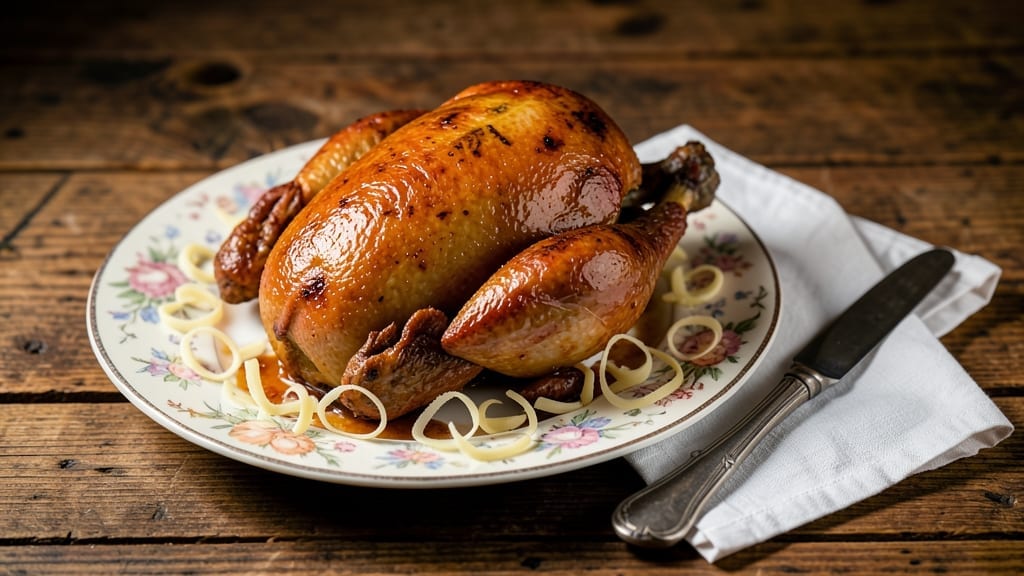
Mastering a 20lb smoked turkey transforms Thanksgiving from a stressful kitchen marathon into a showstopping centerpiece. The secret lies in patience—low-and-slow smoking that renders fat into flavor while keeping the meat impossibly juicy.
I learned this technique from my uncle’s backyard cookouts, where the first whiff of hickory smoke meant dinner was already winning. That same magic happens in your smoker when you balance time, temperature, and wood choice.
This isn’t just another turkey recipe—it’s a foolproof method for golden, crisp skin and meat so tender it falls apart at the touch. We’ll start with a dry brine (no soggy skin here) and a simple rub that enhances rather than masks the bird’s natural richness.
The smoking process? Six hours at 225°F with applewood chips, monitored like a pitmaster’s first competition entry. Every hour, the aroma deepens—smoky, savory, and impossible to resist.
By the time it reaches 165°F internal, your turkey will be resting on a tray, its juices redistributing for that signature moistness. Carving becomes an art: slice against the grain for tender bites, and save the drippings for a restaurant-quality gravy.
This isn’t just dinner—it’s the kind of meal that makes guests pause before they even take their first bite. Let’s get started.
Pro tip: Divide the meat into 16–20 servings (about 12–14 oz per person) and plan sides that complement the smoky depth—think roasted Brussels sprouts with bacon, cornbread, and a crisp green salad. The leftovers? Even better the next day. This turkey doesn’t just feed a crowd—it steals the show.
Ingredients for 20lb smoked turkey
Big bird, big flavor—just patience and the right ingredients for perfection.
| Ingredient | Amount | Notes |
|---|---|---|
| Raw Whole Turkey 🦃 | 20 lb | Thawed, bone-in, skin-on |
| Kosher Salt 🧂 | ½ cup | Diamond Crystal preferred |
| Black Peppercorns 🌶️ | 2 tbsp | Freshly cracked |
| Applewood Smoking Chips 🌳 | 2 lb | Hardwood, food-grade |
| Hickory Wood Chunks 🍂 | 1 lb | For initial flavor base |
| Unsalted Butter 🧈 | 1 lb | For basting and skin crisping |
| Fresh Thyme Sprigs 🌿 | 12 whole | For aromatics |
| Fresh Rosemary Sprigs 🌿 | 6 whole | For herbal depth |
| Granulated Garlic 🧄 | ¼ cup | For dry brine |
| Apple Cider Vinegar 🍎 | ¼ cup | For tenderizing |
| Poultry Thermometer 🔥 | 1 whole | Instant-read preferred |
| Aluminum Foil 🔥 | 1 sheet | For covering during rest |
[recipe_ingredient_scaler]
The turkey is your star, so thaw it properly—place it in the fridge 24 hours per 4-5 lbs. I always grab organic, free-range from ButcherBox or my local farmers market for that extra marbling. The skin matters here—pat it completely dry before seasoning for crispiness. For the wood chips, applewood for sweetness, hickory for boldness—I keep a mix of both on hand. The Diamond Crystal kosher salt dissolves evenly, which is key for that perfect dry brine balance.
No fresh herbs? Dried thyme and rosemary at half the amount work fine, though the flavor won’t be as vibrant. Short on time? Pre-cracked peppercorns save effort, but freshly cracked is worth the extra minute. The apple cider vinegar in the brine tenderizes the meat—don’t skip it unless you want a tougher bird. For the smoking chips, soak them in water for 30 minutes to prevent flare-ups. And if you’re using a pellet smoker, applewood pellets are your best bet for consistency.
This bird needs space—165°F internal temperature is non-negotiable, but let it rest 30-45 minutes before carving to keep juices locked in. The drippings? Strain and save for gravy—trust me, it’s the difference between good and restaurant-quality. Store leftovers in the fridge for up to 4 days, or freeze portions for 3 months. The skin crispiness? Baste with melted butter every hour during the last 2 hours of smoking—it’s the secret to that golden perfection.
Why You’ll Love This Recipe
- No Stress, Big Results: The dry brine with kosher salt and apple cider vinegar? It’s the secret sauce that makes prep actually effortless. Just toss the turkey in the fridge for a day, and you’re done—no last-minute scrambling, no frantic seasoning checks. The wire rack setup means no soggy bottoms, and the smoker does all the heavy lifting while you sip a cocktail.
- Smoke & Butter Magic: Between the applewood and hickory smoke and that final butter basting at 325°F, this turkey hits chef’s kiss perfection. The skin cracks like a perfect latte foam, and the meat stays so juicy you’ll forget turkey can be dry. Honestly, the garlic and vinegar in the brine add depth that makes every bite sing.
- Feeds a Crowd (And Leftovers Too): This 20-pound beast? It’s the ultimate crowd-pleaser—think Thanksgiving without the stress, or a backyard BBQ where the turkey’s the star. And the leftovers? Chef’s kiss for sandwiches, fried rice, or just reheated with pan drippings. My kids even ask for seconds (yes, even on a Tuesday night).
- Budget-Friendly Luxury: Smoking a whole turkey isn’t just for holidays anymore. With a few pounds of wood chips and a little salt, you’re getting a restaurant-worthy bird without the restaurant price. The hickory and applewood combo keeps costs low while delivering that smoky, savory flavor that feels indulgent. Worth every penny.
Step-by-step instructions for smoked turkey
Here’s the method that delivers a showstopping centerpiece with crisp skin and moist meat every time.
Prepare the Dry Brine for Maximum Flavor
In a large bowl, combine the 20 lb raw whole turkey, ½ cup kosher salt, 2 tbsp freshly cracked black peppercorns, ¼ cup granulated garlic, and ¼ cup apple cider vinegar. Gently turn the turkey to coat all surfaces evenly, including the cavity. The vinegar helps tenderize while the salt penetrates deeply for seasoning.
Place the turkey on a wire rack set inside a roasting pan to allow air circulation. Cover loosely with plastic wrap and refrigerate for 12-24 hours. This dry brine transforms the turkey by ensuring even seasoning and preventing dryness during the long cook. Check occasionally and flip the turkey if needed for uniform exposure.
Set Up the Smoker for Low-and-Slow Cooking
Fill a smoker box with 2 lb applewood smoking chips and add 1 lb hickory wood chunks to the fire. Maintain a consistent temperature of 225-250°F throughout the cook. This temperature range is critical—too hot and the skin won’t render properly, too cold and the cook time will drag on unnecessarily.
Once the smoker reaches the target temperature and produces clean blue smoke (not thick white vapor), place the turkey on the smoker grates, breast-side up. Insert the poultry thermometer into the thickest part of the thigh, avoiding bone. This initial setup ensures proper smoke circulation and prevents temperature fluctuations that could compromise the turkey’s texture.
Smoke Until Probe-Tender Perfection
Smoke the turkey undisturbed for 10-12 hours, maintaining the 225-250°F temperature. The skin should develop a deep golden-brown bark, and the thermometer should read 155-160°F in the thickest part of the thigh. This is where patience pays off—the slow cook ensures the meat remains juicy while the skin becomes crisp.
Here’s the thing—don’t open the smoker during this phase. Every time you peek, you lose heat and moisture, extending the cook time. The turkey will naturally self-baste as the fat renders, creating its own flavorful crust. If you notice the smoke thinning, add more 2 lb applewood smoking chips to maintain a steady output.
Baste and Finish for Crispy Skin
Once the turkey reaches 155-160°F, remove it from the smoker and increase the heat to 325°F. Using a pastry brush, generously baste the skin with melted 1 lb unsalted butter, working it under the skin as well. This step is non-negotiable—it transforms the bark from dry to shatteringly crisp while keeping the meat moist.
Return the turkey to the smoker and cook until the internal temperature reaches 165°F in the thickest part of the thigh. The skin should be deep mahogany with crisp edges that crackle when touched. If the skin isn’t crisp enough, broil the turkey for 2-3 minutes at the end, watching closely to avoid burning.
Rest and Carve for Juicy Slices
Transfer the turkey to a cutting board and loosely cover it with 1 sheet aluminum foil. Let it rest for 30-45 minutes before carving. This resting period allows the juices to redistribute, ensuring every slice is moist and flavorful. Real talk—skipping this step means dry turkey. Don’t rush it.
Carve the turkey against the grain for tender slices. The breast meat should be juicy and tender, while the thighs and legs will be fall-apart tender. Serve immediately with the pan drippings reduced into a glossy gravy using the remaining 12 fresh thyme sprigs and 6 fresh rosemary sprigs for aroma. This method guarantees a turkey that’s both perfectly golden and juicy from edge to edge.
Pro Tips For Making 20lb Smoked Turkey
- Crack Those Peppercorns: I used to just toss in whole peppercorns and wonder why my turkey tasted flat. Freshly cracked black peppercorns release their oils and aroma—grind them right before mixing with the kosher salt and vinegar. The effort makes a real difference in the final bite.
- Smoke First, Then Heat: The recipe’s 225-250°F range isn’t just a suggestion—it’s the sweet spot for even cooking. After 10-12 hours, when you hit 155-160°F in the thigh, only then crank the heat to 325°F for that crisp skin. Jumping to high heat too soon turns the breast rubbery.
- Butter Under the Skin: Slathering the skin with melted butter is half the battle, but the other half is working that butter under the skin near the breast. Use your fingers to loosen the skin gently and spread it there—this is what turns dry bark into shatteringly crisp gold.
- Flip the Turkey Mid-Brining: Your turkey might look uneven after 12 hours in the fridge. Flip it halfway through the dry brine (around 8-10 hours in) to ensure the back and legs get the same salty love as the front. Uneven brining = uneven flavor.
Serving suggestions for 20lb smoked turkey
Gravy That Steals the Show
Strain the pan drippings through a fine-mesh sieve into a saucepan, discarding any solids. Add 2 cups turkey or chicken broth and the remaining thyme and rosemary sprigs. Simmer over medium-low heat for 15-20 minutes until reduced by half.
Whisk in 2 tbsp unsalted butter and 1 tbsp cornstarch mixed with 2 tbsp cold water to thicken. Taste and adjust with salt and pepper—this gravy transforms the turkey from good to legendary. 🍲
Sides That Complement the Smoke
Serve your turkey with crispy roasted Brussels sprouts tossed in bacon fat and maple syrup—the sweetness balances the smoky depth. I also love cornbread with honey butter for a Southern touch. For a lighter option, a green salad with apple cider vinaigrette keeps the meal balanced.
Make-Ahead Magic
Prep sides the day before: bake cornbread and store in an airtight container, or roast Brussels sprouts and refrigerate. The turkey itself? Carve it against the grain and store portions in glass containers for up to 4 days.
Reheat gently in a skillet with a splash of broth to restore moisture. Leftovers taste even better the next day—trust me.
Plating Like a Pro
Arrange turkey slices on a platter with the gravy spooned around the edges. Scatter fresh parsley sprigs and thyme leaves for color and aroma. Serve sides family-style on the table so everyone can build their plate. This presentation makes your turkey the centerpiece of any gathering. ✨
Coastal-Inspired Touches
For a nod to my motorcycle rides along the coast, add a sea salt rim to drinks or serve with pickled jalapeños for a spicy kick. I also love pairing this turkey with a dry white wine like Sauvignon Blanc to cut through the richness.
The contrast is refreshing after all that smoke.
Nutrition facts
Frequently asked questions
Why does my smoked turkey skin turn out greasy instead of crispy?
The greasy skin usually happens when the turkey isn’t dried properly before smoking or the basting is done too early. Pat the skin thoroughly dry with paper towels before seasoning, and wait until the turkey reaches 155-160°F before basting with melted butter. Also, avoid overhandling the skin during the smoking process—let the fat render naturally.
How do I know when the turkey is fully cooked without cutting into it?
Use a poultry thermometer inserted into the thickest part of the thigh (avoiding bone) to check for 165°F internal temperature. The skin should also be deep mahogany with crisp edges, and the juices should run clear when you pierce the meat. This ensures juicy perfection without guesswork.
Can I use a different type of wood for smoking besides hickory and applewood?
Hickory adds boldness, while applewood offers sweetness, but other woods like pecan or cherry work too. Just avoid fruitwoods like cherry or peach if you want a cleaner smoke profile. Start with a 1:1 ratio of hickory to applewood for balanced flavor.
What should I do if the smoker temperature fluctuates too much?
Fluctuations can ruin your turkey’s texture. Ensure your smoker is well-ventilated and use a digital meat probe thermometer to monitor both the smoker and turkey temps. If the fire is too hot, add more water to the smoker box or use larger wood chunks. Consistency is key—stay within 225-250°F for the best results.
How can I make sure the turkey stays juicy after resting?
Resting is non-negotiable—cover the turkey loosely with aluminum foil for 30-45 minutes before carving. This lets juices redistribute evenly. Avoid carving early, and if reheating leftovers, warm them gently in a skillet with a splash of broth to restore moisture. Patience here pays off!

Trained in classic French technique but raised on slow-cooked ribs and spicy rubs, she blends culinary skill with smoke and soul.
- Smoked Brisket Recipe: Low and Slow to Fall-Apart Tenderness - November 2, 2026
- Smoked Turkey Breast Recipe: Juicy Pink Center With Crispy Skin Every Time - November 2, 2026
- Leftover Smoked Pulled Pork Chili Recipe: Rustic Flavor Revival in One Pot - November 2, 2026