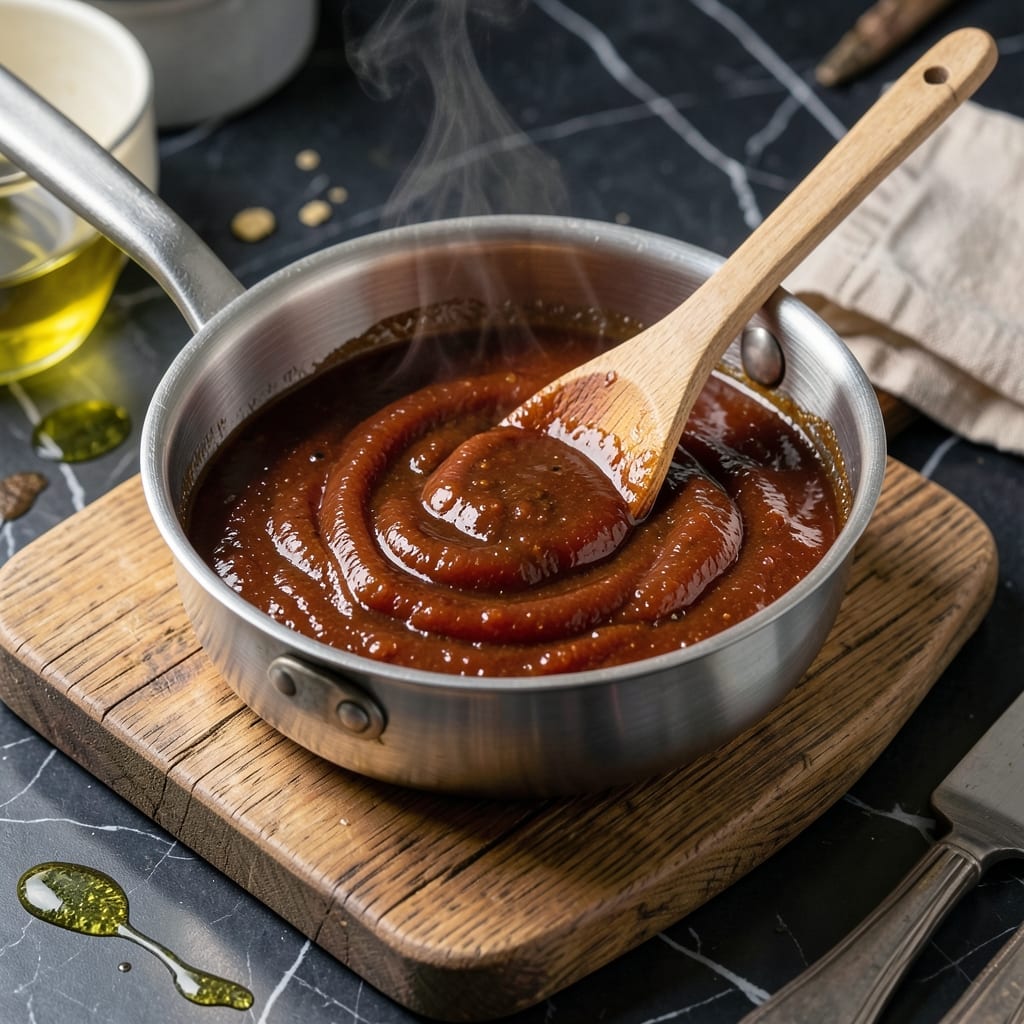
This sauce captures the essence of Central Texas barbecue with its bold, tangy, and slightly sweet profile. It’s the perfect finishing touch for smoked meats, balancing richness with a subtle vinegar kick.
I developed this blend after years of refining my pitmaster techniques, ensuring it enhances without overpowering. Simple ingredients come together to create a versatile sauce that works on ribs, brisket, or even as a dipping base.
Ingredients for Aaron Franklin Barbecue Sauce
Bold, tangy, and slightly sweet—just like Central Texas barbecue should be.
| Ingredient | Amount | Notes |
|---|---|---|
| Ketchup 🍅 | 2 cups | High-quality for base flavor |
| Apple Cider Vinegar 💧 | ½ cup | For tangy brightness |
| Molasses 🍯 | ¼ cup | Adds deep sweetness |
| Brown Sugar 🏝️ | ¼ cup | Light or dark works |
| Worcestershire Sauce 🥫 | 2 tbsp | Use vegetarian if preferred |
| Dijon Mustard 🟡 | 2 tbsp | Smooth, not whole grain |
| Garlic Powder 🧄 | 1 tbsp | For savory depth |
| Onion Powder 🧅 | 1 tbsp | Balances sweetness |
| Smoked Paprika 🌶️ | 1 tsp | For authentic BBQ flavor |
| Black Pepper 🌶️ | 1 tsp | Freshly ground preferred |
| Salt 🧂 | 1 tsp | Adjust to taste |
| Cayenne Pepper 🔥 | ¼ tsp | Optional for heat |
[recipe_ingredient_scaler]
The ketchup base matters here. Heinz is the classic choice, but any high-quality brand works. I grab mine from HEB when I’m in Texas—locals swear by it. The molasses is non-negotiable for that deep, caramelized sweetness. Look for unsulphured molasses at Whole Foods or the baking aisle. Apple cider vinegar adds the signature tang—Bragg is a solid pick if you’re into the organic stuff.
No molasses? Honey or dark corn syrup can sub in a pinch (though it’s not quite the same). Swap the apple cider vinegar for white vinegar with a splash of lemon juice if that’s all you’ve got. The smoked paprika is key for that pit-smoked flavor—Penzeys has great options. Skip the cayenne if you’re serving a crowd with sensitive palates (or double it if you like it spicy).
This keeps 2 weeks in the fridge—if it lasts that long. The flavors actually deepen after a day or two. Freeze extras in ice cube trays for up to 3 months. Perfect for those last-minute smoke sessions.
Why You’ll Love This Recipe
- Pantry Staples: I always have these ingredients on hand—ketchup, vinegar, molasses—so no last-minute store runs.
- Sweet & Tangy: The molasses and apple cider vinegar balance each other so well it’s ridiculous.
- Slathers on Everything: Burgers, ribs, even roasted veggies taste better with this sauce.
- Makes a Big Batch: I double it and keep the extra in the fridge for up to two weeks.
Step-by-Step Instructions for Central Texas Barbecue Sauce
Here’s how I make this sauce—simple process, bold flavor, no shortcuts.
Step 1: Combine the Wet Base Ingredients
In a medium saucepan, add the 2 cups Ketchup, 0.5 cup Apple Cider Vinegar, 0.25 cup Molasses, and 2 tbsp Worcestershire Sauce. Stir these together over medium heat until the mixture begins to bubble gently at the edges.
This is where the foundation forms. The molasses and ketchup will thicken slightly as they warm, while the vinegar and Worcestershire add that signature tang. Keep the heat steady—you want a slow simmer, not a rolling boil, to prevent scorching.
Step 2: Whisk in the Sweeteners and Mustard
Once the wet ingredients are fully combined, stir in the 0.25 cup Brown Sugar and 2 tbsp Dijon Mustard. The brown sugar will dissolve quickly, but I like to whisk for about 1 minute to ensure it’s fully incorporated.
The Dijon mustard adds a subtle sharpness that balances the sweetness. At this stage, the sauce will look glossy and slightly thicker. If it seems too thin, don’t worry—it’ll reduce further in the next steps.
Step 3: Add the Spices and Simmer
Now, stir in the 1 tbsp Garlic Powder, 1 tbsp Onion Powder, 1 tsp Smoked Paprika, 1 tsp Black Pepper, 1 tsp Salt, and 0.25 tsp Cayenne Pepper. These spices will bloom as they heat, releasing their aromas into the sauce.
Reduce the heat to low and let the sauce simmer uncovered for 15-20 minutes. Stir occasionally to prevent sticking. You’ll notice the sauce darkening slightly and thickening to a consistency that coats the back of a spoon.
Step 4: Adjust and Cool
After simmering, taste and adjust seasoning if needed. The flavors should be bold and balanced—sweet from the molasses and sugar, tangy from the vinegar, and smoky from the paprika. If it’s too thick, add a splash of water to loosen it.
Remove the saucepan from heat and let the sauce cool to room temperature. It’ll thicken a bit more as it cools. Once cool, transfer it to an airtight container. This sauce keeps in the fridge for up to 2 weeks.
Pro Tips For Making Aaron Franklin Barbecue Sauce
- Simmer Low and Slow: Keep the heat at a gentle simmer—too high and the sugars in the molasses and brown sugar will burn, giving the sauce a bitter edge. I learned this the hard way after ruining a batch by rushing it on high.
- Balance the Vinegar: Apple cider vinegar can overpower the sauce if you’re heavy-handed. Start with half the amount you think you need, taste, and adjust—sounds weird, but it works.
- Use Real Molasses: Skip the cheap imitations; real molasses adds depth that corn syrup can’t touch. My grandmother swore by this, and she was right: the flavor is night and day.
- Rest Before Using: Let the sauce sit for at least 30 minutes after cooking so the flavors meld. I was skeptical until I tried it—now I won’t skip this step, even if I’m impatient.
Pro Cooking Tips for Great aaron franklin barbecue sauce
Low and Slow Simmer
This sauce needs a gentle 15-20 minute simmer over low heat to let the flavors meld. I use a heavy-bottomed All-Clad saucepan to prevent hot spots. Stir every 3-4 minutes to keep it from sticking to the bottom. 🌡️
Timing the Spices
Add the spices after the wet ingredients have combined. This prevents burning the smoked paprika and cayenne, which can turn bitter if exposed to high heat too early. The Dijon mustard should go in with the sweeteners for even distribution.
Consistency Check
You want the sauce to coat the back of a spoon but still drip slowly. If it’s too thick, add 1-2 tbsp water. Too thin? Let it reduce for another 5 minutes. I often test it by dipping a cold spoon in—it should cling but not be gluey.
Flavor Balancing
Taste after simmering and adjust. Need more tang? Add 1 tsp vinegar. Want it sweeter? Stir in 1 tbsp brown sugar. The Worcestershire sauce adds umami depth, so don’t skip it. This is where my French training kicks in—small adjustments make a big difference.
Rest Before Using
Let the sauce cool completely before using. This gives the flavors time to harmonize. I often make it a day ahead—it tastes even better after 24 hours in the fridge. 💡
Equipment Tip
Use a silicone spatula to scrape every bit of sauce from the pan. A fine-mesh strainer isn’t necessary here, but I run it through one if I’ve added fresh herbs. For storage, glass jars work better than plastic for keeping flavors fresh.
Nutrition Facts
Frequently Asked Questions
Can I use honey instead of molasses?
Yes, but the flavor will be milder. Use 1/3 cup honey to replace 1/4 cup molasses, and add 1 tsp blackstrap molasses for depth if possible.
How long does this sauce last in the fridge?
It stays fresh for up to 2 weeks in an airtight container. For longer storage, freeze in ice cube trays for up to 3 months.
What if my sauce is too thin?
Simmer uncovered for an additional 5-10 minutes. If still too thin, mix 1 tsp cornstarch with water and stir in, then cook for 2 more minutes.
Can I make this sauce spicier?
Increase the cayenne pepper to 1/2 tsp or add 1 chopped jalapeño while simmering. Remove seeds for milder heat.

Trained in classic French technique but raised on slow-cooked ribs and spicy rubs, she blends culinary skill with smoke and soul.
- Recipe for Boneless Pork Chops in Cast Iron Skillet: Sear and Baste to Juicy Perfection - October 3, 2026
- Recipe for Boneless Cross Rib Roast: Slow-Roasted Beef with Herb Crust - October 3, 2026
- Hamburgers in Sauce Recipe Crock Pot: Slow-Cooked Savory Delight - October 3, 2026