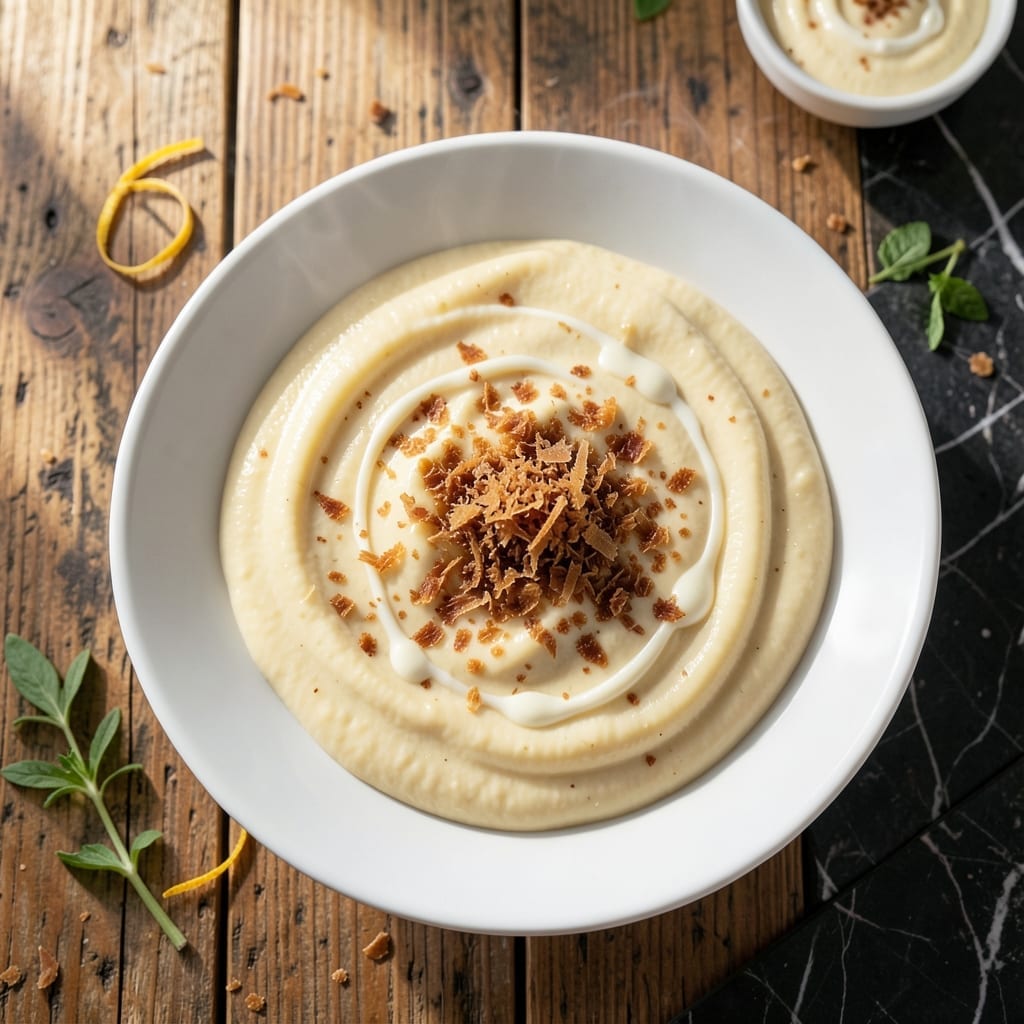
This professional alfredo sauce delivers a silky texture that coats pasta beautifully. The secret is a precise emulsion of cream, butter, and Parmesan.
It comes together in 15 minutes and elevates any dish with its rich, velvety consistency. Store leftovers for up to three days.
Ingredients for Alfredo Sauce Recipe Martha Stewart
Eight ingredients create this velvety emulsion that transforms any pasta dish instantly.
| Ingredient | Amount | Notes |
|---|---|---|
| Unsalted Butter 🧈 | ½ cup | Room temperature for smooth emulsion |
| Heavy Cream 🥛 | 1 ½ cups | Full-fat for velvety texture |
| Parmesan Cheese 🧀 | 1 ½ cups | Freshly grated from wedge |
| Garlic Cloves 🧄 | 3 cloves | Minced to fine paste |
| All-Purpose Flour 🌾 | 2 tbsp | For thickening roux |
| Whole Milk 🥛 | ½ cup | Warm for better incorporation |
| Sea Salt 🧂 | ½ tsp | Fine grain preferred |
| Freshly Ground Black Pepper 🌶️ | ¼ tsp | Adjust to taste preference |
| Ground Nutmeg 🌰 | 0.125 tsp | Freshly grated ideal |
[recipe_ingredient_scaler]
The Parmesan must be freshly grated from a wedge—pre-grated contains anti-caking agents that prevent proper melting. Whole Foods or specialty cheese shops carry high-quality Parmigiano-Reggiano. The heavy cream should be ultra-pasteurized for stability. Unsalted butter allows precise seasoning control. Look for organic dairy products when possible for superior flavor development.
No heavy cream? Half-and-half with a splash of melted butter works in a pinch. Need a gluten-free version? Cornstarch at half the amount replaces the flour. The nutmeg is subtle but essential—freshly grated provides brighter aroma. For a lighter version, substitute whole milk for some cream (texture won’t be as rich). Always use fresh garlic, never powder, for authentic flavor.
Sauce thickens as it cools. Store in an airtight container with plastic wrap pressed directly on the surface to prevent a skin from forming. Keeps in the refrigerator for 3 days (reheat gently with a splash of milk). Not suitable for freezing as it may separate. Best served immediately for optimal silky consistency.
Why You’ll Love This Recipe
- One Pot Wonder: I love that I only need a saucepan and a whisk—no fancy equipment, just melt the butter, stir in the flour, and let the heavy cream and parmesan do their magic.
- Garlic Lovers’ Dream: The fresh garlic cloves sautéed in butter give this alfredo a rich, aromatic depth that jarred sauces can’t touch. Honestly, it’s the reason I make it every week.
- Pasta Night Hero: I toss it with fettuccine, drizzle it over roasted veggies, or even use it as a dip for bread—this sauce adapts to whatever I’m craving.
- Budget-Friendly Luxury: Heavy cream and parmesan feel indulgent, but a little goes a long way. Between us, it costs less than takeout and tastes ten times better.
Step-by-Step Instructions for Silky Parmesan Emulsion
Master this technique for a velvety sauce with perfect consistency every time.
Step 1: Create the Roux Base
Melt the 0.5 cup unsalted butter in a heavy saucepan over medium heat until it begins to foam. I always use a light-colored pan for this—it lets you see the color changes clearly.
Add the 2 tbsp all-purpose flour and whisk constantly for 2-3 minutes until the mixture turns a pale golden color and smells slightly nutty. This cook time removes the raw flour taste and builds the foundation for a stable emulsion.
The roux should bubble gently but not brown. If it starts to darken too quickly, reduce the heat immediately—burnt flour will give your sauce a bitter flavor.
Step 2: Incorporate the Cream and Milk
Slowly pour in the 1.5 cups heavy cream while whisking vigorously to prevent lumps. I pour in a thin stream down the side of the pan rather than directly into the center—this helps create a smooth mixture from the start.
Once the cream is fully incorporated, add the 0.5 cup whole milk in the same manner. Bring the mixture to a gentle simmer, then reduce heat to medium-low. Cook for 3-4 minutes, stirring frequently, until the sauce thickens enough to coat the back of a spoon.
Watch for the sauce to reach a consistency where it leaves a clear path when you run your finger through it on the spoon. This indicates it’s thick enough to hold the cheese.
Step 3: Add Aromatics and Seasonings
Stir in the minced 3 cloves garlic cloves and cook for 1 minute until fragrant but not browned. Garlic burns easily in dairy-based sauces, so keep the heat moderate and stir constantly.
Add the 0.5 tsp sea salt, 0.25 tsp freshly ground black pepper, and 0.125 tsp ground nutmeg. The nutmeg adds a subtle warmth that complements the Parmesan beautifully. Taste and adjust salt if needed, remembering that the cheese will add more saltiness.
Step 4: Achieve the Perfect Cheese Emulsion
Reduce heat to low and add the 1.5 cups Parmesan cheese in ½ cup increments, whisking constantly after each addition until fully melted. This gradual addition prevents the cheese from clumping and ensures a silky texture.
After each addition, wait until the cheese is completely incorporated before adding more. The sauce should become glossy and thick enough to ribbon off the whisk. If it seems too thick, add a splash of warm milk to reach your desired consistency.
Remove from heat as soon as all the cheese is melted. Overheating at this stage can cause the sauce to separate. The final texture should be rich and velvety, coating pasta beautifully without being overly heavy.
Pro Tips For Making Alfredo Sauce Recipe Martha Stewart
- Low and Slow Heat: Keep the flame at medium-low—any higher and the cream will scorch before the cheese melts. I learned this the hard way after ruining two batches with burnt, bitter edges.
- Grated Parmesan Only: Skip the pre-shredded stuff; freshly grated Parmesan melts smoothly and clumps less. The anti-caking agents in bagged cheese turn your sauce grainy.
- Whisk Constantly: From the moment you add flour to the butter until the sauce thickens, don’t stop whisking. This prevents lumps and guarantees a velvety texture.
- Temper the Cream: Warm the heavy cream slightly before adding it to the roux—cold cream can make the sauce seize up. About 30 seconds in the microwave does the trick.
Troubleshooting Perfect Results
🥘 Sauce Too Thin or Runny?
If your Alfredo sauce lacks thickness, it’s likely due to insufficient reduction or too much heavy cream. The sauce needs time to emulsify and thicken as the cheese melts and starches from the pasta help bind it.
Quick Fix: Simmer the sauce on low heat for an extra 2-3 minutes, stirring constantly. If needed, add a teaspoon of cornstarch mixed with cold water to help thicken it without altering the flavor.
🧀 Sauce Separating or Grainy?
Separation or graininess often happens if the heat is too high or the cheese is added too quickly, causing the fats and liquids to split. Overcooking can also break the emulsion.
Quick Fix: Remove the sauce from heat and whisk vigorously. If it persists, add a splash of warm pasta water or a pat of butter to rebuild the emulsion. Stir until smooth.
🧂 Too Salty or Overpowering?
Using pre-shredded Parmesan (which contains anti-caking agents) or over-seasoning can make the sauce taste overly salty. Taste as you go to avoid this.
Quick Fix: Balance the saltiness by adding a pinch of sugar or a splash of heavy cream. For a milder flavor, dilute with a little pasta water or unsalted butter.
⏰ Sauce Curdling?
Curdling occurs when the dairy proteins overheat or react to acidic ingredients. This can turn your silky sauce into a lumpy mess.
Quick Fix: Immediately lower the heat and whisk in a small amount of cold heavy cream or milk to stabilize the sauce. Avoid boiling it afterward.
Nutrition Facts

Trained in classic French technique but raised on slow-cooked ribs and spicy rubs, she blends culinary skill with smoke and soul.
- Recipe for Boneless Pork Chops in Cast Iron Skillet: Sear and Baste to Juicy Perfection - October 3, 2026
- Recipe for Boneless Cross Rib Roast: Slow-Roasted Beef with Herb Crust - October 3, 2026
- Hamburgers in Sauce Recipe Crock Pot: Slow-Cooked Savory Delight - October 3, 2026