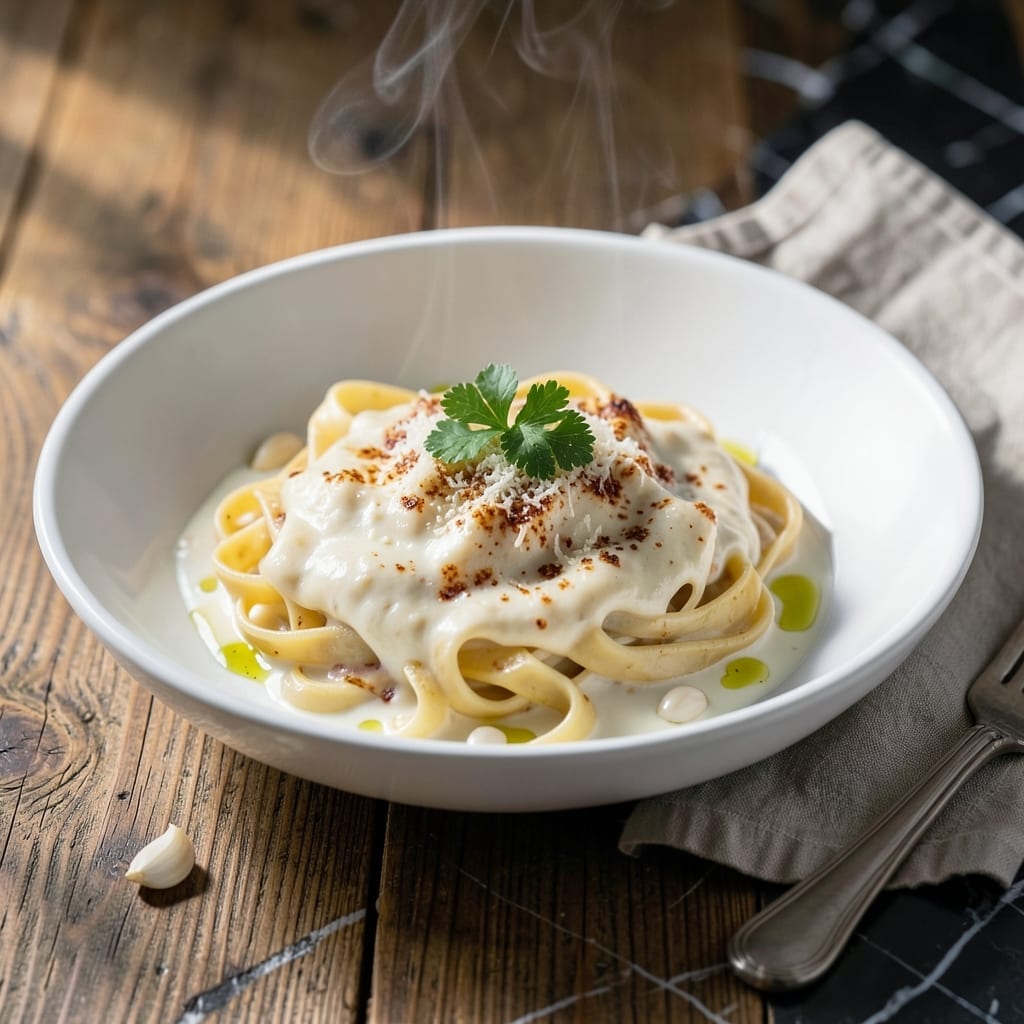
This milk-based alfredo sauce delivers velvety smoothness without heavy cream. I developed this recipe to create restaurant-quality results using simple pantry staples.
The secret is slow cooking with butter and parmesan until it reaches the perfect creamy consistency. It coats pasta beautifully and stores well for up to 5 days in the fridge.
Ingredients for Alfredo Sauce Recipe with Milk
Eight pantry staples transform into restaurant-quality velvety alfredo sauce without heavy cream.
| Ingredient | Amount | Notes |
|---|---|---|
| Whole Milk 🥛 | 2 cups | Full-fat for creaminess |
| Unsalted Butter 🧈 | ½ cup | Cubed for even melting |
| All-Purpose Flour 🌾 | 3 tbsp | For thickening sauce |
| Garlic Cloves 🧄 | 3 cloves | Minced for aromatic base |
| Parmesan Cheese 🧀 | 1 cup | Freshly grated from block |
| Salt 🧂 | ½ tsp | Diamond Crystal preferred |
| Freshly Ground Black Pepper 🌶️ | ¼ tsp | For finishing flavor |
| Nutmeg 🌰 | 0.125 tsp | Freshly grated preferred |
[recipe_ingredient_scaler]
The Parmesan is non-negotiable—Parmigiano-Reggiano from Whole Foods or Costco delivers authentic flavor. Use full-fat whole milk; lower fat versions won’t achieve the same silky texture. Unsalted butter allows precise seasoning control. For the flour, King Arthur or Bob’s Red Mill all-purpose works best for smooth roux formation (the good stuff, not the budget brand).
No whole milk? Half-and-half at one-to-one ratio works in a pinch. Swap Parmesan for Pecorino Romano for sharper flavor. Fresh nutmeg is ideal, but ground nutmeg at equal amount is acceptable (just use a light hand). For garlic, jarred minced saves time, though fresh offers superior aroma. The butter can be salted, but adjust final seasoning accordingly.
Sauce keeps 5 days refrigerated in an airtight container. Reheat gently on low—boiling breaks the emulsion. For longer storage, freeze up to 3 months (it’ll separate slightly but re-emulsifies with stirring). Always bring milk to room temperature before starting for even cooking.
Why You’ll Love This Recipe
- One-Pot Wonder: I love that I can make this creamy sauce in a single saucepan—no colander, no extra bowls, just melt, whisk, and go.
- Rich Comfort: The whole milk and parmesan blend into this velvety, garlicky sauce that clings to pasta like it was made for it.
- Weeknight Hero: Honestly, I toss it with fettuccine, chicken, or even roasted veggies—dinner’s on the table before anyone asks what’s for dinner.
- Budget Stretch: Between us, a little butter, flour, and milk turn into a sauce that tastes like a restaurant splurge but costs pennies.
Step-by-Step Instructions for Alfredo Sauce With Milk
Master the technique for a silky, restaurant-quality sauce using this straightforward method.
Step 1: Create the Roux Base
In a heavy saucepan over medium heat, melt the 0.5 cup Unsalted Butter until it begins to foam slightly. This visual cue indicates the butter has reached the proper temperature without browning.
Immediately whisk in the 3 tbsp All-Purpose Flour to form a smooth paste. Continue whisking constantly for 1-2 minutes until the mixture turns a pale golden color and emits a light, nutty aroma. This cooking process removes the raw flour taste while building the sauce’s foundation.
Step 2: Gradually Incorporate the Milk
Slowly pour in the 2 cups Whole Milk, about ¼ cup at a time, whisking vigorously after each addition. This gradual incorporation prevents lumps from forming and ensures a smooth consistency.
Once all the milk is added, continue whisking until the mixture thickens enough to coat the back of a spoon, about 5-7 minutes. The sauce should have the consistency of heavy cream at this stage, with no visible flour streaks.
Step 3: Add Aromatics and Seasonings
Stir in the minced 3 cloves Garlic Cloves and cook for 30 seconds until fragrant but not browned. Garlic burns easily, so maintain medium-low heat during this step to preserve its delicate flavor.
Add the 0.5 tsp Salt, 0.25 tsp Freshly Ground Black Pepper, and 0.125 tsp Nutmeg. The nutmeg adds depth to the sauce, but use a light hand—its flavor intensifies as the sauce cooks.
Step 4: Finish with Parmesan Cheese
Reduce heat to low and gradually add the 1 cup Parmesan Cheese, stirring constantly until fully melted and incorporated. Freshly grated cheese melts more smoothly than pre-shredded, which contains anti-caking agents that can make the sauce grainy.
The sauce should now be thick, creamy, and glossy. If it becomes too thick, whisk in a splash of warm milk to reach your desired consistency. Taste and adjust seasoning if needed, though the Parmesan may have added sufficient saltiness.
Step 5: Serve Immediately for Best Results
Use the sauce immediately for the best texture and flavor. Alfredo sauce thickens significantly as it cools, so have your pasta ready to toss with the sauce as soon as it’s finished.
For serving, toss with freshly cooked pasta and a small amount of pasta water to help the sauce cling to the noodles. The result should be a velvety, rich coating that enhances rather than overpowers your dish.
Pro Tips For Making Alfredo Sauce Recipe With Milk
- Warm the Milk: Take the milk out of the fridge 15 minutes before starting, or microwave it for 30 seconds—I learned this the hard way after my first batch curdled from cold shock.
- Toast the Flour: Cook the flour and butter together for a full 2 minutes over medium heat until bubbly and golden, not just melted. It removes that raw flour taste.
- Grind Fresh Garlic: Skip the jarred stuff and mince fresh garlic cloves—after burning three batches with pre-minced, I finally figured out it burns faster and tastes bitter.
- Shred Your Own Cheese: Pre-shredded parmesan has anti-caking agents that make the sauce grainy. I was skeptical until I tried grating a block myself and got that silky texture every time.
Serving Suggestions for alfredo sauce recipe with milk
🥘 Plating Styles
For a casual meal, serve your alfredo sauce with milk over a bed of fettuccine or penne, topped with grated Parmesan. For a more formal presentation, layer it with thinly sliced chicken or shrimp in a shallow dish, drizzled with a touch of olive oil. At a buffet, keep the sauce warm in a chafing dish and let guests customize their pasta bowls.
🌿 Garnishing Techniques
Enhance your dish with fresh herbs like parsley, basil, or chives for a pop of color and flavor. A sprinkle of red pepper flakes adds a subtle kick, while a drizzle of truffle oil or a dusting of black pepper elevates the richness. For an extra touch, add toasted pine nuts or sun-dried tomatoes as decorative accents.
🍽️ Portion Sizes
For individual servings, use small, shallow bowls to highlight the creamy texture, pairing with 2-3 ounces of pasta per person. For family-style dining, serve the sauce in a large, warm ceramic dish with tongs or a ladle, allowing everyone to serve themselves. Adjust portion sizes based on whether the sauce is the main focus or a complementary element.
🌡️ Serving Temperature
Alfredo sauce is best served warm, so let it rest for 2-3 minutes after cooking to thicken slightly before plating. If reheating, warm it gently on low heat, stirring frequently to prevent separation. Avoid boiling, as it can cause the sauce to break. For a smoother finish, slice any added proteins thinly and ensure they’re warmed through before serving.
Nutrition Facts

Trained in classic French technique but raised on slow-cooked ribs and spicy rubs, she blends culinary skill with smoke and soul.
- Recipe for Boneless Pork Chops in Cast Iron Skillet: Sear and Baste to Juicy Perfection - October 3, 2026
- Recipe for Boneless Cross Rib Roast: Slow-Roasted Beef with Herb Crust - October 3, 2026
- Hamburgers in Sauce Recipe Crock Pot: Slow-Cooked Savory Delight - October 3, 2026