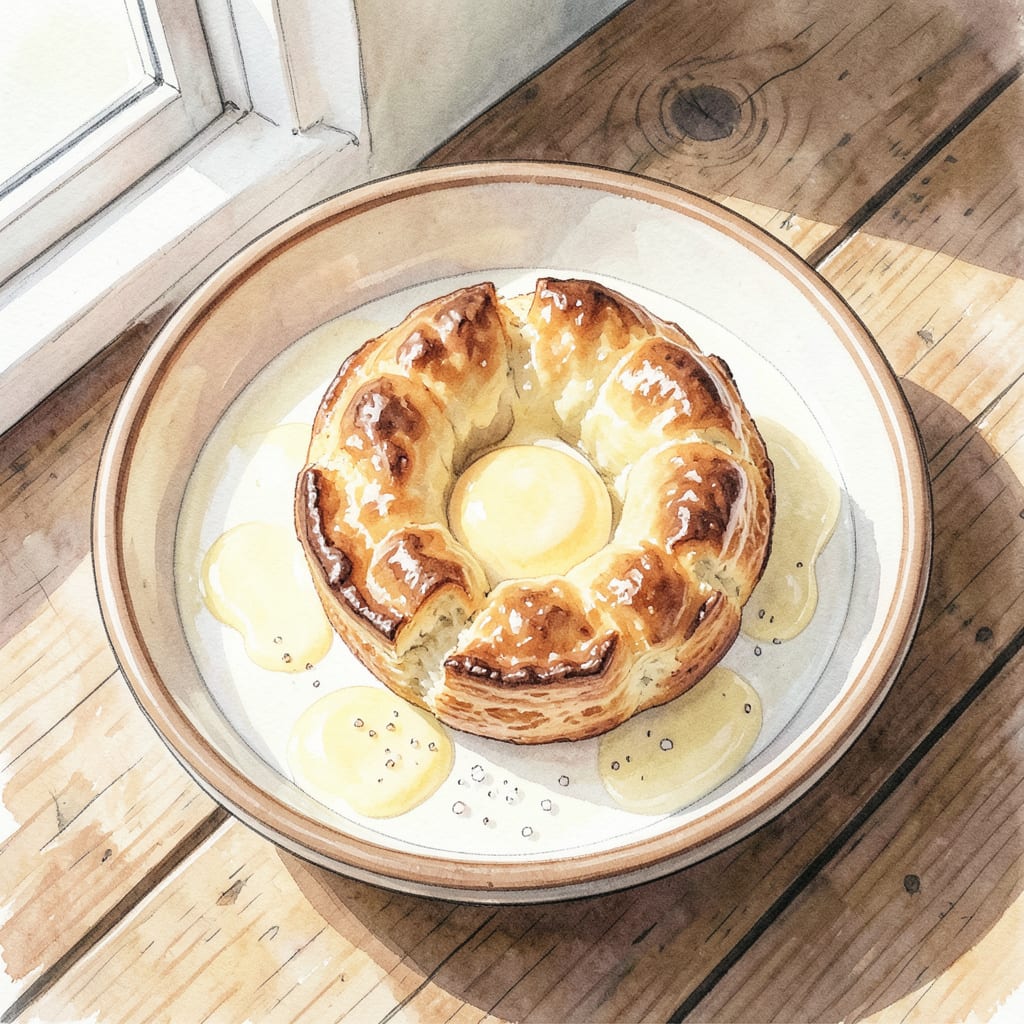
I’m thrilled to share this America’s Test Kitchen-tested popover recipe that delivers light and airy results every time. Perfectly golden and irresistibly delicious, these popovers are sure to become a breakfast favorite.
With simple ingredients and precise technique, you’ll achieve perfect popovers that rise beautifully and stay tender inside. Let’s get started with this classic recipe that’s sure to impress.
Ingredients for America’s Test Kitchen Popover
Simple ingredients come together for an impressive breakfast treat every time.
| Ingredient | Amount | Notes |
|---|---|---|
| All-Purpose Flour 🌾 | 1 ½ cups | Sifted for better texture |
| Whole Milk 🥛 | 1 ½ cups | At room temperature |
| Large Eggs 🥚 | 3 whole | At room temperature |
| Unsalted Butter 🧈 | 4 tbsp | Melted, slightly cooled |
| Salt 🧂 | ½ tsp | Diamond Crystal or kosher |
[recipe_ingredient_scaler]
For the best results, use high-quality all-purpose flour with a low protein content—around 10%. King Arthur or Bob’s Red Mill work well. Milk and eggs should be at room temperature for better emulsification. If you’re using a different brand of flour, check the protein content on the label.
No unsalted butter? You can use salted butter and omit the added salt. If you’re out of whole milk, a mix of 2% milk and heavy cream can work as a substitute. For egg replacements, flax eggs (1 tbsp ground flax + 3 tbsp water) can be used, but results may vary.
Leftover popovers can be stored in an airtight container at room temperature for up to 2 days. To refresh, bake at 350°F for 5-10 minutes. Freeze for longer storage—wrap cooled popovers individually in plastic wrap, then place in a freezer bag for up to 2 months.
Step-by-Step Instructions for America’s Test Kitchen Popover Recipe
Follow these precise steps to achieve perfectly golden, light, and airy popovers that will impress your family and friends.
Step 1: Prepare the Batter
Start by sifting the 1.5 cups All-Purpose Flour into a large bowl to ensure it’s well aerated and lump-free. In a separate bowl, whisk together the 1.5 cups Whole Milk, 3 whole Large Eggs, and 0.5 tsp Salt until the mixture is smooth and the eggs are fully incorporated. The mixture should be at room temperature, as this helps the popovers rise properly.
Gradually pour the wet ingredients into the dry ingredients, whisking gently until just combined. The batter should still be slightly lumpy—overmixing can lead to dense popovers. Finally, add the 4 tbsp Unsalted Butter that has been melted and slightly cooled, and gently fold it into the batter until fully incorporated.
Step 2: Rest the Batter
Cover the bowl with plastic wrap and let the batter rest at room temperature for at least 30 minutes. This resting period allows the flour to fully hydrate, resulting in a more tender popover. If you’re short on time, you can skip this step, but the resting period does make a noticeable difference in the final texture.
While the batter is resting, preheat your oven to 425°F with a popover pan or muffin tin inside. It’s crucial that the pan is hot when you add the batter, as this initial burst of heat helps the popovers rise.
Step 3: Fill and Bake the Popovers
Once the batter has rested and your oven is preheated, remove the hot popover pan from the oven and quickly fill each cup about half full with batter. Don’t overfill, as the popovers will rise significantly during baking. Place the pan back in the oven and immediately reduce the oven temperature to 375°F.
Bake for 25-30 minutes until the popovers are puffed and golden brown. Resist the temptation to open the oven door during the first 20 minutes, as this can cause the popovers to collapse. When done, they should be crispy on the outside and hollow-sounding when tapped on the bottom.
Step 4: Serve Immediately
Remove the popovers from the oven and serve them immediately. Popovers are best enjoyed fresh from the oven, as they tend to lose their crispiness as they cool. If you need to delay serving, you can briefly reheat them in a 350°F oven for a few minutes to restore their crispiness.
Enjoy your perfectly baked popovers with your favorite accompaniments, whether that’s a simple pat of butter, a drizzle of honey, or alongside your favorite roast dinner.
Regional Styles of americas test kitchen popover
New England Style Popovers
The classic New England popover is a staple of breakfast cuisine in the Northeast. These popovers are known for their light, airy texture and perfectly golden color. Traditionally, they’re served with butter and jam or alongside roast beef for a hearty dinner. The key to achieving the signature height is preheating the popover pan properly. 🔥
Southern-Style Variations
In the South, you’ll often find popovers with a slightly different twist. Some recipes incorporate cheddar cheese or jalapeños for added flavor. These variations bring a savory element to the traditional breakfast popover. You can also find recipes that use stone-ground cornmeal for added texture and a hint of corn flavor. The Southern style often includes a touch of hot sauce or Cajun seasoning for an extra kick.
Midwestern Farmhouse Popovers
The Midwest has its own take on popovers, often influenced by German and Scandinavian traditions. These popovers might include ingredients like rye flour or caraway seeds for a heartier flavor. Some Midwestern recipes use buttermilk instead of regular milk, adding a tangy flavor and tender crumb. These popovers are often served with farm-fresh butter and local honey.
Modern Fusion Popovers
Modern chefs are experimenting with popover recipes by incorporating global flavors. You’ll find variations like matcha-green tea popovers or sun-dried tomato popovers. These creative twists maintain the classic popover technique while introducing exciting new flavors. Some recipes even use alternative flours like almond flour or chickpea flour for gluten-free options. The possibilities are endless, and it’s fun to experiment with different flavor combinations.
Regional Ingredient Spotlight
Different regions have their own specialty ingredients that can be incorporated into popover recipes. For example, the Pacific Northwest is known for its hazelnuts, which can be added for a delicious nutty flavor. In the South, you might find pecans or black walnuts used to add texture and flavor. Using local ingredients not only supports regional agriculture but also adds unique characteristics to your popovers.
Nutrition Facts

Trained in classic French technique but raised on slow-cooked ribs and spicy rubs, she blends culinary skill with smoke and soul.
- Recipe for Boneless Pork Chops in Cast Iron Skillet: Sear and Baste to Juicy Perfection - October 3, 2026
- Recipe for Boneless Cross Rib Roast: Slow-Roasted Beef with Herb Crust - October 3, 2026
- Hamburgers in Sauce Recipe Crock Pot: Slow-Cooked Savory Delight - October 3, 2026