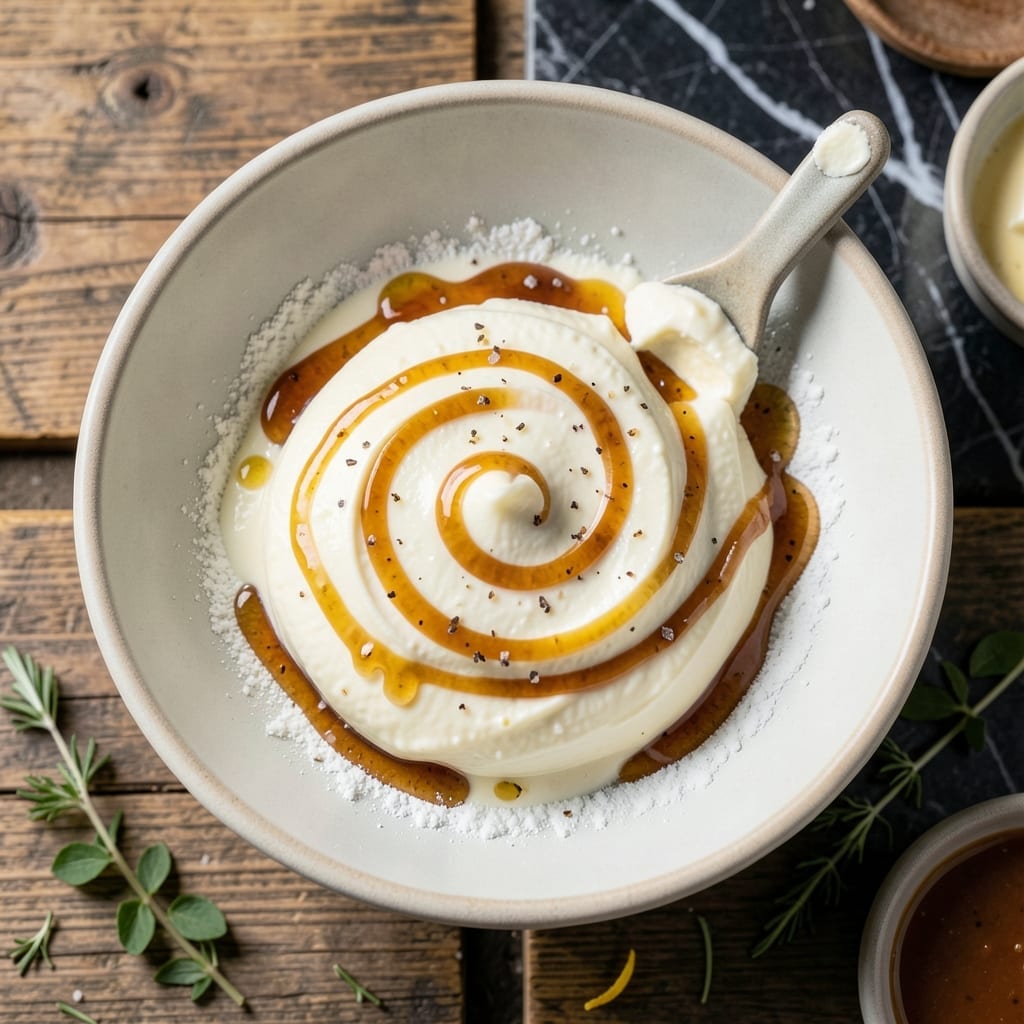
There’s a reason Amish butter has remained a cherished tradition for generations. This spreadable delight combines simple ingredients to create a rich, sweet butter that elevates any meal.
I discovered this method while exploring traditional preserving techniques. The process transforms regular butter into something extraordinary with just a touch of sweetness and a hint of salt.
The result is a smooth, spreadable butter that’s perfect on warm bread, pancakes, or even melted over vegetables. It keeps beautifully in the refrigerator for weeks.
This recipe proves that sometimes, the simplest preparations yield the most satisfying results. Here’s how to make it at home.
Ingredients for Amish Butter
Seven simple ingredients transform into a rich, spreadable butter with sweet depth.
| Ingredient | Amount | Notes |
|---|---|---|
| Unsalted Butter 🧈 | 2 cups | Room temperature, high-quality |
| Powdered Sugar 🍚 | ½ cup | Sifted for smooth texture |
| Honey 🍯 | ¼ cup | Raw or pure preferred |
| Vanilla Extract 🌿 | 1 tsp | Pure, not imitation |
| Fine Sea Salt 🧂 | ¼ tsp | Adjust to taste preference |
| Heavy Cream 🥛 | 2 tbsp | Optional for extra creaminess |
| Lemon Zest 🍋 | ½ tsp | Finely grated, optional brightness |
[recipe_ingredient_scaler]
The butter is the foundation here. Opt for a high-fat European-style butter like Plugrá or Kerrygold for superior texture and flavor. Powdered sugar dissolves more evenly than granulated, creating that signature smooth consistency. Ensure your honey is raw and unfiltered for the best depth of flavor. Most well-stocked grocery stores carry these staples in their baking or dairy sections.
No honey? Maple syrup or light corn syrup can substitute in a pinch, though the flavor profile will shift slightly. Vanilla extract is key for that warm, rounded sweetness—avoid imitation as it lacks complexity. For a tangy twist, a pinch of citric acid replaces the lemon zest. Heavy cream can be omitted, but it adds a luxurious mouthfeel worth the extra tablespoon.
This keeps beautifully—3-4 weeks refrigerated in an airtight container. For longer storage, freeze in portions for up to 6 months. Bring to room temperature before serving to restore its spreadable texture. Always use clean, dry utensils to prevent contamination.
Why You’ll Love This Recipe
- I’ll be real: it keeps in the fridge for weeks, so I make a double batch and never worry about running out.
- 5-Minute Mix: I just dump softened butter, powdered sugar, honey, vanilla, and a pinch of salt in a bowl—one spoon, one bowl, zero fuss.
- Sweet & Salty Magic: The honey and sea salt play off each other so well it tastes like caramel without the work.
- Spreads Like Joy: Honestly, I slather it on toast, swirl it into oatmeal, or gift jars at Christmas—everyone asks for the recipe.
Step-by-Step Instructions for Amish Butter
This straightforward method ensures a silky, spreadable texture with balanced sweetness and richness.
Step 1: Soften and Prepare the Base
Begin by ensuring the 2 cups Unsalted Butter is at proper room temperature. It should yield slightly when pressed but not be greasy or melted. This temperature is crucial for achieving the right emulsion. Place it in a large mixing bowl and use a stand mixer fitted with the paddle attachment to beat it on medium speed for 2-3 minutes until pale and fluffy.
The butter will lighten in color and increase slightly in volume. You’ll notice the texture change from dense to airy—this incorporates air and creates a smooth foundation. Avoid over-beating, which can cause the butter to separate or become grainy.
Step 2: Incorporate the Sweet Elements
With the mixer running on low speed, gradually add the 0.5 cup Powdered Sugar. I sift mine beforehand to prevent any lumps. Beat for 1-2 minutes until fully combined and smooth. The mixture should look creamy with no visible sugar granules.
Next, drizzle in the 0.25 cup Honey in a slow, steady stream while continuing to mix on low speed. This prevents the honey from pooling at the bottom. Increase the speed to medium and beat for another 1-2 minutes until the mixture is uniform and slightly glossy. The honey adds depth and a subtle floral note.
Step 3: Add Flavor Enhancements
Reduce the mixer speed to low and add the 1 tsp Vanilla Extract and 0.25 tsp Fine Sea Salt. The vanilla should be pure for the best flavor complexity. Mix for 30 seconds until just incorporated. Taste and adjust the salt if needed, though I find the given amount strikes the perfect balance.
For an optional but recommended touch, add the 0.5 tsp Lemon Zest. The citrus brightness cuts through the richness and adds a fresh dimension. Mix for another 15 seconds to distribute evenly. The zest should be finely grated to avoid any bitter pith or textural inconsistencies.
Step 4: Finish with Cream for Luxurious Texture
With the mixer still on low speed, pour in the 2 tbsp Heavy Cream. This step is optional but highly recommended for an ultra-smooth, spreadable consistency. Beat for 1 minute until the cream is fully emulsified. The mixture will become lighter and even more luscious.
Watch for the texture to transform from dense to almost whipped. The cream helps stabilize the mixture and prevents separation. If you prefer a firmer butter, you can reduce the cream to 1 tablespoon, but I find 2 tablespoons gives the ideal spreadability.
Scrape down the sides of the bowl with a silicone spatula to ensure all ingredients are fully incorporated. The final product should be smooth, glossy, and uniform in color.
Pro Tips For Making Amish Butter
- Soften the Butter: Pull your unsalted butter out 1-2 hours before mixing—I learned this the hard way after ending up with chunky, uneven spreads from cold butter.
- Sift the Sugar: Powdered sugar lumps are the silent saboteur of smooth amish butter, so sift it first for that velvety texture.
- Skip the Cheap Honey: After using thin, watery honey once, I finally understood why the recipe calls for thick, raw honey—it holds the shape and adds depth.
- Chill Before Serving: Give it 30 minutes in the fridge after mixing, or you’ll have a delicious but runny mess instead of spreadable butter.
Troubleshooting This Dish
Butter Too Soft
If your mixture turns out too soft or runny, it usually means the butter was too warm. Chill the bowl in the freezer for 10-15 minutes to firm it up. Then re-beat on medium-high speed for 1-2 minutes to restore texture. 💡
Grainy Texture
Graininess often occurs from under-creamed butter or undissolved sugar. Ensure the butter is properly softened and the powdered sugar is fully sifted. Beat for an additional 2-3 minutes on medium speed to smooth it out.
Separation Issues
If the mixture separates, it’s likely overmixed or the butter was too cold. Stop mixing immediately and let it sit at room temperature for 10 minutes. Then gently fold with a spatula to recombine.
Overly Sweet
If the butter tastes too sweet, balance it with a pinch of fine sea salt or a squeeze of lemon juice. Start with ⅛ tsp salt and adjust to taste. The acidity will help mellow the sweetness.
Not Spreadable
For butter that’s too firm to spread, add 1 additional tbsp heavy cream and beat on medium speed for 1 minute. This should soften it without compromising flavor. 🔥
Storage Problems
If your butter develops an off flavor, check your storage container. Use an airtight glass jar and ensure utensils are clean and dry before dipping in. This prevents contamination.
Nutrition Facts
Frequently Asked Questions
Can I use salted butter instead of unsalted?
You can, but reduce the added salt to ⅛ tsp or omit it entirely. Salted butter varies in sodium content, so taste as you go. The final flavor may be saltier than intended.
How long does it keep in the fridge?
Stored in an airtight container, it stays fresh for 3-4 weeks. For longer storage, freeze for up to 6 months. Always use clean utensils to prevent spoilage.
What can I substitute for honey?
Maple syrup or light corn syrup work well. Both add sweetness but may slightly alter the flavor. Use the same ¼ cup measurement as honey.
Why is my butter grainy?
Graininess usually means the powdered sugar wasn’t fully dissolved. Ensure butter is properly softened and beat for an extra 2-3 minutes on medium speed.

Trained in classic French technique but raised on slow-cooked ribs and spicy rubs, she blends culinary skill with smoke and soul.
- Recipe for Boneless Pork Chops in Cast Iron Skillet: Sear and Baste to Juicy Perfection - October 3, 2026
- Recipe for Boneless Cross Rib Roast: Slow-Roasted Beef with Herb Crust - October 3, 2026
- Hamburgers in Sauce Recipe Crock Pot: Slow-Cooked Savory Delight - October 3, 2026