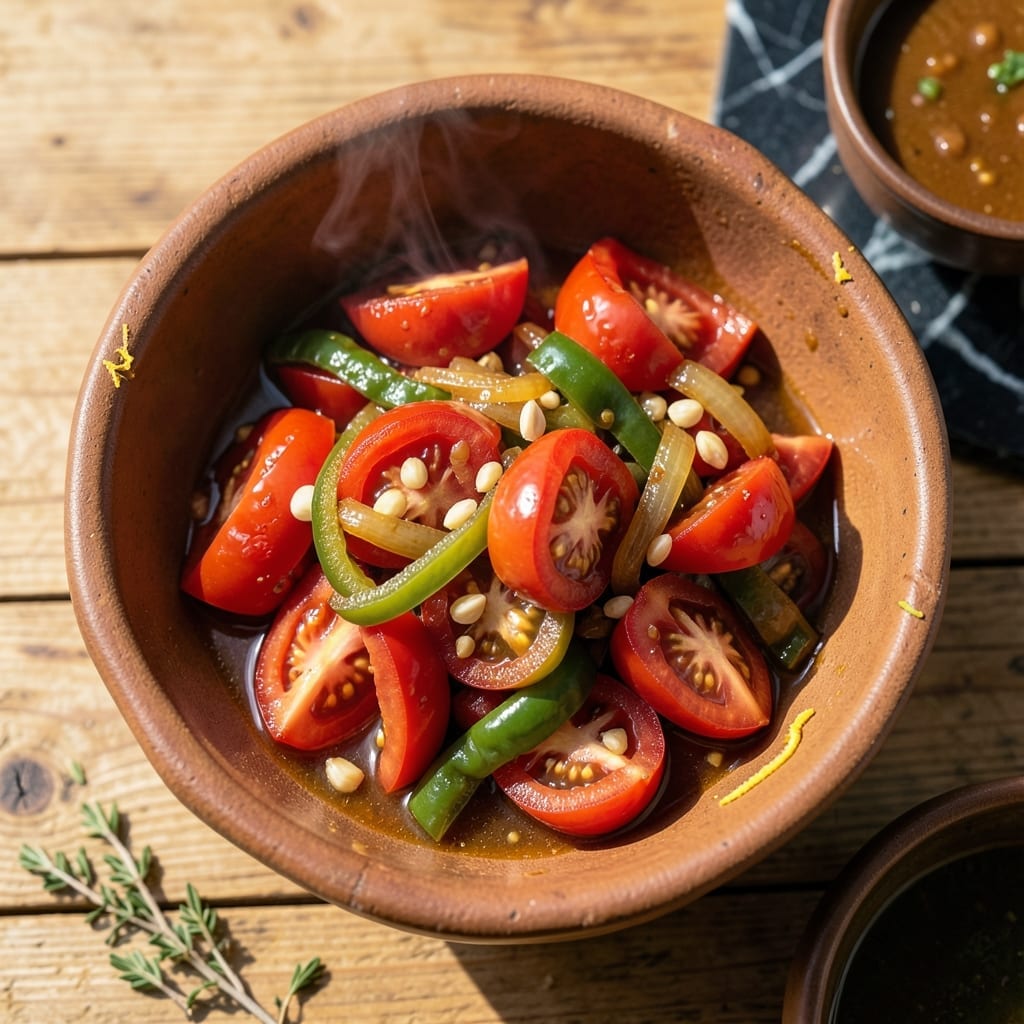
This traditional method preserves summer’s bounty with a tangy depth that defines Amish cooking. The slow simmering process concentrates flavors while maintaining the tomatoes’ natural sweetness.
What emerges is a versatile base for soups, stews, or as a side dish. The technique ensures perfectly balanced acidity and texture every time, using only garden-fresh ingredients and time-honored methods.
Ingredients for Amish Stewed Tomatoes
Fresh tomatoes and garden herbs combine for this timeless, versatile Amish classic with rich depth.
| Ingredient | Amount | Notes |
|---|---|---|
| Fresh Tomatoes 🍅 | 8 lb | Ripe, peeled and quartered |
| Yellow Onions 🧅 | 2 whole | Medium, finely chopped |
| Green Bell Peppers 🌶️ | 2 whole | Diced, seeds removed |
| Garlic Cloves 🧄 | 6 cloves | Minced for depth |
| Apple Cider Vinegar 💧 | ½ cup | For signature tang |
| Granulated Sugar 🍚 | ¼ cup | Balances acidity naturally |
| Sea Salt 🧂 | 1 ½ tbsp | Adjust to taste preference |
| Fresh Basil Leaves 🌿 | ½ cup | Loosely packed, chopped |
| Dried Oregano 🍃 | 1 tbsp | Mediterranean variety preferred |
| Crushed Red Pepper Flakes 🔥 | ½ tsp | Optional for mild heat |
| Extra-Virgin Olive Oil 🫒 | ¼ cup | For sautéing aromatics |
| Fresh Thyme Sprigs 🌿 | 4 pieces | Leaves stripped from stems |
| Bay Leaves 🍃 | 2 pieces | Removed before serving |
[recipe_ingredient_scaler]
The tomatoes are everything here. Seek out heirloom varieties at farmers markets or grow your own—homegrown always wins. Look for vibrant color and firm texture (avoid mealy ones). For the vinegar, raw, unfiltered apple cider vinegar from brands like Bragg delivers authentic tang. The basil should be fresh, never dried—its bright notes elevate the entire dish.
No fresh basil? Fresh parsley at double the amount works in a pinch. Out of green bell peppers? Red or yellow bell peppers add sweetness instead. For sugar, coconut sugar or maple syrup can substitute, though they’ll alter the caramel notes slightly. The oregano can be fresh at triple the dried amount. Always taste as you go—the salt can be adjusted to your preference.
This keeps beautifully. Refrigerate in airtight glass jars for up to 10 days, or freeze for 6 months. The flavors deepen over time, making it even better for sauces and soups. Portion into smaller containers for easy use in future recipes.
Why You’ll Love This Recipe
- One Pot Simplicity: I just dump everything in a pot and let the stove do the work—no fancy techniques required.
- Tangy Depth: The apple cider vinegar with garlic gives it this bright, zingy kick that makes fresh tomatoes taste even better.
- Meal Prep Magic: I make a big batch and use it in soups, over pasta, or as a side all week long.
- Pocketbook Friendly: Fresh tomatoes and basic pantry staples mean I can make this for pennies when they’re in season.
Step-by-Step Instructions for Amish Stewed Tomatoes
This method preserves garden-fresh flavor while developing the signature tangy depth Amish cooks prize.
Step 1: Prepare the Vegetables for Even Cooking
Begin by peeling and quartering all 8 lb Fresh Tomatoes. I find the easiest method is to score an “X” on the bottom of each tomato, blanch in boiling water for 30 seconds, then shock in ice water—the skins will slip right off.
Finely chop the 2 whole Yellow Onions and dice the 2 whole Green Bell Peppers after removing seeds and ribs. Mince the 6 cloves Garlic Cloves for maximum flavor distribution. Strip leaves from the 4 pieces Fresh Thyme Sprigs and chop the 0.5 cup Fresh Basil Leaves just before adding to preserve their bright flavor.
Step 2: Sauté Aromatics to Build Flavor Base
Heat the 0.25 cup Extra-Virgin Olive Oil in a large, heavy pot over medium heat. Add the chopped yellow onions and cook for 5-7 minutes until softened and translucent, stirring occasionally to prevent browning.
Add the diced green bell peppers and continue cooking for another 5 minutes until they begin to soften. Stir in the minced garlic cloves and cook for 30 seconds just until fragrant—don’t let it brown or it will become bitter. This aromatic base is crucial for developing the stew’s complex flavor profile.
Step 3: Combine and Simmer for Optimal Flavor Development
Add the quartered fresh tomatoes to the pot along with the 0.5 cup Apple Cider Vinegar, 0.25 cup Granulated Sugar, 1.5 tbsp Sea Salt, 1 tbsp Dried Oregano, 0.5 tsp Crushed Red Pepper Flakes, chopped basil leaves, thyme leaves, and 2 pieces Bay Leaves. Stir well to combine.
Bring the mixture to a gentle boil, then reduce heat to low. Simmer uncovered for 1.5 to 2 hours, stirring occasionally, until the tomatoes have broken down completely and the sauce has thickened to your desired consistency. The vinegar’s tang will mellow as it cooks, while the sugar balances the natural acidity of the tomatoes.
Taste and adjust seasoning with additional sea salt if needed, remembering that flavors will concentrate as it cooks.
Step 4: Finish and Serve at Peak Flavor
Remove the pot from heat and discard the bay leaves. For a smoother texture, I like to use an immersion blender to partially blend the stew, leaving some texture. Alternatively, you can leave it chunky for a more rustic presentation.
Let the stewed tomatoes cool slightly before serving. The flavors will continue to meld and deepen as it sits. Serve warm as a side dish, over pasta, or as a base for other recipes. The stew keeps well in the refrigerator for up to 1 week and freezes beautifully for longer storage.
Pro Tips For Making Amish Stewed Tomatoes
- Simmer Slowly: Keep the heat at a gentle bubble—too high and your tomatoes will break down into mush before the flavors meld. I learned this the hard way after ending up with soup instead of chunky stewed tomatoes.
- Peel the Tomatoes: Sounds tedious, but blanching the tomatoes for 30 seconds in boiling water makes peeling effortless. The skins stay tough and bitter otherwise, even after long cooking.
- Balance the Vinegar: Start with half the apple cider vinegar you think you need, then adjust. Too much upfront can make the whole batch unpleasantly sharp, and you can’t take it out once it’s in.
- Sweat the Onions First: Cook the yellow onions until soft and translucent before adding peppers or tomatoes—about 8-10 minutes on medium-low. This builds a deep, sweet base that carries the whole dish.
Serving Suggestions for Leftovers
As a Side Dish
Serve these stewed tomatoes warm alongside grilled meats or roasted chicken. The tangy brightness cuts through rich, fatty dishes beautifully. I love pairing it with my smoked pork ribs—the acidity balances the smoky depth perfectly. 🔥
Pasta Perfect Partner
Toss with 1 lb cooked penne and top with fresh Parmesan for a quick, comforting meal. The tomatoes cling to the pasta ridges, delivering flavor in every bite. Add fresh mozzarella pearls for extra creaminess.
Soup Base Foundation
Use as a base for vegetable or bean soups—just add 4 cups broth and your favorite veggies. The concentrated flavor means you’ll need less seasoning. I often stir in 1 can white beans for a hearty minestrone-style dish.
Breakfast Twist
Spoon over creamy polenta or grits, then top with a poached egg. The runny yolk blends with the tangy tomatoes for a Southern-Italian fusion. A sprinkle of crumbled feta adds a salty contrast.
Bruschetta Upgrade
Simmer until thick, then spread on toasted baguette slices. Top with fresh basil and a drizzle of balsamic glaze for an elevated appetizer. This works especially well for summer gatherings.
Freezer Meal Prep
Portion into 1-cup containers and freeze for quick future meals. Thaw overnight in the fridge, then reheat on the stove with a splash of water. The flavors deepen over time, making it even better for sauces. ❄️
Nutrition Facts
Frequently Asked Questions
Can I use canned tomatoes instead of fresh?
Yes, but the flavor won’t be as bright. Use 28 oz canned whole tomatoes per 2 lb fresh, and reduce simmering time to 45 minutes. Drain excess liquid first for better texture.
Why do we add sugar to tomatoes?
The 0.25 cup sugar balances the natural acidity, especially important with tart heirloom varieties. It doesn’t make the dish sweet—just rounds out the tang from the vinegar.
How do I fix overly acidic stew?
Stir in a pinch more sugar or a splash of cream to mellow the acidity. Start with 1 tsp at a time and taste as you go. Never add baking soda—it can create a soapy taste.
Can I skip peeling the tomatoes?
You can, but the skins may create a slightly bitter texture. For a smoother result, peeling is worth the 30-second blanching step. If short on time, use a food mill to remove skins after cooking.

Trained in classic French technique but raised on slow-cooked ribs and spicy rubs, she blends culinary skill with smoke and soul.
- Recipe for Boneless Pork Chops in Cast Iron Skillet: Sear and Baste to Juicy Perfection - October 3, 2026
- Recipe for Boneless Cross Rib Roast: Slow-Roasted Beef with Herb Crust - October 3, 2026
- Hamburgers in Sauce Recipe Crock Pot: Slow-Cooked Savory Delight - October 3, 2026