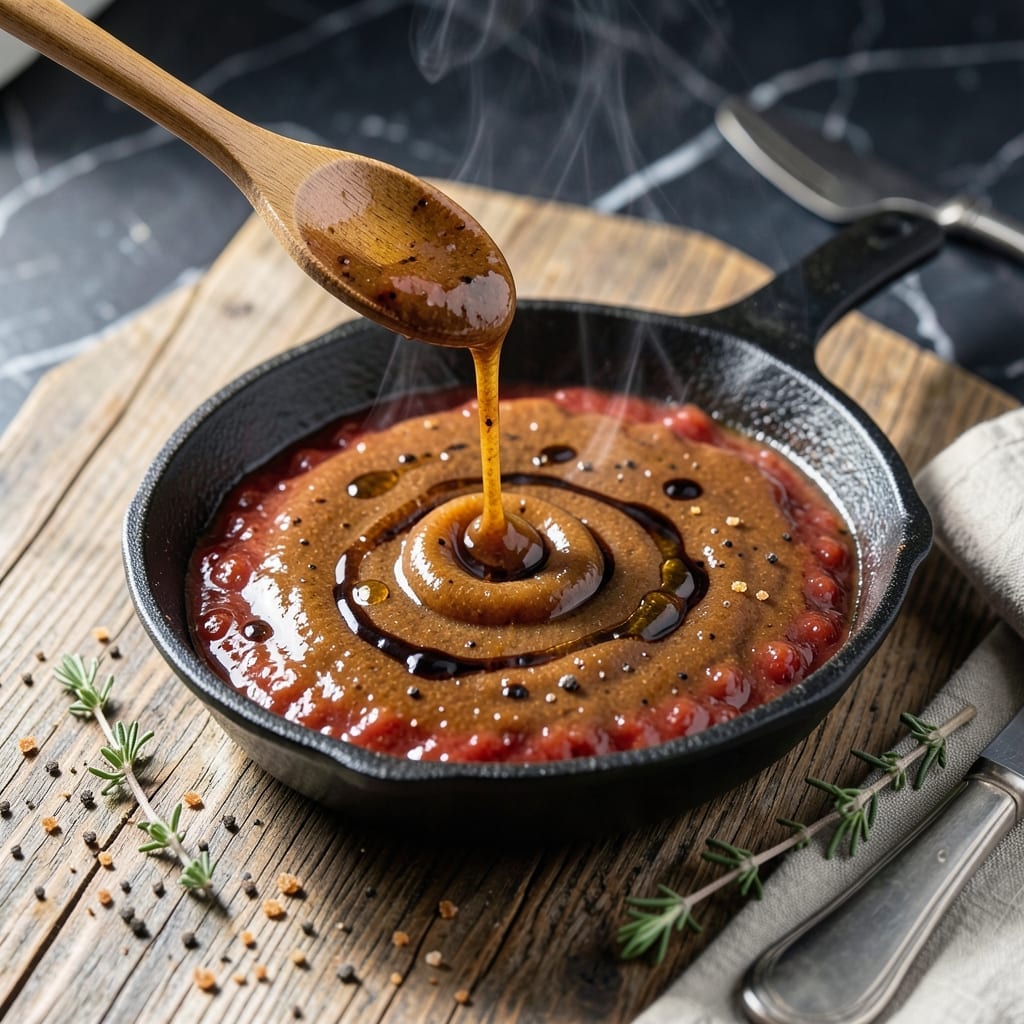
This sauce brings together the sharp tang of apple cider vinegar with the deep richness of molasses. It’s the kind of bold flavor that elevates grilled meats without overpowering them.
I developed this recipe after years of experimenting with vinegar-based sauces at local BBQ competitions. The balance is precise—bright acidity with just enough sweetness to keep it complex.
Ingredients for Apple Cider Vinegar Barbecue Sauce
Ten simple ingredients create this bold vinegar-based barbecue sauce with perfect balance.
| Ingredient | Amount | Notes |
|---|---|---|
| Apple Cider Vinegar 🍏 | 1 ½ cups | Raw, unfiltered preferred |
| Molasses 🫙 | ½ cup | Unsulphured, blackstrap for depth |
| Ketchup 🍅 | 1 cup | Organic or no-sugar-added |
| Brown Sugar 🍚 | ½ cup | Light or dark variety |
| Worcestershire Sauce 🫒 | 2 tbsp | Vegan variety required |
| Dijon Mustard 🟡 | 2 tbsp | Smooth, not whole grain |
| Garlic Powder 🧄 | 1 tsp | Freshly ground ideal |
| Onion Powder 🧅 | 1 tsp | Fine grind preferred |
| Smoked Paprika 🌶️ | 1 tsp | Sweet or hot variety |
| Black Pepper 🌶️ | ½ tsp | Freshly cracked for best flavor |
[recipe_ingredient_scaler]
The vinegar is non-negotiable here. Bragg Organic or Dynamic Health apple cider vinegar with the mother delivers the sharp tang this sauce demands. Molasses should be unsulphured—Grandma’s Original or Plantation Blackstrap for that deep, complex sweetness. Most supermarkets stock these in the baking aisle, but Whole Foods has the best selection of organic options. Look for molasses with a rich, almost bitter aroma—this indicates quality.
Out of molasses? Honey or maple syrup at equal volume can substitute, though the flavor profile shifts slightly sweeter. No Worcestershire? Coconut aminos plus a dash of liquid smoke mimics the umami depth. The ketchup can be swapped for tomato paste thinned with water (use half the quantity), but you’ll lose some sweetness balance. For heat, add a pinch of cayenne—start with 1/4 tsp and adjust.
This sauce keeps beautifully. Refrigerated in an airtight jar, it stays fresh for 2-3 weeks. For longer storage, freeze in ice cube trays—6 months easily. The flavors actually deepen after a day or two, so make it ahead if you can. Always give it a good stir before using as the molasses can settle.
Why You’ll Love This Recipe
- One Bowl Wonder: I just dump everything in a saucepan and let it simmer—no chopping, no fuss.
- Tangy Sweet Balance: The apple cider vinegar cuts through the molasses and brown sugar for that perfect zing.
- Grill or Slow Cooker: I slather it on ribs, chicken, or even stir it into pulled pork. Honestly, it works everywhere.
- Pantry Staples Only: Between us, I always have these ingredients on hand, so I can make a fresh batch anytime.
Step-by-Step Instructions for Apple Cider Vinegar Barbecue Sauce
This method ensures balanced sweetness and tang with a rich, deep flavor profile.
Step 1: Combine the Liquid Base
In a medium saucepan, whisk together the 1.5 cups Apple Cider Vinegar, 0.5 cup Molasses, and 1 cup Ketchup until fully combined. The vinegar provides the signature tang, while the molasses adds body and depth. I always use raw, unfiltered vinegar for maximum flavor complexity.
Place the saucepan over medium heat and bring to a gentle simmer. This initial heating helps meld the liquid ingredients together before adding the dry components. Watch for small bubbles to form at the edges—this indicates the mixture is ready for the next step.
Step 2: Incorporate Sweeteners and Thickeners
Stir in the 0.5 cup Brown Sugar, 2 tbsp Worcestershire Sauce, and 2 tbsp Dijon Mustard. The brown sugar contributes caramel notes, while the mustard adds a subtle sharpness. I prefer smooth Dijon for its ability to blend seamlessly into the sauce.
The mixture will begin to thicken slightly as the sugar dissolves. Continue stirring occasionally to prevent sticking, and maintain that gentle simmer. You’ll notice the color deepen as the ingredients meld together—this visual cue confirms the flavors are developing properly.
Step 3: Add Spices and Simmer
Sprinkle in the 1 tsp Garlic Powder, 1 tsp Onion Powder, 1 tsp Smoked Paprika, and 0.5 tsp Black Pepper. These spices provide the aromatic backbone of the sauce. Freshly cracked black pepper offers the best flavor, but pre-ground works in a pinch.
Reduce the heat to low and let the sauce simmer for 15-20 minutes. This extended cooking time allows the flavors to marry and the sauce to reach the perfect consistency. Stir every 3-4 minutes to prevent scorching, especially as the mixture thickens.
Step 4: Adjust Consistency and Finish
After simmering, the sauce should coat the back of a spoon but still be pourable. If it’s too thin, continue reducing for another 5 minutes. If it’s too thick, add a splash of water to reach your desired texture.
Taste and adjust seasoning if needed, though the initial measurements should yield a well-balanced sauce. Remove from heat and let cool to room temperature. The flavors will continue to develop as it cools, creating a barbecue sauce with bold tang and rich molasses body ready for your next cookout.
Pro Tips For Making Apple Cider Vinegar Barbecue Sauce
- Simmer, Don’t Boil: Keep the heat at a gentle simmer—boiling makes the vinegar too harsh and can cause the molasses to burn. I learned this the hard way after ruining a batch with overzealous heat.
- Bloom the Sugar: Dissolve the brown sugar completely in the vinegar and ketchup first, about 2-3 minutes of stirring. Sounds tedious, but it prevents that grainy texture in the final sauce.
- Skip the Cheap Vinegar: Use raw, unfiltered apple cider vinegar with the “mother”—the murky stuff. The cheaper, clearer versions lack depth and make the sauce taste flat.
- Taste Before Bottling: Let the sauce cool for 10 minutes before adjusting seasoning. Hot sauce tastes sharper and sweeter than it will once it cools, and I’ve over-sweetened more than one batch by jumping the gun.
Make-Ahead Tips for This Recipe
Prep Ahead Strategy
I always mix the dry ingredients—1 tsp each Garlic Powder, Onion Powder, Smoked Paprika, and 0.5 tsp Black Pepper—the night before. Store them in a small jar for instant use. This saves 5 minutes of measuring during cooking.
Refrigerator Storage
After cooling, transfer the sauce to a clean, airtight jar. It keeps beautifully in the fridge for 2-3 weeks. The flavors deepen after 24-48 hours, making it perfect for meal prep. I use Ball Mason jars for easy portioning. ❄️
Freezer Method
For longer storage, freeze in ice cube trays—1 cube equals about 2 tbsp. Once solid, transfer cubes to a freezer bag. They’ll keep for 6 months. Thaw overnight in the fridge or microwave for 30 seconds.
Batch Cooking
Double the recipe and divide into 16-oz jars for gifts. I often make 3 batches at once during BBQ season. Label with the date and flavor profile—this helps track freshness and variety.
Reheating Tips
Gently warm on the stove over low heat for 5-7 minutes, stirring often. Avoid boiling to preserve the tangy balance. If separated, whisk vigorously to re-emulsify. 🔥
Competition Day
At local BBQ competitions, I prep this sauce 2 days ahead. The extended rest time enhances the molasses depth. Store in a cooler with ice packs for safe transport to the event.
Nutrition Facts
Frequently Asked Questions
What can I use instead of molasses?
Honey or maple syrup work in a pinch at equal volume. Each adds sweetness but shifts the flavor slightly. Honey brings floral notes while maple offers earthiness.
How do I fix sauce that’s too thin?
Simmer for an extra 5 minutes to reduce further. If urgent, mix 1 tsp cornstarch with water and stir in while heating. This thickens without altering taste.
Why did my sauce turn out too sweet?
Balance it by adding 1-2 tbsp more vinegar or a pinch of salt. The acidity will cut through excessive sweetness. Always adjust gradually.
Can I use white vinegar instead?
It works but lacks the fruity depth of apple cider vinegar. If substituting, consider adding 1/4 cup apple juice to restore some complexity.

Trained in classic French technique but raised on slow-cooked ribs and spicy rubs, she blends culinary skill with smoke and soul.
- Recipe for Boneless Pork Chops in Cast Iron Skillet: Sear and Baste to Juicy Perfection - October 3, 2026
- Recipe for Boneless Cross Rib Roast: Slow-Roasted Beef with Herb Crust - October 3, 2026
- Hamburgers in Sauce Recipe Crock Pot: Slow-Cooked Savory Delight - October 3, 2026