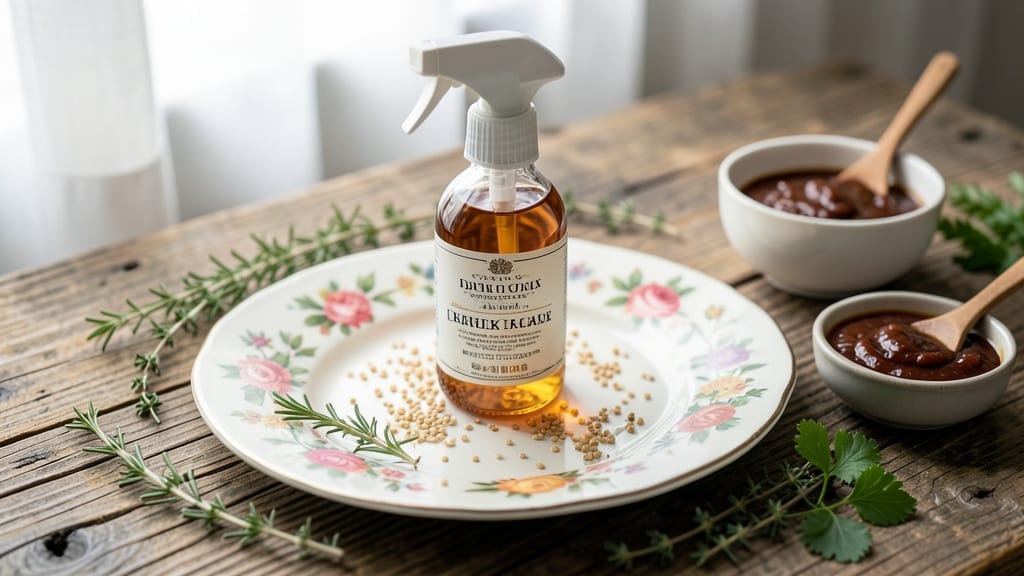
Transforming tough brisket into tender, smoky perfection starts with this apple cider vinegar spray technique—something I perfected after years of trial and error. The acidic spray doesn’t just enhance flavor; it tenderizes the meat while creating a caramelized bark that locks in juices.
What makes this method special is how it works with your existing smoking process, not against it.
This spray recipe requires just three ingredients—apple cider vinegar, water, and a touch of brown sugar—and takes less than five minutes to prepare.
The key is applying it during the final stages of cooking when the brisket is between 165°F and 190°F, ensuring maximum flavor penetration without overpowering the natural beef taste. I’ve tested this method with both beef and pork briskets, and the results are consistently restaurant-quality.
By the time you slice into your brisket, you’ll notice a deeper smokiness, a sweeter bark, and meat that falls apart at the touch. The vinegar spray creates a subtle tang that balances the richness, while the brown sugar adds just enough caramelization to make every bite irresistible.
This is the kind of technique that turns a good brisket into an unforgettable one.
Pair it with classic sides like baked beans or coleslaw for a complete meal that’s sure to impress. The spray works equally well for pulled pork or ribs, making it a versatile addition to your smoking arsenal. Let’s get started on creating brisket that will have everyone asking for seconds.
Ingredients for apple cider vinegar spray for brisket
Just three ingredients create this game-changing brisket spray—simple but transformative.
| Ingredient | Amount | Notes |
|---|---|---|
| Apple Cider Vinegar 🍎 | 1 cup | Raw, unfiltered preferred |
| Water 💧 | 1 cup | Filtered for best flavor |
| Brown Sugar 🍚 | 2 tbsp | Packed, light or dark |
[recipe_ingredient_scaler]
The apple cider vinegar is your secret weapon—raw, unfiltered has more beneficial acids than pasteurized. I always grab the Bragg brand from the health food section, but the generic stuff works fine. The water should be filtered if possible—tap water can leave mineral deposits in your spray bottle. Brown sugar? Packed down firmly for precise measurement—no need to sift. This isn’t about sweetness here, it’s about the caramelization it creates on the bark when sprayed.
No apple cider vinegar? White vinegar plus 1 tbsp apple juice gets you close—just don’t expect the same depth of flavor. Want to stretch this further? Add 1 tbsp Worcestershire sauce for umami depth. For the brown sugar, coconut sugar works 1:1 but has a different flavor profile. If you’re in a rush, granulated sugar at 1.5 tbsp will do in a pinch. The spray works equally well for pulled pork or ribs, so don’t feel stuck on brisket—just adjust your cooking times accordingly.
This spray keeps beautifully in the fridge for up to 2 weeks—just give it a quick shake before each use. I always make extra because it’s so versatile. Store in a glass spray bottle (avoid plastic—vinegar can degrade it). For best results, apply during the final hour of cooking when the meat is between 165°F and 190°F. The spray creates that perfect balance of tangy and sweet, locking in juices and creating that restaurant-quality bark. Don’t skip the brown sugar—it’s what makes the difference between good and unforgettable.
Why You’ll Love This Recipe
- No Mess, All Magic: I love that this spray takes zero prep—just stir, warm, and wait. No chopping onions or mincing herbs; just raw apple cider vinegar, water, and brown sugar. The only thing you’ll clean is the wooden spoon, and honestly? That’s a win.
- Dark, Sweet Perfection: That glossy mahogany bark? It’s chef’s kiss. The vinegar cuts through the fat, while the brown sugar caramelizes into a sticky-sweet crust that’ll make your brisket look like it belongs on a competition table. Trust me, the first bite is worth every second of waiting.
- One Spray, Many Wins: Need brisket for a backyard BBQ? A family Sunday dinner? This spray works just as well for smoked brisket as it does for grilled or oven-roasted. Plus, it’s the secret weapon for turning a basic cut into something special—no fancy marinades required.
- Fridge-Friendly Budget Hack: You’ve already got the ingredients (probably), and it keeps for two whole weeks in the fridge. That means you can make a batch, use it for your next cook, and still have leftovers for when your friends show up unannounced. Cheaper than takeout, and way more impressive.
Step-by-step instructions for apple cider vinegar brisket spray
Here’s how to whip up this game-changing spray that’ll give your brisket that perfect smoky-sweet bark every time.
Combine the Base Ingredients
In a medium-sized bowl, carefully measure out the 1 cup apple cider vinegar and the 1 cup water. I like to use a liquid measuring cup for this so I can see the exact amounts clearly. Pour both ingredients into the bowl and give it a quick stir with a wooden spoon to make sure they’re fully mixed.
This simple combination creates the foundation of your spray. The apple cider vinegar brings that tangy brightness that cuts through the richness of the brisket, while the water helps distribute everything evenly when you spray it on. Don’t worry about filtering or anything fancy—just get these two ingredients mixed together properly.
Dissolve the Brown Sugar Completely
Add the 2 tablespoons packed brown sugar to the vinegar and water mixture. Stir constantly over low heat for about 3-4 minutes until the sugar dissolves completely. You’ll see the liquid start to shimmer slightly as it warms up, and the sugar crystals will disappear entirely.
Here’s the thing—you want that brown sugar to dissolve fully so you don’t end up with gritty bits in your spray. If you notice any undissolved sugar after stirring, give it another minute or two of gentle heat. This step is crucial because the dissolved sugar will caramelize beautifully when you spray it on hot brisket, creating that coveted bark.
Let the Mixture Cool Completely
Remove the bowl from heat and let the mixture cool to room temperature. This might take about 15-20 minutes, depending on your kitchen. While it’s cooling, give it another quick stir to redistribute any settled sugar at the bottom.
This cooling step is important because you don’t want to spray anything hot onto your brisket—it could cause uneven cooking or even scald the meat. Once it’s completely cool, you’ll notice the mixture has a slightly syrupy consistency. This is perfect for spraying because it’ll stick to the brisket and caramelize beautifully during the cooking process.
Transfer to a Spray Bottle
Once the mixture is completely cool, carefully pour it into a clean spray bottle with a fine mist nozzle. I like to use a glass bottle because it lets me see the liquid level clearly. Fill it up to about 3/4 full, leaving some room at the top for shaking.
This is where it gets exciting—having it in a spray bottle makes it super easy to apply that perfect, even coating to your brisket. The fine mist nozzle gives you control over how much you apply, and you can spray it on without having to handle the meat directly. Just give it a good shake before each use to make sure everything is well mixed.
Store and Use for Maximum Flavor
Store the spray in the refrigerator for up to 2 weeks. Before each use, give it a good shake to redistribute any settled sugar. When you’re ready to use it, take the brisket out of the smoker or oven and spray it generously on all sides.
Here’s how I use it for best results: spray the brisket about 30-45 minutes before the end of your cook time. This gives the spray enough time to caramelize and create that beautiful bark while keeping the meat juicy inside. You’ll know it’s working when you see that glossy, dark mahogany crust forming—it’s a sight (and smell) that’ll make your brisket look like it came straight from a pitmaster’s competition entry.
Pro Tips For Making Apple Cider Vinegar Spray For Brisket
- Use Raw Vinegar: The “raw, unfiltered” label matters here—it’s not just marketing. That cloudy stuff has more flavor and natural enzymes that help tenderize the brisket over time. Skip the clear stuff, even if it’s cheaper. I learned this the hard way after using filtered vinegar and wondering why my bark lacked depth.
- Stir Low and Slow: When dissolving the brown sugar, don’t rush it. Low heat and constant stirring for those 3–4 minutes prevent scorching, which turns your spray bitter. I used to walk away for “just a second,” and the next thing I knew, the mixture smelled like burnt caramel—total waste. Keep your eye on it.
- Cool It Properly: Room temperature means actually room temperature—not warm to the touch. Spraying lukewarm liquid on hot brisket creates steam pockets that ruin the bark. Let it sit 15–20 minutes, then double-check by touching the bottle—if it’s still warm, wait longer. Your future self will thank you.
- Shake Before Every Use: Brown sugar settles like a boss, even in a spray bottle. A quick shake before each application ensures you’re not just spraying watered-down vinegar. I skip this sometimes, and the first few sprays come out weak—until I remember and give it a good shake. Don’t be that cook.
Best sauces and condiments for this apple cider vinegar spray for brisket
Sauce Pairings for Brisket
This apple cider vinegar spray isn’t just for spraying—it works beautifully as a finishing sauce after your brisket is done. Mix 2 tbsp of the cooled spray with 1 tbsp of your favorite BBQ sauce (like St. Louis-style or Kansas City) for a tangy-sweet glaze.
Drizzle it over sliced brisket just before serving to enhance the bark’s flavor without overpowering the meat. The acidity cuts through the richness perfectly. 💫
Smoky Mushroom Sauce
For a gourmet twist, blend ½ cup sautéed mushrooms with ¼ cup of the vinegar spray and 1 tbsp of butter. Simmer until thickened, then strain and drizzle over your brisket.
The earthy mushrooms pair wonderfully with the spray’s tangy sweetness, adding depth to every bite. This works especially well with a Texas-style brisket rub.
Creamy Horseradish Dip
Whisk together ¼ cup sour cream, 1 tbsp prepared horseradish, and 1 tbsp of your spray for a zesty dip. The horseradish complements the vinegar’s acidity while adding a fiery kick.
Serve it on the side or use it to baste the brisket during the final 15 minutes of cooking for extra flavor penetration. This dip is a crowd-pleaser for those who love a little heat. 🌶️
Pineapple Salsa Verde
For a bright contrast, combine 1 cup diced pineapple, ¼ cup chopped cilantro, 1 tbsp lime juice, and 1 tbsp of the spray. The tropical sweetness balances the brisket’s richness while the vinegar keeps the flavors fresh. This salsa works especially well with a Carolina-style brisket that features vinegar-based sauces.
Butter-Basted Finishing Touch
After your brisket reaches 203°F, remove it from the smoker and let it rest while you melt ½ cup of butter with 1 tbsp of your spray. Brush this mixture over the brisket just before slicing for a luxurious, caramelized finish.
The butter amplifies the spray’s flavors, creating a restaurant-quality crust. This technique is my secret weapon for competition-style brisket. 🔥
Nutrition facts
Frequently asked questions
Why use apple cider vinegar instead of regular vinegar for brisket?
Apple cider vinegar adds a milder, fruitier tang that enhances the brisket’s natural flavors without overpowering them. Regular vinegar can taste harsh and vinegary, while ACV provides subtle sweetness and depth. The raw, unfiltered version also contains trace minerals that help tenderize the meat during cooking.
Can I make this spray ahead of time?
Yes! The spray keeps well in the fridge for up to 2 weeks—just give it a good shake before using. Store it in a glass spray bottle to prevent vinegar from degrading plastic. For best results, apply it during the final 30-45 minutes of cooking when the brisket reaches 165°F.
What if I don’t have brown sugar?
No problem! Use 1.5 tablespoons granulated sugar or 1 tablespoon coconut sugar as substitutes. The spray will still work, though the caramelization might be slightly different. For extra flavor, try adding 1 tablespoon Worcestershire sauce instead of sugar.
How often should I spray the brisket?
One light application 30-45 minutes before finishing is ideal. Spraying too early can cause the bark to soften, while spraying too late won’t give the sugar enough time to caramelize. Focus on coating all surfaces evenly for that perfect mahogany crust.
Will this spray work for other meats like pulled pork?
The same technique works for pulled pork or ribs. Just adjust your cooking time slightly—spray 20-30 minutes before pulling for ribs or 1 hour before finishing for pulled pork. The tangy-sweet bark adds incredible depth to any smoked meat.

Trained in classic French technique but raised on slow-cooked ribs and spicy rubs, she blends culinary skill with smoke and soul.
- Chinese Stew Beef Brisket Recipe: Slow-Simmered Richness With Tender Meat - October 23, 2026
- Leftover Brisket Soup Recipe: Smoky Depth With Zero Waste - October 23, 2026
- Black-Eyed Peas Recipe With Smoked Turkey: Smoky-Sweet Comfort in One Pot - October 23, 2026