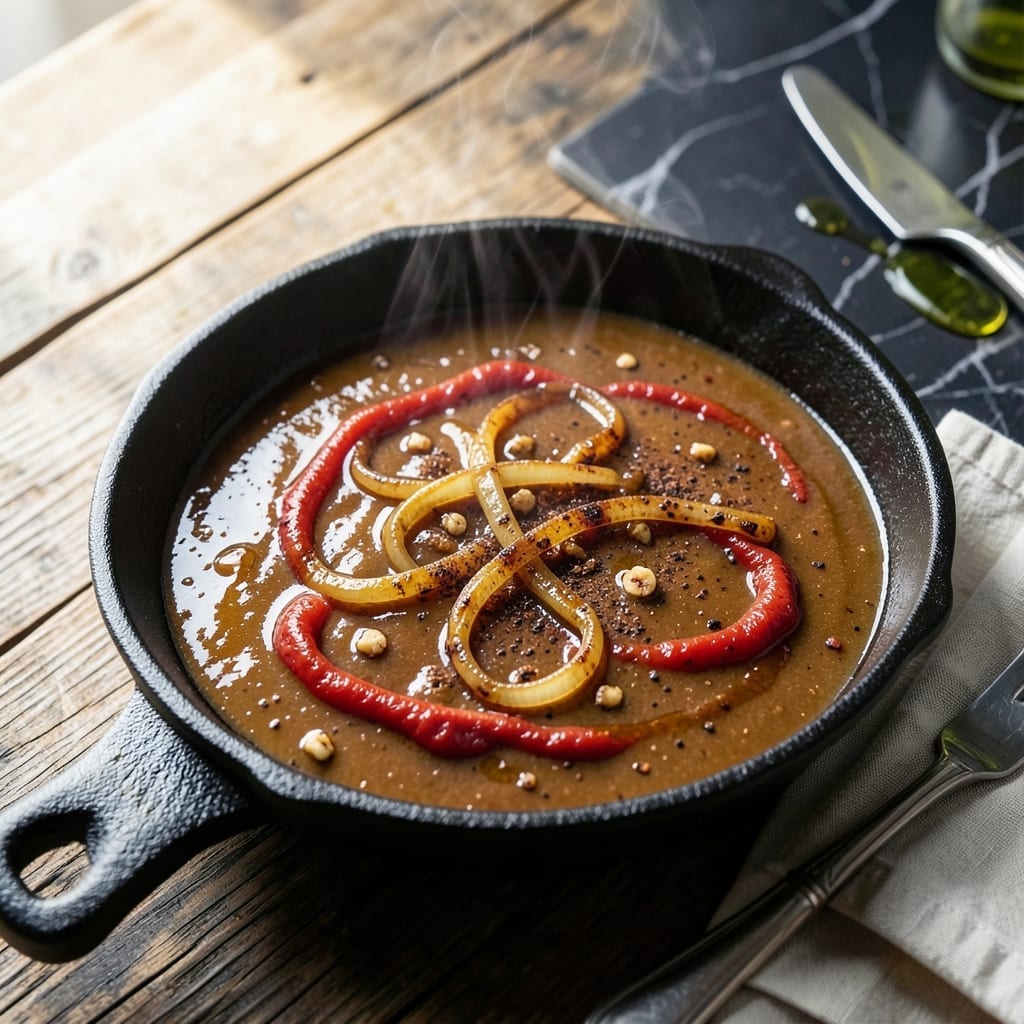
This grilling sauce brings a perfect balance of sweet apple flavor and deep smoky notes to any meat. I developed this recipe to complement everything from ribs to chicken, creating a glossy, caramelized finish that locks in juices.
The base combines fresh apple cider with tomato paste for richness, while a touch of vinegar adds brightness. A careful blend of spices—smoked paprika, garlic, and onion—builds layers of flavor without overpowering the natural fruit sweetness.
You’ll achieve a thick, brushable consistency that clings to grilled meats and caramelizes beautifully under heat. The sauce reduces to a glossy glaze that enhances rather than masks the meat’s natural flavor.
Store in an airtight container for up to two weeks, ready to elevate your next cookout.
Ingredients for Apple Grilling Sauce
Ten simple ingredients transform into a glossy, smoky-sweet glaze for your grill.
| Ingredient | Amount | Notes |
|---|---|---|
| Fresh Apple Cider 🍏 | 2 cups | Unfiltered, no sugar added |
| Tomato Paste 🍅 | 3 tbsp | For depth and richness |
| Apple Cider Vinegar 💧 | 2 tbsp | Adds essential brightness |
| Smoked Paprika 🌶️ | 1 ½ tsp | For deep smoky layers |
| Garlic Powder 🧄 | 1 tsp | Uniform flavor distribution |
| Onion Powder 🧅 | 1 tsp | Balances sweetness perfectly |
| Brown Sugar 🍚 | ¼ cup | Light or dark works |
| Molasses 🍯 | 1 tbsp | Adds complexity and depth |
| Dijon Mustard 🟡 | 1 tsp | Enhances flavor dimension |
| Salt 🧂 | ½ tsp | Diamond Crystal preferred |
[recipe_ingredient_scaler]
The apple cider is non-negotiable here—fresh, unfiltered from a local orchard or Whole Foods gives the best fruit forward flavor. I’ve tried both light and dark brown sugar; dark adds more molasses depth (which is why we’re adding it separately too). Tomato paste from San Marzano cans is my go-to for that rich, concentrated base without any metallic aftertaste.
No molasses? Maple syrup at half the amount works in a pinch, though the flavor profile shifts slightly. Fresh minced garlic can replace powder at a 1 clove to 1/4 tsp ratio, but powder blends more smoothly into the sauce. If you’re out of smoked paprika, regular paprika plus 1/4 tsp liquid smoke gets close—just don’t overdo it.
This keeps beautifully in the fridge for 2 weeks—the flavors actually deepen over time. Freeze for 3 months if you’ve made a big batch (it’s that good). Always give it a stir before using since the spices tend to settle at the bottom.
Why You’ll Love This Recipe
- Minimal Effort: I just dump everything in a pot and let it simmer—no fancy techniques, no stress.
- Sweet & Smoky: The apple cider and smoked paprika balance each other so well it’s ridiculous.
- Grill Night Hero: Slather it on ribs, chicken, or even veggie burgers—it works every time.
- Makes a Jar: I always double the batch because it keeps for weeks and tastes even better later.
Step-by-Step Instructions for Apple Grilling Sauce
This sauce comes together quickly with a few simple steps and delivers bold flavor every time.
Step 1: Combine the Liquid Base
In a medium saucepan, pour in the 2 cups Fresh Apple Cider and the 2 tbsp Apple Cider Vinegar. I like to use unfiltered cider for its deeper, more complex apple flavor, which really shines through in the final sauce.
Add the 3 tbsp Tomato Paste and whisk until fully dissolved into the liquid. The tomato paste adds richness and body, balancing the brightness of the cider and vinegar. Bring this mixture to a gentle simmer over medium heat.
Step 2: Incorporate the Sweet and Smoky Elements
Once simmering, stir in the 0.25 cup Brown Sugar, 1 tbsp Molasses, 1.5 tsp Smoked Paprika, 1 tsp Garlic Powder, and 1 tsp Onion Powder. The molasses and brown sugar create a deep, caramelized sweetness, while the smoked paprika layers in that signature grill-friendly smokiness.
Whisk everything together until the sugar and molasses are completely dissolved. You’ll notice the mixture start to darken slightly as the sugars melt and the spices bloom—this is exactly what you want.
Step 3: Add the Finishing Touches
Stir in the 1 tsp Dijon Mustard and 0.5 tsp Salt. The mustard adds a subtle tang and helps emulsify the sauce, giving it a smooth, glossy finish. The salt enhances all the other flavors, so don’t skip it.
Let the sauce continue to simmer for 10-12 minutes, stirring occasionally. You want it to reduce by about a third and thicken to the consistency of a glaze—it should coat the back of a spoon but still be pourable.
Step 4: Adjust and Cool Slightly
After 10-12 minutes, taste and adjust the seasoning if needed. If it’s too sweet, a splash more Apple Cider Vinegar will brighten it up. If it’s too thin, let it reduce for another 2-3 minutes.
Remove the sauce from the heat and let it cool for 5-10 minutes before using. It will thicken slightly as it cools. This sauce is best used warm or at room temperature—brushing it on meats during the last few minutes of grilling creates a beautiful, sticky glaze.
Pro Tips For Making Apple Grilling Sauce
- Reduce the Cider: Simmer the fresh apple cider for 15-20 minutes first to concentrate the sweetness and depth—otherwise, your sauce will taste thin and watery.
- Bloom the Spices: Toast the smoked paprika and garlic powder in the pot for 30 seconds before adding liquids; it wakes up the flavors and prevents a raw, dusty taste.
- Balance the Vinegar: I learned this the hard way—add the apple cider vinegar gradually and taste as you go, or the sauce can turn unpleasantly sharp instead of tangy.
- Use Double Tomato Paste: Sounds weird, but doubling the tomato paste (to 2-3 tablespoons) gives the sauce body and richness without altering the apple flavor.
Common Mistakes When Making Perfect Results
Over-Reducing the Sauce
It’s easy to get carried away while simmering, but reducing too much turns your glossy glaze into a thick, sticky paste. I aim for a 10-12 minute simmer—just long enough to coat the back of a spoon. If it’s too thick, thin it with 1-2 tbsp water or extra cider. 🔥
Skipping the Taste Test
Always taste before finalizing the sauce. The balance of sweet, smoky, and tangy can shift as it reduces. I often add an extra pinch of salt or splash of Apple Cider Vinegar to brighten the flavors if needed.
Using Filtered Cider
Filtered cider lacks the depth and complexity that makes this sauce special. Stick with unfiltered, fresh apple cider—I grab mine from local orchards or Whole Foods. The sediment and natural cloudiness add richness you can’t replicate.
Adding Molasses Last
Molasses can clump if added too late. Stir it in early with the brown sugar and spices so it dissolves completely. This ensures even distribution of its deep, caramelized sweetness throughout the sauce.
Ignoring the Simmer
A rolling boil can scorch the sugars, giving your sauce a bitter edge. Keep the heat at a gentle simmer—you want small bubbles, not a vigorous boil. I use medium heat and stir occasionally for control.
Storing While Hot
Letting the sauce cool slightly before sealing prevents condensation, which can dilute the flavors and promote mold. Transfer to an airtight container once it’s warm but not piping hot. This keeps it fresh for up to 2 weeks. ❄️
Nutrition Facts
Frequently Asked Questions
Can I use apple juice instead of cider?
Unfiltered apple cider is ideal for its rich, complex flavor. Apple juice works in a pinch, but it lacks depth. You’ll need to add 1 extra tbsp brown sugar to compensate for the missing sweetness and body.
How long does this sauce last in the fridge?
Stored in an airtight container, it stays fresh for up to 2 weeks. The flavors actually deepen over time, making it even more delicious after a few days.
Can I make this sauce ahead of time?
It reheats beautifully. Prepare it up to 3 days ahead for best results. Warm gently before brushing on meats to restore its glossy consistency.
What meats pair best with this sauce?
It’s incredibly versatile. Try it on pork ribs, grilled chicken, or even as a glaze for smoked sausages. The sweet-smoky balance complements rich, savory meats perfectly.

Trained in classic French technique but raised on slow-cooked ribs and spicy rubs, she blends culinary skill with smoke and soul.
- Recipe for Boneless Pork Chops in Cast Iron Skillet: Sear and Baste to Juicy Perfection - October 3, 2026
- Recipe for Boneless Cross Rib Roast: Slow-Roasted Beef with Herb Crust - October 3, 2026
- Hamburgers in Sauce Recipe Crock Pot: Slow-Cooked Savory Delight - October 3, 2026