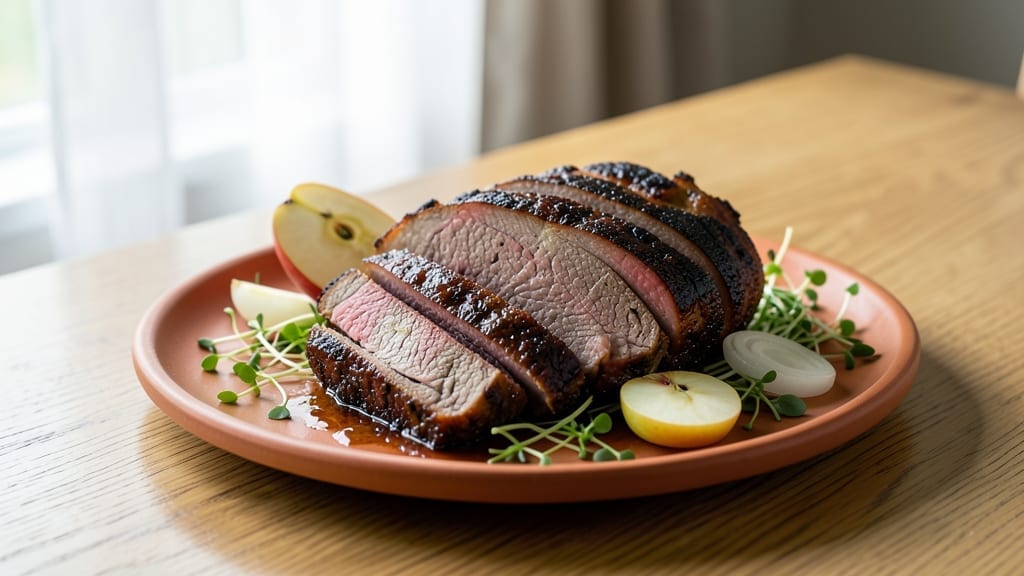
This apple smoked brisket recipe delivers the perfect balance of sweet-smoky bark and fall-apart tenderness that transforms a simple weeknight into a memorable feast. After years of perfecting my technique, I’ve found that applewood smoke and a dry brine elevate even the toughest cuts into restaurant-quality results.
The key lies in patience—letting the brisket rest and the smoke work its magic over hours, not minutes.
The process begins with selecting a well-marbled brisket, trimming excess fat, and applying a dry brine that locks in moisture and deepens flavor. Smoking at a consistent 225°F ensures tender meat without drying it out, while the applewood infuses a subtle sweetness that pairs perfectly with the smoky depth.
This isn’t just about cooking; it’s about mastering texture and flavor harmony.
By the time you slice into the brisket, you’ll uncover layers of juicy, slow-cooked meat with a caramelized bark that’s crisp yet tender. The applewood smoke lingers in every bite, creating a rich, complex profile that’s both hearty and refined.
Serve it with classic sides like creamy mashed potatoes or a tangy apple slaw to complement the brisket’s natural sweetness.
Whether you’re hosting a gathering or treating yourself to a special meal, this recipe delivers professional-level results with a methodical approach. The secret? Timing, temperature, and attention to detail—no shortcuts, just reward. Let’s get started on creating brisket that’s worth the wait.
Ingredients for apple smoked brisket
Sweet-smoked bark and melt-in-your-mouth tenderness—this brisket recipe transforms humble ingredients into showstopping results.
| Ingredient | Amount | Notes |
|---|---|---|
| Beef Brisket 🥩 | 8 lb | Well-marbled, point and flat cut |
| Kosher Salt 🧂 | ½ cup | Diamond Crystal preferred |
| Black Pepper 🌶️ | 1 tbsp | Freshly ground coarse |
| Applewood Chips 🍏 | 2 lb | For consistent applewood smoke |
| Granulated Sugar 🍬 | 1 cup | For bark development |
| Apple Cider Vinegar 🍎 | ½ cup | For dry brine acidity |
| Apple Pieces 🍏 | 2 cups | Cored and chopped |
| Applewood Pellets 🍎 | 2 lb | Alternative to chips |
| Butter 🧈 | ½ cup | Unsalted, melted for bark |
| Brown Sugar 🍯 | ¼ cup | For final bark glaze |
| Apple Juice 🍎 | 1 cup | For spritzing during cook |
| Hickory Wood Chips 🔥 | 1 lb | For initial smoke flavor |
[recipe_ingredient_scaler]
The brisket is your star, so look for a well-marbled cut—preferably a 5-7 lb point and flat combo. Costco carries excellent pre-cut briskets, but local butchers often have better quality. Trim excess fat to ¼-inch thick for even cooking. I always buy mine from Whole Foods when I want to splurge on quality, but the regular supermarket stuff works fine for weeknight dinners. The applewood chips should be soaked in water for 30 minutes before use to prevent flare-ups—trust me on this. For a more consistent smoke, pellets work better as they don’t clump when wet.
No applewood chips? Hickory or cherry wood chips will give you a similar smoky base—just adjust your expectations for the sweetness. For the dry brine, substitute apple cider with white wine vinegar if needed, but don’t skip the acidity—it’s what makes the bark crisp. The sugar is non-negotiable for that caramelized crust, but if you’re watching carbs, monk fruit sweetener works in a pinch. The apple pieces can be any variety—Granny Smith adds tartness, Honeycrisp brings sweetness. I usually grab a mix from the grocery store’s bulk section to save money.
This brisket keeps beautifully for 4-5 days in the fridge, wrapped tightly in butcher paper. For longer storage, freeze it for up to 3 months—just let it thaw in the fridge before reheating. The applewood pellets should be stored in an airtight container away from heat sources. I portion mine into containers so I can pull out slices for sandwiches throughout the week. The bark develops best during the last hour of cooking, so don’t rush it—patience is everything here. If you’re short on time, use a meat thermometer to hit 195°F internal temp for perfect doneness.
Why You’ll Love This Recipe
- I’ll be real: most brisket recipes demand constant babysitting, but this one thrives on patience. Once you dry-brine it overnight (trust me, worth the wait) and fire up the smoker at 225°F, you’re basically on autopilot for 12 hours. Spritz it with apple juice every hour, add those apple chunks at the end, and boom—you’ve got a crowd-pleaser without the stress. My kids even stopped asking, “Is dinner ready yet?” because it’s so foolproof.
- Applewood Magic: Honestly, the combination of hickory and applewood chips (plus those apple pieces tossed in during the last hour) turns your smoker into a fruit-scented dream. It’s not just smoky—it’s apple-smoked, like you’re eating a cross between a campfire and a pie crust. That bark? The granulated sugar and apple cider vinegar in the dry brine make it crispy-sweet without being cloying, and the butter-brown sugar glaze at the end seals the deal.
- Set-and-Forget Feast: I’ll be real: most brisket recipes demand constant babysitting, but this one thrives on patience. Once you dry-brine it overnight (trust me, worth the wait) and fire up the smoker at 225°F, you’re basically on autopilot for 12 hours. Spritz it with apple juice every hour, add those apple chunks at the end, and boom—you’ve got a crowd-pleaser without the stress. My kids even stopped asking, “Is dinner ready yet?” because it’s so foolproof.
- Leftover Legend: This brisket doesn’t just survive leftovers—it thrives. Wrapped tightly in butcher paper, it stays juicy and flavorful for 4-5 days in the fridge. I pull out slices for sandwiches, tacos, or even just warmed-up with a drizzle of that smoky apple glaze. And if you freeze it for up to 3 months? You’ve got a secret weapon for lazy Sundays or game days. No sad, dry meat here—just ready-to-eat perfection.
Step-by-step instructions for apple smoked brisket
Here’s how to transform tough brisket into melt-in-your-mouth perfection with applewood smoke and sweet bark.
Prepare the Brisket with Dry Brine
Pat the 8 lb beef brisket completely dry with paper towels, then place it fat-side up on a wire rack set over a rimmed baking sheet. In a small bowl, combine the ½ cup kosher salt, 1 tbsp black pepper, 1 cup granulated sugar, and ½ cup apple cider vinegar. Mix until the sugar and salt dissolve into the vinegar, creating a dry brine paste.
Generously coat all surfaces of the brisket with this mixture, pressing it into the meat so it penetrates. Wrap the brisket tightly in plastic wrap and refrigerate for 24 hours. This dry brine process ensures maximum tenderness by breaking down muscle fibers and creating that signature sweet-smoky bark. Don’t skip this step—it’s what transforms tough brisket into fall-apart perfection.
Set Up the Smoker for Dual Smoke Flavors
Fill your smoker with the 1 lb hickory wood chips and 2 lb applewood chips (or use 2 lb applewood pellets if preferred). Light them according to your smoker’s instructions and let the temperature stabilize at 225°F. The combination of hickory and applewood creates a perfect balance of smoky depth and sweet fruitiness that defines this recipe.
Once the smoker reaches temperature and you see clean, blue smoke, place the brisket fat-side up on the grill grates. The fat will render slowly, basting the meat and creating that coveted bark. Spritz the brisket with the 1 cup apple juice every hour during the cook to maintain moisture and enhance the applewood flavor. This spritzing technique keeps the meat tender while building that sweet, sticky exterior.
Smoke Until Probe-Tender with Applewood Infusion
Smoke the brisket undisturbed for 12-14 hours, maintaining the 225°F temperature. The cook time may seem long, but patience is key—this slow process allows the connective tissues to break down completely. You’ll know it’s ready when the internal temperature reaches 203°F and a meat probe slides in like butter with no resistance.
During the final hour, add the 2 cups apple pieces to the smoker to infuse the smoke with apple aroma. This step elevates the brisket beyond traditional smoked beef, giving it that distinctive applewood character. If the bark starts to dry out, lightly spritz with more apple juice to maintain moisture and sweetness.
Create the Sweet Bark with Butter and Brown Sugar
Once the brisket reaches 203°F, remove it from the smoker and let it rest for 15 minutes. In a small saucepan, melt the ½ cup butter with the ¼ cup brown sugar over low heat until smooth, creating a sweet glaze. Brush this mixture generously over all surfaces of the brisket, focusing on the top and sides where you want that caramelized bark.
Return the brisket to the smoker and smoke for an additional 30-45 minutes at 250°F to set the bark. Watch closely—you want it to develop a deep amber color with crispy edges. This butter and brown sugar combination creates that signature sweet-smoky crust that makes this brisket unforgettable. The high heat at the end helps develop the caramelization while keeping the interior tender.
Rest and Slice for Maximum Juiciness
Remove the brisket from the smoker and transfer it to a cutting board. Tent loosely with aluminum foil and let it rest for 2 hours. This resting period allows the juices to redistribute throughout the meat, ensuring every slice is moist and flavorful. The brisket should be warm to the touch but not hot—this is when the magic happens.
Slice the brisket against the grain into ¼-inch thick pieces, separating the point from the flat if needed. The meat should pull apart easily with minimal resistance, indicating perfect tenderness. Serve immediately with any accumulated juices from the resting period spooned over the top. Each bite should deliver that perfect balance of smoky, sweet applewood flavor with melt-in-your-mouth tenderness.
Pro Tips For Making Apple Smoked Brisket
- Prep Apples Right: Chop those 2 cups apple pieces into uniform ½-inch chunks—no smaller, or they’ll burn in the smoker. I used to skip this, and half the batch turned to ash while the rest stayed raw. A sharp knife and a little patience make all the difference.
- Watch the Smoke Temp: That 225°F isn’t a suggestion—it’s non-negotiable. I learned this after my first attempt wavered to 200°F, turning the brisket into tough, gray leather. Keep an eye on your smoker, and don’t rush the 12-14 hours. The slow cook is what melts the fat and tenderizes the meat.
- Butter the Bark Fast: Once you hit 203°F, melt that ½ cup butter with ¼ cup brown sugar immediately—don’t let it sit. The glaze needs to be hot when you brush it on, or it’ll just cling like a sad, greasy film instead of caramelizing into that crispy, sweet crust. Work quick, then get it back in the smoker.
- Rest Like Your Future Self Depends on It: Skipping the 2-hour rest is how you end up with dry, stringy slices. I know, I know—you’re starving, and it feels like forever. But trust me, the juices need that time to redistribute. Tent it loosely with foil, and let it sit while you make a quick side or set the table. Your brisket will thank you.
Storing and reheating this apple smoked brisket
Fridge Storage Tips
The brisket stays at its best for 4-5 days when stored properly. Wrap it tightly in butcher paper (not foil) to allow breathability while locking in moisture. Place it in an airtight container or a sealed bag with the juices to keep everything fresh.
I like to store it on a plate in the fridge to catch any drippings, which I later use for sandwiches or gravy. This method preserves that sweet-smoky flavor without drying out the meat. ❄️
Freezer Preservation
For longer storage, freeze the brisket for up to 3 months—it keeps its tenderness and flavor remarkably well. Portion it into ½ lb slices wrapped individually in plastic wrap before placing in a freezer bag. Label with the date so you don’t forget!
When ready to eat, thaw overnight in the fridge for even reheating. I often pull out slices for sandwiches throughout the week, so this makes meal prep a breeze.
Reheating Like a Pro
To restore that restaurant-quality texture, reheat slices in a 350°F oven for 10-15 minutes on a wire rack over a baking sheet. This prevents sogginess while keeping the bark crisp. Alternatively, use a skillet over medium heat with a splash of apple juice to mimic the smoker’s moisture.
Always let reheated brisket rest for 5 minutes before serving—this lets the juices redistribute for that melt-in-your-mouth experience.
Repurposing Leftovers
Don’t waste those delicious leftovers! Shred the brisket for loaded nachos or sandwiches with pickles and coleslaw. I also make a quick brisket dip by blending cooked slices with sour cream and garlic powder, served with tortilla chips.
The applewood notes shine in these creative uses, turning scraps into new favorites. Look at you—wasting nothing!
Bark Maintenance
If your brisket’s bark loses its crispness after refrigeration, revive it by broiling for 2-3 minutes at 375°F until slightly charred. For extra sweetness, brush with a mixture of ½ cup melted butter and 1 tbsp brown sugar before reheating.
This trick brings back that signature caramelized crust without overcooking the meat. It’s like giving your brisket a second chance at perfection! 🔥
Nutrition facts
Frequently asked questions
Why does the dry brine step take 24 hours?
The 24-hour dry brine is essential for maximum tenderness and flavor development. This process breaks down muscle fibers while creating that signature sweet-smoky bark. Skipping it means losing the melt-in-your-mouth texture that makes this brisket legendary. Patience here pays off in every bite!
Can I use only applewood chips instead of hickory?
Yes, but you’ll lose some depth of smoke flavor. The hickory adds a classic smoky backbone while the applewood brings sweetness. If you prefer pure applewood, use 2 lb applewood chips and adjust expectations for a milder, fruitier taste. The bark will still develop beautifully!
What if my brisket dries out during smoking?
Spritz generously with apple juice every hour and add apple pieces to the smoker during the final hour. If the bark looks dry, wrap it loosely in foil for 30 minutes before finishing. The butter-brown sugar glaze in Step 4 will also help restore moisture and sweetness. Don’t rush—patience prevents dryness!
Is the resting time really necessary?
The 2-hour rest lets juices redistribute, ensuring every slice is moist and flavorful. Skipping it means dry, tough meat. Tent loosely with foil to keep it warm but not steamed. This step separates good brisket from great brisket—trust the process!
Can I make this recipe in a grill instead of a smoker?
Yes, but with adjustments. Use a pellet grill set to 225°F with applewood pellets. For charcoal grills, create indirect heat and use a smoke box with applewood chips. Spritzing and the final bark glaze remain the same—just monitor temperature closely to avoid flare-ups.

Trained in classic French technique but raised on slow-cooked ribs and spicy rubs, she blends culinary skill with smoke and soul.
- Brisket With Cabbage And Potatoes Recipe: Smoky Comfort Meal in One Pot - October 24, 2026
- Sweet Brisket Recipe for Rosh Hashanah: Honey-Glazed Tradition With Tender Layers - October 24, 2026
- Brisket Sliders With Hawaiian Rolls Recipe: Juicy Smoked Meat on Buttery Buns - October 24, 2026