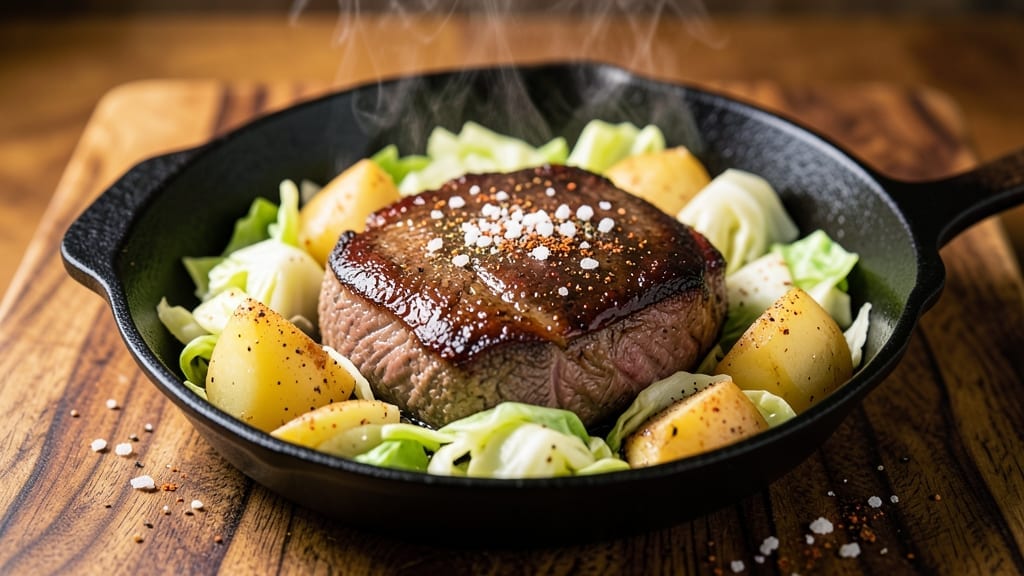
This brisket with cabbage and potatoes recipe delivers the ultimate smoky comfort meal that brings the soul-warming flavors of a backyard cookout to your dinner table. 🔥 The secret lies in slow-cooking the brisket until it’s fork-tender while roasting the cabbage and potatoes in the same pot, creating a harmonious blend of textures and flavors that’s impossible to resist.
What sets this dish apart is its simplicity and depth—just a few quality ingredients transformed through time and heat. The brisket develops a rich, smoky crust while staying juicy inside, while the cabbage softens into sweet, caramelized strands and the potatoes develop a crispy exterior with a tender center.
I’ve been perfecting this one-pot method for years, and it never fails to impress.
By the time you’re done, you’ll have a meal that’s hearty enough to feed a crowd but simple enough for a weeknight dinner.
The brisket falls apart at the touch of a fork, the cabbage is sweet and tender, and the potatoes are perfectly crispy—all infused with the same smoky aroma that makes this dish so irresistible.
Serve with a side of crusty bread to soak up every last bit of that delicious juices.
This recipe is especially perfect for cooler evenings when you crave something warm and satisfying. The flavors only get better as they sit, making it ideal for meal prep or leftovers. Let’s get cooking and create a meal that feels like coming home.
Ingredients for brisket recipe with cabbage and potatoes
Smoky, tender brisket with caramelized cabbage and crispy potatoes—just a few ingredients for soul-warming dinner magic.
| Ingredient | Amount | Notes |
|---|---|---|
| Beef Brisket 🥩 | 4 lb | Point-cut preferred, fat cap left on |
| Yellow Onions 🧅 | 2 whole | Thickly sliced, caramelized |
| Russet Potatoes 🥔 | 4 lb | Cut into 2-inch chunks |
| Green Cabbage 🥬 | 1 whole | Quartered, core removed |
| Dry Mustard 🧂 | 2 tbsp | For brisket rub |
| Brown Sugar 🍚 | 2 tbsp | For caramelizing onions |
| Smoked Paprika 🌶️ | 1 tbsp | For brisket rub |
| Garlic Powder 🧄 | 1 tbsp | For brisket rub |
| Salt 🧂 | 1 tbsp | Kosher preferred |
| Black Pepper 🌶️ | 1 tsp | Freshly ground |
| Olive Oil 🫒 | ½ cup | For searing brisket |
| Beef Broth 💧 | 2 cups | Low-sodium preferred |
| Apple Cider Vinegar 🍎 | 2 tbsp | For tenderizing |
[recipe_ingredient_scaler]
The brisket is everything here. Point-cut gives you the most flavorful, juicy meat—fat cap left on keeps it moist during slow cooking. I always buy mine from Costco or a local butcher, where they can trim it fresh. Look for bright red color and good marbling; if it’s grayish, it’s been sitting too long. The fat cap is non-negotiable—it renders down into the cabbage and potatoes, making everything richer. If you can’t find point-cut, flat-cut works but may need extra trimming.
No dry mustard? Dijon works, but cut the amount in half—it’s stronger. Short on smoked paprika? Regular paprika plus a pinch of cayenne gets you close. Cabbage quarters make it cook faster, but if you’ve got whole heads, just halve them. The Russet potatoes are key for crispiness—Yukon Golds will get mushy. For the broth, low-sodium is best so you control the saltiness. Apple cider vinegar? White vinegar works in a pinch, but the apple flavor adds a nice touch.
This reheats beautifully—honestly tastes better the next day. Store in an airtight container for 4-5 days in the fridge or freeze portions for 3 months. I always double the batch and freeze half—I portion it into containers so lunches are sorted for the week. The brisket keeps its moisture better when wrapped in foil with a splash of broth. Cabbage and potatoes? Just toss them in the pot with the brisket—no need to pre-cook. The smoky aroma fills the house, so cook it in the oven if you’re sensitive to smoke.
Why You’ll Love This Recipe
- One-Pot Magic: That Dutch oven does all the work—just sear the brisket, toss in the potatoes and cabbage, and let it simmer while you relax. No last-minute chopping frenzies, just effortless flavor.
- Smoky, Sweet, Satisfying: The dry mustard and smoked paprika on the brisket? Game-changer. Those caramelized onions with a splash of apple cider vinegar add depth, and the cabbage soaks up all the beefy goodness—every bite is a flavor explosion.
- Feeds a Crowd (or Your Leftovers): Four pounds of brisket and four pounds of potatoes? That’s easily enough for a family dinner and tomorrow’s lunch. Freeze portions for months, or reheat the next day—it tastes just as good cold.
- Budget’s Best Friend: You’re getting a whole cut of brisket, a whole cabbage, and a whole bag of potatoes for a fraction of what takeout costs. The spices? A few dollars’ worth of pantry staples. Hearty, filling, and won’t break the bank.
Step-by-step instructions for brisket with cabbage and potatoes
Here’s how to create that hearty, one-pot masterpiece with tender brisket and perfectly caramelized veggies.
🔥 Step 1: Sear and Rub the Brisket
Heat a large Dutch oven over medium-high heat and add the ½ cup olive oil. Once shimmering, place the 4 lb beef brisket fat-side down and sear for 5-6 minutes until deeply browned. Flip and repeat on the other side. This creates that rich, caramelized crust we’re after.
While the brisket sears, mix the 2 tbsp dry mustard, 2 tbsp brown sugar, 1 tbsp smoked paprika, 1 tbsp garlic powder, 1 tbsp salt, and 1 tsp black pepper in a small bowl. Once seared, remove the brisket and generously coat it with the rub mixture, pressing it into all sides. Let it sit while you prep the vegetables.
👨🍳 Step 2: Caramelize Onions and Prep Vegetables
In the same Dutch oven, add the 2 yellow onions (thickly sliced) and cook over medium heat for 10-12 minutes until softened and beginning to caramelize. Stir occasionally and resist the urge to walk away—this is where the deep sweetness develops. Add 2 tbsp apple cider vinegar halfway through cooking to tenderize the onions.
While the onions cook, cut the 4 lb russet potatoes into 2-inch chunks and quarter the 1 green cabbage, removing the core. Toss both with a pinch of salt to prevent browning while you finish the onions.
🥘 Step 3: Build the One-Pot Masterpiece
Return the rubbed brisket to the Dutch oven and nestle it among the caramelized onions. Add the potato chunks and cabbage quarters around it, creating a single layer. Pour in the 2 cups beef broth until everything is just covered—about halfway up the sides of the brisket.
Bring to a gentle simmer over medium-low heat, then cover with a tight-fitting lid. Here’s the thing—this dish needs patience. Let it cook for 2 hours undisturbed, allowing the brisket to become fork-tender and the vegetables to absorb all that smoky flavor. Check occasionally to ensure there’s always some liquid present.
⏰ Step 4: Finish and Rest for Maximum Comfort
After 2 hours, remove the lid and increase heat to medium. Cook uncovered for another 30-45 minutes until the brisket reaches 200-205°F internally and the potatoes are fork-tender with slightly crispy edges. The cabbage should be wilted but still holding its shape.
Transfer the brisket to a cutting board, tent loosely with foil, and let it rest for 15 minutes before slicing. This resting period ensures those juices stay inside where they belong. Serve the brisket with the cabbage and potatoes from the pot—each bite delivers tender meat, caramelized onions, and perfectly cooked vegetables in one comforting package.
Pro Tips For Making Brisket Recipe With Cabbage And Potatoes
- Press That Rub Hard: The dry mustard and smoked paprika won’t stick if you just sprinkle it on—work it into every crevice of the brisket, especially the fat cap. I used to skip this, and half the flavor ended up in the pot instead of on the meat.
- Don’t Rush the Onions: Those 10-12 minutes of caramelizing feel endless, but skipping them means bland, watery onions. Add the apple cider vinegar at the 5-minute mark—it cuts the sweetness just enough to balance the dish.
- Check the Potatoes Early: After 2 hours of simmering, the potatoes should be soft but not falling apart. If they’re still rock-hard, cover them with a splash more beef broth and let them cook another 15 minutes. No one wants mushy spuds in a brisket pot.
- Uncover Before the Final Push: The last 30-45 minutes uncovered isn’t just for browning—it lets the cabbage crisp slightly and the broth reduce enough to coat everything properly. If you keep it covered, you’ll end up with soggy sides.
Pro cooking tips for this recipe
Mastering the Sear
That initial sear is where the magic starts—don’t skip it! I use a large Dutch oven because it distributes heat evenly and holds that smoky flavor. Heat the oil until it’s shimmering, then let the brisket develop that deep brown crust on both sides.
This isn’t just about looks; it’s the Maillard reaction at work, creating those complex, savory flavors that make your mouth water. 🔥
Rub Application Secrets
Press that rub deep into the fat cap—it’s not just for the meat, it’s for the juices that’ll render into your cabbage and potatoes. I like to let the brisket sit with the rub for 10-15 minutes before adding the veggies.
This gives the spices time to start working their magic. Trust me, that extra step makes all the difference when you take your first bite.
Temperature Control
After searing, we’re cooking low and slow—medium-low heat is key. The brisket will hit that 200-205°F internal temperature mark, but don’t rush it. I’ve learned the hard way that 2 hours of undisturbed cooking is non-negotiable for that perfect tenderness.
Use a meat thermometer—I swear by my Thermoworks Smoke probe.
Vegetable Placement
Arrange your potatoes and cabbage around the brisket like a protective circle. This ensures they absorb all those delicious brisket juices while cooking. I like to nestle the cabbage quarters against the brisket first—they’ll soften faster and take on more flavor.
The potatoes get their crispy edges from the residual heat after the brisket is done.
Uncovered Finish
After those 2 hours, uncovering the pot is crucial. It lets the moisture evaporate just enough to crisp up those potato edges while keeping the cabbage tender.
I increase the heat to medium for the final 30-45 minutes, watching like a hawk—you want that perfect balance of tender and crispy without drying out the meat.
Resting is Non-Negotiable
Once the brisket hits temperature, let it rest for 15 minutes under foil. This might seem like overkill, but it’s the difference between juicy perfection and dry disappointment.
I’ve made this mistake too many times—trust me, the juices will run out if you cut into it too soon. Patience here pays off in every bite. 💡
Nutrition facts
Frequently asked questions
Why does the brisket need to rest after cooking?
Resting the brisket for 15 minutes after cooking is essential—it lets the juices redistribute evenly throughout the meat. Without this step, those delicious juices would spill out when you slice, leaving you with dry meat instead of tender perfection. This simple pause ensures every bite is juicy and flavorful.
Can I use a different type of cabbage instead of green cabbage?
Napa cabbage works beautifully, as does red cabbage—just quarter it like the green cabbage. Red cabbage adds a subtle sweetness, while Napa cabbage cooks faster and stays tender. The key is to remove the core and cut into quarters for even cooking.
What if my brisket isn’t reaching 200-205°F
after 2 hours?
If your brisket isn’t hitting the right temperature, it’s likely due to undercooked meat or insufficient heat. Check your oven or stovetop temperature with an accurate thermometer—some burners run cooler than expected. If needed, increase heat slightly and keep cooking, but never rush it. Patience is key for that perfect tenderness!
How do I prevent the potatoes from becoming mushy?
Russet potatoes are your best friend here—their starch content helps them stay crispy. Cut them into 2-inch chunks and avoid overcrowding the pot. Start with a gentle simmer and uncover the pot for the final 30-45 minutes to evaporate excess moisture. This crispy edge magic happens naturally!

Trained in classic French technique but raised on slow-cooked ribs and spicy rubs, she blends culinary skill with smoke and soul.
- Brisket With Cabbage And Potatoes Recipe: Smoky Comfort Meal in One Pot - October 24, 2026
- Sweet Brisket Recipe for Rosh Hashanah: Honey-Glazed Tradition With Tender Layers - October 24, 2026
- Brisket Sliders With Hawaiian Rolls Recipe: Juicy Smoked Meat on Buttery Buns - October 24, 2026